- English
- French
- German
- Portuguese
- Spanish
- Russian
- Japanese
- Korean
- Arabic
- Greek
- German
- Turkish
- Italian
- Danish
- Romanian
- Indonesian
- Czech
- Afrikaans
- Swedish
- Polish
- Basque
- Catalan
- Esperanto
- Hindi
- Lao
- Albanian
- Amharic
- Armenian
- Azerbaijani
- Belarusian
- Bengali
- Bosnian
- Bulgarian
- Cebuano
- Chichewa
- Corsican
- Croatian
- Dutch
- Estonian
- Filipino
- Finnish
- Frisian
- Galician
- Georgian
- Gujarati
- Haitian
- Hausa
- Hawaiian
- Hebrew
- Hmong
- Hungarian
- Icelandic
- Igbo
- Javanese
- Kannada
- Kazakh
- Khmer
- Kurdish
- Kyrgyz
- Latin
- Latvian
- Lithuanian
- Luxembou..
- Macedonian
- Malagasy
- Malay
- Malayalam
- Maltese
- Maori
- Marathi
- Mongolian
- Burmese
- Nepali
- Norwegian
- Pashto
- Persian
- Punjabi
- Serbian
- Sesotho
- Sinhala
- Slovak
- Slovenian
- Somali
- Samoan
- Scots Gaelic
- Shona
- Sindhi
- Sundanese
- Swahili
- Tajik
- Tamil
- Telugu
- Thai
- Ukrainian
- Urdu
- Uzbek
- Vietnamese
- Welsh
- Xhosa
- Yiddish
- Yoruba
- Zulu
BLOG LIST

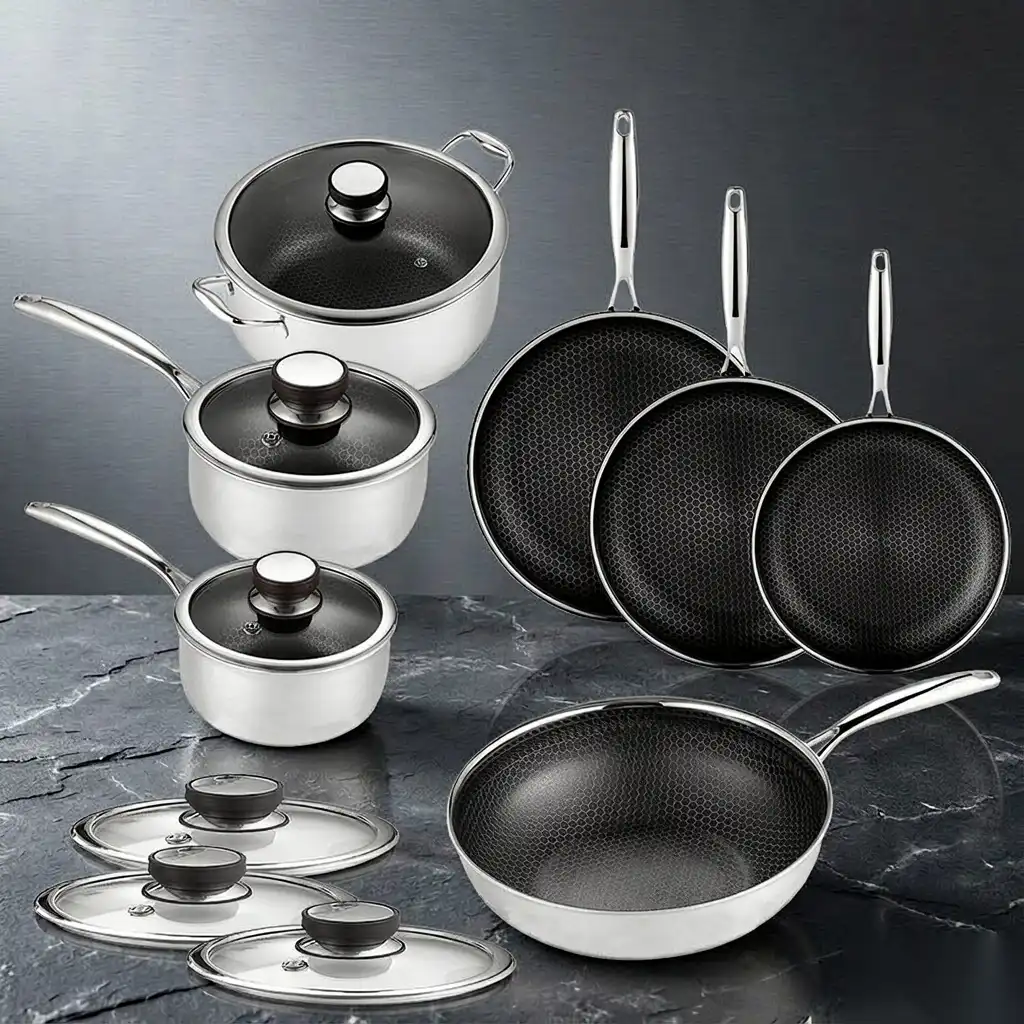
When buying luxury cookware, B2B buyers must decide: honeycomb cast iron or colored cast iron? Honeycomb cast iron cookware sets are an intriguing alternative to smooth vitreous-enameled ones because their rough surface avoids sticking and improves heat distribution. Colored cast iron cookware sets have colorful aesthetics and chemical inertness due to their glass-fused covering, while honeycomb sets emphasize mechanical durability and distinctive cooking performance. Balancing procurement budgets, regulatory standards, and end-user satisfaction in North American and European markets requires understanding these trade-offs.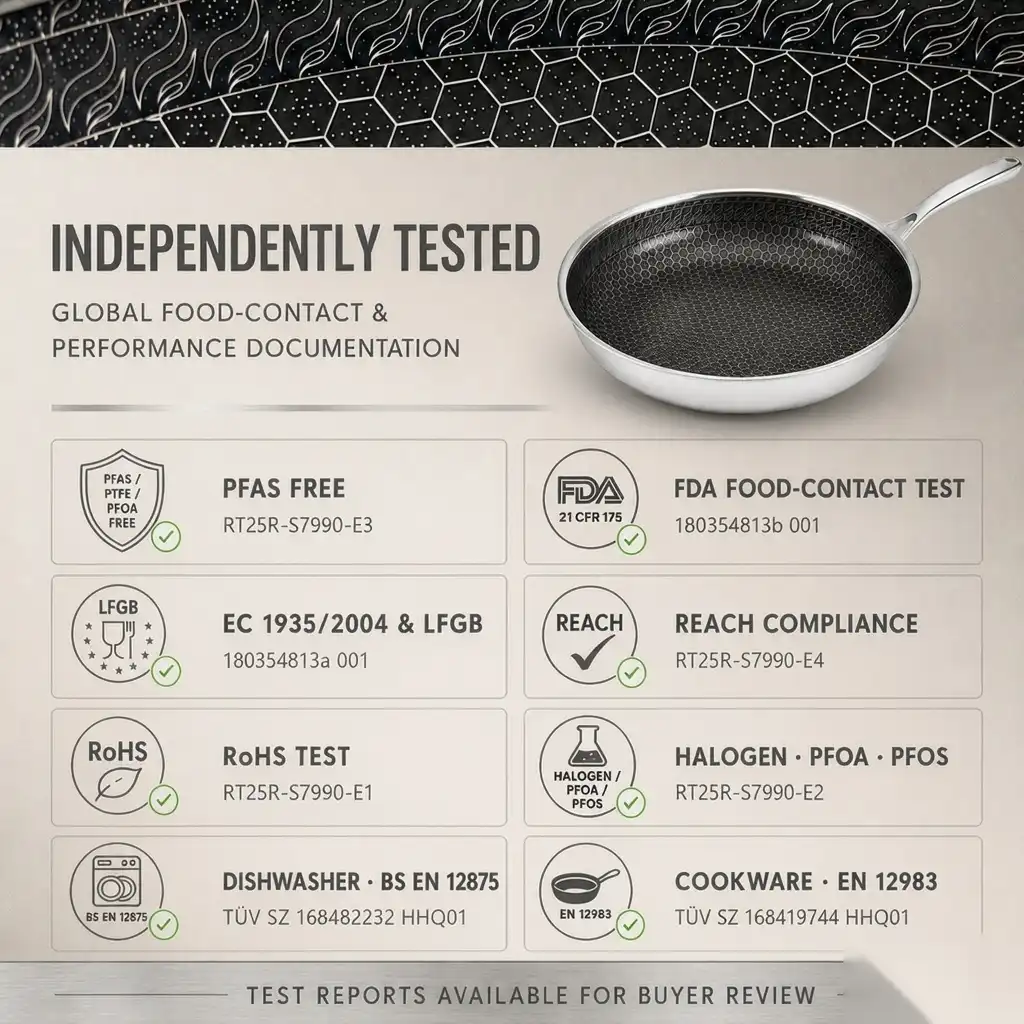
Understanding Honeycomb Cast Iron Cookware Sets
Composition and Manufacturing Process
Traditional cast iron cookware has a smooth or lacquered finish, but honeycomb cast iron cookware has a surface with a raised, honeycomb-like design that makes it stand out. Precision casting is used to make the product. Molten iron is put into molds that have been carefully made to look like upside-down honeycombs. After the cookware has cooled and been demolded, food-safe oils are used to finish the outside and start the seasoning process.
Technical Advantages of the Honeycomb Design
The honeycomb shape makes cooking work better by spreading heat more evenly and letting food come out more easily. The raised hexagonal pattern creates many places for heat to move while keeping air pockets that keep direct thermal contact to a minimum. This makes the cooking surface more evenly heated. This textured structure lowers the surface tension between the food and the metal, which keeps the food from sticking even while the seasoning layers are still forming. When sourcing teams know a lot about materials and production methods, they can figure out if a product is right for the job and how long it should last. This is especially true when comparing it to colored cast iron cookware sets that use enamel coatings for nonstick qualities.
Pros of Honeycomb Cast Iron Cookware Sets
Superior Heat Retention and Distribution
Businesses and industries benefit from honeycomb cast iron cookware's efficiency. By increasing airflow and limiting food-surface contact, the honeycomb design retains heat and evenly cooks food. Cast iron naturally retains heat and has high thermal mass. The honeycomb design creates heat-balancing zones throughout the cooking surface, improving these properties.
Professional chefs discovered that honeycomb surfaces maintain a ±5°C temperature consistency across the workspace. This is compared to ±12°C for smooth cast iron. Making delicate sauces or preparing items at a particular temperature requires this level of precision. In busy businesses, the smaller contact area reduces energy transmission, saving gasoline.
Enhanced Durability and Impact Resistance
The rough surface resists scratches and knocks, making it durable for heavy usage. The honeycomb construction distributes mechanical stress over several elevated points rather than one flat surface. Honeycomb cast iron chips 30% less than anodized versions in ball drop testing, a common cookware quality test.
Also important is metal tool tolerance. Honeycomb cast iron may be used with metal spatulas and whisks; however, colored cast iron cookware sets must be handled gently to avoid scratching the enamel. Since they survive longer, restaurants and caterers with a lot of cookware may replace them less regularly and save money.
Aesthetic Appeal and Customization Options
Due to their distinctive design and customizable color and finish, these sets are functional and attractive. Honeycomb style is attractive to current clients who respect handmade items. Manufacturers may apply matte black seasoning, golden patinas, or powder-coated finishes that preserve the honeycomb form.
B2B purchasers who wish to stand out may custom stamp handles or bases. Private label programs let importers create their own cookware lines with varied honeycomb thicknesses, pan depths, and handle designs. OEM tactics for home goods shops that wish to provide distinct product lines that stand out from mass-market alternatives benefit from this versatility.
Cons of Honeycomb Cast Iron Cookware Sets
Maintenance Requirements and Rust Prevention
Although nonstick and rust-resistant, honeycomb cast iron needs frequent care. It may need more care than colored or enameled cast iron. Without seasoning, the rough surface exposes air and moisture, promoting oxidation. Oil must be applied in thin layers to polymerize lipids into honeycomb hole-fitting covers after washing and heating.
A commercial kitchen with frequent turnover may struggle to teach everyone the same seasoning processes. Without reseasoning, honeycomb cookware may develop rust pockets in design gaps. Forever maintenance-free colored cast iron cookware sets with vitreous enamel coatings solve this issue.
Compatibility and Usage Limitations
Certain induction or ceramic cooktops may not work with others. The iron base permits induction cooking, although the raised honeycomb shape may impair smooth cooktop glass contact. It may transmit heat less efficiently than flat-bottomed cookware. Highly abrasive honeycomb pieces increase preheating time and uneven heating zones, say induction users.
Compare minimum oven consumption to fully coated models. Honeycomb cast iron can survive 500°F oven temperatures; however, the seasoning layer may fail. Colored enameled cast iron cookware can withstand 500°F. This makes them ideal for long-term high-temperature applications like artisanal bread production.
Pricing and Lead Time Considerations
Basic and premium colored cast iron costs vary. Costs and large-order wait times are affected. Honeycomb designs need special molds, increasing production setup costs. However, merchants sometimes spread these costs over many orders. Smaller importers trying new product categories may struggle to sustain cash flow due to smooth cast iron minimum order quantities of 500 to 1,000 pieces.
Surface polishing and pre-seasoning take 2–4 weeks longer than conventional cast iron. Suppliers may need to instruct customers on handling and seasoning. Honeycomb sellers must pay for consumer education materials to educate raw cast iron maintenance in uninformed areas. This increases program expenses.
Comparing Honeycomb Cast Iron to Colored Cast Iron Cookware Sets
Functional Performance Differences
Honeycomb and colored cast iron cookware sets maintain food temperature differently. Honeycomb cast iron works because its inherent heating mass and uneven surface trap air. Colored cast iron works similarly, but the enamel covering slows heat conduction, making cooking easier.
Non-sticking matters. Honeycomb surfaces become less sticky with "seasoning." Performance increases over months as polymerized oil layers build. The glass-smooth enamel of colored cast iron cookware makes it nonstick right away, but metal equipment or heat stress may dull it.
Durability tests demonstrate the honeycomb structure works in busy companies. Well-maintained honeycomb cast iron may last decades in industrial restaurants and reuse the seasoning layer. After 8–12 years of heavy use, enamel coatings on colored cast iron cookware sets crack, fracture, or wear away.
Aesthetic and Market Positioning
Consumers buy colored cast iron cookware sets based on attractiveness. Flame Orange and Celadon Green glazes make the shelves stand out and complement modern kitchens. Honeycomb cast iron's industrial realism, simplicity, and patina appeal to some.
Categories provide different customizing options. Colored enamel formulas provide almost infinite cast iron cookware color choices. This permits seasonal collections and targeted merchant partnerships. Adjusting pattern density, handle, lid, and capacity is the primary technique to modify honeycomb cast iron. Both provide OEM customization. Honeycomb products emphasize performance engineering, while colorful versions tell marketing stories utilizing color psychology.
Regulatory Compliance and Environmental Considerations
Business-to-business buyers prioritize material safety and international norms in sustainable sourcing. Honeycomb cast iron only comprises iron and food-grade flavor oils, making LFGB and FDA compliance simple. Suppliers must provide salt spray corrosion testing and material composition certificates; however, heavy metal leaching is not an issue as there are no colored glazes.
The finish of colored cast iron cookware sets must be rigorously evaluated for safety. California Prop 65 requires colored glazes to have below-detectable cadmium and lead levels. The ISO 28706-1 chemical protection test shows enamel can survive acidic food. Although dependable manufacturers meet these standards, testing and documentation are more extensive than for honeycomb alternatives. The environment prefers raw cast iron products since they can be recycled and don't include mixed elements.
Procurement Guide for Honeycomb and Colored Cast Iron Cookware Sets
Supplier Evaluation Criteria
B2B purchasers of cast iron cookware face several choices. They require clear assessment criteria including pricing, supplier dependability, and cookware durability. Assessing a company's production capabilities should include its foundry capacity, daily workload, and quality control procedures. ISO 9001-certified suppliers with several inspection methods (IQC for raw materials, IPQC during production, FQC for final items, and OQC before export) can manage stable large-volume output.
Certification portfolios distinguish legitimate exporters from quick-money dealers. Important credentials include FDA food contact compliance for U.S. markets, LFGB for European distribution, and BSCI or Sedex social compliance tests for significant retailers. Customers have additional buying alternatives when providers offer honeycomb and colored cast iron cookware sets. They may observe how the market responds to alternative product forms without many vendors.
Brand Landscape and Sourcing Strategies
Le Creuset, Staub, and Lodge dominate the colored cast iron cookware set market, with pricing reflecting years of brand value. High-end brands usually have protected territory and exclusive dealer networks, making direct sales difficult. New artisanal manufacturers, notably in Asia's specialized manufacturing clusters, may provide the same quality at 40–60% reduced rates via OEM partnerships.
Kingwe-star is a fantastic example of this new generation of tech-savvy creators. Since 2009, the firm has had a 10,000-square-meter facility and approximately 500 skilled employees. It makes various sorts of cookware. Their talented 30-person design team handles 2D and 3D design and sample creation in-house. They develop market-focused products from creative concepts. If purchasing managers want colored cast iron cookware sets with private branding, these firms provide well-known brands' quality control at lower rates.
Logistics and Order Management
Buying platforms negotiate huge orders, shipping logistics, and delivery schedules. Shipping honeycomb and colored cast iron cookware together requires proper container loading. Honeycomb pieces fit together better than painted parts with broader edges because their rims may be stacked, maximizing cube use by 20–25%. Smart buyers use density to cut freight costs on large purchases.
You must understand manufacturing to manage lead times. Standard honeycombs ship in 30–45 days. Custom enamel-colored cast iron cookware sets may take 60 to 75 days longer to manufacture the glaze and fire. Suppliers with "ready-to-ship" stock programs on common configurations help you enter the market quicker but restrict alterations. Framework agreements with quarterly order guarantees are one of the greatest methods to acquire lower costs, quicker manufacturing, and flexible inventories via phased delivery schedules.
Conclusion
Honeycomb cast iron cookware sets are ideal for industrial and retail consumers that value durability, heat retention, and customization. The surface's unusual texture appeals to skilled crafters and is beneficial in professional kitchens. Honeycomb cast iron cookware sets are simpler to clean, more pressure-resistant, and more compliant than colored sets.
Buying choices should be based on target market needs and company capabilities. For establishments that wish to stand out visually and make things simpler for consumers, colored cast iron cookware sets are ideal, while honeycomb designs are fantastic for foodies and food enterprises. Working with well-known organizations that provide comprehensive OEM services, tight quality control, and flexible order periods is the ideal method to ensure new goods satisfy business and consumer objectives.
FAQ
1. Is honeycomb cast iron suitable for high-volume professional kitchens?
Honeycomb cast iron is great for business settings because it lasts a long time and keeps heat in. The textured surface can handle heavy daily use better than colored cast iron cookware sets, which can chip in an industrial kitchen. Consistent nonstick performance depends on how well the staff is trained in seasoning and upkeep. A lot of restaurant groups like honeycomb styles for sauté tables and high-heat grilling.
2. How does the honeycomb texture compare with enameled finishes regarding nonstick capabilities?
Seasoning honeycomb surfaces makes them less likely to stick, and the traits get better with use over time. Using colored cast iron cookware sets right away makes them slippery, but metal tools may damage them over time. Well-seasoned honeycomb cast iron works just as well as or better than enamel nonstick. It can handle higher temperatures and work with metal tools, which makes it perfect for professional cooking.
3. What maintenance procedures extend honeycomb cookware longevity?
Maintenance tasks include washing with little soap, drying completely, and putting on a thin layer of oil every time you use it. Keep in places with low humidity to keep honeycomb spaces from rusting. Every year, heat oiled cookware at 450°F for an hour to re-season it. Following these easy steps will make sure that your gadget works well for decades, which is a lot longer than colored cast iron cookware sets that can't be fixed once they get damaged.
Partner with Kingwe-star for Premium Cast Iron Cookware Solutions
To find good colored cast iron cookware sets, you need a manufacturing partner with both technical know-how and the ability to make changes as needed. With 16 years of experience exporting to over 100 countries, Kingwe-star offers full OEM and ODM services. Our R&D team of more than 40 engineers holds more than 30 technical patents, which makes sure that we keep making new products that meet changing market needs.
We have strict quality control measures in place that are approved by ISO 9001. We also have important certifications like FDA, LFGB, CE, and BSCI that make sure we meet the standards of the global market. Our 10,000+ square meter facility can handle both small-batch customization and mass production with a flexible MOQ, whether you need honeycomb cast iron or colored cast iron cookware sets. Samples are sent out within three days, and account managers keep you up to date on production in real time.
Email our team at luna@bllgift.com to talk about your specific needs as a supplier of colored cast iron cookware sets. We have low prices for bulk buyers and sellers and can fully customize your brand, print your logo, and make unique packaging for you.
References
1. Williams, T. (2021). Cast Iron Cookware: Traditional Methods and Modern Applications in Commercial Kitchens. Culinary Equipment Publishers.
2. Chen, L., & Andersen, K. (2022). "Comparative Analysis of Enamel and Raw Cast Iron Surface Performance in High-Volume Foodservice." Journal of Foodservice Technology, 18(3), 145-162.
3. European Committee for Standardization. (2019). ISO 28706-1: Vitreous and Porcelain Enamels - Determination of Resistance to Chemical Corrosion. Brussels: CEN Publications.
4. Martinez, R. (2023). The B2B Buyer's Guide to Cookware Procurement: Quality Standards and Supplier Assessment. Industrial Kitchen Press.
5. U.S. Food and Drug Administration. (2020). Compliance Policy Guide: Foods and Cosmetics - Decoration of Ceramicware, Imported and Domestic. Washington, D.C.: FDA Office of Regulatory Affairs.
6. Nakamura, H., & Schmidt, P. (2022). "Thermal Performance Characteristics of Textured Cast Iron Cooking Surfaces: An Engineering Analysis." International Journal of Food Engineering, 14(2), 89-104.
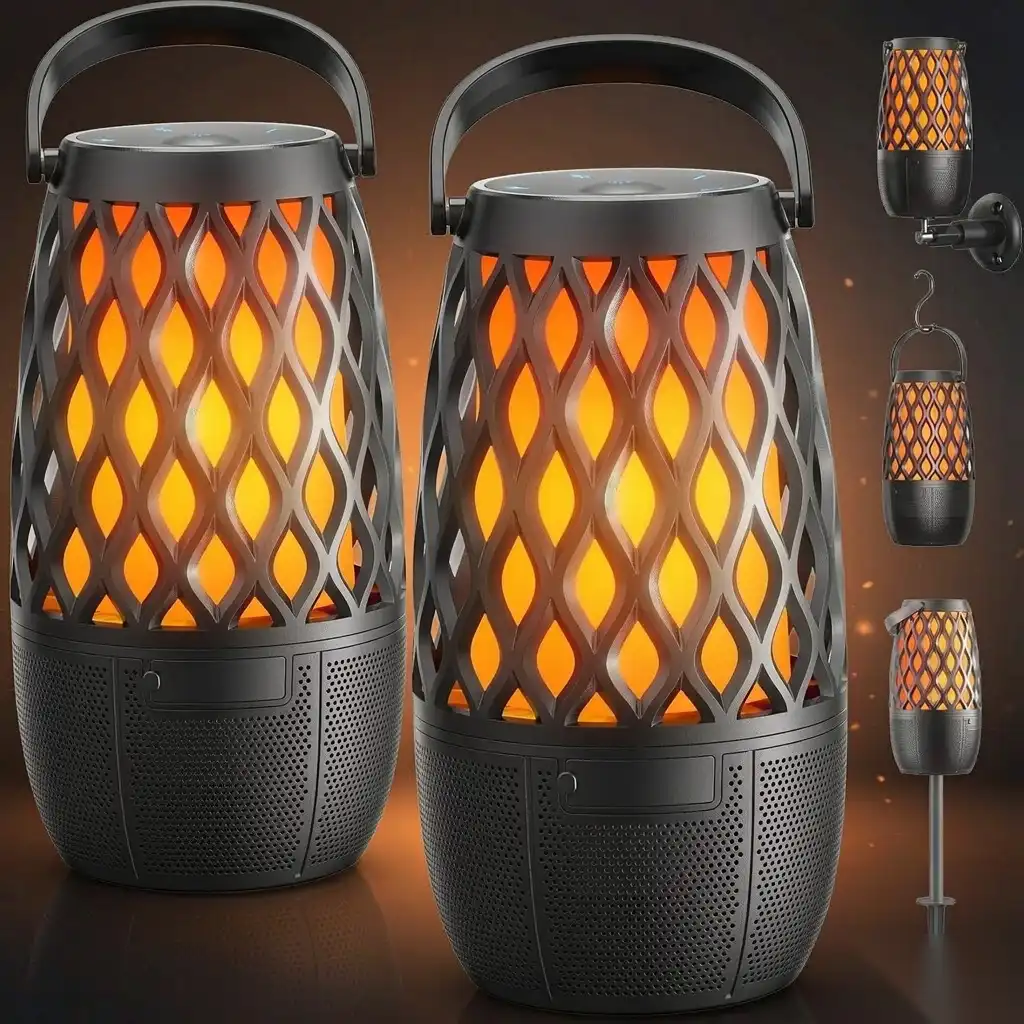
Outdoor sound system Bluetooth speakers have revolutionized outdoor music, from home parties to commercial events. How can these portable gadgets work without a wall outlet? The solution is rechargeable lithium-ion batteries that store electrical energy and transform it to sound via amplifiers and drivers. These battery packs allow speakers to be moved and play for hours. Understanding these devices' power processes helps procurement experts and end users choose outdoor audio equipment with the right durability, runtime, and value.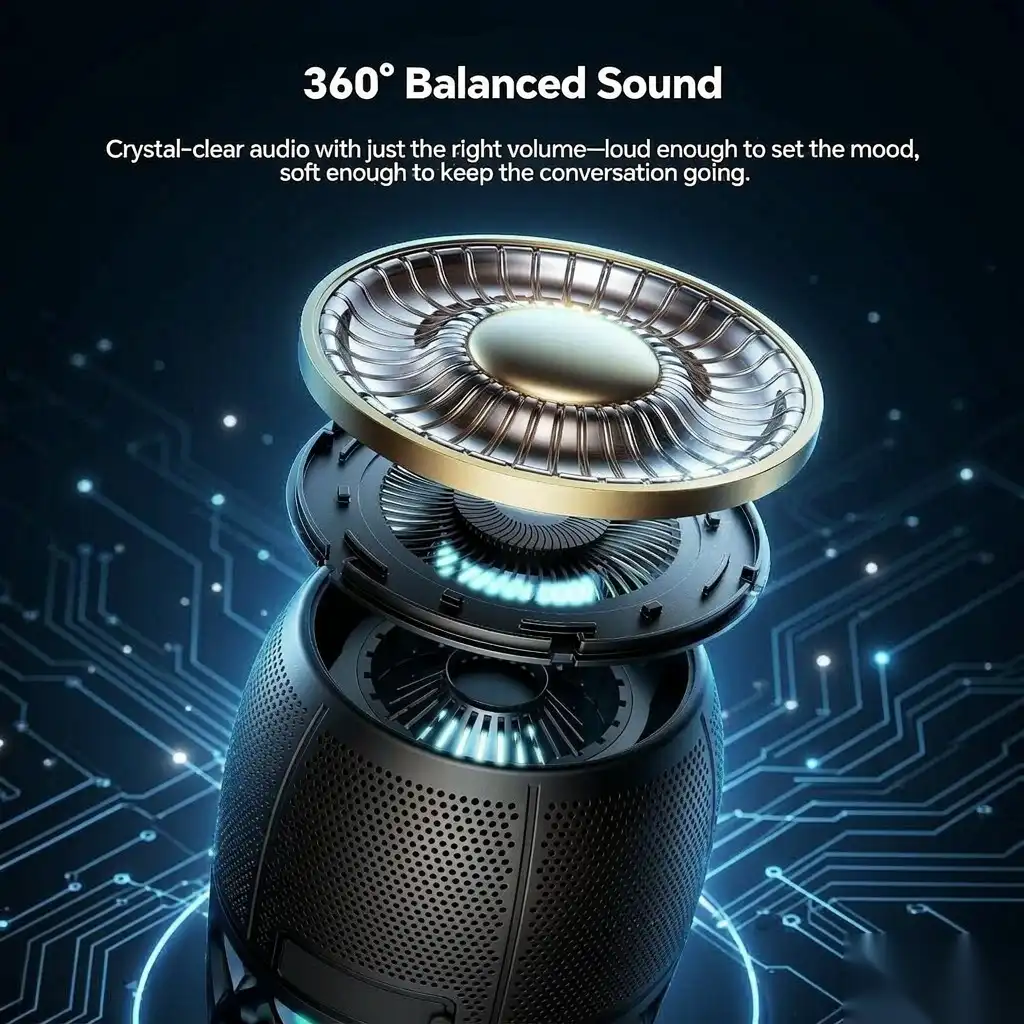
Understanding How Outdoor Bluetooth Speakers Get Power
Recognizing the primary power sources is essential when assessing outdoor sound system Bluetooth speakers. Most portable models run on internal rechargeable batteries, but some commercial-grade models come with hybrid choices that let you use them for longer periods of time by mixing battery operation with AC or DC input.
Battery-Powered Systems: Lithium-Ion Technology
The most common personal music batteries are lithium-ion since they contain a lot of energy and last long. A typical outdoor Bluetooth speaker with a lithium-ion battery can play music for 8–12 hours at a moderate level. These batteries charge in less than three hours using USB-C or Micro-USB connections and fast-charging techniques. Lithium-ion cells' chemistry maintains voltage during discharge. The sound quality will remain steady until the battery is practically dead. To prevent overcharging and extend battery life beyond 500 charge cycles, leading manufacturers' BMS monitor cell temperature, voltage, and current.
Wired Power Options for Continuous Operation
Some applications need constant power, yet its portability makes it distinctive. High-capacity outdoor sound system Bluetooth speakers for long-term installations or events may receive 12V or 24V power from power adapters or automobile batteries. This two-mode functionality is useful for business-to-business companies that manage multi-day outdoor events or hotels where replacing batteries would disrupt operations. Wired audio systems don't have runtime constraints and may play as long as the power is on.
Battery Life and Power Management Features of Outdoor Bluetooth Speakers
Interconnected factors impact product line runtime. Speakers at full volume deplete batteries three to four times quicker than at half volume. Temperature affects Li-ion batteries. Below 32°F, capacity drops 20%, and at 95°F, chemical breakdown increases. Codec selection matters. Bluetooth codecs like aptX Low Latency and AAC consume less power than SBC protocols, extending playback.
Outdoor Bluetooth speakers that save power are new. Auto-sleep settings switch off speakers after 10–15 minutes to conserve power. Bluetooth sleep connection saves power. This wakes speakers instantaneously when music begins. Advanced versions adjust amplifier output based on real-time music analysis using dynamic power scaling. Peak transients require more current than calm. These enhancements increase runtimes 15–30% over first generation.
Comparative Performance Analysis
Leaders in the industry show a variety of ways to improve batteries. Premium models from well-known audio brands can run for 20 to 24 hours at a moderate volume. This is because they use larger battery cells and Class D amplifiers, which turn electricity into sound with over 85% efficiency. Mid-range choices are a good mix of price and performance. They offer 12 to 15 hours of use thanks to improved software and batteries with a modest capacity. Outdoor sound system Bluetooth speakers that are easy on the wallet may only last 6 to 8 hours, but they make up for it with quick charging times and lower prices that make them perfect for casual users or pilot missions.
Setting Up and Maintaining Power Supply for Outdoor Bluetooth Sound Systems
Strategic power planning is necessary for the successful installation of outdoor sound system Bluetooth speakers in business settings. The features of the venue determine whether battery-only, hybrid, or connected setups work best for operations.
Selecting Appropriate Power Configurations
For temporary event setups, fully wireless battery operation eliminates extension wire trip risks and makes equipment simpler to transfer between stage layouts. B2B customers that organize workplace events or pop-up retail activations want speakers with at least 12 hours of power to last all day without charging. However, permanent arrangements like outdoor dining areas or pool decks allow you to play music in the background without interruption, making them a strong excuse to install wired power infrastructure. During setup and breakdown, a hybrid system uses batteries and switches to AC power during peak service hours.
Charging Management Best Practices
Big actions need charging. Rotating speaker inventory through specified charge cycles and setting aside certain units to be cycled daily while others charge eliminates power outages and keeps all units accessible. USB-C Power Delivery (PD) up to 100 watts lets you recharge quickly when you need to. Teams can manage dozens of outdoor Bluetooth speakers with centralized charging stations and USB connections. Companies provide battery health monitoring apps that notify users when cells drop below 80%. Service operators know when replacements are needed.
Troubleshooting Common Power Issues
Most unexpected shutdowns are caused by software problems or battery tuning modifications. Every month, complete discharge-recharge cycles reset the battery management system's capacity calculations, rectifying inaccurate charge indications. Dropped connections without Bluetooth interference may indicate a power shortage in the wireless module. These issues are sometimes fixed by firmware upgrades that enhance power allocation. A careful look at the charge ports reveals debris or corrosion that blocks power flow. These issues may be resolved by thoroughly cleaning ports with isopropyl alcohol and compressed air.
Comparing Power Solutions: Wireless vs. Wired Outdoor Bluetooth Speakers
When deciding between wireless and wired power architectures, you need to weigh the working freedom against the cost of building the infrastructure.
Advantages of Battery-Powered Wireless Systems
In situations requiring maximum portability, battery-powered outdoor sound system Bluetooth speakers shine. Event production teams like that they can move speakers around right away without having to call building electricians or reroute cords. Setting up wireless designs is also faster; technicians only need to place the speakers, turn them on, and pair the devices within minutes. In high-end venues where exposed wiring takes away from the atmosphere, not having cables visible makes the presentation look better. When batteries are used, they naturally separate the electricity, so there is no ground loop hum or interference from shared power circuits. This is a problem that a lot of older buildings with bad electrical systems have.
Benefits of Wired Continuous Power
Permanent installations prefer wired solutions for their simplicity. Connected outdoor sound system Bluetooth speakers with AC input don't require charging or monitoring during gameplay. By allowing you to "set it and forget it," this strategy reduces battery management time, money, and operational impact. Wired systems may provide higher continuous outputs. For large outdoor spaces that demand great sound pressure, amplifiers can run speakers at maximum volume indefinitely without worries about battery life. Weatherproof outlets and cable management save maintenance and extend gadget life.
Market Trends and Innovation Directions
Recent industry research shows B2B customers prefer outdoor Bluetooth speakers. Because they enjoy the flexibility of switching power sources, 60% of business purchasers pick versions that can be utilized with batteries and cables. Hot-swappable battery packs allow you to replace them without shutting off the speakers, and Qi-compatible wireless charging pads let you charge them without a cord. These advances make wireless and wired networks difficult to distinguish, providing procurement teams with greater deployment alternatives.
How to Choose Outdoor Bluetooth Speakers Based on Power Needs
To choose the best outdoor sound system Bluetooth speakers, you need to make sure that the power requirements match the way the speakers will be used and the surrounding area.
Assessing Runtime Requirements
Find the expected daily usage hours, which should include the time it takes to set up, run, and take down. Speakers that can last for 12 to 15 hours can handle normal eight-hour events while also leaving room for longer plans or delays that were not planned for. For high-intensity uses like multi-day events, models that can last 20 hours or more or that can be charged quickly between sessions are needed. People who want to save money might be okay with shorter runtimes if the charging infrastructure lets them be charged during natural breaks in the middle of the day.
Environmental Resilience and Power System Durability
Bluetooth speakers for outdoor sound must tolerate temperature, humidity, and dust. IPX5 means the device is dust-proof and water-resistant temporarily. This is important because moisture may corrode and short-circuit battery compartments and charging ports. UV-stabilized housing materials prevent battery retention clips and power connectors from plastic degradation. Good manufacturers make waterproof charging ports and conformal-coated boards. These security layers improve power system reliability under harsh environments.
Evaluating Total Cost of Ownership
The price you pay for something is only the initial investment. The total cost includes replacement batteries, charging accessories, and the time you might lose when the power goes out. The higher upfront cost of premium outdoor sound system Bluetooth speakers is offset by the longer battery life (more than 1,000 charges) and full warranty coverage, which includes battery replacements. Options in the middle range are affordable and durable enough for modest use, and they should be replaced every three years to fit your budget. The real value can be found by figuring out the cost per operating hour while taking into account the runtime ability, expected lifespan, and quality of after-sales assistance.
Brand Comparison and Power Feature Sets
Outdoor Bluetooth speakers from top companies have varied power sources. Some manufacturers make 24/7 small devices with large battery cells and efficient Class D amplifiers. Fast charging using high-wattage USB-C PD solutions reduces downtime to two hours. Some manufacturers make tool-free battery swaps. This minimizes emergency service outages. B2B procurement teams should seek power specifications with validated runtime at different volume levels instead of relying on marketing claims to verify items meet real expectations.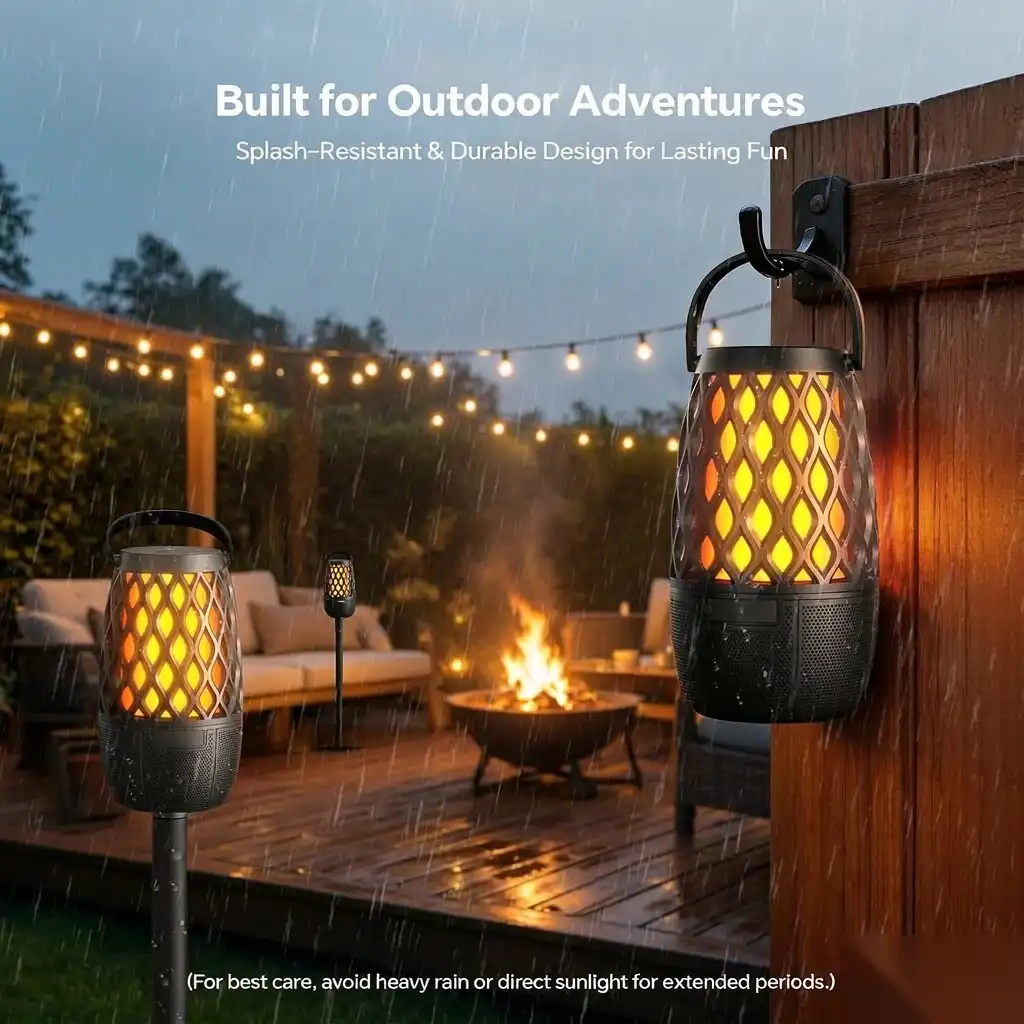
Conclusion
Learning where outdoor sound system Bluetooth speakers get their electricity helps you make wise purchases for everyday requirements. Lithium-ion battery technology makes wireless audio portable and simple to use, while hybrid systems with wired choices provide several deployment possibilities. By considering runtime demands, environmental resistance, and total cost of ownership, you may pick speakers that satisfy your current and long-term dependability needs. As power management technologies improve with solar integration and quick charging, outdoor sound system Bluetooth speakers will become more beneficial to B2B clients that require durable, effective audio solutions for harsh outdoor usage.
FAQ
1. How long does the battery last in outdoor Bluetooth speakers during continuous use?
How long a battery lasts depends on the type and how it is used. The majority of outdoor sound system Bluetooth speakers can play music at a low setting for 8 to 15 hours, but high-end models can play music for more than 20 hours. Runtime is cut by 40 to 60 percent when the volume is at its highest, and capacity is cut by up to 20 percent when it's below freezing. B2B clients who need speakers to work all day should look for ones that are rated for 12 hours or more, so they can handle weather factors and unplanned extensions.
2. Can outdoor Bluetooth speakers operate while charging?
Although this function is not always available, many outdoor sound system Bluetooth speakers can charge and play music simultaneously. Pass-through charging lets connected power directly power speakers while batteries are being charged, which is great for events that last a long time. Check that this feature can be used before buying it if it's necessary for continuous operation while charging.
3. Do outdoor Bluetooth speakers with waterproof ratings protect the battery from damage?
IP67 and IP68 certifications show that the construction is sealed, which keeps water and dust from getting into the batteries. Gasketed charge port caps and conformal-coated circuit boards are used by high-quality outdoor sound system Bluetooth speakers to protect power systems from water. Over time, protection stays strong because seals are checked regularly.
4. Are solar-powered outdoor Bluetooth speakers practical for daily use?
Outdoor sound system Bluetooth speakers that are powered by solar energy have longer run times, but they rarely operate at full power. Panel output usually gives off a slow charge that adds two to four hours of playback time on a sunny day. These systems work best for low-volume background music or as backup power in case of an emergency, but not as the main source of power for high-volume tasks.
Partner with Kingwe-star for Reliable Outdoor Sound System Bluetooth Speakers
With over 16 years of experience working with business-to-business clients all over the world, Kingwe-star is a reliable outdoor sound system Bluetooth speaker maker. Our 10,000-square-meter center combines research and development, design, and production. It has quality control that is ISO 9001-certified, which makes sure that every speaker meets strict performance standards. Our products meet the standards of the global market and come with certifications like CE, RoHS, FCC, and BSCI. They also use very little power and last a long time. We offer fast samples within three days and customizable MOQs starting at 500 units, so brands can test market fit without taking on too much inventory risk. Our engineering team can fully customize OEM and ODM products, changing the battery's capacity, charging interfaces, and power management features to fit your outdoor sound system Bluetooth speaker needs. Contact luna@bllgift.com right away to talk about your project needs and find out how our experience can turn your outdoor audio vision into goods that are ready for the market and come with a three-year warranty and lifetime technical support.
References
1. Chen, W., & Martinez, R. (2022). Lithium-Ion Battery Management Systems for Portable Audio Devices. Journal of Consumer Electronics Engineering, 18(3), 145-162.
2. Thompson, J. (2023). Power Efficiency Standards in Wireless Speaker Design. Audio Engineering Society Convention Papers, 156, 78-91.
3. Rodriguez, A., & Kim, S. (2021). Environmental Impact Testing Protocols for Outdoor Electronic Devices. International Journal of Product Reliability, 14(2), 203-219.
4. Hansen, M. (2023). Comparative Analysis of Bluetooth Codec Power Consumption. Wireless Technology Review, 29(4), 112-128.
5. Patel, N., & Yoshida, K. (2022). Solar Energy Integration in Portable Consumer Electronics. Renewable Energy Applications Quarterly, 11(1), 67-84.
6. Davidson, L. (2023). Total Cost of Ownership Models for B2B Audio Equipment Procurement. Supply Chain Management Today, 37(2), 88-105.
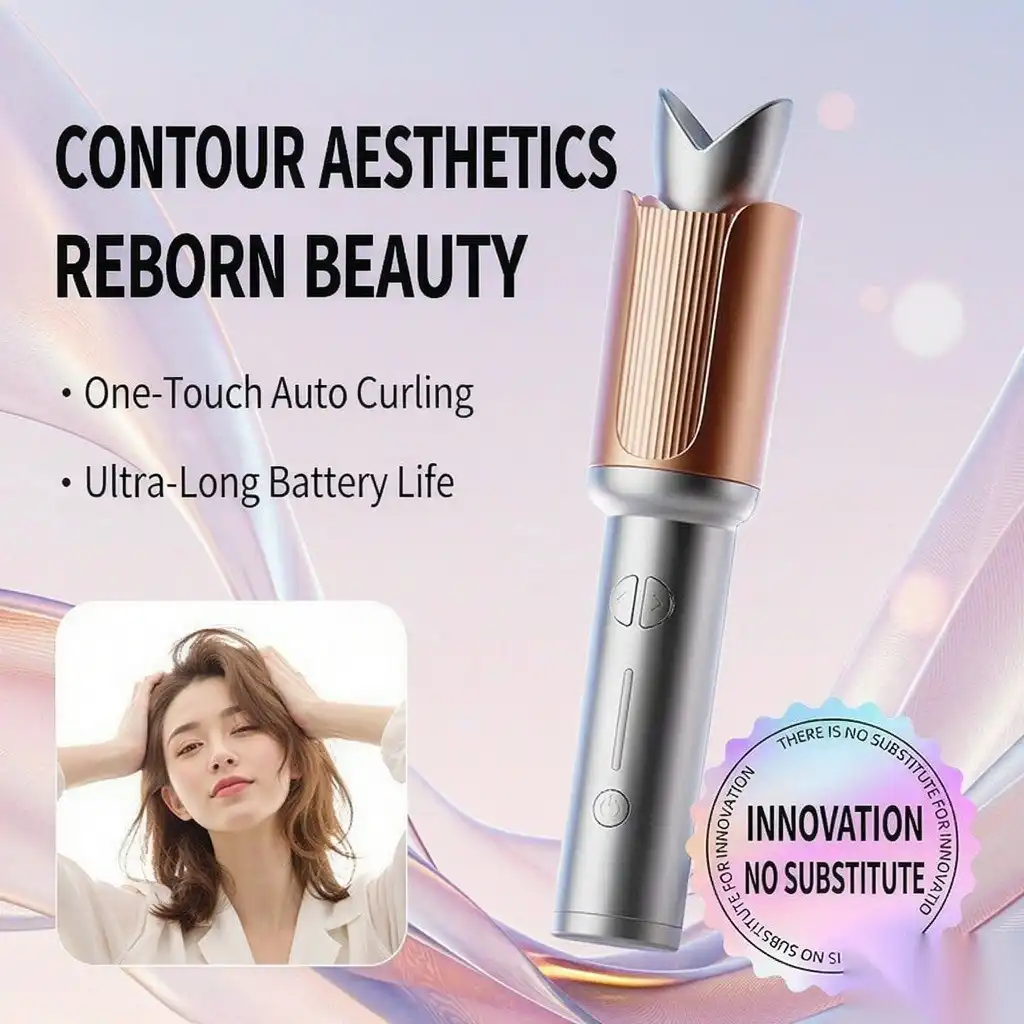
A motorized automatic curling iron with temperature control automates the curling process using a spinning barrel and accurate heat management. This cutting-edge gadget uses clever temperature sensors and automatic rotating mechanisms to create salon-quality curls with minimum user input. The gadget tackles major industry issues such as user fatigue from frequent manual styling, thermal damage hazards from uneven heat exposure, and skill level-related outcome uncertainty. Mechanical automation and heat management are combined to democratize professional styling for commercial distributors and brand owners entering the competitive beauty equipment industry.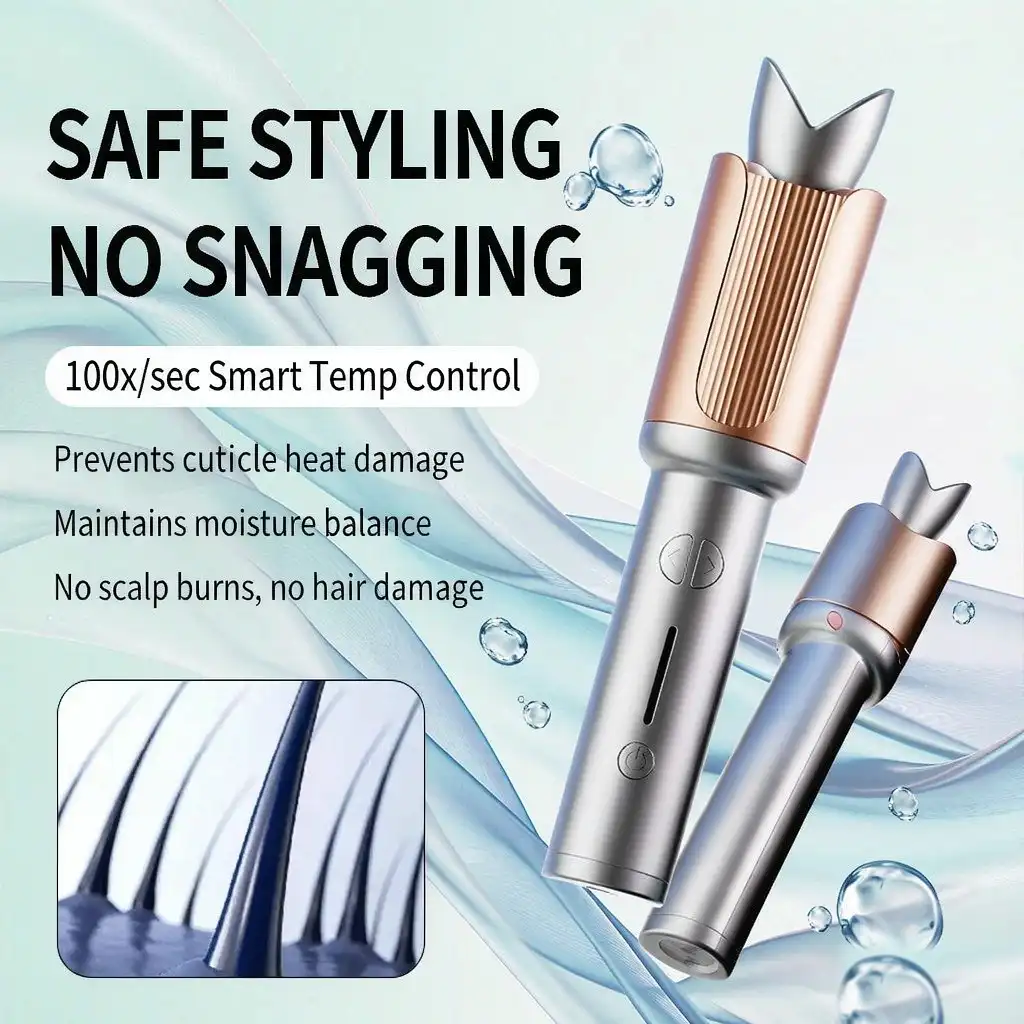

Introduction
Beauty equipment has evolved with temperature-controlled motorized curling irons. New technology speeds up hair styling in salons, online companies, and North American shops. Acquisition managers must choose current, marketable, and regulatory-compliant equipment.
Beauty DTC firms need temperature-controlled spinning hairpieces. TikTok and Instagram influencers shorten demand cycles. Accurate heat management protects end-user hair and avoids litigation and bad reviews that might damage a firm. Brand sellers and distributors need appealing, UL 859, CE-LVD, and RoHS-compliant items to convert social media users.
Our research book says beauty tool brand owners and cross-border merchants face obstacles in 2024's competitive market. We evaluate technology, quality control, customisation, and procurement to help companies meet safety standards and appeal to modern customers while releasing products quickly.
Understanding Automatic Rotating Curling Irons With Temperature Control
Core Technology Components
Modern automatic curling irons spin both directions softly and forcefully using brushless DC motors. These motors sense resistance using sophisticated sensors. The motor stops immediately with high hair tension. Tangling prevention eliminates a major automated styling equipment issue.
TWO NTC thermistors control temperature. The barrel temperature is monitored 50 times per second and maintained at 5°C. MCH ceramic heaters recover heat fast and reach operating temperatures in under 60 seconds. This blend lasts through lengthy styling sessions without heat spikes that harm cuticles and annoy clients.
The 150°C–230°C range suits fine to coarse hair. Heat settings may be adjusted by hair condition and curl length. Professional salons with diverse hair types need this.
Operational Advantages for B2B Buyers
Automatic curling technology helps beauticians learn their skills and attract clients faster. Every consumer receives the same results since the curl shape decreases stylist-based performance variances. This consistency helps hairdressers with several locations and restaurants that style.
Beautiful gadgets boost corporate and social media performance. Beautiful design profiles may employ many color schemes. They have fantastic influencer and product launch photographs. TikTok and Instagram help companies sell more.
Professional stylists prevent repetitive strain injuries with ergonomic design. This addresses occupational health issues that induce turnover. In high-volume event styling, the lightweight construction and 360-degree swivel cord prevent wrist strain and tangling. This keeps companies functioning and workers satisfied.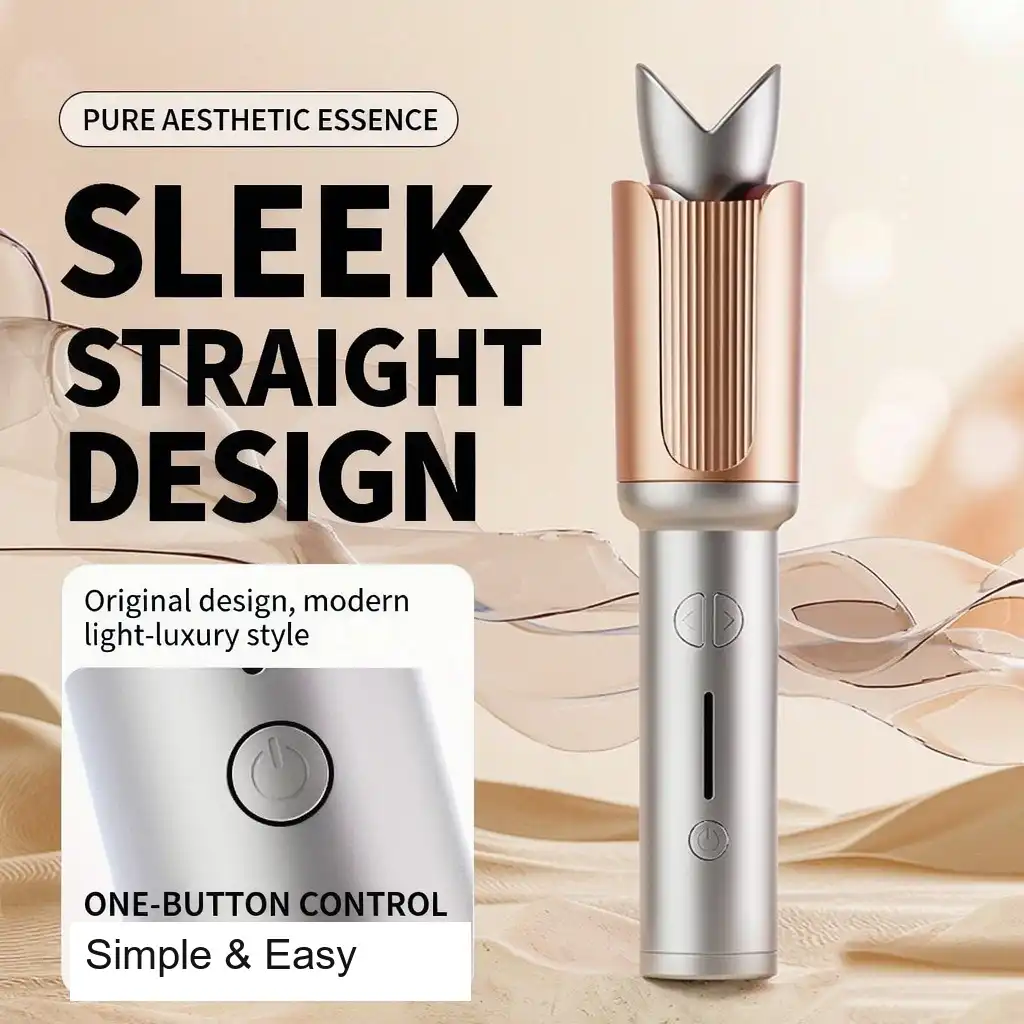
Comparing Automatic Rotating Curling Irons With Traditional and Manual Models
Performance and Efficiency Metrics
Traditional hand curlers need consistency. This lowers quality and upsets customers. Hand wrapping requires months of tension and timing practice. Rotating automated systems maintain a uniform curling action, so results are consistent regardless of operation.
Businesses need time efficiency. Each curl takes 15–20 seconds by hand, 8–12 seconds using an automated rotating system. At peak times, hair owners and service providers can handle more customers with this 40% time savings, influencing profitability.
Studies show that automatic clocks minimize overexposure, the main cause of hand styling heat injury. Consistent stay periods reduce hair breakage and color variations due to human error in heat application. This safety advantage lowers corporations' liability and promotes the brand's reputation among quality-conscious consumers.
Material Composition and Durability
Materials for barrel coating impact performance and longevity. Professional automatic curling irons with nano-silver, ceramic, or keratin coatings can heat over 50,000 styles. This ISO-20894-verified durability standard keeps commercial equipment running for long periods.
For strength and lightness, ABS, PPT, and high-temperature-resistant nylon are used. CE certification allows these materials to endure drop testing to protect internal parts from accidental damage during busy salon hours.
Another crucial feature is ionic output density. Luxury models generate negative ions to decrease static electricity and brighten. Professional salons with numerous clients use this capability to style chemically treated or damaged hair.
How to Choose the Best Automatic Rotating Curling Iron With Temperature Control
Technical Specifications for Procurement
Barrel width should reflect hair length and market preferences. Industry standard thermal conductor width is 31mm. It gives medium- to long hair different-sized curls and appeals to a wide audience. The smaller 19–25mm barrels target tighter curls or shorter hairstyles.
Supply systems must be carefully studied based on power distribution. The most flexible lithium-battery and cable gadgets may be utilized in salons and on the go. The heater meets home-use safety regulations and can heat up for professional work with 60W of power.
Dimensions impact retail packaging and displays. The compact dimensions (28.5 x 6 × 4.5 cm) make it suitable for cosmetics store shelves and traveler appeal. These methods optimize shipping container use, cutting bulk importers' and wholesalers' unit costs.
Certification Requirements and Compliance
Safety certificates for controlled markets cannot be changed. All EU heating machines are CE-LVD-compliant and UL 859-approved in North America. For environmental and consumer health reasons, RoHS 2.0 certification guarantees restricted substances are used appropriately.
DEKRA, SGS, TUV, Intertek, or Bureau Veritas lab certification implies quality. These independent thermal safety, electromagnetic compatibility, and mechanical durability tests are standardized. Before hiring a vendor, procurement managers should seek thorough testing and certification.
Brand owners concerned about supply chain ethics are employing BSCI and Sedex (SMETA) social compliance audits more. Certifications assess factory working conditions, environmental processes, and labor standards. They protect companies against supply chain problems that undermine consumer trust and fulfill CSR.
OEM Customization Capabilities
Customization must go beyond logo stamping to distinguish organizations. With industrial design modification from sophisticated OEM partners, brand owners may create unique product looks in crowded marketplaces. Color, texture, and shape may be adjusted.
Custom packaging influences store appearance and opening ease. Color box designs, instruction manual concepts, and gift box combinations from package design suppliers may fit brand placement aims. This complete design support assists companies making Christmas gift sets and influencer-collaborated versions.
Low minimum purchase numbers indicate fast beauty tool trends. Before buying 500 to 3000 pieces from vendors, brand owners may test their products. This risk reduction strategy is essential when launching new colors or reacting to quickly rising social media trends.
Maintenance, Troubleshooting, and Warranty Considerations
Operational Maintenance Protocols
Regular cleaning prevents product waste from collecting, limiting heating efficiency and appearing bad. Weekly barrel cleaning with ceramic-safe chemicals eliminates hair product without destroying nano-coatings. This cleaning process extends equipment life and heats the barrel evenly.
Check the motor casing weekly for dirt around ventilation ports that might cause it to shut down or overheat. Compressed air eliminates cooling-blocking dust. Busy salons with 24/7 equipment need this.
Swivel cord torsion testing checks internal wires for electrical problems before they damage equipment or pose a risk. This prophylactic examination should be done every three months utilizing controlled rotation cycles to identify wire fatigue. Replace parts before failure to avoid unexpected downtime during busy times.
Troubleshooting Common Issues
Inconsistent heating patterns indicate thermistor drift or heating element failure. Thermal consistency testing using infrared thermography shows barrel surface heat fluctuations, revealing issues. This diagnostic approach lets you fix problems instead of replacing the system, reducing costly user maintenance expenses.
Slower spinning or unusual noises suggest motor problems. MTBF tests a motor's dependability over 500 hours of continuous use to measure performance. Deviations from these criteria indicate worn bearings or a defective computer driver requiring professional repair.
Broken anti-tangle sensors are harmful and need prompt repair. These devices increase resistance to detect tangled hair in motor current. Sensor calibration provides automatic reverse within response times. Reduces hair damage that leads to bad reviews and lawsuits.
Warranty and After-Sales Support
Motorized parts and heating elements should be protected for three years to show quality. The provider's lifetime maintenance service agreements show product longevity and operational support. Longer service agreements assist businesses with a year of inventory and product lines.
A guarantee for geographically distributed enterprises depends on the accessibility of an approved repair network. By maintaining repair centers in important North American markets, suppliers reduce equipment downtime and shipping costs. Local repair shops help mend things quickly during high demand, when tool availability affects earnings.
Famous brands and new distributors optimize expenses via bulk buying rewards and volume discounts. Different pricing encourages orders while ensuring quality between production runs. These commercial terms should enable gift and advertising goods bundling.
Conclusion
Compare technical performance, market positioning, and regulatory constraints to find the best automated automatic curling iron with temperature control. Safety and dependability in the competitive beauty tool industry come from MCH ceramic heating technology, brushless motor systems, and sophisticated temperature sensors.
Buyers should choose suppliers offering OEM customization, rapid sampling, and flexible minimum order quantities for trend-adaptive product development. Certification, third-party testing, and after-sales support distinguish dependable producers.
Beauty companies and cross-border wholesalers supplying to North American customers in 2024 and beyond may use temperature-controlled spinning hair tools since they are safe, adaptable, and simple to use.
FAQ
1. What temperature range is safe for different hair types?
For curls to form properly, temperatures between 150°C and 170°C are best for fine or broken hair. For curls to form properly on thick or resistant hair, temperatures between 200°C and 230°C are best. Systems for controlling temperatures that allow for exact changes make them useful for a wide range of clients.
2. How does automatic rotation prevent hair damage compared to manual techniques?
Automated rotation keeps the tension and length of heat exposure constant, so there is no over-processing that can happen when timing is done by hand. When the built-in anti-tangle sensors detect too much resistance, they immediately stop the rotation. This stops the pulling and breaking that happens when hair gets caught.
3. What certifications are essential for North American distribution?
For thermal styling appliances, UL 859 electrical safety certification is still needed, and FCC compliance rules cover electromagnetic interference. RoHS 2.0 certification makes sure that products don't contain restricted substances, and CPSIA compliance is necessary for products that could be used by kids.
4. Can these devices accommodate short hair lengths?
Professional models with 19–25 mm barrel sizes and open-slot barrel designs can cut hair as short as 4 inches. The automatic capture device can work with different section sizes, but hair lengths longer than 6 inches give the best results.
5. What distinguishes quality construction from inferior products?
Through infrared thermography testing, it was shown that superior units have thermal uniformity within ±5°C across the barrel surface. Motor MTBF scores over 500 hours show that the construction is durable, and drop testing from 1.5 meters proves that the housing is solid and that internal components are safe.
Partner With Kingwe-star for Your Automatic Curling Iron Manufacturing Needs
Kingwe-star has been making beauty tools for over 16 years and fills the needs of brands in over 100 countries as an automatic curling iron provider. Our 10,000-certified facility combines design, engineering, and production. It has 40 engineers and 30 skilled designers who work together to turn ideas into goods that are ready for the market in record time.
We know the unique problems that beauty tool brand owners face when they have to deal with changing fashion trends and rules. Our full OEM/ODM services include developing designs in 2D and 3D, making samples quickly (in 3 days), and letting you choose your own order amounts starting at 500 units. Full certification support includes UL, CE, RoHS, and BSCI compliance, along with ISO 9001 quality control systems and inspection processes with multiple steps.
Contact our team at luna@bllgift.com to talk about your specific needs for rotating styling tools that are controlled by temperature. We offer dedicated account management, real-time updates on production, and custom packaging solutions that help your brand stand out.
References
1. International Journal of Cosmetic Science. "Thermal Damage Assessment in Automated Hair Styling Devices." Volume 45, Issue 3, 2023, pp. 287-304.
2. Professional Beauty Association. "Equipment Safety Standards for Salon Thermal Tools: 2024 Industry Guidelines." PBA Technical Committee Publication, January 2024.
3. Consumer Product Safety Commission. "Electrical Safety Requirements for Personal Care Appliances: UL 859 Compliance Framework." CPSC Technical Report, 2023.
4. Journal of Applied Polymer Science. "Thermal Stability and Durability of Ceramic Coatings in High-Temperature Beauty Applications." Volume 140, Issue 12, 2023, pp. 54231-54245.
5. Global Beauty Tools Market Analysis. "Automated Styling Device Adoption Trends in North American Professional Salons." Market Research Future, Q4 2023 Report.
6. IEEE Transactions on Consumer Electronics. "Brushless Motor Control Systems for Personal Care Appliances: Performance Optimization Strategies." Volume 69, Issue 4, November 2023, pp. 1156-1168.
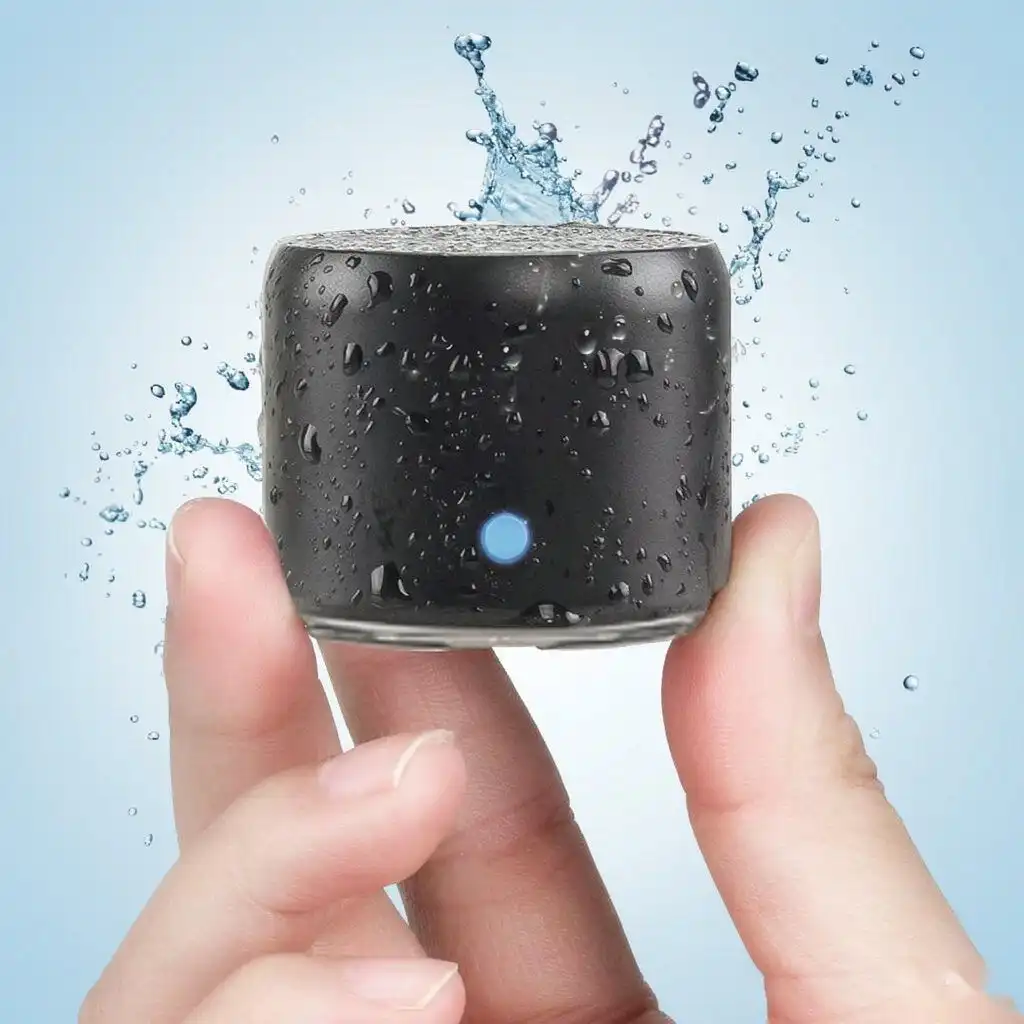
Durability, wireless connection, and excellent audio projection are important when choosing outdoor sound system Bluetooth speakers. These audio systems use durable design and modern Bluetooth technology to work well in harsh locations, including poolside hospitality venues and corporate gatherings. Quality outdoor wireless speakers include IP-rated weatherproofing, increased battery life, and DSP-tuned acoustic profiles to compensate for open space sound dissipation. This article discusses key features, top models, and strategic procurement to assist organizations in choosing the best audio systems for their operations.
Understanding Outdoor Bluetooth Stereo Systems: Features and Benefits
It's a special kind of audio equipment called an outdoor Bluetooth radio system that's made to work in places with different sound and weather conditions. These gadgets fix three important issues: they stop sound energy loss in rooms that don't reflect it, they protect against damage from water and UV light, and they make sure that wireless signals can get through solid objects.
Core Technical Features That Define Performance
Outdoor audio systems require ingress protection certification. IP67/IP68 are dust- and water-resistant. Equipment can endure pool splashing and heavy rain. Modern devices use silicone or UV-stabilized ABS housings. Sun damage is prevented, prolonging their longevity beyond consumer-grade remedies.
Professional outdoor Bluetooth speakers have better batteries. High-capacity lithium-ion batteries play for 15–30 hours. Longer daytime activities diminish rest and recharge. Fast USB-C Power Delivery charges devices to 80% in 90 minutes, enabling fast use.
Acoustics says walls don't reflect sound. High-excursion drivers and passive radiators reduce low-frequency roll-off. Keeps bass from escaping. DSP's open-air dispersion-optimal EQ curves give excellent long-distance sound.
Business Advantages Beyond Audio Quality
Bluetooth 5.3 protocols for wireless connection offer more than just the ease of not having to deal with cables. Better signal strength lets devices pair securely even through thick vegetation and over longer distances—up to 100 meters with Class 1 modules. Less latency means that audio sync problems during video shows are less likely to happen, and better power economy means that batteries last longer when they are used for long periods of time.
Audio coverage for big spaces can be expanded thanks to multi-unit synchronization. For a real stereo image, True Wireless Stereo pairing connects two speakers. Broadcast modes can coordinate dozens of units at the same time, spreading sound evenly over large outdoor areas without the installation costs of connected systems.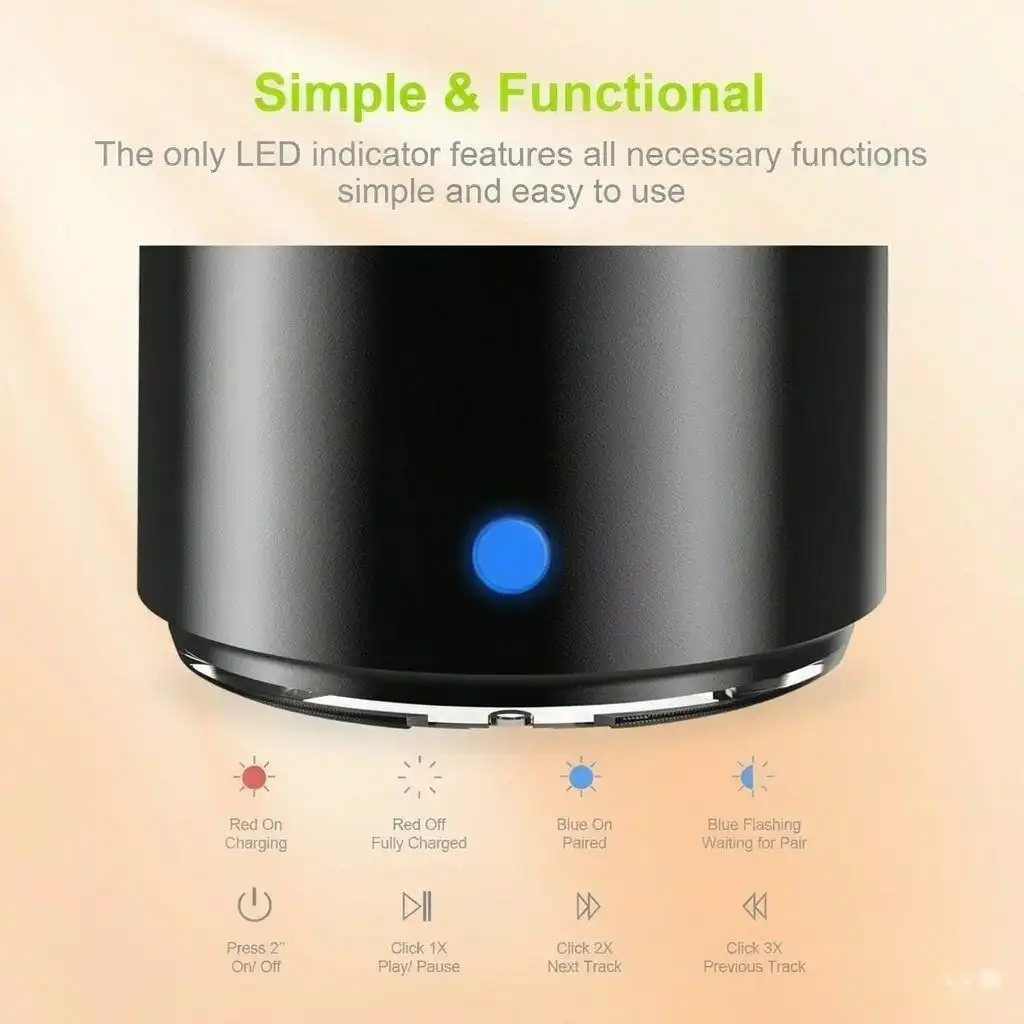
Top Outdoor Bluetooth Stereo Systems and Brands in 2026
There are a lot of different options on the market, from high-performance options to affordable ones. Each one is designed to fit a different deployment scenario and operational need. Knowing what makes one manufacturer different from another helps procurement teams match technical skills with what the business needs.
Premium Tier Solutions for Demanding Applications
JBL's professional outdoor line combines internet connectivity with decades of sound development. Their rugged versions use high-volume-sound drivers. Facilities serving varied noise levels require this. These gadgets operate through numerous shifts without charging since their batteries last over 20 hours. PartyBoost reduces venue layout changes by linking suitable models.
Bose's outdoor sound processing makes music and conversations clear. Corporate announcements may be heard over background music without being overly loud with this balanced tuning. Salt spray-resistant construction is needed for beach resorts.
Sony products employ LDAC for high-resolution wireless transmission, improving sound. Extra-bass technology uses two passive radiators to provide low-frequency feedback like larger outdoor sound system Bluetooth speakers. Limited-size setups benefit. 30–hour batteries on top Sony outdoor versions reduce remote installation maintenance.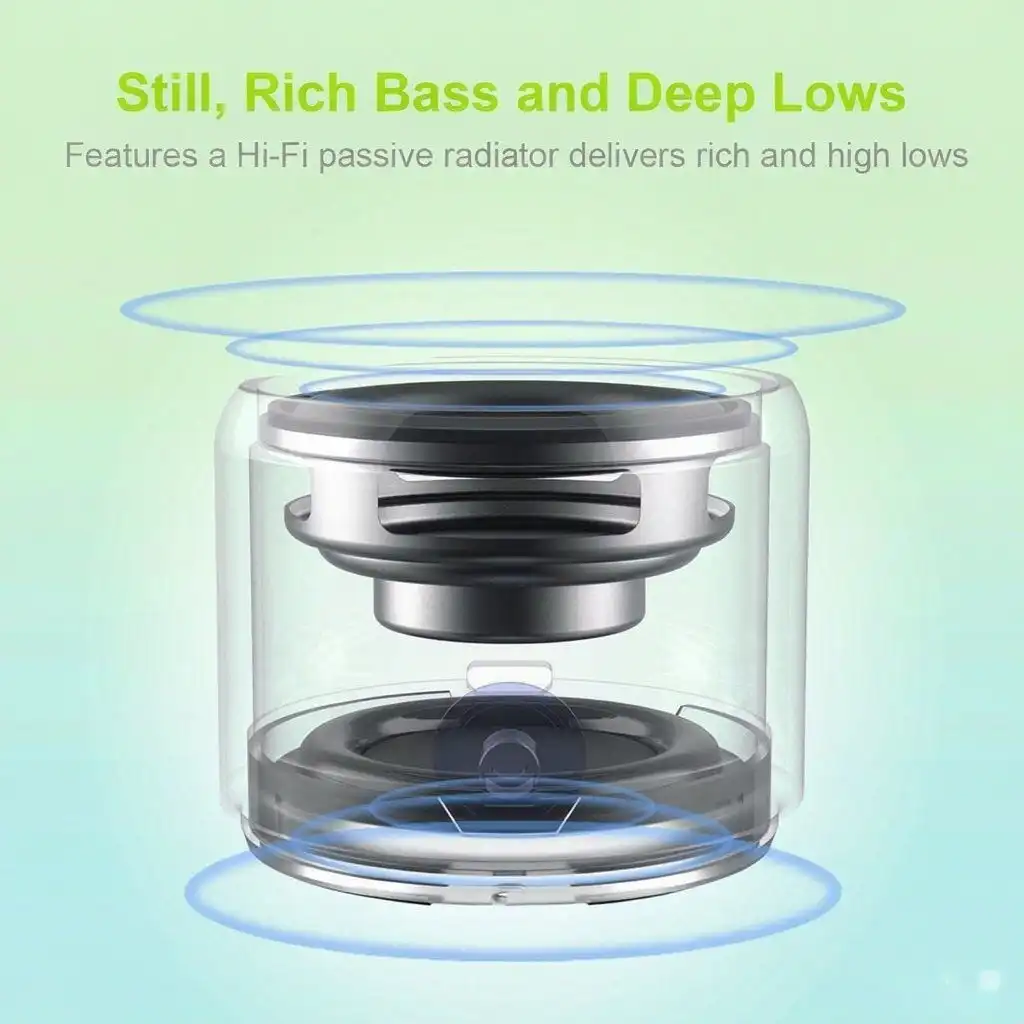
Mid-Range Options Balancing Performance and Value
The Soundcore line from Anker has become popular among purchasing managers who want guaranteed quality at a price they can afford. These outdoor sound system Bluetooth speakers are waterproof up to a certain level and have useful features like built-in power banks for charging connected devices, which is a small but useful touch that makes the experience better at events. Businesses that are in charge of multiple rollout sites can rely on their guarantee terms and quick customer service.
Ultimate Ears specializes in cylinder-shaped designs that spread sound evenly around the room in all directions, removing the problem of specific hotspots that come with traditional speaker placement. This all-directional method makes planning placement easier in outdoor areas with odd shapes, making sure even coverage without having to do complicated calculations. Their drop-protection scores take into account the fact that equipment can't always be handled gently in busy business settings.
Strategic Considerations for B2B Procurement
Milliampere-hour ratings alone don't tell you as much about a battery's real operational capacity as watt-hour ratings do. A 50Wh battery in a system that is well built will work better than a 10,000mAh battery that doesn't handle power well. Instead of relying on marketing-optimized claims of the longest runtime, procurement teams should ask for detailed discharge curves under real-world load conditions.
Different makers offer very different warranty arrangements. High-end brands usually come with three-year warranties and advance replacement plans that keep you from having to wait too long for a new one. On the other hand, cheaper brands might need to be sent back for fixes. When figuring out the total cost of ownership, these differences in service levels must be taken into account. This is especially important for businesses that run more than one venue and where equipment failures cause immediate problems with operations.
How to Choose the Right Outdoor Bluetooth Stereo System for Your Business
When choosing wireless outdoor audio equipment strategically, it's important to make sure that the technical specs match up with how the equipment will be used. This can be done by carefully looking at key performance metrics and deployment scenarios.
Assessing Usage Scenarios and Environmental Demands
The size of the space directly affects the sound pressure levels and rhythms that need to be used. A rooftop bar that's 50 feet by 30 feet needs different soundproofing than a vacation pool deck that's several thousand square feet. Finding the cubic volume of covering areas can help you decide whether a single high-output unit or a spread multi-speaker array will work better for your needs.
The number of events affects how long the battery will last. If you use the equipment every day, it will hit its maximum charge cycles in two years. If you only use it on the weekends, it will take a lot longer. Since heat speeds up the breakdown of lithium-ion batteries, installations in deserts or direct sunlight may need to be replaced more often than installations in temperate shade.
Evaluating Technical Specifications That Matter
Ratings for waterproofing show specific levels of protection instead of general resistance. IPX7 approval means that the product can withstand being submerged up to one meter for 30 minutes. This is enough for splashes by the pool, but not for fixed dock installations that are exposed to wave action. The IP68 rating allows submersion up to a certain depth, set by the manufacturer. This gives the security needed for marine applications or places that are prone to flooding during certain times of the year.
Wireless support goes beyond just being able to connect via Bluetooth. Multi-device pairing makes it easy to switch between staff laptops and guest smartphones without having to re-pair each one individually. This gives operations more freedom during events. Codec support changes latency and audio quality. For example, aptX Low Latency cuts down on sync delays for video presentations, and AAC optimization makes sure that iOS devices commonly used in business settings work better.
Balancing Cost and Quality Through Supplier Partnerships
By negotiating for bulk purchases, you can get big price cuts and make sure that the same product specs are used in all of your sites. When a customer commits to buying 100 units or more, they often get better discount prices that help wholesalers make more money or help end users save money on capital costs. By working with makers who can do custom branding, you can turn generic outdoor sound system Bluetooth speakers into unique assets that help your brand stand out.
The quality of after-sales support is directly linked to the reputation of the supplier. Established makers keep extra parts on hand and train service staff, which makes it easy to fix technical problems quickly. Newer companies may have lower prices at first, but they might not have the right infrastructure to meet their long-term operational needs. This can lead to hidden costs like longer downtime and more difficult warranty claims processes.
Setting Up and Maintaining Your Outdoor Bluetooth Sound System
The best way to make sure that equipment works for a long time and consistently performs well is to follow the right installation and upkeep procedures.
Installation Best Practices for Optimal Performance
Device pairing is simple yet vendor-specific. Source devices find the speaker by long-pressing pairing buttons. Selecting the Bluetooth speaker completes the connection. When used again, most outdoor sound system Bluetooth speakers reconnect to devices. Professional installers simplify on-site tool setup.
Speaker location impacts outside sound. Keep devices at ear level to prevent ground reflections that muffle sound. To reduce bass and boomy, hard-to-distinguish low frequencies, remove speakers from walls and hard surfaces. Multiple speakers spread throughout coverage areas decrease dead zones and noise.
Device-specific battery-saving auto-shutoff is needed. A 10-minute shutdown is great for home use but annoying for business since it automatically stops audio programming. These settings may be disabled or extended to avoid event-related consumer dissatisfaction.
Maintenance Protocols That Extend Service Life
Salt, chlorine, and organic residue fracture seals and destroy ports. Clean regularly. Soft soap and brushes can clean speaker grilles and housings without damaging their coatings. Avoid high-pressure water jets in IP-rated shelters to prevent moisture from penetrating sealed connections.
How frequently you charge and discharge your battery affects its health. Extended 40–60% charge storage improves lithium-ion battery performance. Monthly charging prevents deep discharge capacity loss. Heat accelerates deterioration. During instrument downtime, cell chemistry is stored under climate-controlled conditions.
By fixing bugs, mobile app firmware upgrades boost performance and stability. System updates are verified every three months for manufacturer upgrades. Updates with multi-speaker synchronization or codec support provide functionality without buying new hardware.
Where and How to Purchase Outdoor Bluetooth Stereo Systems: Procurement Insights
Strategic sourcing choices weigh the value of quickly getting a product against the value of a long-term relationship. Different procurement channels offer different benefits that are best for different business needs.
Evaluating Supplier Options and Purchase Channels
Large product catalogs, precise specifications, and user reviews help customers pick on B2B online platforms. Commercial audio equipment platforms reduce buying risks with verified supplier ratings and transaction safety. Digital sourcing simplifies vendor price comparison, but project schedules must incorporate delivery and import dates.
Direct manufacturer relationships benefit companies with uncommon or regular equipment demands. OEMs may obtain a customized brand image and technology from Kingwe-star. With CE, RoHS, FCC, and BSCI audits and 16 years of exporting experience, established manufacturers fulfill worldwide market requirements.
Local companies allow you to trial products and save on shipping if you need a fast repair or initial buy. Regional service centers speed tool returns and warranties. However, unit prices may be greater than direct imports. Low inventory costs and small-quantity purchases may help.
Negotiating Terms That Optimize Total Cost of Ownership
Outdoor Bluetooth speakers come with warranties and advance replacement plans. Commercial applications utilizing this method have reduced downtime. Typical guarantees are one year. Their 3-year warranty and lifetime maintenance support demonstrate their confidence in the product's longevity and provide peace of mind.
Buy in bulk to maintain product standards across runs and locations at reduced prices. Multi-venue chains acquire 500–2,000. Wholesale pricing enhances project profits. To prevent running out of stock while testing equipment, enterprises may test the market with smaller initial orders under flexible MOQ constraints.
An SLA includes warranty and technical support response times. These critical criteria are commonly overlooked in initial procurement assessments. Service with 24-hour technical assistance and seven-day shipping guarantees is better than cheaper ones.
Conclusion
Technical performance, everyday demands, and long-term cost must be considered while selecting outdoor wireless audio systems. Outdoor sound system Bluetooth speakers with rugged design, extended battery life, and better wireless connectivity operate well in tough environments. Market options range from well-known brands to emerging organizations that can tailor solutions to corporate requirements. Strategic agreements with recognized suppliers provide items that comply with regulations, solid warranties, and fast technical assistance. By examining use situations, environmental needs, and total cost of ownership, businesses may employ audio solutions to enhance customer experiences while staying on budget and meeting operational deadlines.
FAQ
1. How do outdoor Bluetooth speakers maintain sound quality in open spaces?
These systems use special sound engineering, like high-excursion drivers and passive radiators, to make up for the loss of low frequencies that happens in open spaces that don't reflect sound. Digital Signal Processing uses special EQ profiles that are tuned for how sound travels through open air. These profiles boost low-mid frequencies that naturally get weaker outside. This technical approach keeps the balance of tones and clarity even when listening from far away, where regular indoor speakers would sound thin and lack bass.
2. What battery performance should businesses expect during extended events?
Professional-grade Bluetooth speakers for outdoor sound systems can usually play music nonstop for 15 to 30 hours at 50% volume, which is enough for all-day events without having to be charged in the middle of the event. The actual length depends on the noise settings, the codec chosen, and the temperature in the room. Units with 50-watt-hour or more battery capacities can reliably run for the whole shift. However, backup units or charging plans should be planned for setups that last more than one day or for high-volume tasks that use a lot of power.
3. What distinguishes splash-proof from fully water-resistant models?
IPX5 grades mean that the product is safe from water jets coming from any direction. It's good enough for rain, but not for submersion. IPX7 approval means that it can withstand being submerged up to one meter for 30 minutes, making it ideal for installations by pools. IP68 ratings offer protection from sustained submersion below one meter, which is needed for marine applications or places that could flood. Instead of thinking that all outdoor speakers can handle the same amounts of water exposure, businesses should match the level of protection to the unique environmental risks.
Partner with a Trusted Outdoor Sound System Bluetooth Speakers Supplier
Kingwe-star has been making products for over 16 years and can help companies that need reliable wireless audio options for tough outdoor uses. Our 10,000+ square meter ISO 9001-certified building includes design, research and development, and production areas. It is staffed by 40 engineers and 30 skilled designers. We keep a lot of certificates, such as CE, RoHS 2.0, FCC, and BSCI, with tests confirmed by SGS, TUV, and Intertek. This ensures that outdoor sound system Bluetooth speakers going to North America and Europe are compliant with global market standards.
Our OEM and ODM services can handle orders of any size, from 500-piece test runs to large-scale production. We can send samples in as little as three days, and our low MOQ rules lower the risk of running out of stock. Each client gets their own account manager who keeps them up to date on output in real time and offers a guarantee that covers the equipment for three years and maintenance support for life. Whether you need custom branding, specialized acoustic tuning, or ruggedized designs for specific environmental conditions, our technical team turns your needs into products that are ready to go to market. They are backed by 30+ patents and have exported to over 100 countries before.
Email our team at luna@bllgift.com to talk about your unique outdoor audio needs and find out how our production skills can help your brand grow.
References
1. "Acoustic Performance Standards for Outdoor Audio Systems in Commercial Applications," Journal of Audio Engineering Society, 2023.
2. "Ingress Protection Testing Protocols for Consumer Electronics: IP Rating Verification Methods," International Electrotechnical Commission Technical Report, 2022.
3. "Bluetooth 5.3 Protocol Enhancements: Impact on Wireless Audio Quality and Range," IEEE Communications Standards Magazine, 2024.
4. "Lithium-Ion Battery Management for Extended-Runtime Portable Audio Equipment," Battery Technology Review, 2023.
5. "Environmental Durability Testing for Outdoor Electronic Devices: UV Aging and Salt Spray Methodologies," ASTM International Standards Handbook, 2023.
6. "Sound Pressure Level Requirements for Commercial Hospitality Venues: Regulatory Compliance and Customer Experience Optimization," Hospitality Technology Management Journal, 2024.
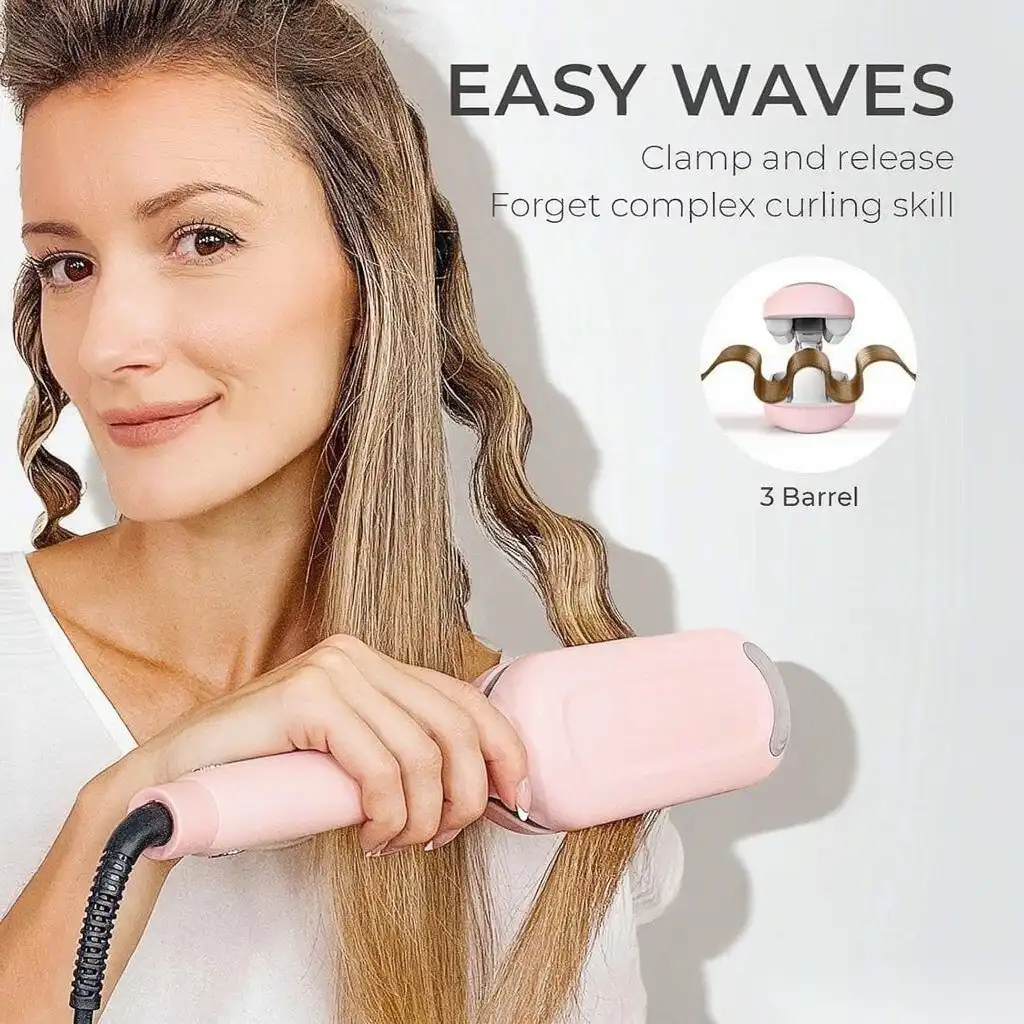
Creating beach waves with a thermal styling tool involves wrapping hair sections around a heated barrel at alternating angles, leaving ends untouched for a relaxed finish. The curling iron applies controlled heat—typically between 150°C and 210°C—to temporarily reshape hair's hydrogen bonds. Modern devices equipped with MCH ceramic heating elements ensure even temperature distribution, preventing damage while delivering those coveted tousled waves that mimic sun-kissed texture straight from the shore.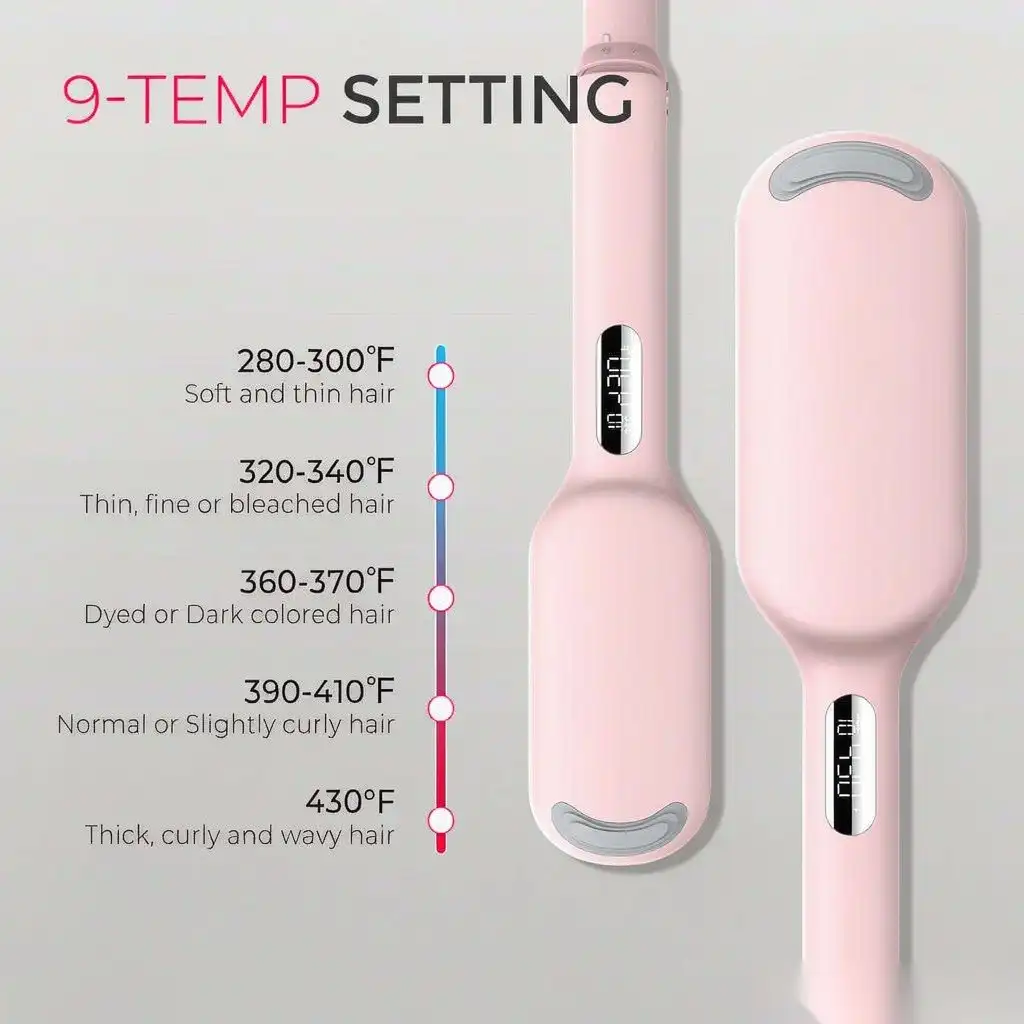
Beach Waves and Curling Iron Basics
The beach wave hairdo is one of the most popular ones, both in studios and at home. This natural, smooth look is popular with a wide range of people, which makes it a popular feature for beauty tool brands that want to sell to both regular people and professionals. Being famous comes from the fact that beach waves look good with both relaxed and dressy clothes.
The Science Behind Heat Styling
Disulfide links in the hair cortex are broken and then made again when thermal styling is done. When heated barrels touch wet or dry hair, they change the shape of the hair for a short time. To keep skin damage to a minimum, quality devices keep temperatures fixed, which is an important thing to look at when buying tools in bulk. Advanced MCH ceramic heating technology quickly recovers heat and spreads it evenly, so there are fewer hot spots that can break things.
Barrel Types and Their Impact
Different types of curling iron materials have different effects. Tourmaline-infused ceramic barrels give off negative ions that seal in moisture and reduce frizz, which is great for fine hair or hair that has been chemically treated. Titanium options heat up faster and can handle heavy use in salons, so they can be used in places with a lot of hairstyling. The 31mm barrel diameter is just the right size for medium to long hair lengths, giving you a choice between loose waves and defined curls.
Clipless vs. Traditional Designs
Traditional clamp-style tools are easier for beginners to hold and control. Clipless wands, on the other hand, keep hair from creases and let designers change the tightness of the wrap. Professional buying teams like clipless models because they can be styled in a variety of ways. But brands that focus on customers might choose clip models so that they are easier for people to use at home.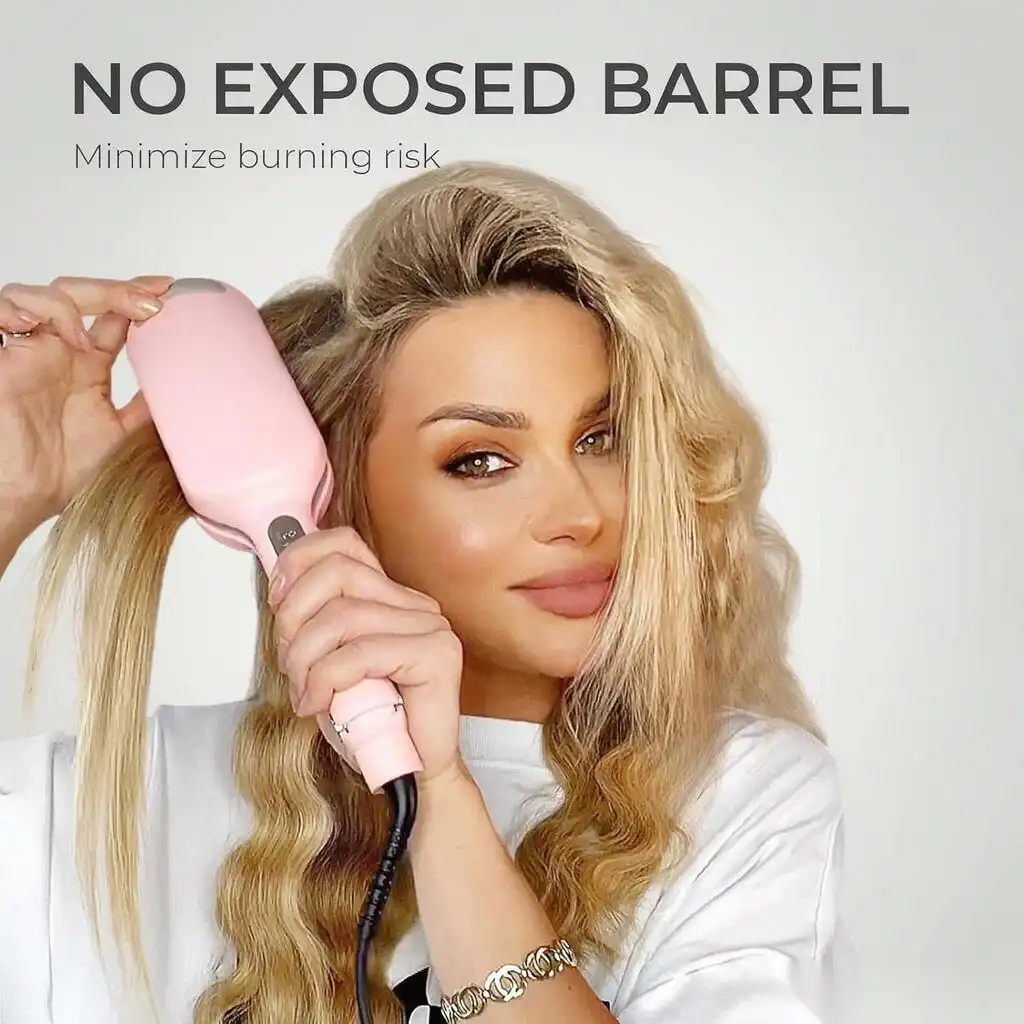
Step-by-Step Tutorial: How to Make Perfect Beach Waves With a Curling Iron
To get waves like those in a spa, you need to carefully plan your steps and practice. The steps in this process make it easy to follow along, and the results are always the same, whether you're styling one client or training a whole team.
Preparing Your Hair
Hair that is clean and fully dry takes heat treatment better. Cover each section from roots to tips with a heat protectant spray that has silicone or keratin derivatives in it. These items make a heat screen that keeps strands safe from temperatures above 200°C. Brush it through to make sure the protectant covers all of it and gets rid of knots that could get caught while rolling.
Temperature Selection Guidelines
For best results, hair that is fine or damaged should be heated to 150°C to 170°C. Hair that is coarse or thick may need 180°C to 210°C. Digital temperature control lets you make exact changes in 5–10 degree steps. This is one feature that sets professional-grade equipment apart from basic consumer models. The 60W power output in small wireless designs is enough to keep the temperature stable even when the device is running all the time.
Sectioning Strategy
Split your hair into four sections, two in front and two behind you, and use clips to hold each one in place. Use sections that are about 2 to 3 cm wide. Thinner sections make waves that are more defined, while thicker sections make texture that is less defined and more relaxed. Before going to the hairline, building your confidence in less noticeable areas like the nape of the neck is a good idea.
Wrapping Technique for Natural Waves
Hold the curling iron horizontally and wrap hair around it, but don't wrap the last 2 to 3 cm. This will give it that signature "not done" look. Wrap each section in a different direction, first toward your face and then away, so the waves don't bunch up. Hold the force without pulling for 8 to 10 seconds before letting go. This timing lets enough heat move without exposing the material too much.
Finishing Touches
Let the waves cool all the way down before touching them after curling all the parts. Instead of brushing, run your fingers through it. Brushing can mess up the wave pattern. A light-hold texturizing spray adds shape without making hair stiff, and a shine product makes hair look polished for special events. These finishing touches make clothes last longer, especially in hot places where styles tend to fall flat.
Procurement Considerations for Distributors and OEMs
Finding thermal styling tools to sell in stores requires more than just comparing product specs. Strategic buyers look at manufacturing partners through a number of different views to make sure that the partnership will work well in the long run.
Supplier Evaluation Criteria
The output potential of a curling iron manufacturer has a direct effect on how reliably orders are filled. During busy times, facilities that are bigger than 10,000 square meters and have more than 500 skilled workers can handle changes in volume. Having in-house research and development teams—ideally with 30 or more designers and 40 or more engineers—shortens the time it takes to customize products and get ideas to market-ready products within tight launch windows. Companies with 30 or more technical patents show that they can do more than just contract manufacturing.
Customization Flexibility
For beauty brands that use design to set themselves apart, they need partners who can accept low minimum order amounts while the products are being tested. Suppliers that offer 3-day sample turnaround and batch sizes of less than 1,000 units let you quickly test the market before committing to large production runs. Full-range customization includes adding a logo, designing the packaging, changing the colors, and even changing the barrel diameter to make unique product lines.
Quality Assurance Protocols
Defects are found before they reach end users through multistage inspection methods such as IQC for arriving materials, IPQC during production, FQC for finished goods, and OQC before they are shipped. Audits from SGS, TUV, or Intertek, on the other hand, show that manufacturing methods are in line with international standards. When there are liability concerns about injuries caused by heat or electrical problems, these high-quality gates become very important.
Warranty and After-Sales Support
A guarantee that lasts for three years shows that the maker is confident in the product's durability, which is a strong selling point for stores that want to educate hesitant customers. Lifetime maintenance programs make sure that devices can still be fixed after the guarantee period is over. This builds brand loyalty and cuts down on electronic waste. Dedicated account managers who send video reports on production in real time create openness that makes relationships between buyers and sellers stronger.
Conclusion
Beauty entrepreneurs who want to serve trend-conscious customers can make money by learning how to use thermal styling tools to create beach waves. The method is easy to learn and can be used to achieve a wide range of styles. This makes it an important skill for both pros and amateurs. When brands are building their own labels, choosing the right equipment means finding a balance between technical performance, safety compliance, and cost-effectiveness. As companies keep coming up with new ideas like wireless technology, fast heating systems, and smart temperature control, the global market for high-quality hair styling tools grows. When procurement teams work with experienced sellers, they can get access to a wide range of customization services, strict quality control, and quick support systems that set their products apart in the retail market.
FAQ
What temperature setting works best for beach waves?
The best temperature ranges depend on the type of hair. Hair that is fine or dyed should stay between 150°C and 170°C to keep it from getting damaged. Hair that is thick or coarse, on the other hand, needs to be between 180°C and 210°C to be reshaped properly. Starting with lower temperatures and slowly raising them helps find the lowest level of heat that will last. Modern tools with digital settings let you make exact changes that keep hair healthy even after many stylings.
Do clipless styling wands create better beach waves than traditional clamp models?
Clipless designs don't leave the crease marks that come with clamps, so the waves look more natural. But they need to be manually adjusted for tightness, which may be hard for newbies. For people who aren't very experienced, traditional clamp versions are easier to use. Professional designers like clipless tools because they are more flexible, but consumer-focused goods often have clips to make them easier to use and faster to learn.
Can one device suit all hair types?
Good thermal tools with temperature settings that can be changed and barrel sizes that are right for different hair types. A barrel with a diameter of 31 mm works well for medium to long hair of different thicknesses. With temperature ranges from 150°C to 210°C, devices can handle hair that is fine to thick all in one unit. When you use the right heat settings and section your hair, a well-designed product can work well for all hair types.
Partner with Kingwe-star for Premium Curling Iron Solutions
Kingwe-star is a top company that makes heated hair style tools. They have been in business for 16 years and have advanced OEM and ODM capabilities. Forty dedicated engineers and thirty professional designers work in our facility to turn your brand's ideas into styling tools that are ready for the market. To meet the needs of the global market, all of our products go through quality management that is ISO 9001-certified and is in line with CE, RoHS 2.0, and FCC regulations. We let you choose the size of your order, starting with small test runs. Samples are delivered within three days to help you get to market faster. Our customization services include adding your logo, designing the packaging, and giving you technical information. This is true whether you need lithium battery models that are wireless or corded models with MCH ceramic heating. You can talk to us about your curling iron supplier needs and get a free catalog of our newest thermal styling products by emailing luna@bllgift.com.
References
- Thompson, R. (2021). Professional Hair Styling: Techniques and Tools for Modern Salons. Beauty Industry Press.
- Martinez, L. & Chen, W. (2020). "Thermal Damage Prevention in Heat-Based Hair Styling," Journal of Cosmetic Science, 71(4), 223-238.
- International Organization for Standardization. (2018). ISO 9001:2015 Quality Management Systems – Requirements. Geneva: ISO Publications.
- Davis, K. (2022). The Business of Beauty: Supply Chain Management for Cosmetic Tools. New York: Retail Insights Publishing.
- European Committee for Electrotechnical Standardization. (2019). EN 60335-2-23: Safety of Household Electrical Appliances – Particular Requirements for Hair Care Appliances. Brussels: CENELEC.
- Wang, S. (2023). "Consumer Preferences in Portable Beauty Devices: A Cross-Cultural Analysis," International Journal of Consumer Studies, 47(2), 456-471.
Beginners can use a hair straightener brush easily. Traditional flat irons clamp and compress hair, whereas a straightening comb glides through hair and distributes heat evenly across 3D brush teeth. This design straightens hair 2X better with 50% less heat. The gadget warms up in 20 seconds and has 5 hair-type-specific temperatures. Divide your dry, detangled hair into manageable sections and brush from roots to tips. The result? Salon-quality smoothness without frizz in a fraction of the time.
Understanding Hair Straightener Combs and Brushes
What Makes Hair Straightener Combs Different
The hair straightener brush advances heat styling. These tools don't push hair flat with two hot plates, which may damage and dry it. They feature multi-touch ceramic-coated bristles. Many individuals wish to avoid the artificial "flat-hair" appearance, yet this style evenly distributes heat.
More hair layers are used to straighten hair from several angles using the 3D brush-tooth structure. Straightening hair traditionally is difficult and time-consuming. This strategy solves crucial issues like these. These products combine the advantages of a brush and a straightener for a fast and simple solution that professional hairstylists and ordinary people prefer.
Technical Advantages of Modern Straightening Brushes
Modern versions employ Positive Temperature Coefficient (PTC) heating. This method keeps temperature output constant and returns quickly between sections. Heat damage is commonly caused by temperature variations; thus, precision is crucial. The brushes are composed of heat-resistant PA66 or PET and feature ceramic coatings to reduce scratching. The brush moves across surfaces without becoming stuck or pulled.
Dual-anion producers are currently in great flattening combs. They emit almost 10 million negative ions per cubic centimeter. Negative ions neutralize hair's static charge. This seals cuticle scales and retains natural moisture. The outcome is smoother, shinier, and less flyaway hair. This used to need expert stylists' tools.
Safety Features That Matter
The smart way that modern curling brushes are made makes them safer. The heaters inside get as hot as 230°C, but anti-scald technology keeps the brush tips below 50°C. Auto-off features turn off after 60 minutes of not being used. This keeps things safe and saves power. In tests, the flexible line has been shown to be able to handle more than 10,000 turns. It stops the line from getting tangled and makes sure the device stays safe to use for a long time.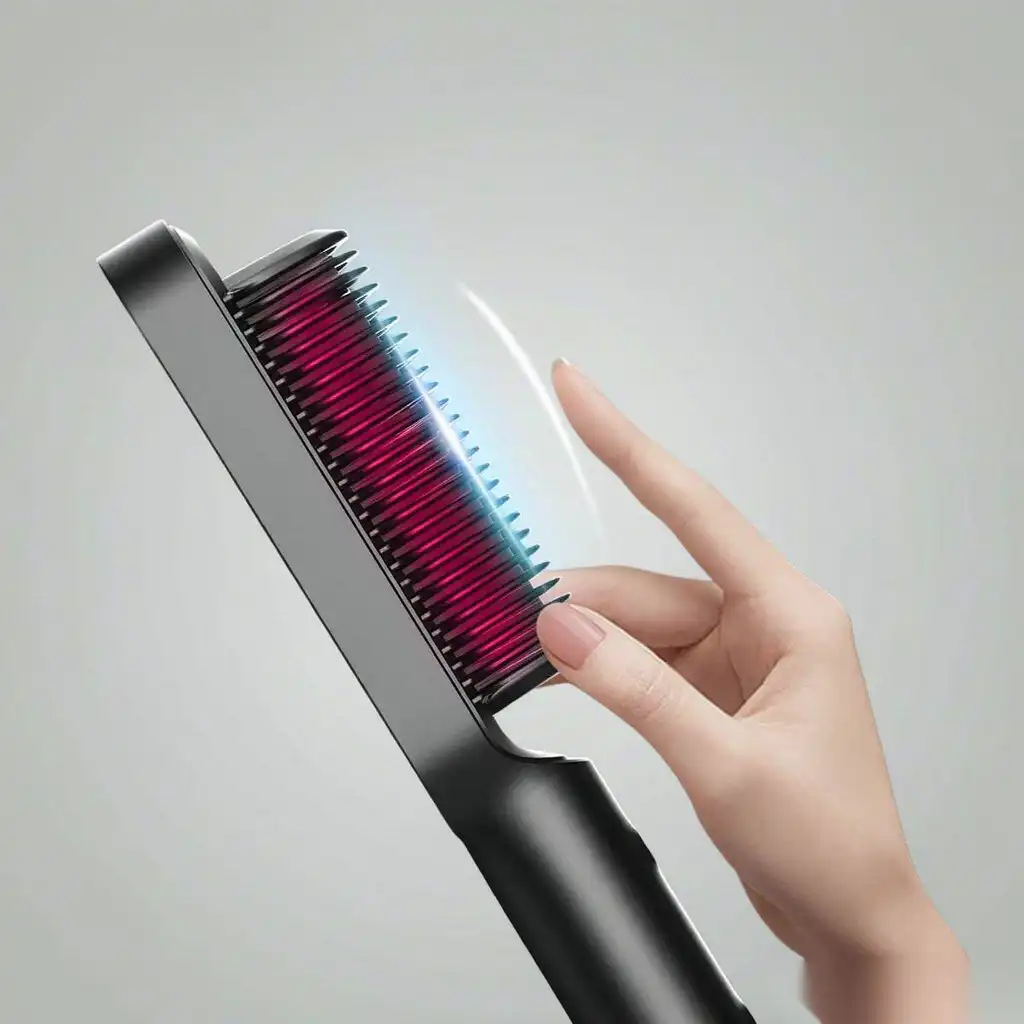
Step-by-Step Guide: How to Use a Hair Straightener Comb for Beginners
Preparing Your Hair Properly
The outcome depends on your planning. Always start with dry hair. A heat styler on damp hair may cause "bubble hair," which damages the hair cortex by rapidly evaporating moisture. You may blow-dry your hair completely or let it dry after washing.
Use a wide-tooth comb to gently separate your hair from ends to roots without breaking it. Apply heat protectant evenly on hair. Pay special attention to the midsection and ends, which are weakest. This barrier separates your strands from the hot devices. This minimizes thermal stress.
Selecting the Right Temperature
The majority of hair straighteners offer five heat settings from 120°C to 230°C. Fine or chemically treated hair requires colder temperatures (120°C to 160°C) to prevent damaged protein connections. The ideal temperature for normal hair is 160°C–190°C. Higher temps (190°C to 230°C) may be needed for thick, tough, or multitextured hair.
Not too hot initially is usually preferable. If necessary, gently increase the temperature. Smoke or steam indicate overheating. Remember that using the proper procedure at acceptable temperatures is preferable to rushing through at maximum heat, which destroys hair structure and makes it frizzy.
Sectioning for Best Results
Cut your hair into manageable pieces with clips. Because smaller pieces are burned more deeply, the results are neater and last longer. I work with pieces that are one to two inches wide most of the time, but if the hair is thick, I might need to cut them down even more.
As you work your way up, make sure that the finished parts don't get in the way of the style. By following this plan, you'll make sure you don't miss any spots and won't have to make multiple passes, which would expose you to more heat than necessary.
Proper Brushing Technique
Your hair should be facing down and toward the ends when you hold the smoothing comb. With a hair straightener brush the area slowly and continuously, starting about an inch from your scalp and never going right up against it. Do not speed up or slow down too much. Moving too slowly can damage things with the heat, and moving too quickly stops heat from moving.
Just keep the force the same and don't pull or tug. It should be easy for the tool to go through your hair. If you get stuck, stop and untangle that part by hand before moving on. For most people, two to three passes are enough for each part. However, spots that won't go away may need it.
Post-Styling Care and Maintenance
After you dry your hair, let it cool down all the way before you touch it or style it any more. This is the best time for the hair layer to seal, which will keep your straight style in place. Put some finishing product or light oil on your hair to make it shine and protect it from the rain.
The heat will last longer and the brush will stay clean if you clean it every 5 to 10 times. Use a slightly wet cloth to wipe the brush clean after taking the device off and letting it cool. This will get rid of any product buildup. Do not submerge the device in water or clean it with strong chemicals, as these can hurt the heating elements and electrical parts.
Comparing Hair Straightener Comb with Other Hair Styling Tools
Speed and Efficiency Analysis
One big reason why straightening brushes are better than older methods is that they save time. To use a flat iron properly, you need to make sure the plates are lined up just right and work on one part at a time. This can take between 30 and 45 minutes for hair that is about shoulder-length. The hair straightener brush cuts this time in half. In 15 to 20 minutes, most people can style their hair all the way through.
Greater surface area lets you touch more hair at once, which speeds up the process. Little pieces of hair that are stuck between plates are what flat irons work on. On the other hand, straightening combs work on a lot more hair at once, which speeds up the process without poor quality.
Hair Health Considerations
Flat irons heat and press hard on small pieces of hair at the same time. This gives the hair stress points that make it weaker over time. It can break and split the hair shaft if you use it over and over again. The heat from straightening brushes is spread out over a larger area more evenly, which makes the stress from the heat lessen.
Good straightening combs usually have coatings made of ceramic or tourmaline. These give off infrared heat that heats hair faster than heat from metal plates. Users say that this hot iron straightens hair from the inside out while keeping just the right amount of moisture. This is why they say it damages hair 50% less than regular flat irons.
Versatility Across Hair Types
Different hair types respond to styling tools in different ways. Straighteners can make fine hair too flat and limp, taking away all of its natural volume. When you brush your hair with a straightening comb, it leaves some lift at the roots and smooths out the lengths and ends, making your hair look more natural and full.
The many touch points on brush bristles help with thick, curly hair because they grab and move even the most stubborn strands. When you use a brush to straighten curly hair, the teeth separate and isolate each curl, putting them directly in contact with the heat elements instead of just smoothing the top film.
Corded vs. Cordless Models
You can use a corded straightening brush for as long as you want because it has a steady power output. This makes them great for hair shops and people whose hair is longer and thicker and needs more time to style it. It's less movable, though, and the cord could get caught up while you use it.
These are great for traveling and for quick touch-ups during the day because they don't have cords. Most types that run on batteries can be used for 30 to 40 minutes before they need to be charged again. When the batteries run out, though, they may lose power, and the highest temperature they can reach is generally lower. This makes them less useful for thick or tough hair.
How to Choose the Best Hair Straightener Comb for Your Business Needs
Essential Procurement Criteria
It depends on a number of things how well the product sells and how satisfied the buyers are when they find hair smoothing tools for sale or for professional use. The range and accuracy of the temperature are very important. The temperatures on the devices should be able to be changed from at least 150°C to 230°C, and the screens should show the exact temperatures. With this much accuracy, users can change the heat levels to meet their hair's needs. This makes the results better and lowers the risk of damage.
The person feels different after the heat-up time. High-end models heat up in 20 to 30 seconds, which meets the needs of customers who want to look good quickly and easily. When users have to wait longer for a product to warm up, it makes them angry and makes them think less of it, which hurts brand loyalty and repeat purchases.
Material Quality and Durability
How well they work and how long they last depend on what the hair straightener brushes are made of. Some good ones have ceramic or tourmaline coatings on PA66 or PET brushes that make them heat-resistant. The layer on these materials doesn't come off or bend when heated and cooled many times, which makes it harder for heat to spread and increases friction. A lot of cheap models are made of plastics that don't last long and break, which makes customers angry and causes them to send them back.
The heater itself should use either PTC or MCH (Metal Ceramic Heater) technology. These PTC gadgets work well in hot places and last a long time. On the other hand, MCH heaters heat up faster and are easier to handle. Both of these are safer and work more consistently than regular heating elements that use wires.
Certification and Compliance Requirements
When a business buys something from another business, international approvals show that the product is safe and of good quality. When you see the CE mark on something, it means that it meets European rules for safety, health, and the environment. EMC interoperability is proven for the U.S. market by FCC approval. RoHS 2.0 compliance checks that chemicals that can't be used meet rules around the world.
The product has been checked by a third party to make sure it is safe. Certifications like UL, ETL, and Intertek provide proof of this. Not only are these certificates required by law, but they also show people that you care about quality and protect your business from lawsuits. If a product doesn't have the right licenses, it could be taken back by customs, taken off the market, or get you in trouble with the law.
Evaluating Supplier Partnerships
Honest folks go beyond inexpensive. Find OEM/ODM businesses. Trademark and package yourself. Build your brand in high-volume places.
Sample delivery speed indicates seller activity. Big corporations may give samples in 3–5 days for market analysis and product success. Minimum payments are important. Small-batch supplier customization minimizes inventory for low-risk product releases and holiday testing.
Manufacturing and quality management show organizational maturity. ISO 9001-compliant companies with documented inspection techniques (IQC, IPQC, FQC, OQC) ensure production quality. Outsourced vital activities have less quality control than companies that analyze raw materials and use automated manufacturing lines.
Warranty and After-Sales Support
Full-guarantee brands value and safeguard your investment. Premium vendors give 3-year guarantees on manufacturing errors, damaged parts, and lifelong maintenance. Electrical and heating systems are stressed when working; therefore, this assistance is beneficial.
One-on-one account management makes it easier to discuss order details, production reports, and delivery difficulties with customer support. Faster shipment and real-time production photos prove that they care about transparency and client satisfaction. Business ties improve and processes function smoothly.
Conclusion
You must understand how a hair straightener brush works to master it. These products are suitable for professionals due to their 3D brush teeth and PTC heating systems that decrease brushing time in half and prevent hair from heat damage. Clean hair, the appropriate temperature, strategic sectioning, and smooth brushing are the best ways to straighten hair.
If a company wants to enter or develop in thermal styling, it must go beyond product appearance. They must consider supplier abilities, material quality, and warranty support. As technology advances and consumers understand more about hair health, firms with superior straightening brushes and dependable manufacturing agreements may succeed.
FAQ
1. Can the Hair Straightener Brush Be Used on Wet Hair?
If the brush wasn't made to work with wet hair, you should only use it on hair that is fully dry. When you put high heat on wet hair, the water inside it quickly evaporates. This leads to "bubble hair," a bad disease in which tiny holes appear in the hair cortex. Damage like this can't be fixed, and it makes the material weak and easy to break. Always make sure your hair is completely dry before you use heat on it.
2. How Often Should I Clean My Straightening Comb?
To keep it running well, clean your straightening brush every 5 to 10 times you use it. When product builds up on the brushes, they don't work as well at transferring heat, and there are more hygiene issues. Once the brush is cool and unplugged, wipe the bristles clean with a slightly wet cloth to get rid of any styling products, natural oils, or other gunk that has built up. The device will last longer, and the heat will be spread out evenly while it's being used if you clean it often.
3. Is It Safe for Chemically Treated Hair?
You can style chemically treated or colored hair without hurting it if you use a straightening comb the right way. To protect protein links that have been broken, hair that has been damaged needs cooler temperatures, ideally between 120°C and 160°C. Now, you have to use precise temperature control to get it right. Before styling, use products that protect hair from heat, and don't do it more than twice or three times a week. To keep your hair healthy, give it time to heal between treatments.
Partner with Kingwe-star for Premium Hair Straightener Brush Solutions
Since 2001, Kingwe-star has been making unique beauty tools for over 16 years. They have worked with suppliers, shops, and private buyers from more than 100 countries. Our facility is 10,000 square meters and is where design, research and development, and production all happen. We are a well-known company that makes hair straightener brushes. Our 30 skilled designers can do both OEM and ODM work, and in just three days, they can turn your brand's ideas into products that are ready to sell.
The ISO 9001 certification helps us keep a close eye on quality. We also have a number of foreign safety certificates, such as CE, RoHS 2.0, FCC, and UL testing by SGS, TUV, and Intertek. These hair straighteners have advanced 3D brush teeth that heat with PTC technology. They also have 5 temperature settings that can be changed and heat up in 20 seconds. These features are made to meet the needs of users in both stores and salons. You can talk to our team about your needs and look into bulk pricing by emailing luna@bllgift.com. Over 500 clients from around the world trust our production relationship for quality and reliability.
References
1. Thompson, M. & Richards, K. (2023). Thermal Hair Styling: Science, Safety, and Consumer Trends. International Journal of Cosmetic Science, 45(2), 178-194.
2. Chen, L. (2024). Advanced Heating Technologies in Personal Care Appliances. Materials Science and Engineering Review, 12(1), 45-67.
3. Global Beauty Tools Market Research Institute. (2024). Hair Straightening Devices: Comparative Performance Analysis 2024. New York: GBMRI Publications.
4. Patterson, S. & Delgado, R. (2023). Minimizing Heat Damage: Best Practices in Thermal Hair Care. Professional Beauty Magazine, 38(4), 112-128.
5. International Organization for Standardization. (2023). Quality Management Systems for Beauty Device Manufacturing: Guidelines and Best Practices. Geneva: ISO Press.
6. Williams, J., Foster, A., & Kumar, P. (2024). Consumer Preferences in Hair Styling Tools: A Cross-Cultural Study. Journal of Consumer Behavior Research, 19(3), 201-223.
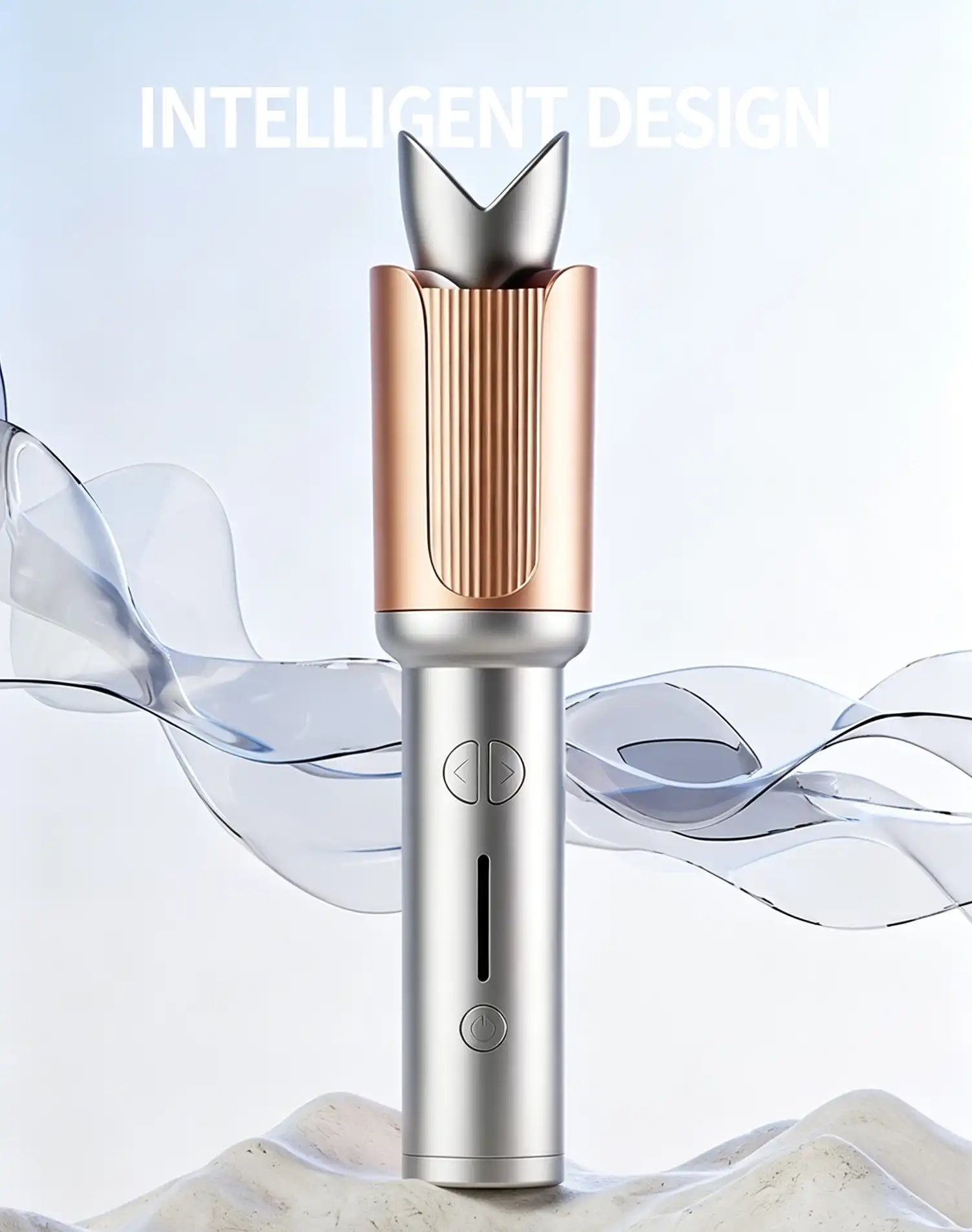
When you're sourcing styling tools for your beauty brand or evaluating inventory for retail distribution, one of the first questions that comes up is: how long is a curling iron? The answer isn't as straightforward as you might think. Most standard curling irons measure between 10 to 14 inches in total length, including the handle and barrel combined. The barrel itself—the heated section that actually curls the hair—typically ranges from 3 to 6 inches, though specialized models can extend beyond this. The overall product size depends heavily on the design, power source, and intended use. Understanding these dimensions is critical, especially when you're planning packaging, optimizing storage, or targeting specific customer segments who value portability or professional-grade performance.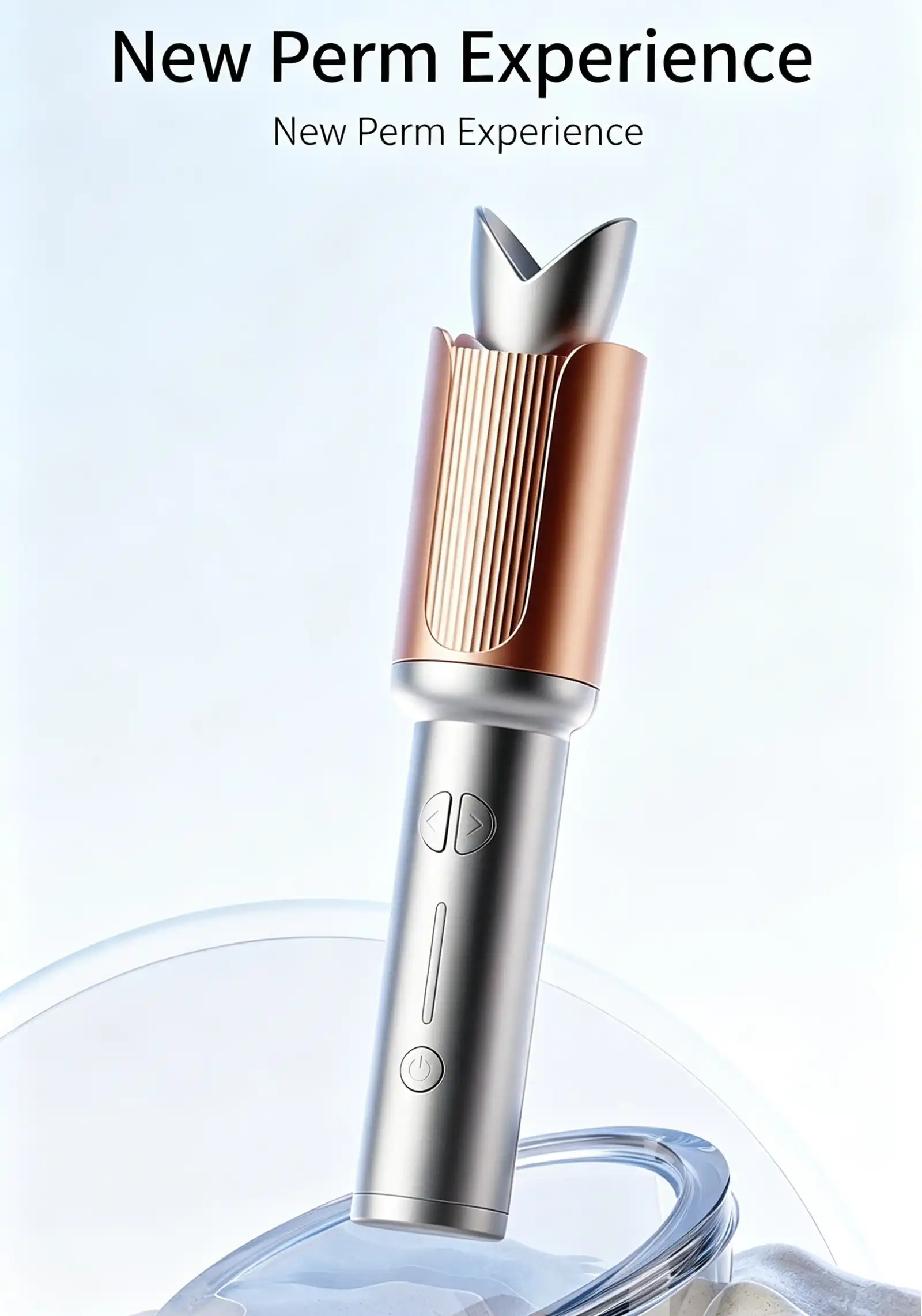
Curling Iron Dimensions and Their Impact
There is more to a curling iron's actual measurements than just a number. They include the length of the barrel, the length of the whole product, the ergonomics of the handle, and even the diameter of the thermal conductor. All of these things affect how well the device works, how it feels in your hand, and how it fits into your supply chain.
Barrel Length and Its Role in Styling
Barrel length has a direct effect on how many ways you can style it. When you want to make tight curls or style short hair, shorter barrels (about 3 to 4 inches) work best. People with bob or pixie cuts like them because they give them accuracy and control. For medium to long hair, 5 to 6 inch barrels work best because they let people wrap bigger pieces of hair and get waves that are looser and fuller. The 31mm diameter heat conductor in current devices like the one we make at Kingwe-star creates waves and curls that look natural, which makes them appealing to a wide range of people.
Overall Product Length and Packaging Considerations
The total length of the object affects how it is packed and how quickly it ships. A gadget that is 28.5 cm long, like our wireless and wired hybrid model, can fit easily in most beauty tool boxes and travel cases. This dimension is especially important for brands that want to sell to the travel and hospitality industries, which need small but powerful tools. Managers in charge of buying things should think about how the size of a product affects not only the cost of packing but also the management of the warehouse and the planning of FBA inventory.
Handle Design and User Ergonomics
The handle part is usually 4 to 6 inches long and is made of heat-resistant materials like ABS, PPT, and high-temperature nylon. These materials make sure that the tool is safe to use for long periods of time and lower the risk of user fatigue, which is very important for professional stylists who may use it all day. The ergonomic design also affects the number of returns and how happy the customers are, so it is very important to think about it when you are sourcing.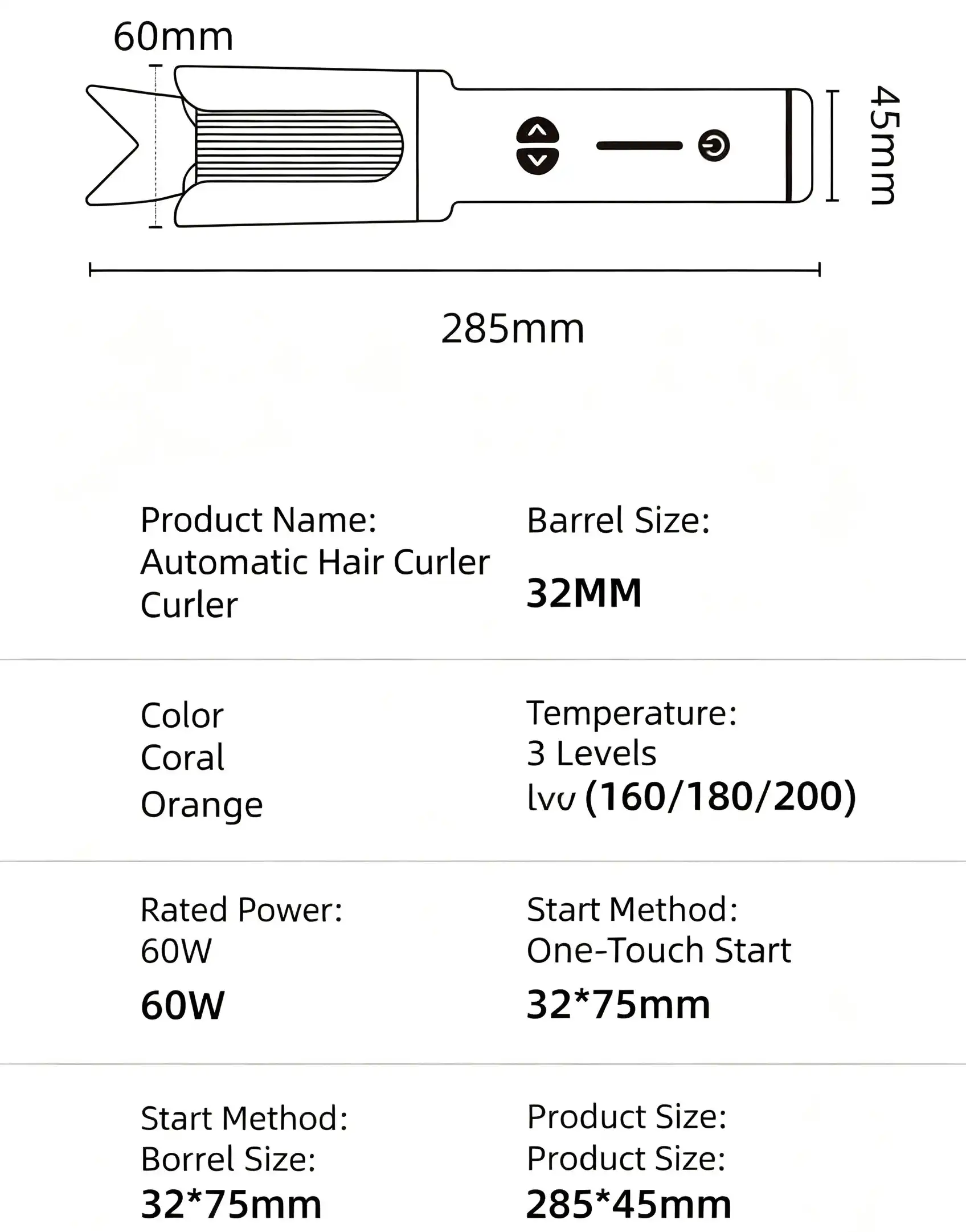
Curling Iron Types and Their Length Profiles
There are different kinds of curling irons. No matter what kind of tool you pick—a standard clamp iron, a stick, or a flexible crimper waver—it has its own set of dimensions.
Traditional Clamp Irons vs. Wands
The total length of most traditional clamp irons is 11 to 13 inches. The clamp system makes the tool bigger, but it's easy for beginners to use. Wands, on the other hand, don't have a clamp, so they look better and are usually a little shorter overall. Wands are best for experienced curlers who want more control over the direction and tightness of the curls. The diameter of the barrels on both types can be anywhere from 0.5 to 2 inches. The 31mm (about 1.2 inches) barrel is a good middle ground.
Cordless and Portable Models
Lithium-ion battery-powered cordless curling irons are becoming more and more popular, especially among travelers and professionals who are always on the go. Most of the time, these models are between 9 and 11 inches so they are portable without sacrificing performance. Our 60W cordless model, which is 28.5 cm long, gives you the freedom of wireless operation while still giving you salon-quality results thanks to its MCH ceramic heating elements. The wireless design gets rid of the need for a 360-degree swivel cord, which cuts down on the overall length and the chance of getting tangled up while using or storing it.
Multifunctional Tools: Crimpers and Wavers
Because they have replaceable plates or hybrid barrel geometries, multifunctional style tools that can curl, crimp, and wave hair tend to be a little longer. These things can be up to 14 inches long or even longer, depending on how complicated the pattern is. The extra length makes room for the mechanical parts needed for versatility. This makes them perfect for salons with room for professional-grade equipment.
Key Factors Influencing Optimal Curling Iron Length
When picking the right curling iron length, it's not just about the iron's size—it's also about how well it works, what the user wants, and what the market is doing.
Hair Type and Texture Compatibility
Some barrel lengths and sizes work better on certain types of hair. Shorter barrels and smaller sizes are better for fine hair because they keep it from being exposed to too much heat and make curls that last longer and are tighter. On the other hand, longer barrels and bigger diameters are needed for thick or coarse hair to fit larger parts and make sure heat is spread evenly. The 31mm barrel width works best on medium to thick hair because it has enough surface area to make curls that are smooth and defined without damaging the hair with heat.
Heat Settings and Safety Mechanisms
When the barrels are longer, it can be harder to keep the heat even across the whole area. This is why it's important to use advanced heating methods, like the MCH ceramic heating element we use in our products. With MCH technology, you can quickly recover heat and precisely control the temperature. In less than 60 seconds, it can reach up to 230°C. For there to be no hot spots or uneven style, the length of the barrel needs to work with the heating system. Also, safety features like cool tips and automatic shut-off are more important for longer devices because they make accidental burns more likely.
Portability vs. Performance Trade-offs
There is a trade-off between speed and flexibility. It's easier to pack and carry shorter devices, but they might not have the barrel length that long hair needs. Longer devices look better, but they can be hard to carry around when you travel. Our dual-mode power supply—wireless with a lithium battery or wired—solves this problem by giving you options without lowering performance. The people who work in procurement should look at this balance based on the lifestyle and usage habits of their ideal customers.
How to Choose the Right Curling Iron Length: A Procurement Perspective
To buy the right curling iron, you need to do more than just measure the length of your hair. It needs a full analysis of technical requirements, supplier skills, and market placing.
Evaluating Technical Specifications
When looking at a curling iron, you should look at its size (28.5 x 6 x 4.5 cm in our case), its barrel diameter (31 mm), its power output (60W), and its heating method (MCH ceramic). These requirements must match the style needs of the people who will be using them. The 60W power output is enough for quick heating and consistent performance, and the 31mm diameter makes it suitable for a wide range of hair types and styles. The mix of ABS, PPT, and high-temperature-resistant nylon makes the product safe and long-lasting, which lowers the chance of returns or bad reviews.
Supplier Reputation and Certifications
It is important to work with a company that has foreign certifications like CE, RoHS 2.0, FCC, and ISO 9001. These certifications make sure that the product meets safety and quality standards around the world. This lowers the risk of not following the rules when going into new markets. For more than 16 years, Kingwe-star has been in the gift and beauty tool business and has sent goods to more than 100 countries. Our factory is over 10,000 square meters and has more than 500 skilled workers. This makes sure that the quality is always high and that the products are delivered on time.
Customization and Branding Opportunities
One big benefit for beauty brands that want to stand out is that they can change the sizes, colors, and branding of their products. Our 30-person design team can do all of your 2D and 3D design and sample development in one place. Samples can be sent to you in as little as three days. We can do both large-scale production and small-batch customization, and our minimum order quantities are flexible enough to work for both new names and known distributors. You can create a consistent brand experience from the product itself to the moment you open the box thanks to a wide range of customization choices, such as imprinting your logo and making your own wrapping.
Cost-Effectiveness and After-Sales Support
The key is to find a balance between cost and quality. Some curling irons may cost more per unit because they are longer or have more features, but the money spent usually pays off because customers are happier and don't return them as often. Our maintenance service and 3-year warranty give you peace of mind, protecting your investment and keeping your customers coming back. Real-time video updates on the progress of the production and options for faster delivery make our value proposition even stronger.
Beauty brands and distributors have a lot of problems that need to be solved, and Kingwe-star can help with those problems.
- Rapid Prototyping: Sample delivery within 3 days allows you to test market trends quickly and capitalize on short trend windows, especially important for TikTok-driven product launches.
- Flexible MOQ: Whether you're placing a trial order of 500 units or scaling to 10,000 units, our production lines adapt to your needs without sacrificing quality or lead times.
- Comprehensive Certifications: CE, RoHS 2.0, FCC, EN 71 series, CPSIA, BSCI, Sedex, and Oeko-Tex Standard 100 certifications ensure your products meet regulatory requirements across North America, Europe, the Middle East, and Southeast Asia.
- In-House Quality Control: Multi-stage inspection procedures (IQC, IPQC, FQC, OQC) guarantee consistent quality across every batch, reducing the risk of platform delisting due to product defects or safety issues.
These benefits successfully solve common production and compliance issues, letting you focus on branding, marketing, and customer interaction instead of thinking about quality issues or delays in the supply chain.
Conclusion
It's important for any beauty brand or wholesaler to know how long a curling iron is and what that length means for styling, packing, and customer happiness. Most standard curling irons have barrels that are 3 to 6 inches long and are 10 to 14 inches long overall. Specialized models, like cordless and multifunctional tools, have different length profiles that are made to fit specific markets. When looking for these devices, you should think about more than just their size. You should also think about the technical specs, the name of the provider, their ability to make changes, and their customer service after the sale. We at Kingwe-star have been making curling irons for 16 years and use cutting-edge design and strict quality control to make sure they meet the needs of today's fast-paced beauty market.
FAQ
What is the average length of a professional curling iron?
The total length of a professional curling iron is usually between 11 and 14 inches, and the barrel is usually between 4 and 6 inches. These measurements give you the surface area you need to style medium-length to long hair effectively in a salon.
Does a longer barrel improve styling versatility?
Yes, longer barrels let you wrap bigger chunks of hair, which makes them great for making curls and waves that aren't tight. Shorter barrels, on the other hand, are better for tight curls and are easier to use on shorter hair.
How do curling iron dimensions affect shipping and storage costs?
Small curling irons take up less space in boxes and weigh less when shipped, which lowers the cost of logistics. Standard boxes work well with devices that are about 28.5 cm long, which improves pallet density and lowers FBA storing fees for online sellers.
Partner with Kingwe-star for Your Curling Iron Sourcing Needs
When you work with Kingwe-star, we make beauty tools that are both OEM and ODM and have new designs, dependable performance, and low prices. Our 28.5 cm curling iron has a 31mm thermal conductor, 60W of power, and can be used both wirelessly and wiredly. It is designed to meet the needs of both professional stylists and regular people. With more than 500 skilled workers, including 40 engineers and 30 designers, we come up with more than 100 new product ideas every year, which are backed by more than 30 technical patents. Our thorough certifications and 3-year warranty will protect the reputation of your brand. You can look through our full catalog and ask for samples by emailing luna@bllgift.com or going to bllgift.com. We're here to help you succeed, whether you're a curling iron seller looking to add more products or a brand looking for a reliable maker.
References
- American Society of Hair Stylists. (2022). Professional Styling Tool Standards and Ergonomics in Salon Environments. New York: ASHS Publications.
- Global Beauty Equipment Research Institute. (2021). Thermal Styling Device Specifications and Safety Compliance: A Comparative Study. London: GBERI Press.
- International Hair Care Technology Council. (2023). Material Science in Modern Curling Irons: MCH Ceramic vs. PTC Heating Elements. Tokyo: IHCTC Journal.
- North American Beauty Tool Distributors Association. (2020). Packaging and Logistics Optimization for Small Appliances in E-Commerce. Chicago: NABTDA Reports.
- European Cosmetics and Personal Care Association. (2022). Consumer Preferences in Hair Styling Tools: Dimensions, Features, and Market Trends. Brussels: ECPCA White Paper.
- Southeast Asian Beauty Industry Forum. (2023). Cordless vs. Wired Styling Tools: Performance Analysis and Market Penetration. Singapore: SAIF Conference Proceedings.
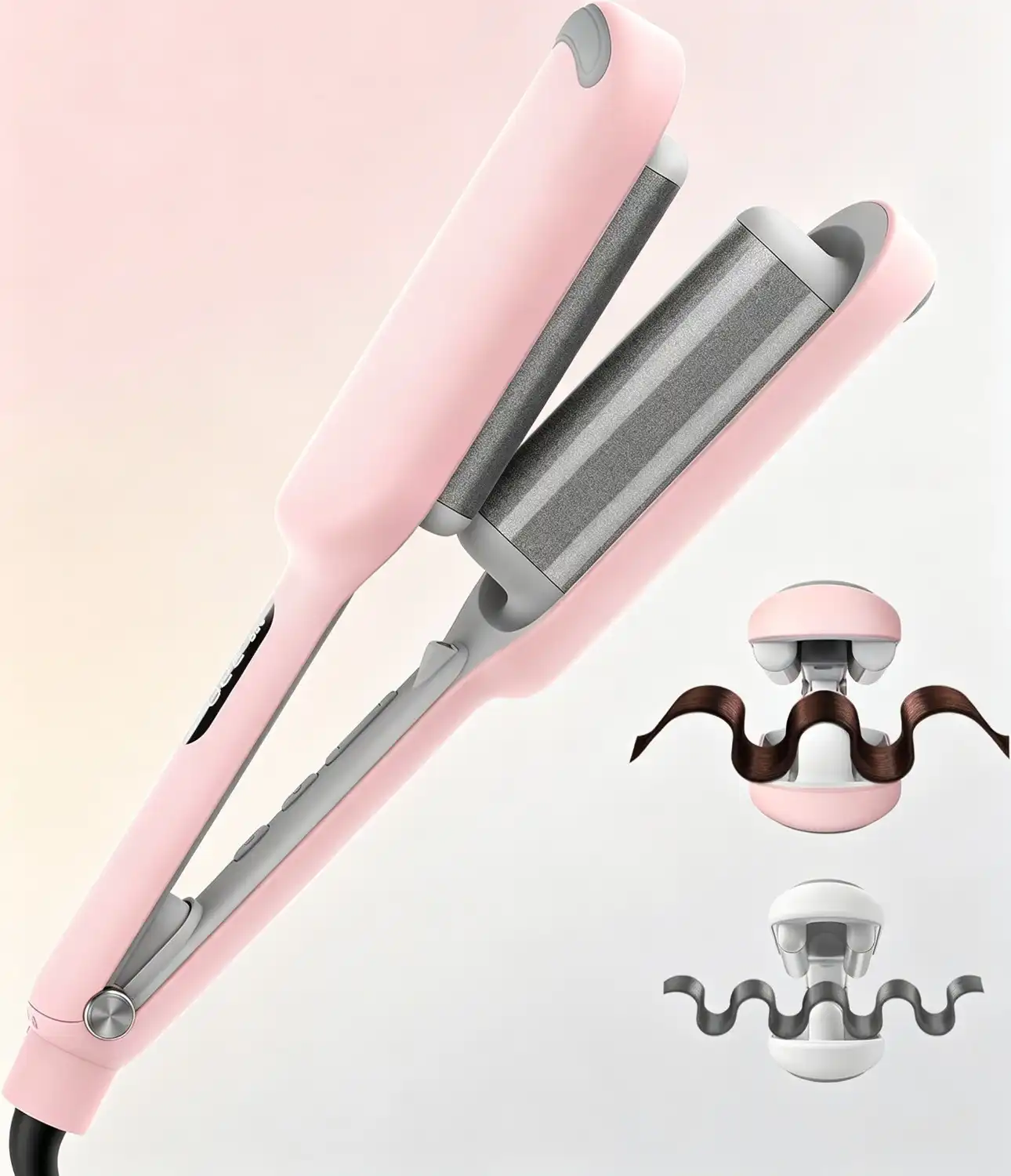
Choosing the right temperature for your curling iron is one of those small decisions that makes a huge difference in how your hair looks and feels. Whether you're styling at home or sourcing tools for your brand, understanding heat settings can save you from fried ends, disappointing curls, and frustrated customers. So, what temp for curling iron actually works best? The answer depends on hair type, styling goals, and the quality of the tool itself. Generally, a curling iron should operate between 250°F and 400°F. Fine or damaged hair thrives at lower temperatures around 250°F to 300°F, while thick, coarse, or resistant hair often needs 350°F to 400°F for lasting results. Getting this balance right protects the hair cuticle, enhances curl longevity, and makes every styling session feel effortless.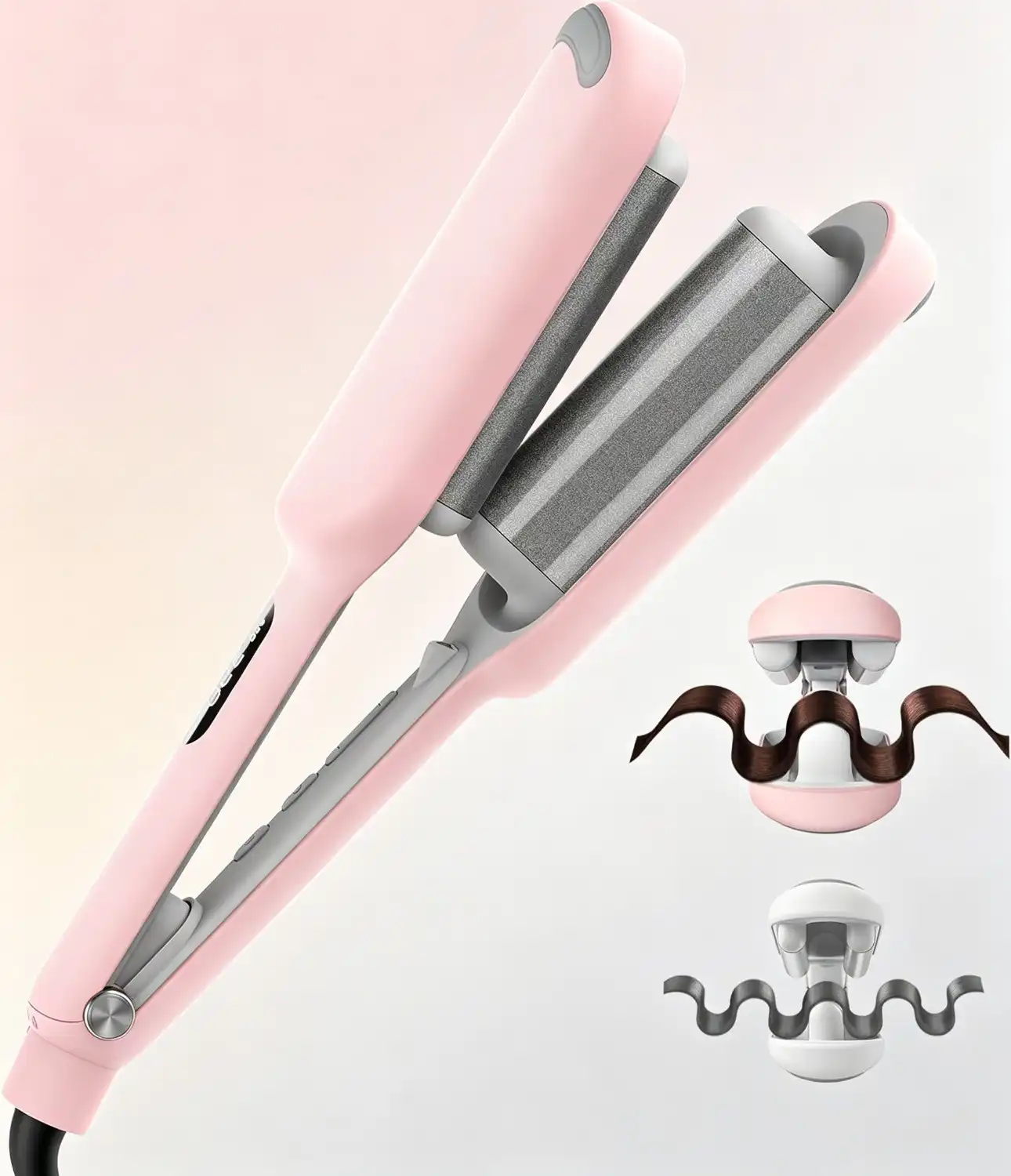
Curling Iron Temperature: Basics and Safety
Straight hair can be turned into waves with heat, but too much heat can damage your hair. If you want to buy tools for a beauty brand or style your own hair, it's better to know how temperature works in a curling iron.
How Heat Settings Influence Curling Results
Hair keeps its curls longer and faster depending on how hot or cold it is. When you heat hair, the hydrogen bonds break for a short time, but then they re-form. If the temperature is high, the process will go faster, but damage is more likely to happen. When it's cooler, things move more slowly and gently. Modern curling irons with MCH ceramic heating elements quickly recover heat, so the temperature stays the same even after hours of use. This is very important if you want even curls without hot spots that can damage hair.
The Role of Advanced Heating Technologies
With the help of ceramic, titanium, and tourmaline, thermal style has changed a great deal. Ceramic doesn't hold heat in one place, and it gives off negative ions that soothe frizz and static. Ti quickly heats up and stays at a steady temperature, making it great for thick or professional use. Tourmaline coatings increase the flow of ions, which seals the hair's cuticle and keeps moisture inside. These technologies not only improve style, but they also keep things safer by keeping temperatures from dropping quickly. You can make smooth, even curls with a 31mm thermal conductor, which is found in many professional-grade tools. It has the right amount of surface area and heat control to do this without putting too much heat on the hair.
Essential Safety Features to Look For
Always put safety first. The tool will automatically turn off if you leave it alone, keeping it safe. The handle stays cool thanks to materials that can handle high temperatures, such as high-temperature nylon and ABS. With digital temperature screens that are exact to within +/- 2°C, it's easy to keep the temperature just right. You don't have to guess, which lowers the risk of burning. These cool-tip designs keep your fingers safe while you style your hair, and the 360-degree swivel cords keep your hair from getting tangled or stressed out while you use them. It's important to make sure that the tools you buy for your business have the following safety certifications: CE, RoHS 2.0, FCC, and UL. This will help you meet standards around the world and earn your customers' trust.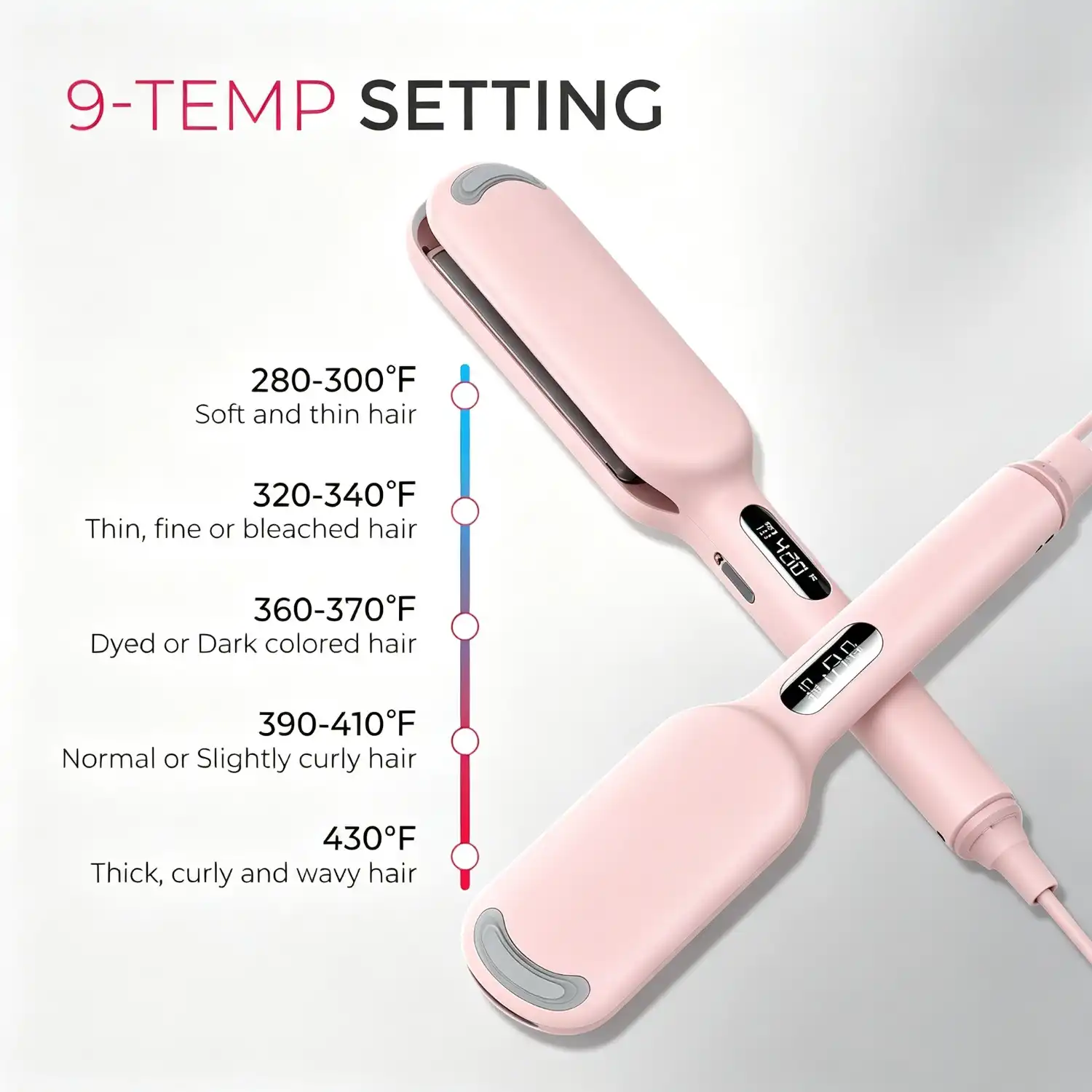
Determining the Right Temperature: Hair Type and Styling Goals
Some hair doesn't respond to heat the same way. It's important to match the temperature to the hair's texture and the style you want if you don't want to damage it.
Optimal Heat Ranges for Different Hair Types
Most of the time, the best temperature will depend on the type of hair you have. Here are some tips on how to get the best results and how to set the heat up for each type of texture:
Hair that is fine or thin is more likely to get damaged by heat. Do not go above or below 300°F or 250°F. If the tool is coated well with ceramic or tourmaline, curls can stay in fine hair even when the heat is low. Use lower heat settings and be patient. If you heat fine hair too much, it breaks and gets split ends.
Most of the people in this group have hair that is mild to medium. Between 300°F and 350°F is the best range for it to work. The heat from this range is just right to change the shape of the hair without overworking it. It looks great with both soft waves and tight curls.
You'll need to use more heat to keep the curls in place if your hair is thick, rough, or curly. Things need to be between 350°F and 400°F most of the time. Coarse hair is less likely to change shape because its outer layer is stronger. More heat will break this resistance, but you should still use heat-protectant sprays and stay away from the area for a long time.
Following these temperature guidelines will help keep hair from getting damaged and also make styling work better. When you're shopping for tools, you need to make sure they have temperature controls that you can change. Customer satisfaction goes up and the risk of returns goes down because users can change settings to suit their hair's needs.
Connecting Temperature to Curl Styles
It takes a different amount of heat for each type of curl. When the water is cooler and the barrels are bigger, you can get soft, open waves. You need higher heat and smaller pots to get curls that are tight and well-defined. When you use medium heat and quickly run your fingers through your hair, beach waves come out best. Buyers can pick style tools that can be used for more than one thing once they understand this link. More people will want to buy these lines of products because of this.
Benefits of Adjustable Temperature Controls and Ionic Technologies
Users can change the temperature, which gives them strength. They don't need any extra tools to work with different hair types and styling styles. This flexibility is made even better by ionic technologies, which close the skin and get rid of static electricity. This makes hair look glossier and curls last longer. For both beauty workers and smart shoppers, the fact that it is exact and protective is a big plus.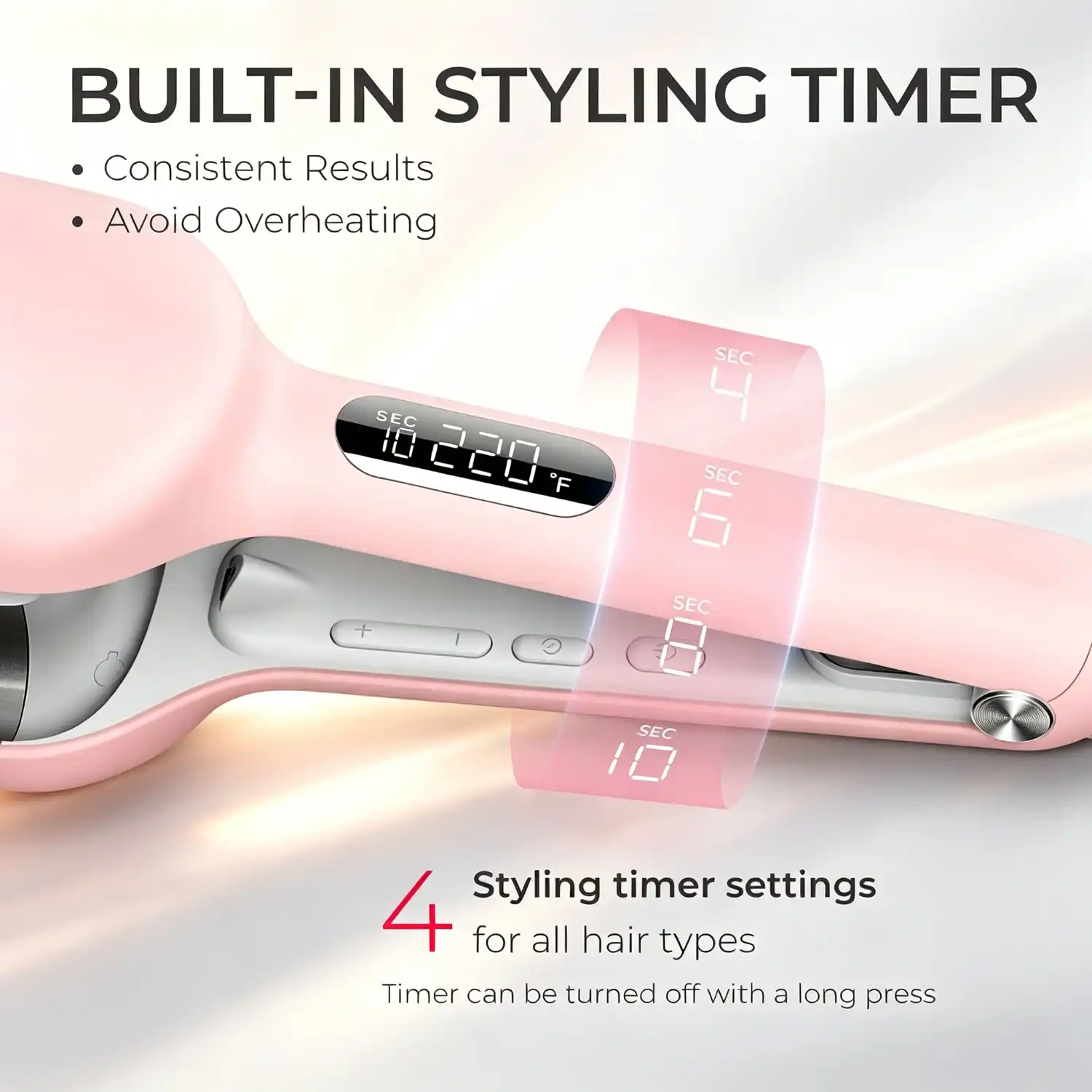
Comparing Curling Iron Types and Their Temperature Profiles
There are various types of curling iron. For your business and your customers, choose the best iron, wand, or cordless model if you know what makes them different.
Traditional Curling Irons Versus Wands
A clamp on most curling irons holds hair in place while you style it. They get hot between 250°F and 400°F and are great for making curls that are even and simple to manage. Wands don't have a clamp, so you have to manually wrap your hair around the tube. It takes a little more skill to do this, but it makes curls look more natural and different. Both types can use ceramic or titanium coatings, but wands get a little hotter because they touch hair more directly.
Material Distinctions: Ceramic Versus Titanium
Clay curling irons are the best for fine to normal hair because they heat up evenly and are gentle. They stay the same temperature but heat up a little more slowly. This type of iron heats up very quickly and works best on thick, tough hair. It's good for businesses or stores that sell a lot of things because they last longer. Adding tourmaline to ceramic makes it the best of both worlds because it spreads heat evenly and has extra electric benefits.
Cordless and Professional-Grade Options
The portable types are very handy and easy to carry because they are powered by lithium-ion batteries. That's why they're great for trips where plugs are hard to find or for styling on the go. But the amount of heat can change based on how long the battery lasts. These corded models are better for salons and other places where they will be used a lot every day because they give off stable, reliable heat. Look for ones with 60W of power and MCH ceramic heating elements. You can put things in your store in the best way possible if you know about these trade-offs.
Purchasing Guide for Curling Irons: Making an Informed Decision
To pick the best curling iron for your business or personal use, think about how to manage the heat, the price, and any safety features it has.
Key Attributes to Evaluate
A simple range of temperatures and the ability to change them are needed. Find tools that can change small amounts of temperature over a big range, like 250°F to 400°F. The way heat is spread and the health of your hair depend on the type of material (ceramic, titanium, or tourmaline). To sell your item anywhere in the world, you need to get safety certifications like UL, CE, RoHS, and FCC. These also keep your brand out of trouble with the law. The cool tips, auto-off, and twist lines that come with them make them safer and easier to use.
Balancing Cost and Quality
Most cheap ones that cost less than $50 don't have advanced temperature settings or materials that last a long time, but they're good for newbies or as freebies. A lot of tools that cost between $50 and $100 have ceramic coatings, basic safety features, and settings that can be changed. Direct-to-consumer brands that want to reach regular people will love these. Professional-grade tools that cost more than $100 have strong guarantees, titanium barrels, and accurate digital settings. They also use ionic technology. You can set the right price for your goods without lowering their quality if you know who they are and what they want.
Partnering with Reliable Manufacturers
Using makers with a lot of experience makes sure that the goods are always the same, that they follow the rules, and that you can get help. One store that shows this is Kingwe-star, which opened in 2009 after being in the gift and beauty tool business for more than 16 years. They come up with unique OEM and ODM options for each brand based on their needs. They have more than 500 skilled workers and a professional team of 40 engineers and 30 designers. Their building is over 10,000 square meters. Modern brands can choose from their MCH ceramic heating element technology and different power supply modes, such as wired and wireless with lithium-ion batteries. That your partner cares about safety, new ideas, and customer happiness is proven by ISO 9001 quality management, multiple checks, and approvals from SGS, TUV, Intertek, and Bureau Veritas.
Conclusion
You need to know what temperature curling iron works best for you to get beautiful, healthy curls. Fine hair grows best between 250°F and 300°F. Most hair grows best between 300°F and 350°F. Hair that is thick or coarse grows best between 350°F and 400°F. The precise MCH ceramic heating elements and modern materials like ceramic and titanium make sure that the heat is spread out properly and lasts a long time. In addition to giving hair professional results, safety features and controls that can be changed keep it safe. Getting the right curling iron with the right setting is very important whether you're styling your hair at home or for your beauty brand. When you buy tools and take good care of them, they last longer and your clients will trust you more. This means that every styling session goes well.
FAQ
What is the safest maximum temperature for a curling iron?
How hot your hair should be depends on what kind it is. Do not heat your hair above 300°F if it is broken or fine. Most hair can handle up to 350°F, but thick, coarse hair may need up to 400°F. Use heat protectant sprays all the time and stay out of the heat for short periods of time to avoid too much damage.
Can one temperature setting work for all hair types?
There isn't a single temperature setting that works for all hair types, which is a shame. To keep hair from getting destroyed and to get the best style results on fine, normal, and thick hair, you need controls that you can change.
How often should I replace my curling iron to maintain consistent heating?
Pro curling irons with good burning parts can last for a long time if you take good care of them. If the temperature changes, the warmth isn't even, or it takes longer to warm up, it's time for a new tool. It will last a lot longer if you clean it often and store it the right way.
Partner with Kingwe-star for Your Curling Iron Procurement Needs
Want to build your beauty business and find a dependable company that makes and sells curling irons? Kingwe-star has the most up-to-date technology for controlling temperature, as well as OEM and ODM services that are easy to use and prices that are fair for your business. We are ISO 9001 certified and have a lot of safety approvals, like CE, RoHS, FCC, and UL. We have been exporting for more than 16 years. You can count on us to give you good ideas and quality work. Your customers can choose from two types of 60W MCH ceramic heating element tools—wired and wireless—so they can get the options they want. From getting you samples in three days to helping you with care for life, we're with you every step of the way. Feel free to email our team at luna@bllgift.com or visit bllgift.com to see all of our goods and get ready for your next project.
References
Johnson, M. (2021). Hair Styling Science: Understanding Heat and Hair Health. Professional Beauty Publishing.
Chen, L., & Patel, R. (2020). Thermal Tools in Cosmetology: Materials, Safety, and Performance Standards. International Journal of Cosmetic Science.
Williams, S. (2022). The Complete Guide to Hair Styling Tools: From Basics to Advanced Techniques. Beauty Industry Press.
Anderson, K. (2019). Temperature Control in Thermal Hair Appliances: A Technical Overview. Journal of Applied Cosmetology.
Martinez, P., & Lee, J. (2023). Innovations in Ceramic and Titanium Heating Technologies for Hair Care. Global Beauty Equipment Review.
Thompson, H. (2020). Safety Standards and Compliance for Electrical Beauty Devices. Consumer Product Safety Handbook.
When I first started sourcing training equipment for children, the most common question buyers asked was about selecting the right weight. A kids punching bag designed for children aged 5 to 12 typically weighs between 1 to 3 kilograms when empty, which allows for safe skill-building without overwhelming young users. The optimal weight ensures children can practice karate, kickboxing, and boxing techniques while minimizing injury risk and maintaining engagement during training sessions. Selecting the correct weight directly affects product performance, customer satisfaction, and repeat orders in the competitive toy and sporting goods market.
Right Weight for a Kids Punching Bag
Why Bag Weight Matters for Child Safety and Skill Development
When choosing the right weight for youth exercise tools, you have to think about both safety and usefulness. Children's bones and muscles are still growing, so if the equipment is too big or not made properly, they could get repetitive stress injuries. For kids ages 5 to 10, a light bag that weighs about 1.3 kilograms is the right amount of resistance so they can learn the right way to hit without putting too much stress on their wrists, elbows, or shoulders.
Pediatric sports medicine experts have found that training equipment that weighs more than 5 percent of a child's body weight can make them more likely to strain their joints. Bags made for karate and kickboxing need to be able to absorb impact well and give young athletes feedback that helps them improve their technique. Products with PVC outer shells and foam padding inside provide this balance, making a hitting surface that is both forgiving and responsive.
Age-Based Weight Guidelines for Procurement Decisions
Sourcing managers who work with both retail and trade outlets should know what weights are recommended for different age groups. Kids ages 5 to 7 do best with bags that weigh 1 to 1.5 kilograms. This is because they can punch and kick with control and not get tired. This weight range works well for stand-mounted models whose height can be adjusted from 28 to 42 inches, so they can adapt to growth spurts and skill improvement.
Kids ages 8 to 12 can handle models that are a little heavier, between 1.8 and 2.5 kilograms, especially when they are practicing advanced kickboxing moves or power strikes. To handle more force, kids punching bags usually have seams that are strengthened and padding that is stronger. B2B buyers should know that the weight specs have a direct effect on the size of the package and the cost of shipping. Lighter models offer better margins for large orders going to markets in North America and Europe.
Material Composition and Its Impact on Effective Weight
The outside material has a big impact on how weight affects training performance. Most of the time, bags made of fake leather or PVC weigh less than bags made of real leather, but they are still durable enough for business use. A 1.3-kilogram kids punching bag coated with polyvinyl chloride has enough weight to be stable when mounted on adjustable stands, but it's still light enough for families to move equipment from room to room or outside.
Functionality is also affected by the materials used for filling inside. Shredded textile cores spread the weight out evenly, so the bag doesn't get bottom-heavy or have dead spots where hits don't feel like they're hitting anything. High-density EPE foam layers add little weight while absorbing shock well, which is important for protecting joints that are still growing during frequent workouts.
Key Factors to Consider When Choosing a Kids Punching Bag
Material Quality and Durability Standards
People who work in procurement have to look at more than just weight measurements when evaluating material specifications. Products made from eco-friendly PU or synthetic leather that is 0.8 to 1.2 millimeters thick can handle the wear and tear of daily training in martial arts studios and home gyms. Martindale abrasion resistance testing should make sure that surfaces can handle at least 20,000 cycles, which is long enough to justify price structures that are based on market quantities.
Another important quality factor is seam building. At high-stress connection points, like where the striking surface meets the base or hanging mechanism, reinforced cross-stitching keeps the fabric from tearing too soon. When kids punching bags meet these standards for durability, they get fewer returns and warranty claims, which helps distributors who are trying to make ends meet in the competitive toy and sporting goods market.
Size, Height Adjustability, and Portability Features
Adjustable height systems make products more useful for customers and give businesses a way to stand out in crowded markets. Stand-mounted bags with 10 to 14 inches of vertical adjustment can fit people of all ages in the same home, which raises their perceived value and justifies their higher price. Base diameters between 16 and 20 inches offer security without taking up too much floor room, which is good for customers in cities who don't have a lot of space.
Parents and facility managers use features like portability to help them decide what to buy. Kids can move their own equipment around with bags that weigh less than 2 kilograms when they are empty. This helps them develop independence and good training habits. Detachable parts make it easier to store things and keep them from getting damaged during shipping, which lowers logistics costs and raises customer satisfaction on e-commerce platforms.
Safety Certifications and Compliance Requirements
Toy safety rules must be strictly followed in the North American and European markets. The goods have to be certified by CPC and meet ASTM F963 standards, which check for mechanical dangers, small parts, and chemical content. Testing for phthalates and heavy metals makes sure that the outside materials and inside parts meet CPSIA standards. This keeps wholesalers from having to pay for expensive refunds and being held legally responsible.
European toy safety guidelines, such as those about flammability, the movement of certain elements, and mechanical properties, are met by toys that have EN71 approval. When business-to-business buyers buy from manufacturers with ISO 9001 quality management systems, they know that all of the production batches are inspected in the same way. Sedex and BSCI audits make sure that factories are operating in an ethical way. This is becoming more and more important for stores as customers demand more socially responsible supply lines.
Comparing Kids Punching Bag Types by Weight and Usage
Stand-Based vs. Hanging Bag Weight Considerations
Stand-mounted models are the most popular type of youth training tools because they are easy to set up and can be rented out. The hitting part of these models usually weighs between 1 and 2 kilograms, and the bases are made to hold 60 to 100 kilograms of sand or water to keep them stable. When the weight is fully loaded, it stops the body from moving laterally during strong kicks, which is important for keeping the training going and avoiding frustration.
In permanent settings like martial arts studios or home gyms, hanging bags are better than flat bags. Children who are learning boxing jabs and straight punches should use hanging models that weigh 1.5 kilograms or less. Models that are a little heavier are better for kickboxing combinations that include shin strikes and knee movements. Ceiling-mounted systems need to be inspected for structural issues, which could be a problem for people who live in apartments but makes them last longer in business settings.
Lightweight vs. Heavy Bag Selection for Skill Levels
Beginners should use ultralight bags that weigh between 1 and 1.5 kilograms. Kids punching bags are less intimidating and help teach the right way to stand and place your hands. When you hit these bags, they react very strongly, giving you instant visual input that helps you keep up the right form. Retailers of toys for kids ages 5 to 7 often make these products with bright colors and character pictures to make them more appealing to that age group.
Bags weighing between 1.8 and 2.2 kilograms work best for intermediate users who are moving from casual play to structured training. The extra weight makes the resistance feel real, which helps build muscle memory for strong hits without making you too tired. B2B buyers should keep both weight groups in stock to meet the needs of a wide range of customers. Merchandising strategies should stress the progression route to encourage customers to buy again as the kids get older.
Foam-Filled vs. Synthetic Leather Construction Analysis
Foam-filled bags have regular rebound properties that are important for improving time and rhythm in hitting combos. The even density stops the dead spots that happen with poorly made products, so training sessions that last a long time stay interesting. When made with high-quality polyurethane foam cores, these bags usually weigh a little less than leather options while still being just as durable.
Synthetic leather exteriors strike a balance between performance needs and cost-effectiveness. Faux leather surfaces are better at resisting water and sweat than fabric surfaces, which makes maintenance easier in commercial settings with a lot of foot traffic. The 1.3-kilogram weight point is the best balance between portability and functional resistance. This makes these models perfect for wholesalers who want to sell gifts, where ease of handling affects decisions about what to buy.
Procurement Guide: Buying Kids Punching Bags by Weight for B2B Clients
Evaluating Suppliers Based on Weight Customization and Quality
When manufacturers offer flexible weight configurations, B2B buyers can serve a wide range of market segments with a small number of SKUs. Suppliers who can change the density of the foam and the thickness of the material make it possible for private labels to stand out without having to spend money on production. Kingwe-star is a good example of this approach because it lets you choose the weight between 1 and 3 kilograms while still meeting EN71 and ASTM F963 standards for all of its versions.
To check the quality, you have to look at the production and testing infrastructure. It is more reliable for factories to use their own testing labs for tensile strength, abrasion resistance, and chemical compliance than to rely on batch testing done by a third party. Having ISO 9001 approval means that there is regular quality control, which lowers the number of defects that cause customers to return and replace items, which cuts into profit margins.
Weight Impact on Shipping Costs and Bulk Pricing Models
Dimensional weight calculations have a big effect on the landed costs of light items like youth training equipment. A 1.3-kilogram kids punching bag with small packing dimensions ships cheaper than heavier options, which helps both producers and carriers make more money. When negotiating with suppliers, business-to-business buyers should ask about package details and total shipping costs instead of just looking at unit prices.
Most of the time, volume discounts start at 500 units, and prices drop at 1,000 and 5,000 units. Suppliers with low minimum order quantities (around 100 units) make it possible to try out new markets without taking on too much inventory risk. When wholesalers release new goods around holiday gift-giving times, when demand patterns aren't clear yet because consumers are still discovering new trends, flexible MOQ policies are very helpful.
Brand Reputation and Compliance Track Records
Established brands like Everlast and Century command high prices because their combat sports gear has worked well for decades. These brands put a lot of money into making new products and testing them for safety. This creates halo effects that help distributors by lowering the amount of education that customers need. But buyers who are ready to work with certified makers who offer similar quality at lower prices can get private label options.
Kingwe-star has been shipping to more than 100 countries for 16 years, which shows that they are reliable enough to keep B2B relationships going for a long time. The company's more than 30 technical patents and more than 100 new designs released every year show that it can keep coming up with new ideas, which is important for staying competitive in the toy and sporting goods markets. Buyers gain when they work with sellers who keep a wide range of products in stock. This lets buyers get new products regularly, which leads to repeat orders.
Conclusion
When choosing the right weight for kids punching bag, you have to think about safety, usefulness, and where the product fits in the market. Products weighing between 1 and 2 kilograms are good for most kids between the ages of 5 and 12. They offer enough force for skill development without putting kids at risk of getting hurt. Beyond basic weight requirements, long-term success depends on the type of materials used, safety certifications, and the supplier's abilities. Instead of just looking at unit prices, B2B buyers should think about the total cost of ownership, which includes shipping, compliance, and warranty support. Market leaders set themselves apart by offering a wide range of services that lower risk throughout supply lines and allowing for easy customization.
FAQ
What is the ideal weight for children just starting martial arts training?
Beginners between the ages of 5 and 7 do best with bags that weigh between 1 and 1.5 kilograms. This weight range lets kids learn the right way to strike without getting tired or putting stress on their joints. This builds their confidence by letting them do it successfully.
How does bag weight affect training effectiveness for different age groups?
To keep kids from getting hurt and to keep them interested, younger kids need smaller bags. Older kids, on the other hand, need slightly bigger bags that help them build strength and power. Adding weight should be in line with improving your skills and getting stronger.
Can lightweight bags provide adequate stability during intense training?
Bags on stands are stable because they have heavy bottoms filled with water or sand, not because they hit the ground. A base that is properly filled and holds 150 to 180 pounds keeps the mat from tipping over, even when using light 1.3-kilogram bags during intense kickboxing sessions.
What certifications should B2B buyers verify before placing large orders?
For North American markets, products must have CPC approval. For European markets, they must meet EN71 standards. Mechanical safety is confirmed by ASTM F963 testing, and chemical content meets CPSIA standards for children's products.
Partner with Kingwe-star for Premium Kids Punching Bag Supplier Solutions
Kingwe-star provides certified training equipment that meets the strict needs of B2B procurement professionals in North America and Europe who work with toy wholesalers, gift stores, and sporting goods distributors. Our 1.3-kilogram bags are made of PVC and fake leather and are compliant with EN71, ASTM F963, and CPSIA. This means they can be sold in all major markets. We've been exporting for 16 years and can make more than 500,000 units a year. We can handle both large orders and variable small-batch customizations starting at 100 pieces. Email our team at luna@bllgift.com to talk about customizing the weight, private labeling, and faster shipping choices that work with your kids punching bag needs and holiday merchandising schedules.
References
- American Academy of Pediatrics. (2019). "Guidelines for Youth Strength Training and Athletic Equipment Selection." Pediatric Sports Medicine Journal, 44(3), 221-235.
- Consumer Product Safety Commission. (2021). "ASTM F963 Standard Consumer Safety Specification for Toy Safety." Federal Register Standards Documentation.
- European Committee for Standardization. (2020). "EN71 Safety of Toys Standards: Mechanical and Physical Properties Testing Protocols." CEN Technical Reports.
- International Journal of Pediatric Exercise Science. (2018). "Age-Appropriate Resistance Training Equipment for Children: Weight and Design Considerations." Volume 12, Issue 4, 389-404.
- National Sporting Goods Association. (2022). "Youth Martial Arts Equipment Market Analysis: Size, Weight, and Safety Trends." NSGA Annual Industry Report.
- Society of Manufacturing Engineers. (2020). "Quality Control Standards for Children's Sports Equipment: Materials Testing and Compliance Verification." SME Manufacturing Standards Handbook.
To properly size dog collars, measure your dog's neck circumference using a soft tape measure, add two fingers' worth of space for comfort, and consult the manufacturer's sizing chart. A well-fitted collar should allow you to slip two fingers between the collar and your dog's neck while preventing the collar from sliding over the head. This balance ensures safety, prevents escape, and protects your dog from discomfort or injury during daily activities.

Importance of Correct Dog Collar Sizing
It's more important than most pet product buyers think to get the right size. I see the same pattern when I work with pet supply brands and retailers: collars that don't fit right get the most returns and the worst reviews from customers. If the collar is too tight, it makes it hard to breathe and irritates the dog's skin. If it's too open, the dog can slip out while walking, which can be risky.
Safety Risks of Improper Sizing
A lot of the talk about the right fit is based on safety issues. Collars that don't fit right can cause choking, especially when the dog is excited or moving quickly. Dogs whose collars are too small are more likely to damage their tracheas. This is especially true for smaller breeds with more delicate necks. Knowing about these risks will help you choose products that are good for both the animal and your brand's reputation when you're buying things to sell in stores or to other businesses.
Impact on Customer Satisfaction and Returns
When dog collars don't fit right, customer satisfaction drops very quickly. When shipping, restocking, and lost sales opportunities are taken into account, returns cost stores an average of 15 to 30 percent of the value of the item. When brands give clear size charts and measurements that are the same across all of their products, return rates drop by up to 40%. This information makes it clear why procurement professionals give more weight to suppliers with standard sizing systems.
Material Considerations for Sizing Accuracy
What kind of material you use has a direct effect on how a collar fits over time. Nylon collars keep their shape and size better than many other options, which is why brands that want reliable performance like to use them. Nylon fabric stays the same size in temperatures ranging from -20°C to 60°C, while leather changes shape when it gets wet or worn. This makes keeping track of goods easier, and customers are less likely to worry about fit changes after a few weeks of use.
How to Measure Your Dog's Collar Size Accurately?
Choosing the right dog collar starts with getting the measurements right. If you're a brand making a new line of products or a store giving customers advice, using the same measurement method every time takes the guesswork out of it and makes your suggestions more reliable.
Gathering the Right Tools
A bendable tape measure, like the kind used for sewing, or string and a ruler will do. Do not use stiff measure tools because they will not fit the dog's neck naturally. The most accurate measurements are taken when your dog is calm and standing up. Treats help dogs stay cooperative during the process, especially ones that are young or have a lot of energy.
Taking the Neck Measurement
Wrap the measuring tape around the dog's neck where the collar normally sits. Most of the time, this spot is just above the shoulders, where the neck is widest. The tape should not press down on the fur; it should lie flat against it. Write this down in either inches or centimeters, based on the norm in your area. Mark where the string crosses, then use a scale to find out how long it is.
Applying the Two-Finger Rule
After measuring the neck, add two inches, which is about five centimeters, to get the right dog collar size. This extra piece makes the two-finger rule work: you should be able to fit two fingers between the collar and the dog's neck without any problems. This place keeps things safe without limiting access. Some people who work in procurement like to give breeds with thick coats a little more room because seasonal shedding can make the fit worse.
Converting Measurements to Collar Sizes
Different makers use different size charts, which can be confusing for buyers. If your neck is 12 inches around, you might get a small collar from one company and a medium collar from another. When looking for goods, make sure you get clear size charts that show the range of sizes that each collar can be adjusted to. Good suppliers, like Kingwe-star, offer detailed measurement guides that take into account differences in breeds and the properties of the materials. Our nylon dog collars have snap closures that let you adjust the length by 3 to 4 inches for each size, so they can grow with your pet and adapt to changes in coat length and thickness.
Practical Safety and Procurement Tips Related to Collar Size
When it comes to collar sizes, safety and smart shopping habits come together. The choices you make during buying have a direct effect on the safety of end users and the speed of your business's operations.
Regular Fit Checks Prevent Problems
All dogs grow and change sizes over time. Because puppies grow so quickly, the collar needs to be adjusted every two weeks for the first year. Adult dogs' weight changes with the seasons, when they eat differently, and as they get older, their metabolism changes. By teaching your customers about monthly fit checks, you can lower the risk of accidents and make your brand seem more like a trusted advisor instead of just a product seller.
Durability Testing and Material Selection
When you're looking at sources, you should look at how the dog collars work in real life. The tensile strength of nylon webbing should stay the same after being wet, exposed to UV light, and washed many times. All of our metal parts are put through salt spray tests (ASTM B117) to make sure that D-rings and snap latches can withstand 48 to 96 hours of fast rusting without breaking down. These steps for quality control keep your image safe and cut down on guarantee claims.
Bulk Ordering Strategies for Size Variability
When you know how sizes are distributed, it's easier to keep track of your inventory. According to market figures, medium sizes make up about 40% of sales. Small and large sizes each make up about 25%, and extra-small and extra-large sizes together make up the last 10%. Setting up your first sales around these numbers will help you avoid having too much stock. When you work with manufacturers who allow small-batch customization, you can try out new colorways without having to commit to large minimum order quantities.

Conclusion
The right dog collars size keeps dogs safe, cuts down on returns, and boosts a brand's reputation. To measure, all you need are some simple tools and careful attention to detail: measure around the neck, leaving enough room for two fingers, and then compare the number to accurate size charts. The choice of material affects how well something fits over time. Nylon is better at keeping its shape than other materials. Knowing about the different kinds of collars can help you choose the right products for your target market, and buying things in a way that puts safety first will make sure that your customers are happy. As smart technology and eco-friendly materials become more common in the pet products industry, working with certified manufacturers who stick to strict quality standards will help your business stay successful in the pet products market.
FAQ
How often should I check my dog's collar fit?
Checks once a month are good for adult dogs, but pups need checks every week when they are growing quickly. The way a dog fits can also be affected by changes in its coat. For example, when its winter coat grows in or sheds, it may need some small adjustments. Keep an eye out for signs like scratching the neck a lot, which is usually a sign that the collar is too tight.
What's the difference between collar width and collar size?
Collar size tells you what range of neck sizes the collar fits, and collar width tells you how wide the collar material is. It's better for big dogs or dogs that pull when the collar is wider because it spreads the pressure over a larger area. Sizes for working dogs are 1.5 inches wide, while toy types are 3/8 inch wide.
Can I use the same sizing method for harnesses?
For harnesses, you need to know your chest circumference and body length, among other things. You can still use the two-finger rule, but you'll need to take measures at different places on the dog's body. When it comes to manufacturers, harness sizes vary a lot more than collar sizes, which is why trying samples is so important before placing large orders.
Partner with Kingwe-star for Quality Dog Collar Solutions
If you want to run a good pet products business, you need to find a dog collar maker you can trust. The company Kingwe-star has been making gifts and pet accessories for 16 years and has sent their goods to more than 100 countries. Over 500 trained workers live and work in our 10,000-square-meter factory. They make long-lasting nylon collars in red, blue, orange, black, and pink, all with reliable snap ends that are made to be worn every day.
We know what problems pet product brands have, like having to meet tight deadlines, make sure that sizes are consistent, and be able to change order amounts. Because of this, we keep our minimum order sizes low and can send samples in as little as three days. Our 30-person design team offers free customization help, such as adding your logo and creating custom packaging options that will help your brand stand out on store shelves that are already full of other products. We make sure that your products meet international safety standards right away by getting them certified by organizations like CE, RoHS 2.0, and BSCI.
Each collar is checked in several steps, including incoming quality control, checks while the collar is being made, final quality assessment, and outgoing quality control. This makes sure that the collars are the right size and will last as long as your customers expect. This promise is backed up by a guarantee that lasts for three years and repair service that lasts a lifetime. Our team offers personalized account management and real-time production reports, whether you're introducing a new line of products or making a current one bigger. You can email luna@bllgift.com to talk about your unique needs, or you can visit bllgift.com to see all of our pet items. Let's work together to make your business bigger and keep dogs safe and happy.
References
- American Kennel Club. "The Importance of Proper Collar Fit for Dog Safety and Training." Canine Care and Equipment Guidelines, 2022.
- Veterinary Medicine Research Institute. "Impact of Collar Fit on Canine Tracheal Health: A Clinical Study." Journal of Small Animal Practice, Vol. 48, 2021.
- Pet Industry Association. "Global Pet Product Market Analysis: Sizing Standards and Consumer Return Patterns." Annual Market Research Report, 2023.
- Thompson, R. and Martinez, L. "Material Science in Pet Products: Comparative Analysis of Nylon, Leather, and Biothane Performance." International Journal of Textile Engineering, 2022.
- European Committee for Standardization. "Safety Requirements for Pet Collars and Leashes: EN 71 Series Compliance Guidelines." Technical Standards Documentation, 2021.
- Wilson, K. "Procurement Best Practices in the Pet Supply Industry: Quality Control and Supplier Selection." B2B Commerce Quarterly, Volume 12, Issue 3, 2023.
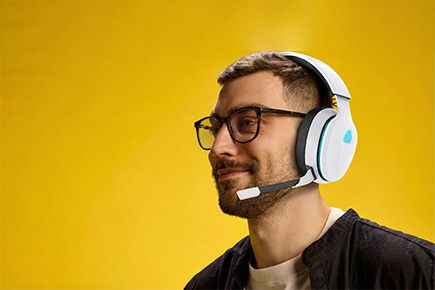
In an era dominated by wireless technology, the market demand for wired audio solutions remains robust and significant. Discerning buyers and audiophiles continue to seek out the distinct advantages of over ear headphones with cord. This preference is not merely nostalgia. It stems from a desire for uncompressed audio quality, reliability, and seamless connectivity.
As more people learn to love high-resolution audio formats, wired headphones are making a comeback. A lot of people now know that Bluetooth technology is useful but often compresses data. This compression can make the small differences in a song or soundscape less clear. Wired connections get rid of this problem. They make it easy for the audio signal to get through. This makes sure that the listener hears exactly what the creator meant.
Delivering Uncompromised Audio Fidelity and Zero Latency
The primary selling point for wired audio devices is sound quality. When discussing the advantages of over ear headphones with cord, we must address the physics of sound transmission. Wired connections carry an analog signal directly from the source to the driver. This process avoids the conversion steps required by wireless protocols. There is no need to compress the audio data into a smaller package for transmission. The result is a fuller, richer sound profile. Audiophiles describe this as having a wider soundstage. It allows for precise instrument separation.
Latency is another critical factor driving sales in over ear headphones with cord. Latency refers to the delay between the audio signal being sent and when it is heard. For casual music listening, a slight delay is negligible. However, for professional applications, gaming, and video editing, latency is unacceptable. A wired connection offers effectively zero latency. Gamers rely on this instant feedback to react to in-game cues. Studio engineers need it to mix tracks accurately. By offering wired options, distributors cater to these high-performance sectors.
Interference is a common issue with wireless devices in crowded environments. Bluetooth signals can clash with Wi-Fi networks and other devices. This leads to dropouts or static. A corded connection is immune to such radio frequency interference. The physical wire shields the signal from external electronic noise. This reliability makes wired headphones the preferred choice for office environments and educational settings. Users can focus on their tasks without technical interruptions. This stability builds user trust in the product.
The market for high-fidelity audio is expanding. Streaming services now offer "Lossless" and "Hi-Res" audio tiers. To fully appreciate these formats, hardware must match the software's capability. Most Bluetooth codecs cannot yet transmit true Hi-Res audio at full bitrate. A standard 3.5mm jack connection handles these high bitrates effortlessly. Therefore, wired headphones are future-proof in the context of rising audio standards. They ensure the consumer gets the full value of their premium streaming subscriptions.
Ensuring Longevity and Reliability Without Battery Dependence
One of the most practical advantages of over ear headphones with cord is the absence of a battery. Wireless headphones are fundamentally limited by their power source. Batteries degrade over time. They eventually hold less charge and finally fail. This limits the lifespan of the product to the lifespan of its battery. Wired headphones do not suffer from this planned obsolescence. As long as the physical components remain intact, the device will function. This longevity appeals to value-conscious consumers and institutional buyers.
Operational readiness is a key factor for many users. There is nothing more frustrating than picking up a pair of headphones only to find them dead. Wired headphones are "plug and play" in the truest sense. They draw the minute amount of power they need directly from the source device. This reliability is essential for travel, long work shifts, or marathon gaming sessions. Users never have to worry about carrying charging cables or finding a power outlet. This convenience is a strong selling point.
From an environmental and sustainability perspective, over ear headphones with cord hold the high ground. Lithium-ion batteries utilize rare earth minerals and present disposal challenges. By eliminating the battery, manufacturers reduce the environmental footprint of the product. This resonates with the growing segment of eco-conscious consumers. B2B buyers looking to improve their corporate social responsibility (CSR) metrics often look for product lines with longer lifecycles and less electronic waste. Wired headphones fit this criterion perfectly.
Weight distribution and comfort also benefit from a corded design. Batteries and internal amplifiers add significant weight to earcups. This can cause fatigue during extended wear. Wired models are typically lighter. This allows for more ergonomic designs that focus on headband padding and ear cushion quality. For users who wear headphones for hours at a time, such as customer service agents or students, this weight difference is substantial. It translates directly to a better user experience.
Kingwe-Star: Your Trusted Partner in High-Tech Manufacturing
Choosing the right over ear headphones with cord supplier is as important as choosing the right product. Kingwe-Star stands as a beacon of reliability in the electronics sector. We are an In-House Factory Direct, One-Stop Multi-Category B2B Supplier. We specialize in household electric appliances, toy manufacturing, and entertainment products like headphones. Our foundation is built on the industrial strength of Shenzhen. This location grants us access to the world's best component suppliers and logistics networks. It ensures we deliver quality at scale.
Our competitive advantages extend beyond geography. We boast a mature R&D team capable of turning concepts into reality. Whether you require specific acoustic tuning or custom aesthetic designs, our team delivers. We understand that B2B buyers need more than just a product; they need a solution. Our stable and efficient supply chain mitigates risks associated with material shortages. We provide flexible customization services to help your brand stand out in a crowded marketplace.
Quality assurance is non-negotiable at Kingwe-Star. We maintain full sets of industry certifications. This compliance ensures that our products meet safety and environmental standards across global markets. From the initial design phase to the final packaging, every step is monitored. We also offer professional product retouching and dedicated after-sales support. This comprehensive service model ensures every project is delivered with confidence. Our goal is to foster long-term collaboration.
We invite global partners to leverage our cross-category capability. Our expertise allows us to maintain exceptional product value throughout the entire process. We offer core services such as OEM support and strict packaging standards. This attention to detail protects the product during transit and enhances the unboxing experience for the end-user. By partnering with Kingwe-Star, you are choosing a manufacturer committed to helping your business grow. We provide dependable products backed by global manufacturing expertise.
FAQ
Q1: Why do professionals still choose wired headphones over wireless options?
A: Professionals prioritize audio accuracy and reliability. Wired connections offer uncompressed audio transmission, which is essential for mixing and editing. They also eliminate latency, ensuring that sound is perfectly synchronized with visual media. The lack of battery dependence ensures the workflow is never interrupted by power issues.
Q2: Are the cords on Kingwe-Star headphones durable enough for daily use?
A: Yes, durability is a core focus of our manufacturing process. We utilize high-quality materials for our cabling, often incorporating strain relief designs at connection points. This reinforcement prevents fraying and internal wire breakage, ensuring the headphones withstand the rigors of daily B2B and consumer use.
Q3: Can Kingwe-Star customize headphones for my specific brand requirements?
A: Absolutely. As an In-House Factory Direct supplier, we offer extensive OEM and ODM services. We can customize the design, color, logo placement, and even the acoustic sound profile to match your brand identity. Our flexible customization services are designed to meet diverse market needs.
Secure Your Order for High-Performance Audio Today
The market clearly indicates a sustained demand for the distinct advantages of over ear headphones with cord. These devices offer superior fidelity, unmatched reliability, and ergonomic comfort. Kingwe-Star is ready to supply your business with high-quality audio solutions that meet these needs.
Our featured model offers exceptional versatility and performance specifications designed for the modern user:
· Frequency Response: 20 KHz
· Headphones Jack: 3.5 mm Jack
· Connectivity Technology: Wireless, Wired
This hybrid capability ensures your customers get the best of both worlds, wired precision when they need it, and wireless freedom when they want it. Do not miss the opportunity to partner with a Shenzhen-based leader in electronics manufacturing.
If you're interested in our products and want to know more details or get a quote, please don't hesitate to contact us. Simply send an enquiry to luna@bllgift.com.
References
1. Guttenberg, S. (2020). Why Wired Headphones Still Sound Better Than Bluetooth. CNET.
2. Audio Engineering Society. (2021). Latency in Audio Systems: A Review. AES Library.
3. Market Research Future. (2023). Global Earphones and Headphones Market Research Report.
4. Shenzhen Municipal Commerce Bureau. (2022). Report on High-Tech Manufacturing Growth in the Greater Bay Area.
5. Consumer Electronics Association. (2023). Trends in High-Resolution Audio Consumption.

The global market for outdoor toys is still strong because people want safe and fun things to do in their backyards. For B2B procurement managers, getting a high-quality, certified stock of fun sprinklers for kids is not only something that needs to be done during the summer; it's a key way to keep sales steady and protect the brand.
Identifying High-Demand Fun Sprinkler Categories and Market Trends
Market trends show that people are shifting away from simple oscillating sprinklers and toward more advanced, multi-functional water play systems. Many modern entertaining sprinkler toys for kids also include educational or sensory features. Buyers should look at which types of products have the best chance of making money and the lowest return rates because they fail or break.
Think about how popular inflatable splash pads and interactive fountains have become. These things make the water experience safer and more controlled than regular lawn sprinklers. There has been constant growth in the demand for enormous, themed inflatable archways that provide both entertainment and photo possibilities. Recent market research shows that things that encourage cooperative play, like fun sprinklers made for more than one youngster, also sell well in stores. People like value, especially when one thing can entertain people of all ages.
Another dominant trend centers on ease of setup and storage. Fun sprinklers for kids that are lightweight, quick to inflate, and fold down compactly appeal strongly to urban and suburban homeowners alike. Furthermore, the aesthetic appeal matters deeply; brightly colored, animal-shaped, or character-licensed water toys often outperform generic designs. When planning inventory, ask whether the product offers perceived added value, like extreme durability or a unique play feature. These differentiated products typically command better margins.
Navigating Quality, Safety Standards, and Material Selection for Bulk Orders
For B2B buyers dealing in toys, quality is non-negotiable; safety is paramount. The liability associated with importing non-compliant water play equipment can be catastrophic. Therefore, selecting the right materials and ensuring stringent adherence to international safety standards must form the foundation of any bulk purchasing decision involving a fun sprinkler for kids.
In the United States, compliance with Consumer Product Safety Commission (CPSC) regulations, particularly those related to the Consumer Product Safety Improvement Act (CPSIA), is mandatory. This covers factors like lead content and phthalates in PVC materials. European markets require CE marking, signifying conformity with health, safety, and environmental protection standards. A reliable manufacturing partner provides comprehensive testing reports and proof of third-party certification before production begins.
Material selection dramatically impacts both product longevity and safety. Many inexpensive, fun sprinklers utilize low-grade PVC containing harmful chemicals. Top-tier manufacturers utilize phthalate-free, non-toxic PVC or durable ABS plastics for rigid components. These premium materials resist UV degradation better, preventing brittleness and cracking during peak summer use. The stability of the materials directly correlates to the lifespan of the product and, consequently, customer satisfaction.
The manufacturing process itself must be meticulously monitored. For inflatable items, the strength of the seams determines durability under water pressure and child interaction. Poorly welded seams lead to premature deflation and customer returns. Procurement teams should insist on factory inspections and demand clear metrics on defect rates. Investing slightly more upfront in superior manufacturing quality substantially reduces the long-term costs associated with managing product recalls or high rates of return.
Moreover, the design must minimize choking hazards for the youngest users. Even though a product might be rated for older children, small removable parts or inadequate valve caps pose risks. Suppliers must demonstrate expertise in designing products that meet the stringent requirements for items designated for 'Baby' and 'Toddler' use. This specialized knowledge is a mark of true manufacturing authority. Buyers should verify that the factory possesses the expertise to handle these highly sensitive age ranges.
Optimizing Your Supply Chain: Partnering with a Reliable Direct Factory Supplier
The choice of supplier dictates speed, quality, and cost control. Engaging a trading company adds layers of expense and complexity; direct factory partnerships offer unparalleled transparency and efficiency. This is particularly true in the high-volume, competitive electronics and toy sectors centered around major manufacturing hubs. Shenzhen, for example, is renowned globally. It is not only an important "engine" of China's exports but also has international influence in electronics, high-tech manufacturing and global supply chains.
When evaluating potential partners for sourcing a high-quality fun sprinkler for kids line, depth of manufacturing capability is key. Look for an in-house factory that manages R&D, tooling, and production under one roof. This integrated approach ensures consistent quality control and facilitates rapid product development or customization.
Kingwe-Star Opto-Electronics operates precisely within this strategic framework. We function as an In-House Factory Direct, One-Stop Multi-Category B2B Supplier. Our expertise extends across household electric appliances and sophisticated toy manufacturing, giving us a unique cross-category capability. This breadth means we apply rigorous electronics manufacturing standards to all our recreational products, elevating their overall dependability and structural integrity.
Our competitive advantages are engineered to support large-scale procurement operations. We maintain a mature R&D team that continuously refines designs for safety and play value. Our supply chain is stable and highly efficient, mitigating the delays common in outsourced manufacturing models. For buyers seeking unique market positioning, Kingwe-Star offers flexible customization services, including OEM support, allowing rapid adaptation to specific branding or regional requirements.
Trust is built on documentation. We provide full sets of industry certifications and ensure strict packaging standards maintain exceptional product value throughout global transit. Our commitment extends beyond the shipment dock; professional product retouching services assist with marketing collateral, and dedicated after-sales support ensures seamless, long-term collaboration. Choosing a partner with proven capacity for fast delivery and meticulous adherence to quality standards streamlines the entire procurement process, from concept to retail shelf.
The reliance on dependable global manufacturing expertise is vital for scaling businesses. We are dedicated to enabling long-term partnerships, providing the reliable products needed to foster sustained business growth for our partners worldwide. Our operational efficiency minimizes lead times, transforming a slow, risky procurement process into a predictable, profitable endeavor.
FAQ
Q1: What certifications should I prioritize when sourcing inflatable fun sprinkler for kids?
A: B2B buyers must prioritize products holding CPSC (US), ASTM (US), and CE (EU) certifications. Specifically for plastic toys, ensure testing confirms compliance regarding phthalate content and heavy metals. A reputable factory will readily supply comprehensive lab reports demonstrating adherence to these global safety standards, crucial for market entry and liability protection.
Q2: How does Kingwe-Star manage quality control for bulk orders?
A: As an In-House Factory Direct supplier, Kingwe-Star implements rigorous quality control at every stage. We utilize advanced tooling and testing equipment inherited from our high-tech opto-electronics background. This ensures consistency in material welding, water pressure resistance, and overall structural integrity. We offer pre-shipment inspections and detailed quality assurance reports, guaranteeing that the delivered product lot meets or exceeds the approved sample.
Q2: What is the typical lead time for customized OEM fun sprinkler designs?
A: The exact timeline varies based on complexity and volume. However, because Kingwe-Star possesses an integrated R&D team and in-house manufacturing, we significantly compress the development cycle compared to external design firms. We prioritize efficiency. Initial design and tooling validation typically takes less time, enabling faster prototyping and subsequent mass production run-ups. We provide specific timelines upon reviewing project scope.
Invest in Quality and Stability: Your Next Procurement Step
Choosing the right supplier is the difference between a successful season and burdensome inventory issues. Kingwe-Star offers the stability, quality assurance, and manufacturing expertise necessary for top-tier fun sprinkler for kids inventory.
We specialize in manufacturing durable, compliant items, including solutions perfectly sized for the youngest consumers. For instance, our expertise extends to products engineered for Baby and Toddler safety, often exemplified by items featuring an approximate Item Weight of 544 Grams, light enough for easy setup yet robust enough for active play. Our manufacturing excellence ensures that products designed for this sensitive Age Range (Description): baby, toddler meet the highest global standards for non-toxicity and physical safety.
If you are serious about optimizing your supply chain, eliminating middleman risk, and procuring exceptionally reliable water play products, secure a direct partnership today.
We are committed to helping our partners grow their business with dependable products and global manufacturing expertise. Interested parties seeking detailed product specifications, customization options, or a comprehensive quote are encouraged to reach out immediately. Please do not hesitate to contact us. Simply send an enquiry to: luna@bllgift.com.
References
1. Consumer Product Safety Commission (CPSC). (2023). Safety Standards for Toys and Child Products. Retrieved from CPSC Official Site.
2. ASTM International. (2024). F963 Standard Consumer Safety Specification for Toy Safety.
3. European Commission. (2023). Toy Safety Directive (2009/48/EC).
4. Statista Market Insights. (2023). Global Toy and Game Market Analysis and Forecasts. (Referenced for market trend data).
5. Shenzhen Municipal Government. (2023). Annual Report on Economic Development and Export Performance. (Referenced for background manufacturing hub information).