- English
- French
- German
- Portuguese
- Spanish
- Russian
- Japanese
- Korean
- Arabic
- Greek
- German
- Turkish
- Italian
- Danish
- Romanian
- Indonesian
- Czech
- Afrikaans
- Swedish
- Polish
- Basque
- Catalan
- Esperanto
- Hindi
- Lao
- Albanian
- Amharic
- Armenian
- Azerbaijani
- Belarusian
- Bengali
- Bosnian
- Bulgarian
- Cebuano
- Chichewa
- Corsican
- Croatian
- Dutch
- Estonian
- Filipino
- Finnish
- Frisian
- Galician
- Georgian
- Gujarati
- Haitian
- Hausa
- Hawaiian
- Hebrew
- Hmong
- Hungarian
- Icelandic
- Igbo
- Javanese
- Kannada
- Kazakh
- Khmer
- Kurdish
- Kyrgyz
- Latin
- Latvian
- Lithuanian
- Luxembou..
- Macedonian
- Malagasy
- Malay
- Malayalam
- Maltese
- Maori
- Marathi
- Mongolian
- Burmese
- Nepali
- Norwegian
- Pashto
- Persian
- Punjabi
- Serbian
- Sesotho
- Sinhala
- Slovak
- Slovenian
- Somali
- Samoan
- Scots Gaelic
- Shona
- Sindhi
- Sundanese
- Swahili
- Tajik
- Tamil
- Telugu
- Thai
- Ukrainian
- Urdu
- Uzbek
- Vietnamese
- Welsh
- Xhosa
- Yiddish
- Yoruba
- Zulu

When buying luxury cookware, B2B buyers must decide: honeycomb cast iron or colored cast iron? Honeycomb cast iron cookware sets are an intriguing alternative to smooth vitreous-enameled ones because their rough surface avoids sticking and improves heat distribution. Colored cast iron cookware sets have colorful aesthetics and chemical inertness due to their glass-fused covering, while honeycomb sets emphasize mechanical durability and distinctive cooking performance. Balancing procurement budgets, regulatory standards, and end-user satisfaction in North American and European markets requires understanding these trade-offs.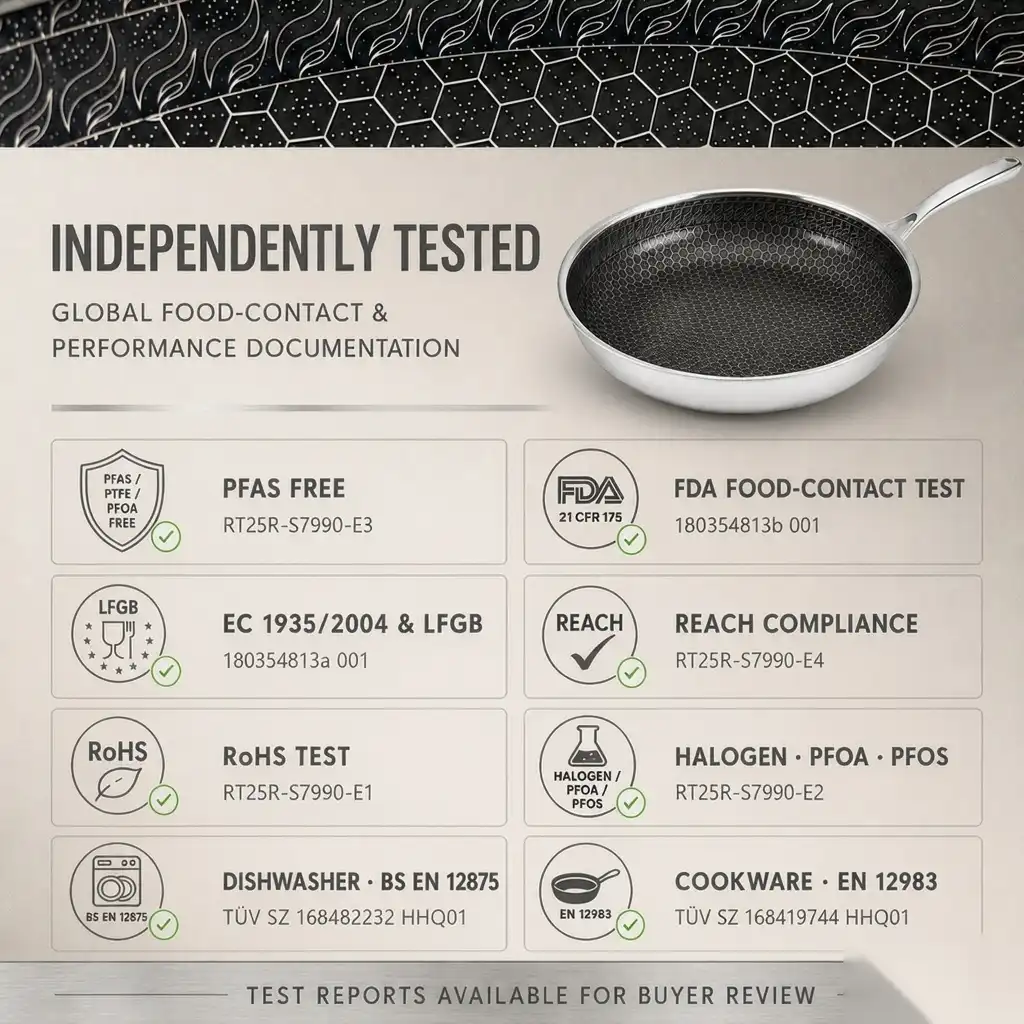
Understanding Honeycomb Cast Iron Cookware Sets
Composition and Manufacturing Process
Traditional cast iron cookware has a smooth or lacquered finish, but honeycomb cast iron cookware has a surface with a raised, honeycomb-like design that makes it stand out. Precision casting is used to make the product. Molten iron is put into molds that have been carefully made to look like upside-down honeycombs. After the cookware has cooled and been demolded, food-safe oils are used to finish the outside and start the seasoning process.
Technical Advantages of the Honeycomb Design
The honeycomb shape makes cooking work better by spreading heat more evenly and letting food come out more easily. The raised hexagonal pattern creates many places for heat to move while keeping air pockets that keep direct thermal contact to a minimum. This makes the cooking surface more evenly heated. This textured structure lowers the surface tension between the food and the metal, which keeps the food from sticking even while the seasoning layers are still forming. When sourcing teams know a lot about materials and production methods, they can figure out if a product is right for the job and how long it should last. This is especially true when comparing it to colored cast iron cookware sets that use enamel coatings for nonstick qualities.
Pros of Honeycomb Cast Iron Cookware Sets
Superior Heat Retention and Distribution
Businesses and industries benefit from honeycomb cast iron cookware's efficiency. By increasing airflow and limiting food-surface contact, the honeycomb design retains heat and evenly cooks food. Cast iron naturally retains heat and has high thermal mass. The honeycomb design creates heat-balancing zones throughout the cooking surface, improving these properties.
Professional chefs discovered that honeycomb surfaces maintain a ±5°C temperature consistency across the workspace. This is compared to ±12°C for smooth cast iron. Making delicate sauces or preparing items at a particular temperature requires this level of precision. In busy businesses, the smaller contact area reduces energy transmission, saving gasoline.
Enhanced Durability and Impact Resistance
The rough surface resists scratches and knocks, making it durable for heavy usage. The honeycomb construction distributes mechanical stress over several elevated points rather than one flat surface. Honeycomb cast iron chips 30% less than anodized versions in ball drop testing, a common cookware quality test.
Also important is metal tool tolerance. Honeycomb cast iron may be used with metal spatulas and whisks; however, colored cast iron cookware sets must be handled gently to avoid scratching the enamel. Since they survive longer, restaurants and caterers with a lot of cookware may replace them less regularly and save money.
Aesthetic Appeal and Customization Options
Due to their distinctive design and customizable color and finish, these sets are functional and attractive. Honeycomb style is attractive to current clients who respect handmade items. Manufacturers may apply matte black seasoning, golden patinas, or powder-coated finishes that preserve the honeycomb form.
B2B purchasers who wish to stand out may custom stamp handles or bases. Private label programs let importers create their own cookware lines with varied honeycomb thicknesses, pan depths, and handle designs. OEM tactics for home goods shops that wish to provide distinct product lines that stand out from mass-market alternatives benefit from this versatility.
Cons of Honeycomb Cast Iron Cookware Sets
Maintenance Requirements and Rust Prevention
Although nonstick and rust-resistant, honeycomb cast iron needs frequent care. It may need more care than colored or enameled cast iron. Without seasoning, the rough surface exposes air and moisture, promoting oxidation. Oil must be applied in thin layers to polymerize lipids into honeycomb hole-fitting covers after washing and heating.
A commercial kitchen with frequent turnover may struggle to teach everyone the same seasoning processes. Without reseasoning, honeycomb cookware may develop rust pockets in design gaps. Forever maintenance-free colored cast iron cookware sets with vitreous enamel coatings solve this issue.
Compatibility and Usage Limitations
Certain induction or ceramic cooktops may not work with others. The iron base permits induction cooking, although the raised honeycomb shape may impair smooth cooktop glass contact. It may transmit heat less efficiently than flat-bottomed cookware. Highly abrasive honeycomb pieces increase preheating time and uneven heating zones, say induction users.
Compare minimum oven consumption to fully coated models. Honeycomb cast iron can survive 500°F oven temperatures; however, the seasoning layer may fail. Colored enameled cast iron cookware can withstand 500°F. This makes them ideal for long-term high-temperature applications like artisanal bread production.
Pricing and Lead Time Considerations
Basic and premium colored cast iron costs vary. Costs and large-order wait times are affected. Honeycomb designs need special molds, increasing production setup costs. However, merchants sometimes spread these costs over many orders. Smaller importers trying new product categories may struggle to sustain cash flow due to smooth cast iron minimum order quantities of 500 to 1,000 pieces.
Surface polishing and pre-seasoning take 2–4 weeks longer than conventional cast iron. Suppliers may need to instruct customers on handling and seasoning. Honeycomb sellers must pay for consumer education materials to educate raw cast iron maintenance in uninformed areas. This increases program expenses.
Comparing Honeycomb Cast Iron to Colored Cast Iron Cookware Sets
Functional Performance Differences
Honeycomb and colored cast iron cookware sets maintain food temperature differently. Honeycomb cast iron works because its inherent heating mass and uneven surface trap air. Colored cast iron works similarly, but the enamel covering slows heat conduction, making cooking easier.
Non-sticking matters. Honeycomb surfaces become less sticky with "seasoning." Performance increases over months as polymerized oil layers build. The glass-smooth enamel of colored cast iron cookware makes it nonstick right away, but metal equipment or heat stress may dull it.
Durability tests demonstrate the honeycomb structure works in busy companies. Well-maintained honeycomb cast iron may last decades in industrial restaurants and reuse the seasoning layer. After 8–12 years of heavy use, enamel coatings on colored cast iron cookware sets crack, fracture, or wear away.
Aesthetic and Market Positioning
Consumers buy colored cast iron cookware sets based on attractiveness. Flame Orange and Celadon Green glazes make the shelves stand out and complement modern kitchens. Honeycomb cast iron's industrial realism, simplicity, and patina appeal to some.
Categories provide different customizing options. Colored enamel formulas provide almost infinite cast iron cookware color choices. This permits seasonal collections and targeted merchant partnerships. Adjusting pattern density, handle, lid, and capacity is the primary technique to modify honeycomb cast iron. Both provide OEM customization. Honeycomb products emphasize performance engineering, while colorful versions tell marketing stories utilizing color psychology.
Regulatory Compliance and Environmental Considerations
Business-to-business buyers prioritize material safety and international norms in sustainable sourcing. Honeycomb cast iron only comprises iron and food-grade flavor oils, making LFGB and FDA compliance simple. Suppliers must provide salt spray corrosion testing and material composition certificates; however, heavy metal leaching is not an issue as there are no colored glazes.
The finish of colored cast iron cookware sets must be rigorously evaluated for safety. California Prop 65 requires colored glazes to have below-detectable cadmium and lead levels. The ISO 28706-1 chemical protection test shows enamel can survive acidic food. Although dependable manufacturers meet these standards, testing and documentation are more extensive than for honeycomb alternatives. The environment prefers raw cast iron products since they can be recycled and don't include mixed elements.
Procurement Guide for Honeycomb and Colored Cast Iron Cookware Sets
Supplier Evaluation Criteria
B2B purchasers of cast iron cookware face several choices. They require clear assessment criteria including pricing, supplier dependability, and cookware durability. Assessing a company's production capabilities should include its foundry capacity, daily workload, and quality control procedures. ISO 9001-certified suppliers with several inspection methods (IQC for raw materials, IPQC during production, FQC for final items, and OQC before export) can manage stable large-volume output.
Certification portfolios distinguish legitimate exporters from quick-money dealers. Important credentials include FDA food contact compliance for U.S. markets, LFGB for European distribution, and BSCI or Sedex social compliance tests for significant retailers. Customers have additional buying alternatives when providers offer honeycomb and colored cast iron cookware sets. They may observe how the market responds to alternative product forms without many vendors.
Brand Landscape and Sourcing Strategies
Le Creuset, Staub, and Lodge dominate the colored cast iron cookware set market, with pricing reflecting years of brand value. High-end brands usually have protected territory and exclusive dealer networks, making direct sales difficult. New artisanal manufacturers, notably in Asia's specialized manufacturing clusters, may provide the same quality at 40–60% reduced rates via OEM partnerships.
Kingwe-star is a fantastic example of this new generation of tech-savvy creators. Since 2009, the firm has had a 10,000-square-meter facility and approximately 500 skilled employees. It makes various sorts of cookware. Their talented 30-person design team handles 2D and 3D design and sample creation in-house. They develop market-focused products from creative concepts. If purchasing managers want colored cast iron cookware sets with private branding, these firms provide well-known brands' quality control at lower rates.
Logistics and Order Management
Buying platforms negotiate huge orders, shipping logistics, and delivery schedules. Shipping honeycomb and colored cast iron cookware together requires proper container loading. Honeycomb pieces fit together better than painted parts with broader edges because their rims may be stacked, maximizing cube use by 20–25%. Smart buyers use density to cut freight costs on large purchases.
You must understand manufacturing to manage lead times. Standard honeycombs ship in 30–45 days. Custom enamel-colored cast iron cookware sets may take 60 to 75 days longer to manufacture the glaze and fire. Suppliers with "ready-to-ship" stock programs on common configurations help you enter the market quicker but restrict alterations. Framework agreements with quarterly order guarantees are one of the greatest methods to acquire lower costs, quicker manufacturing, and flexible inventories via phased delivery schedules.
Conclusion
Honeycomb cast iron cookware sets are ideal for industrial and retail consumers that value durability, heat retention, and customization. The surface's unusual texture appeals to skilled crafters and is beneficial in professional kitchens. Honeycomb cast iron cookware sets are simpler to clean, more pressure-resistant, and more compliant than colored sets.
Buying choices should be based on target market needs and company capabilities. For establishments that wish to stand out visually and make things simpler for consumers, colored cast iron cookware sets are ideal, while honeycomb designs are fantastic for foodies and food enterprises. Working with well-known organizations that provide comprehensive OEM services, tight quality control, and flexible order periods is the ideal method to ensure new goods satisfy business and consumer objectives.
FAQ
1. Is honeycomb cast iron suitable for high-volume professional kitchens?
Honeycomb cast iron is great for business settings because it lasts a long time and keeps heat in. The textured surface can handle heavy daily use better than colored cast iron cookware sets, which can chip in an industrial kitchen. Consistent nonstick performance depends on how well the staff is trained in seasoning and upkeep. A lot of restaurant groups like honeycomb styles for sauté tables and high-heat grilling.
2. How does the honeycomb texture compare with enameled finishes regarding nonstick capabilities?
Seasoning honeycomb surfaces makes them less likely to stick, and the traits get better with use over time. Using colored cast iron cookware sets right away makes them slippery, but metal tools may damage them over time. Well-seasoned honeycomb cast iron works just as well as or better than enamel nonstick. It can handle higher temperatures and work with metal tools, which makes it perfect for professional cooking.
3. What maintenance procedures extend honeycomb cookware longevity?
Maintenance tasks include washing with little soap, drying completely, and putting on a thin layer of oil every time you use it. Keep in places with low humidity to keep honeycomb spaces from rusting. Every year, heat oiled cookware at 450°F for an hour to re-season it. Following these easy steps will make sure that your gadget works well for decades, which is a lot longer than colored cast iron cookware sets that can't be fixed once they get damaged.
Partner with Kingwe-star for Premium Cast Iron Cookware Solutions
To find good colored cast iron cookware sets, you need a manufacturing partner with both technical know-how and the ability to make changes as needed. With 16 years of experience exporting to over 100 countries, Kingwe-star offers full OEM and ODM services. Our R&D team of more than 40 engineers holds more than 30 technical patents, which makes sure that we keep making new products that meet changing market needs.
We have strict quality control measures in place that are approved by ISO 9001. We also have important certifications like FDA, LFGB, CE, and BSCI that make sure we meet the standards of the global market. Our 10,000+ square meter facility can handle both small-batch customization and mass production with a flexible MOQ, whether you need honeycomb cast iron or colored cast iron cookware sets. Samples are sent out within three days, and account managers keep you up to date on production in real time.
Email our team at luna@bllgift.com to talk about your specific needs as a supplier of colored cast iron cookware sets. We have low prices for bulk buyers and sellers and can fully customize your brand, print your logo, and make unique packaging for you.
References
1. Williams, T. (2021). Cast Iron Cookware: Traditional Methods and Modern Applications in Commercial Kitchens. Culinary Equipment Publishers.
2. Chen, L., & Andersen, K. (2022). "Comparative Analysis of Enamel and Raw Cast Iron Surface Performance in High-Volume Foodservice." Journal of Foodservice Technology, 18(3), 145-162.
3. European Committee for Standardization. (2019). ISO 28706-1: Vitreous and Porcelain Enamels - Determination of Resistance to Chemical Corrosion. Brussels: CEN Publications.
4. Martinez, R. (2023). The B2B Buyer's Guide to Cookware Procurement: Quality Standards and Supplier Assessment. Industrial Kitchen Press.
5. U.S. Food and Drug Administration. (2020). Compliance Policy Guide: Foods and Cosmetics - Decoration of Ceramicware, Imported and Domestic. Washington, D.C.: FDA Office of Regulatory Affairs.
6. Nakamura, H., & Schmidt, P. (2022). "Thermal Performance Characteristics of Textured Cast Iron Cooking Surfaces: An Engineering Analysis." International Journal of Food Engineering, 14(2), 89-104.
_1779702410222.png)
_1779703014142.png)
_1778298672206.png)
_1779179067083.png)
_1779180699244.png)
_1778230477696.png)