- English
- French
- German
- Portuguese
- Spanish
- Russian
- Japanese
- Korean
- Arabic
- Greek
- German
- Turkish
- Italian
- Danish
- Romanian
- Indonesian
- Czech
- Afrikaans
- Swedish
- Polish
- Basque
- Catalan
- Esperanto
- Hindi
- Lao
- Albanian
- Amharic
- Armenian
- Azerbaijani
- Belarusian
- Bengali
- Bosnian
- Bulgarian
- Cebuano
- Chichewa
- Corsican
- Croatian
- Dutch
- Estonian
- Filipino
- Finnish
- Frisian
- Galician
- Georgian
- Gujarati
- Haitian
- Hausa
- Hawaiian
- Hebrew
- Hmong
- Hungarian
- Icelandic
- Igbo
- Javanese
- Kannada
- Kazakh
- Khmer
- Kurdish
- Kyrgyz
- Latin
- Latvian
- Lithuanian
- Luxembou..
- Macedonian
- Malagasy
- Malay
- Malayalam
- Maltese
- Maori
- Marathi
- Mongolian
- Burmese
- Nepali
- Norwegian
- Pashto
- Persian
- Punjabi
- Serbian
- Sesotho
- Sinhala
- Slovak
- Slovenian
- Somali
- Samoan
- Scots Gaelic
- Shona
- Sindhi
- Sundanese
- Swahili
- Tajik
- Tamil
- Telugu
- Thai
- Ukrainian
- Urdu
- Uzbek
- Vietnamese
- Welsh
- Xhosa
- Yiddish
- Yoruba
- Zulu

Creating beach waves with a thermal styling tool involves wrapping hair sections around a heated barrel at alternating angles, leaving ends untouched for a relaxed finish. The curling iron applies controlled heat—typically between 150°C and 210°C—to temporarily reshape hair's hydrogen bonds. Modern devices equipped with MCH ceramic heating elements ensure even temperature distribution, preventing damage while delivering those coveted tousled waves that mimic sun-kissed texture straight from the shore.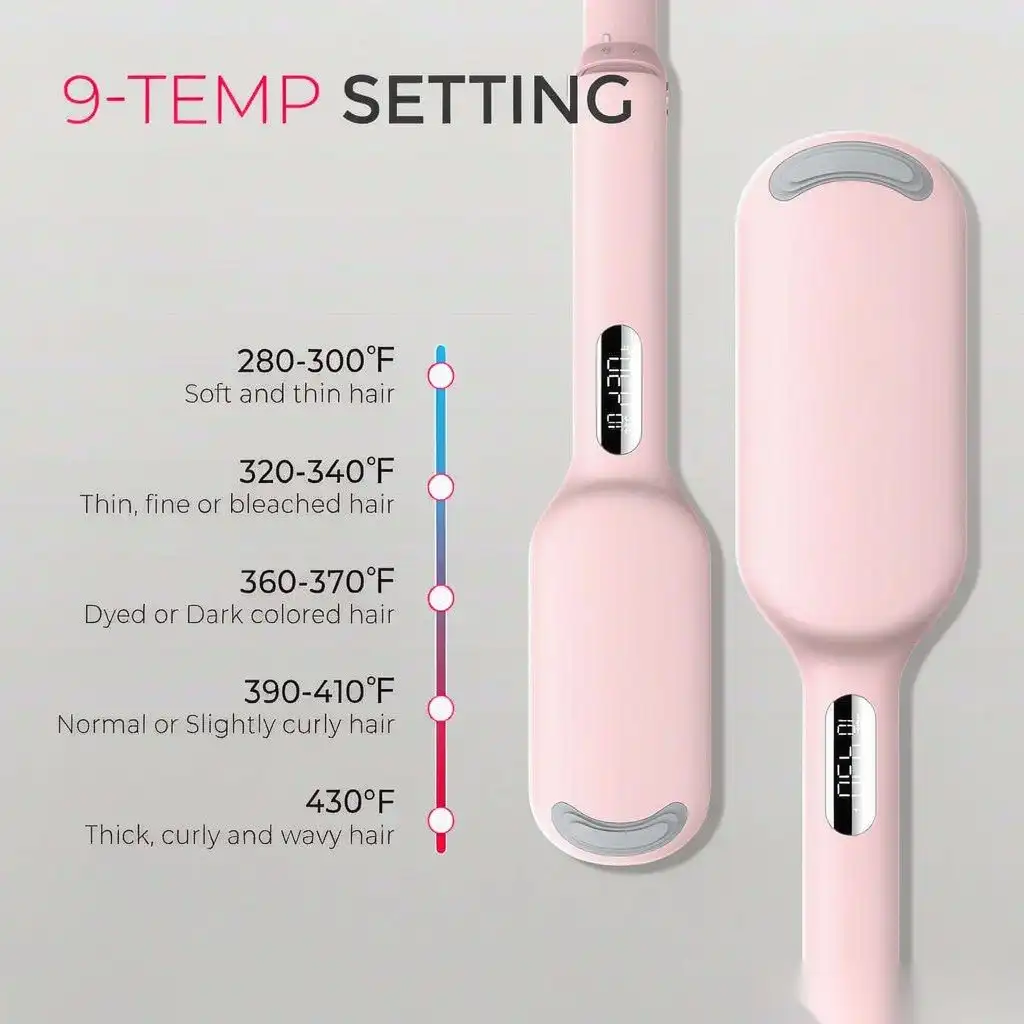
Beach Waves and Curling Iron Basics
The beach wave hairdo is one of the most popular ones, both in studios and at home. This natural, smooth look is popular with a wide range of people, which makes it a popular feature for beauty tool brands that want to sell to both regular people and professionals. Being famous comes from the fact that beach waves look good with both relaxed and dressy clothes.
The Science Behind Heat Styling
Disulfide links in the hair cortex are broken and then made again when thermal styling is done. When heated barrels touch wet or dry hair, they change the shape of the hair for a short time. To keep skin damage to a minimum, quality devices keep temperatures fixed, which is an important thing to look at when buying tools in bulk. Advanced MCH ceramic heating technology quickly recovers heat and spreads it evenly, so there are fewer hot spots that can break things.
Barrel Types and Their Impact
Different types of curling iron materials have different effects. Tourmaline-infused ceramic barrels give off negative ions that seal in moisture and reduce frizz, which is great for fine hair or hair that has been chemically treated. Titanium options heat up faster and can handle heavy use in salons, so they can be used in places with a lot of hairstyling. The 31mm barrel diameter is just the right size for medium to long hair lengths, giving you a choice between loose waves and defined curls.
Clipless vs. Traditional Designs
Traditional clamp-style tools are easier for beginners to hold and control. Clipless wands, on the other hand, keep hair from creases and let designers change the tightness of the wrap. Professional buying teams like clipless models because they can be styled in a variety of ways. But brands that focus on customers might choose clip models so that they are easier for people to use at home.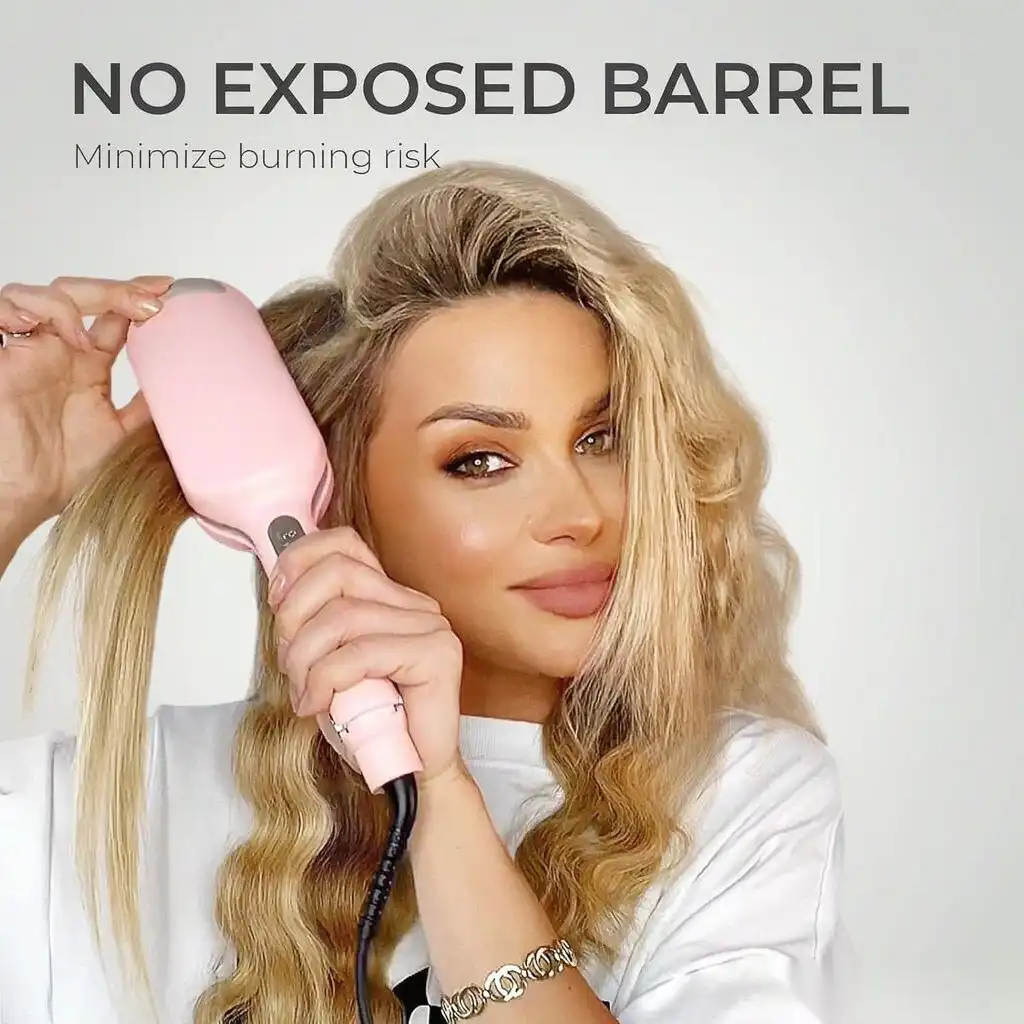
Step-by-Step Tutorial: How to Make Perfect Beach Waves With a Curling Iron
To get waves like those in a spa, you need to carefully plan your steps and practice. The steps in this process make it easy to follow along, and the results are always the same, whether you're styling one client or training a whole team.
Preparing Your Hair
Hair that is clean and fully dry takes heat treatment better. Cover each section from roots to tips with a heat protectant spray that has silicone or keratin derivatives in it. These items make a heat screen that keeps strands safe from temperatures above 200°C. Brush it through to make sure the protectant covers all of it and gets rid of knots that could get caught while rolling.
Temperature Selection Guidelines
For best results, hair that is fine or damaged should be heated to 150°C to 170°C. Hair that is coarse or thick may need 180°C to 210°C. Digital temperature control lets you make exact changes in 5–10 degree steps. This is one feature that sets professional-grade equipment apart from basic consumer models. The 60W power output in small wireless designs is enough to keep the temperature stable even when the device is running all the time.
Sectioning Strategy
Split your hair into four sections, two in front and two behind you, and use clips to hold each one in place. Use sections that are about 2 to 3 cm wide. Thinner sections make waves that are more defined, while thicker sections make texture that is less defined and more relaxed. Before going to the hairline, building your confidence in less noticeable areas like the nape of the neck is a good idea.
Wrapping Technique for Natural Waves
Hold the curling iron horizontally and wrap hair around it, but don't wrap the last 2 to 3 cm. This will give it that signature "not done" look. Wrap each section in a different direction, first toward your face and then away, so the waves don't bunch up. Hold the force without pulling for 8 to 10 seconds before letting go. This timing lets enough heat move without exposing the material too much.
Finishing Touches
Let the waves cool all the way down before touching them after curling all the parts. Instead of brushing, run your fingers through it. Brushing can mess up the wave pattern. A light-hold texturizing spray adds shape without making hair stiff, and a shine product makes hair look polished for special events. These finishing touches make clothes last longer, especially in hot places where styles tend to fall flat.
Procurement Considerations for Distributors and OEMs
Finding thermal styling tools to sell in stores requires more than just comparing product specs. Strategic buyers look at manufacturing partners through a number of different views to make sure that the partnership will work well in the long run.
Supplier Evaluation Criteria
The output potential of a curling iron manufacturer has a direct effect on how reliably orders are filled. During busy times, facilities that are bigger than 10,000 square meters and have more than 500 skilled workers can handle changes in volume. Having in-house research and development teams—ideally with 30 or more designers and 40 or more engineers—shortens the time it takes to customize products and get ideas to market-ready products within tight launch windows. Companies with 30 or more technical patents show that they can do more than just contract manufacturing.
Customization Flexibility
For beauty brands that use design to set themselves apart, they need partners who can accept low minimum order amounts while the products are being tested. Suppliers that offer 3-day sample turnaround and batch sizes of less than 1,000 units let you quickly test the market before committing to large production runs. Full-range customization includes adding a logo, designing the packaging, changing the colors, and even changing the barrel diameter to make unique product lines.
Quality Assurance Protocols
Defects are found before they reach end users through multistage inspection methods such as IQC for arriving materials, IPQC during production, FQC for finished goods, and OQC before they are shipped. Audits from SGS, TUV, or Intertek, on the other hand, show that manufacturing methods are in line with international standards. When there are liability concerns about injuries caused by heat or electrical problems, these high-quality gates become very important.
Warranty and After-Sales Support
A guarantee that lasts for three years shows that the maker is confident in the product's durability, which is a strong selling point for stores that want to educate hesitant customers. Lifetime maintenance programs make sure that devices can still be fixed after the guarantee period is over. This builds brand loyalty and cuts down on electronic waste. Dedicated account managers who send video reports on production in real time create openness that makes relationships between buyers and sellers stronger.
Conclusion
Beauty entrepreneurs who want to serve trend-conscious customers can make money by learning how to use thermal styling tools to create beach waves. The method is easy to learn and can be used to achieve a wide range of styles. This makes it an important skill for both pros and amateurs. When brands are building their own labels, choosing the right equipment means finding a balance between technical performance, safety compliance, and cost-effectiveness. As companies keep coming up with new ideas like wireless technology, fast heating systems, and smart temperature control, the global market for high-quality hair styling tools grows. When procurement teams work with experienced sellers, they can get access to a wide range of customization services, strict quality control, and quick support systems that set their products apart in the retail market.
FAQ
What temperature setting works best for beach waves?
The best temperature ranges depend on the type of hair. Hair that is fine or dyed should stay between 150°C and 170°C to keep it from getting damaged. Hair that is thick or coarse, on the other hand, needs to be between 180°C and 210°C to be reshaped properly. Starting with lower temperatures and slowly raising them helps find the lowest level of heat that will last. Modern tools with digital settings let you make exact changes that keep hair healthy even after many stylings.
Do clipless styling wands create better beach waves than traditional clamp models?
Clipless designs don't leave the crease marks that come with clamps, so the waves look more natural. But they need to be manually adjusted for tightness, which may be hard for newbies. For people who aren't very experienced, traditional clamp versions are easier to use. Professional designers like clipless tools because they are more flexible, but consumer-focused goods often have clips to make them easier to use and faster to learn.
Can one device suit all hair types?
Good thermal tools with temperature settings that can be changed and barrel sizes that are right for different hair types. A barrel with a diameter of 31 mm works well for medium to long hair of different thicknesses. With temperature ranges from 150°C to 210°C, devices can handle hair that is fine to thick all in one unit. When you use the right heat settings and section your hair, a well-designed product can work well for all hair types.
Partner with Kingwe-star for Premium Curling Iron Solutions
Kingwe-star is a top company that makes heated hair style tools. They have been in business for 16 years and have advanced OEM and ODM capabilities. Forty dedicated engineers and thirty professional designers work in our facility to turn your brand's ideas into styling tools that are ready for the market. To meet the needs of the global market, all of our products go through quality management that is ISO 9001-certified and is in line with CE, RoHS 2.0, and FCC regulations. We let you choose the size of your order, starting with small test runs. Samples are delivered within three days to help you get to market faster. Our customization services include adding your logo, designing the packaging, and giving you technical information. This is true whether you need lithium battery models that are wireless or corded models with MCH ceramic heating. You can talk to us about your curling iron supplier needs and get a free catalog of our newest thermal styling products by emailing luna@bllgift.com.
References
- Thompson, R. (2021). Professional Hair Styling: Techniques and Tools for Modern Salons. Beauty Industry Press.
- Martinez, L. & Chen, W. (2020). "Thermal Damage Prevention in Heat-Based Hair Styling," Journal of Cosmetic Science, 71(4), 223-238.
- International Organization for Standardization. (2018). ISO 9001:2015 Quality Management Systems – Requirements. Geneva: ISO Publications.
- Davis, K. (2022). The Business of Beauty: Supply Chain Management for Cosmetic Tools. New York: Retail Insights Publishing.
- European Committee for Electrotechnical Standardization. (2019). EN 60335-2-23: Safety of Household Electrical Appliances – Particular Requirements for Hair Care Appliances. Brussels: CENELEC.
- Wang, S. (2023). "Consumer Preferences in Portable Beauty Devices: A Cross-Cultural Analysis," International Journal of Consumer Studies, 47(2), 456-471.
_1779702960313.png)
_1779178193299.png)
_1779947509721.jpg)
_1779703042122.png)
_1779179662775.png)
_1779180807109.png)