- English
- French
- German
- Portuguese
- Spanish
- Russian
- Japanese
- Korean
- Arabic
- Greek
- German
- Turkish
- Italian
- Danish
- Romanian
- Indonesian
- Czech
- Afrikaans
- Swedish
- Polish
- Basque
- Catalan
- Esperanto
- Hindi
- Lao
- Albanian
- Amharic
- Armenian
- Azerbaijani
- Belarusian
- Bengali
- Bosnian
- Bulgarian
- Cebuano
- Chichewa
- Corsican
- Croatian
- Dutch
- Estonian
- Filipino
- Finnish
- Frisian
- Galician
- Georgian
- Gujarati
- Haitian
- Hausa
- Hawaiian
- Hebrew
- Hmong
- Hungarian
- Icelandic
- Igbo
- Javanese
- Kannada
- Kazakh
- Khmer
- Kurdish
- Kyrgyz
- Latin
- Latvian
- Lithuanian
- Luxembou..
- Macedonian
- Malagasy
- Malay
- Malayalam
- Maltese
- Maori
- Marathi
- Mongolian
- Burmese
- Nepali
- Norwegian
- Pashto
- Persian
- Punjabi
- Serbian
- Sesotho
- Sinhala
- Slovak
- Slovenian
- Somali
- Samoan
- Scots Gaelic
- Shona
- Sindhi
- Sundanese
- Swahili
- Tajik
- Tamil
- Telugu
- Thai
- Ukrainian
- Urdu
- Uzbek
- Vietnamese
- Welsh
- Xhosa
- Yiddish
- Yoruba
- Zulu

Beginners can use a hair straightener brush easily. Traditional flat irons clamp and compress hair, whereas a straightening comb glides through hair and distributes heat evenly across 3D brush teeth. This design straightens hair 2X better with 50% less heat. The gadget warms up in 20 seconds and has 5 hair-type-specific temperatures. Divide your dry, detangled hair into manageable sections and brush from roots to tips. The result? Salon-quality smoothness without frizz in a fraction of the time.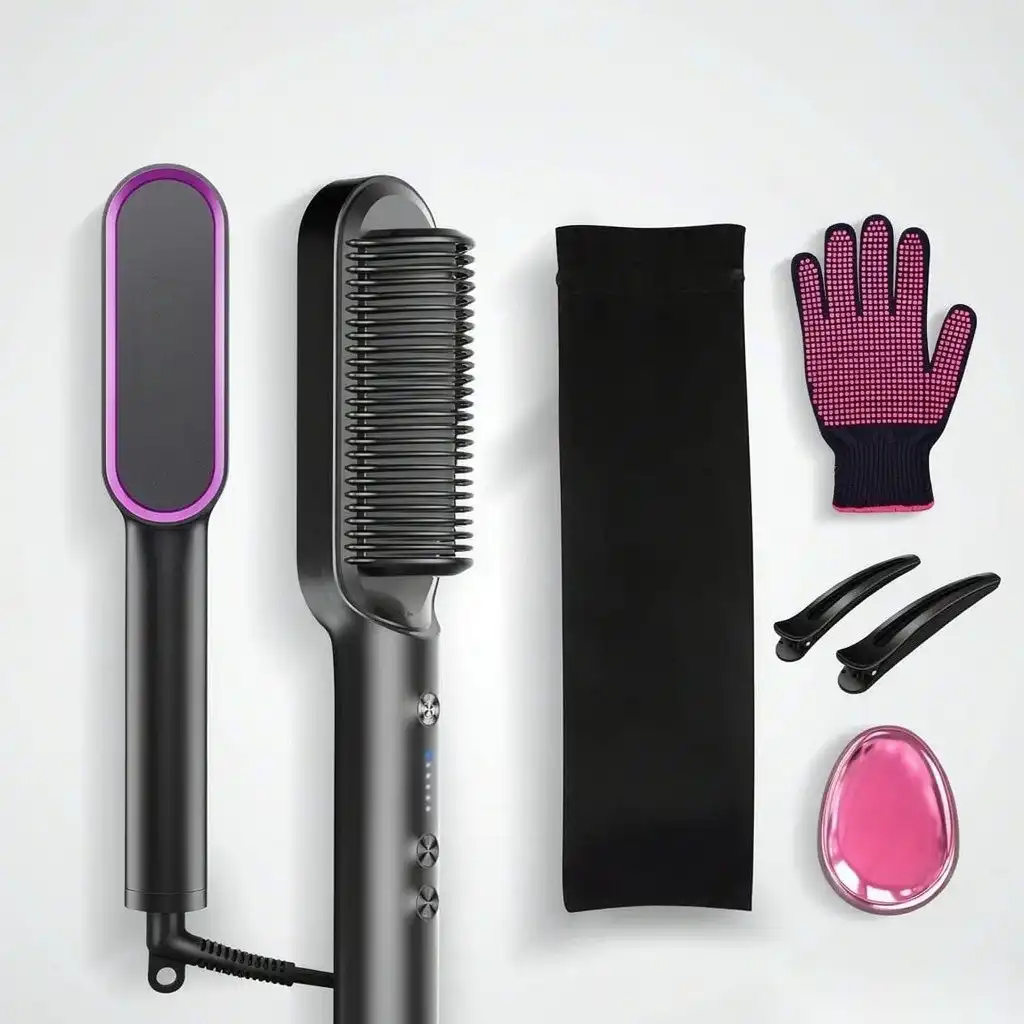
Understanding Hair Straightener Combs and Brushes
What Makes Hair Straightener Combs Different
The hair straightener brush advances heat styling. These tools don't push hair flat with two hot plates, which may damage and dry it. They feature multi-touch ceramic-coated bristles. Many individuals wish to avoid the artificial "flat-hair" appearance, yet this style evenly distributes heat.
More hair layers are used to straighten hair from several angles using the 3D brush-tooth structure. Straightening hair traditionally is difficult and time-consuming. This strategy solves crucial issues like these. These products combine the advantages of a brush and a straightener for a fast and simple solution that professional hairstylists and ordinary people prefer.
Technical Advantages of Modern Straightening Brushes
Modern versions employ Positive Temperature Coefficient (PTC) heating. This method keeps temperature output constant and returns quickly between sections. Heat damage is commonly caused by temperature variations; thus, precision is crucial. The brushes are composed of heat-resistant PA66 or PET and feature ceramic coatings to reduce scratching. The brush moves across surfaces without becoming stuck or pulled.
Dual-anion producers are currently in great flattening combs. They emit almost 10 million negative ions per cubic centimeter. Negative ions neutralize hair's static charge. This seals cuticle scales and retains natural moisture. The outcome is smoother, shinier, and less flyaway hair. This used to need expert stylists' tools.
Safety Features That Matter
The smart way that modern curling brushes are made makes them safer. The heaters inside get as hot as 230°C, but anti-scald technology keeps the brush tips below 50°C. Auto-off features turn off after 60 minutes of not being used. This keeps things safe and saves power. In tests, the flexible line has been shown to be able to handle more than 10,000 turns. It stops the line from getting tangled and makes sure the device stays safe to use for a long time.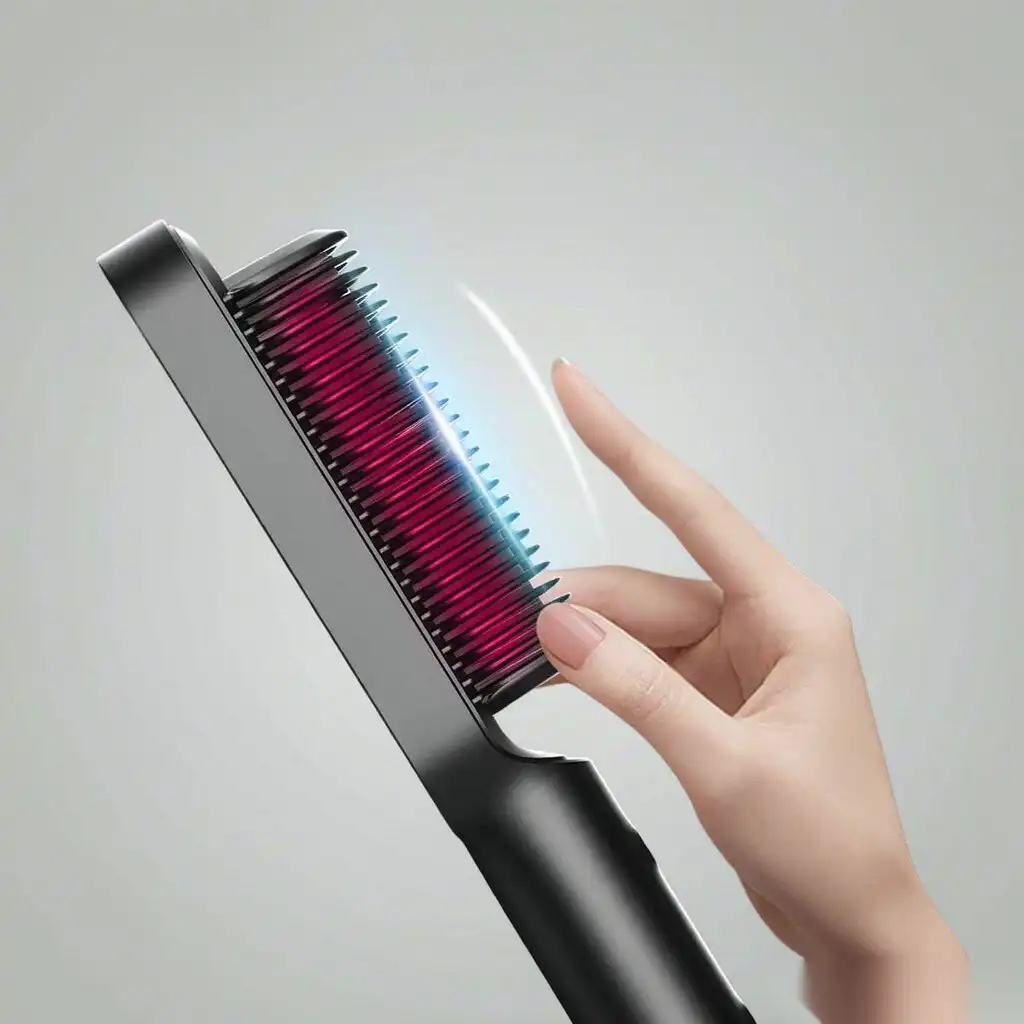
Step-by-Step Guide: How to Use a Hair Straightener Comb for Beginners
Preparing Your Hair Properly
The outcome depends on your planning. Always start with dry hair. A heat styler on damp hair may cause "bubble hair," which damages the hair cortex by rapidly evaporating moisture. You may blow-dry your hair completely or let it dry after washing.
Use a wide-tooth comb to gently separate your hair from ends to roots without breaking it. Apply heat protectant evenly on hair. Pay special attention to the midsection and ends, which are weakest. This barrier separates your strands from the hot devices. This minimizes thermal stress.
Selecting the Right Temperature
The majority of hair straighteners offer five heat settings from 120°C to 230°C. Fine or chemically treated hair requires colder temperatures (120°C to 160°C) to prevent damaged protein connections. The ideal temperature for normal hair is 160°C–190°C. Higher temps (190°C to 230°C) may be needed for thick, tough, or multitextured hair.
Not too hot initially is usually preferable. If necessary, gently increase the temperature. Smoke or steam indicate overheating. Remember that using the proper procedure at acceptable temperatures is preferable to rushing through at maximum heat, which destroys hair structure and makes it frizzy.
Sectioning for Best Results
Cut your hair into manageable pieces with clips. Because smaller pieces are burned more deeply, the results are neater and last longer. I work with pieces that are one to two inches wide most of the time, but if the hair is thick, I might need to cut them down even more.
As you work your way up, make sure that the finished parts don't get in the way of the style. By following this plan, you'll make sure you don't miss any spots and won't have to make multiple passes, which would expose you to more heat than necessary.
Proper Brushing Technique
Your hair should be facing down and toward the ends when you hold the smoothing comb. With a hair straightener brush the area slowly and continuously, starting about an inch from your scalp and never going right up against it. Do not speed up or slow down too much. Moving too slowly can damage things with the heat, and moving too quickly stops heat from moving.
Just keep the force the same and don't pull or tug. It should be easy for the tool to go through your hair. If you get stuck, stop and untangle that part by hand before moving on. For most people, two to three passes are enough for each part. However, spots that won't go away may need it.
Post-Styling Care and Maintenance
After you dry your hair, let it cool down all the way before you touch it or style it any more. This is the best time for the hair layer to seal, which will keep your straight style in place. Put some finishing product or light oil on your hair to make it shine and protect it from the rain.
The heat will last longer and the brush will stay clean if you clean it every 5 to 10 times. Use a slightly wet cloth to wipe the brush clean after taking the device off and letting it cool. This will get rid of any product buildup. Do not submerge the device in water or clean it with strong chemicals, as these can hurt the heating elements and electrical parts.
Comparing Hair Straightener Comb with Other Hair Styling Tools
Speed and Efficiency Analysis
One big reason why straightening brushes are better than older methods is that they save time. To use a flat iron properly, you need to make sure the plates are lined up just right and work on one part at a time. This can take between 30 and 45 minutes for hair that is about shoulder-length. The hair straightener brush cuts this time in half. In 15 to 20 minutes, most people can style their hair all the way through.
Greater surface area lets you touch more hair at once, which speeds up the process. Little pieces of hair that are stuck between plates are what flat irons work on. On the other hand, straightening combs work on a lot more hair at once, which speeds up the process without poor quality.
Hair Health Considerations
Flat irons heat and press hard on small pieces of hair at the same time. This gives the hair stress points that make it weaker over time. It can break and split the hair shaft if you use it over and over again. The heat from straightening brushes is spread out over a larger area more evenly, which makes the stress from the heat lessen.
Good straightening combs usually have coatings made of ceramic or tourmaline. These give off infrared heat that heats hair faster than heat from metal plates. Users say that this hot iron straightens hair from the inside out while keeping just the right amount of moisture. This is why they say it damages hair 50% less than regular flat irons.
Versatility Across Hair Types
Different hair types respond to styling tools in different ways. Straighteners can make fine hair too flat and limp, taking away all of its natural volume. When you brush your hair with a straightening comb, it leaves some lift at the roots and smooths out the lengths and ends, making your hair look more natural and full.
The many touch points on brush bristles help with thick, curly hair because they grab and move even the most stubborn strands. When you use a brush to straighten curly hair, the teeth separate and isolate each curl, putting them directly in contact with the heat elements instead of just smoothing the top film.
Corded vs. Cordless Models
You can use a corded straightening brush for as long as you want because it has a steady power output. This makes them great for hair shops and people whose hair is longer and thicker and needs more time to style it. It's less movable, though, and the cord could get caught up while you use it.
These are great for traveling and for quick touch-ups during the day because they don't have cords. Most types that run on batteries can be used for 30 to 40 minutes before they need to be charged again. When the batteries run out, though, they may lose power, and the highest temperature they can reach is generally lower. This makes them less useful for thick or tough hair.
How to Choose the Best Hair Straightener Comb for Your Business Needs
Essential Procurement Criteria
It depends on a number of things how well the product sells and how satisfied the buyers are when they find hair smoothing tools for sale or for professional use. The range and accuracy of the temperature are very important. The temperatures on the devices should be able to be changed from at least 150°C to 230°C, and the screens should show the exact temperatures. With this much accuracy, users can change the heat levels to meet their hair's needs. This makes the results better and lowers the risk of damage.
The person feels different after the heat-up time. High-end models heat up in 20 to 30 seconds, which meets the needs of customers who want to look good quickly and easily. When users have to wait longer for a product to warm up, it makes them angry and makes them think less of it, which hurts brand loyalty and repeat purchases.
Material Quality and Durability
How well they work and how long they last depend on what the hair straightener brushes are made of. Some good ones have ceramic or tourmaline coatings on PA66 or PET brushes that make them heat-resistant. The layer on these materials doesn't come off or bend when heated and cooled many times, which makes it harder for heat to spread and increases friction. A lot of cheap models are made of plastics that don't last long and break, which makes customers angry and causes them to send them back.
The heater itself should use either PTC or MCH (Metal Ceramic Heater) technology. These PTC gadgets work well in hot places and last a long time. On the other hand, MCH heaters heat up faster and are easier to handle. Both of these are safer and work more consistently than regular heating elements that use wires.
Certification and Compliance Requirements
When a business buys something from another business, international approvals show that the product is safe and of good quality. When you see the CE mark on something, it means that it meets European rules for safety, health, and the environment. EMC interoperability is proven for the U.S. market by FCC approval. RoHS 2.0 compliance checks that chemicals that can't be used meet rules around the world.
The product has been checked by a third party to make sure it is safe. Certifications like UL, ETL, and Intertek provide proof of this. Not only are these certificates required by law, but they also show people that you care about quality and protect your business from lawsuits. If a product doesn't have the right licenses, it could be taken back by customs, taken off the market, or get you in trouble with the law.
Evaluating Supplier Partnerships
Honest folks go beyond inexpensive. Find OEM/ODM businesses. Trademark and package yourself. Build your brand in high-volume places.
Sample delivery speed indicates seller activity. Big corporations may give samples in 3–5 days for market analysis and product success. Minimum payments are important. Small-batch supplier customization minimizes inventory for low-risk product releases and holiday testing.
Manufacturing and quality management show organizational maturity. ISO 9001-compliant companies with documented inspection techniques (IQC, IPQC, FQC, OQC) ensure production quality. Outsourced vital activities have less quality control than companies that analyze raw materials and use automated manufacturing lines.
Warranty and After-Sales Support
Full-guarantee brands value and safeguard your investment. Premium vendors give 3-year guarantees on manufacturing errors, damaged parts, and lifelong maintenance. Electrical and heating systems are stressed when working; therefore, this assistance is beneficial.
One-on-one account management makes it easier to discuss order details, production reports, and delivery difficulties with customer support. Faster shipment and real-time production photos prove that they care about transparency and client satisfaction. Business ties improve and processes function smoothly.
Conclusion
You must understand how a hair straightener brush works to master it. These products are suitable for professionals due to their 3D brush teeth and PTC heating systems that decrease brushing time in half and prevent hair from heat damage. Clean hair, the appropriate temperature, strategic sectioning, and smooth brushing are the best ways to straighten hair.
If a company wants to enter or develop in thermal styling, it must go beyond product appearance. They must consider supplier abilities, material quality, and warranty support. As technology advances and consumers understand more about hair health, firms with superior straightening brushes and dependable manufacturing agreements may succeed.
FAQ
1. Can the Hair Straightener Brush Be Used on Wet Hair?
If the brush wasn't made to work with wet hair, you should only use it on hair that is fully dry. When you put high heat on wet hair, the water inside it quickly evaporates. This leads to "bubble hair," a bad disease in which tiny holes appear in the hair cortex. Damage like this can't be fixed, and it makes the material weak and easy to break. Always make sure your hair is completely dry before you use heat on it.
2. How Often Should I Clean My Straightening Comb?
To keep it running well, clean your straightening brush every 5 to 10 times you use it. When product builds up on the brushes, they don't work as well at transferring heat, and there are more hygiene issues. Once the brush is cool and unplugged, wipe the bristles clean with a slightly wet cloth to get rid of any styling products, natural oils, or other gunk that has built up. The device will last longer, and the heat will be spread out evenly while it's being used if you clean it often.
3. Is It Safe for Chemically Treated Hair?
You can style chemically treated or colored hair without hurting it if you use a straightening comb the right way. To protect protein links that have been broken, hair that has been damaged needs cooler temperatures, ideally between 120°C and 160°C. Now, you have to use precise temperature control to get it right. Before styling, use products that protect hair from heat, and don't do it more than twice or three times a week. To keep your hair healthy, give it time to heal between treatments.
Partner with Kingwe-star for Premium Hair Straightener Brush Solutions
Since 2001, Kingwe-star has been making unique beauty tools for over 16 years. They have worked with suppliers, shops, and private buyers from more than 100 countries. Our facility is 10,000 square meters and is where design, research and development, and production all happen. We are a well-known company that makes hair straightener brushes. Our 30 skilled designers can do both OEM and ODM work, and in just three days, they can turn your brand's ideas into products that are ready to sell.
The ISO 9001 certification helps us keep a close eye on quality. We also have a number of foreign safety certificates, such as CE, RoHS 2.0, FCC, and UL testing by SGS, TUV, and Intertek. These hair straighteners have advanced 3D brush teeth that heat with PTC technology. They also have 5 temperature settings that can be changed and heat up in 20 seconds. These features are made to meet the needs of users in both stores and salons. You can talk to our team about your needs and look into bulk pricing by emailing luna@bllgift.com. Over 500 clients from around the world trust our production relationship for quality and reliability.
References
1. Thompson, M. & Richards, K. (2023). Thermal Hair Styling: Science, Safety, and Consumer Trends. International Journal of Cosmetic Science, 45(2), 178-194.
2. Chen, L. (2024). Advanced Heating Technologies in Personal Care Appliances. Materials Science and Engineering Review, 12(1), 45-67.
3. Global Beauty Tools Market Research Institute. (2024). Hair Straightening Devices: Comparative Performance Analysis 2024. New York: GBMRI Publications.
4. Patterson, S. & Delgado, R. (2023). Minimizing Heat Damage: Best Practices in Thermal Hair Care. Professional Beauty Magazine, 38(4), 112-128.
5. International Organization for Standardization. (2023). Quality Management Systems for Beauty Device Manufacturing: Guidelines and Best Practices. Geneva: ISO Press.
6. Williams, J., Foster, A., & Kumar, P. (2024). Consumer Preferences in Hair Styling Tools: A Cross-Cultural Study. Journal of Consumer Behavior Research, 19(3), 201-223.
_1778297140365.png)
_1779181551319.png)
_1779947477692.jpg)
_1779184142744.png)
_1779947817260.jpg)