- English
- French
- German
- Portuguese
- Spanish
- Russian
- Japanese
- Korean
- Arabic
- Greek
- German
- Turkish
- Italian
- Danish
- Romanian
- Indonesian
- Czech
- Afrikaans
- Swedish
- Polish
- Basque
- Catalan
- Esperanto
- Hindi
- Lao
- Albanian
- Amharic
- Armenian
- Azerbaijani
- Belarusian
- Bengali
- Bosnian
- Bulgarian
- Cebuano
- Chichewa
- Corsican
- Croatian
- Dutch
- Estonian
- Filipino
- Finnish
- Frisian
- Galician
- Georgian
- Gujarati
- Haitian
- Hausa
- Hawaiian
- Hebrew
- Hmong
- Hungarian
- Icelandic
- Igbo
- Javanese
- Kannada
- Kazakh
- Khmer
- Kurdish
- Kyrgyz
- Latin
- Latvian
- Lithuanian
- Luxembou..
- Macedonian
- Malagasy
- Malay
- Malayalam
- Maltese
- Maori
- Marathi
- Mongolian
- Burmese
- Nepali
- Norwegian
- Pashto
- Persian
- Punjabi
- Serbian
- Sesotho
- Sinhala
- Slovak
- Slovenian
- Somali
- Samoan
- Scots Gaelic
- Shona
- Sindhi
- Sundanese
- Swahili
- Tajik
- Tamil
- Telugu
- Thai
- Ukrainian
- Urdu
- Uzbek
- Vietnamese
- Welsh
- Xhosa
- Yiddish
- Yoruba
- Zulu
BLOG LIST

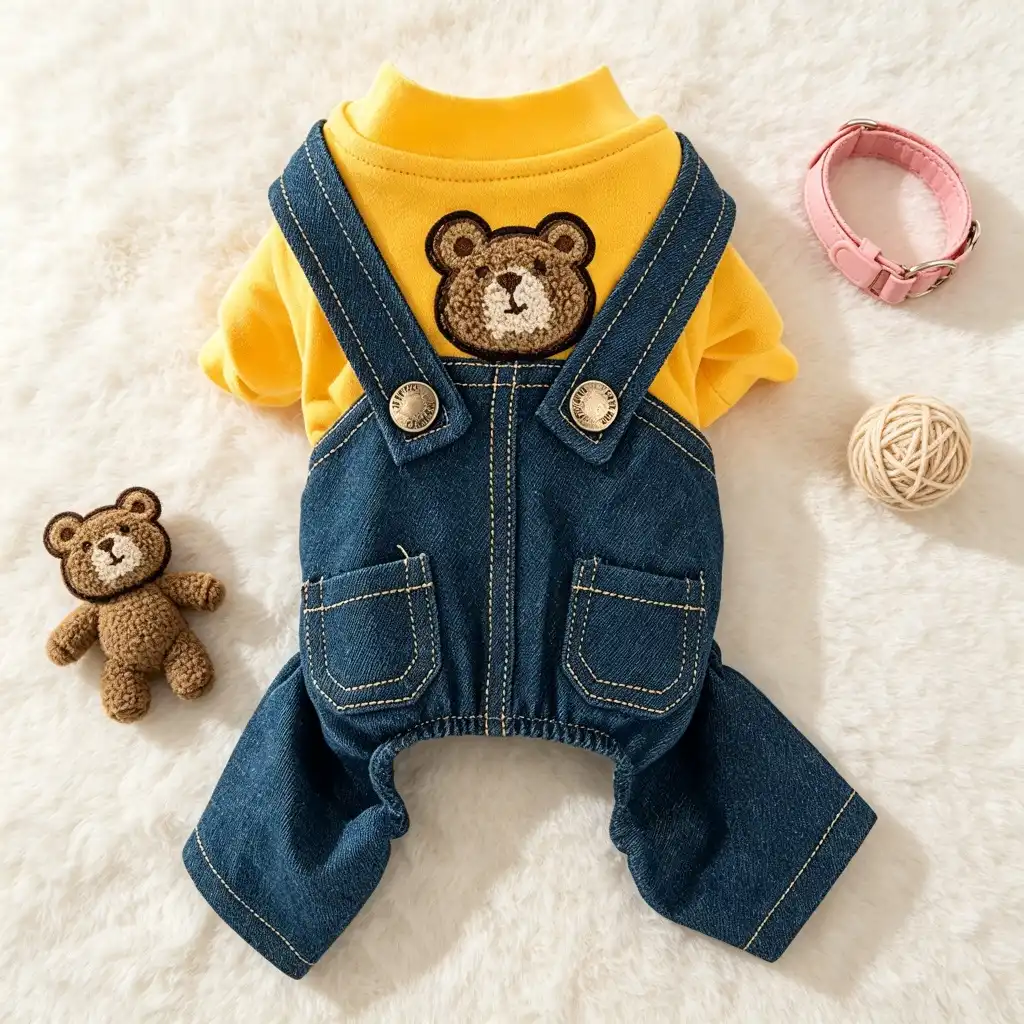
Most dogs begin showing discomfort when outdoor temperatures drop below 45°F (7°C), making protective outerwear a practical necessity rather than a fashion statement. A quality dog coat becomes essential when the thermometer reads 32°F (0°C) or lower, particularly for small breeds, puppies, senior pets, and those with thin fur. Wind chill and moisture amplify cold stress, so understanding these thresholds helps pet owners safeguard their companions while creating robust market opportunities for brands offering functional, well-designed canine apparel that balances warmth, mobility, and safety.
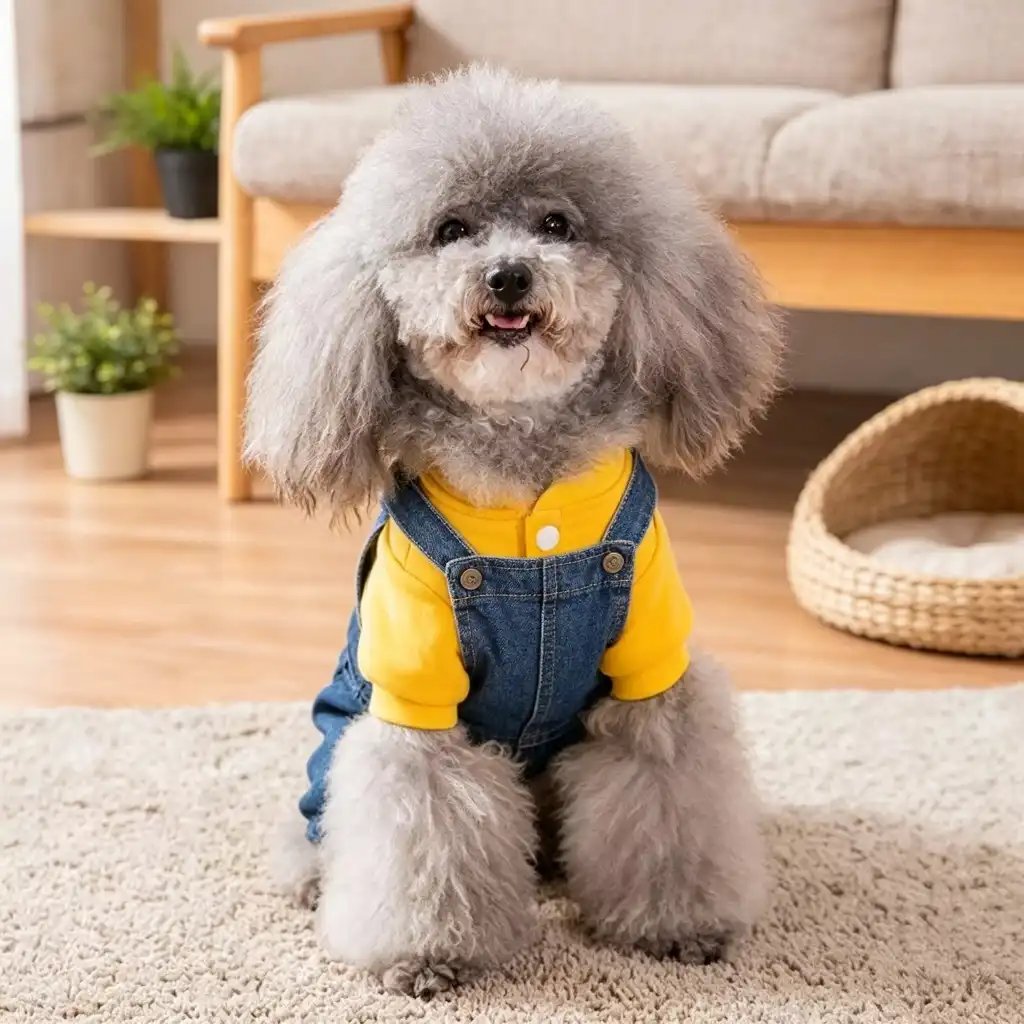

Understanding When Dogs Need a Coat
A dog's temperature perception depends on its breed, body type, and surroundings. Huskies and other northern dogs have a warm layer. The lack of this in short-haired dogs like Chihuahuas and Greyhounds makes even moderate temperatures stressful. Age matters. When outdoors, puppies and senior dogs require particular attention since they have problems maintaining body temperature. Consider your dog's health. Cold weather hurts arthritic and immune-compromised dogs, who require continual warmth.
Breed-Specific Temperature Tolerances
Surprisingly well, big dogs with thick coats can handle cold weather. Most of the time, they don't need extra clothes to stay warm in temperatures as low as 20°F (-6°C). It is best to keep toy dogs and dogs that weigh less than 15 pounds inside when the temperature drops below 50°F (10°C). Cold air makes it hard for dogs with short muzzles to breathe, like Bulldogs. They need clothes that are both warm and open. Product lines that meet the needs of a wide range of users in different areas and breeds can be chosen by buying teams that know about these differences.
Environmental Factors Beyond Temperature
A dog loses a lot more heat when the wind speed is 15 mph or more. This makes a quiet 35°F day feel much cooler. Both rain and snow are dangerous because they make fur wet, which makes it less warm and increases the chance of freezing. In cities with salty streets, chemical allergens make things even worse because they hurt paw pads and make people not want to be outside for long periods of time. More than one problem is solved by products with waterproof shells, adjustable closures, and bright trim. This makes them more valuable for shops that want to draw honest pet owners.
Recognizing Cold Stress Signals
People who own dogs often miss the signs that their dogs are unhappy because they change the way they act. One of the most obvious signs is shaking, which happens when the body tries to make up for lost heat. When an animal hits its tolerance level, it doesn't want to walk, lifts its hands over and over, or looks for a place to hide. There is a chance that the animal will die if it stays out in the cold for a long time. The ears, tail, and paw pads could get frostbite. By telling people about these warning signs, your line of products stops people from getting sick instead of just looking nice. This gets people to trust the brand more.
Types of Dog Coats and Their Suitable Temperature Ranges
Different items stand out by having architectural characteristics suitable for weather and activity. There are padded jackets for chilly regions, waterproof jackets for rainy places, and light coats for seasonal places. Performance textiles for outdoor clothing have been developed thanks to material science advances. Synthetic down, moisture-wicking layers, and breathable covers are beneficial without being cumbersome. This section allows businesses to match technical features with pricing points and target segments, although it can be improved.
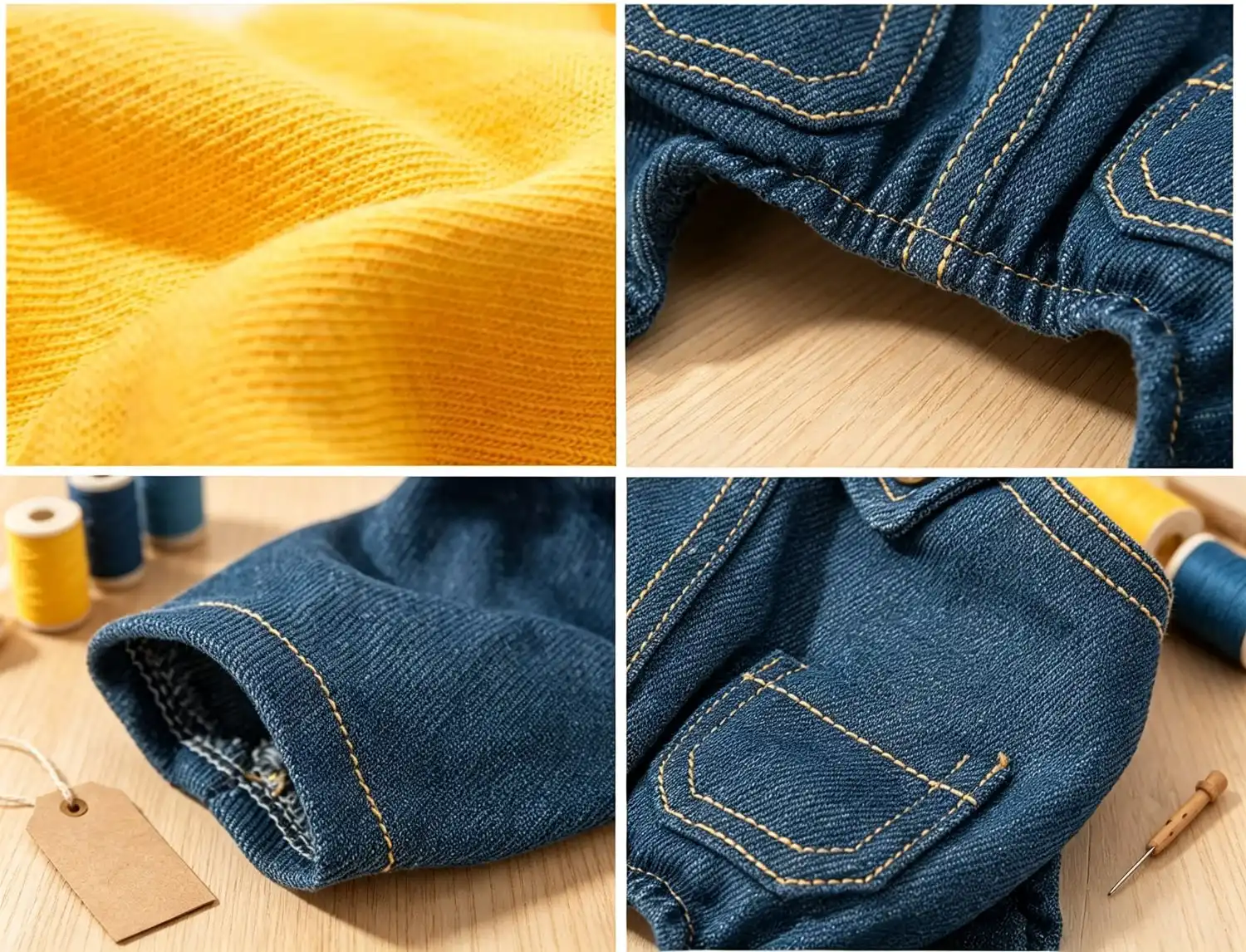
Insulated Winter Coats for Subzero Conditions
When it's below 20°F (-6°C), dog coats need winter parkas to keep them warm, just like people do. A good insulated coat has synthetic fill or recycled polyester batting between the tough outer shell and the soft inside lining. These styles work best in dry, cold places where the major risk is wind getting in. Long chest panels, high collars, and coverings around the belly keep heat from leaving the body's core. A lot of people in this area like to stay busy in the winter, which means that brands can charge more when they want to sell to people in the north.
Waterproof and All-Weather Designs
In places where it rains, clothes need to keep water out while still letting air flow through them so you don't get too hot while you're moving around. Underlayers stay dry because the durable water-resistant (DWR) coatings on technical fabrics keep water and snow off of them. Because seams are sealed and there are storm flaps around closures, leaks that hurt performance can't happen. Temps in this group are between 2°C and 10°C, or 35°F and 50°F. It rains and is not too cold. This is great for city dwellers because it means they don't have to change clothes to go from morning walks to weekend camping trips.
Lightweight Fleece and Transitional Layers
You don't need as much cushioning in spring and autumn, but you should still cover it. Recycled polyester fleece jackets keep you warm in 45°F to 60°F (7°C to 15°C) weather. These products keep aging or recovering pets warm and comfy. Fleece breathes, keeping you warm and cool while playing. Budget-conscious customers looking for multi-season apparel should visit this neighborhood. It contains brands that use eco-friendly products.
Reflective and High-Visibility Safety Options
Nighttime safety and warmth may be achieved using standout garments. Photoluminescent or bright strips alert drivers to early morning and late-night pedestrians. This reduces accidents. They supplement insulation, making them suitable for a wide variety of temperatures. Residents in safe cities favor qualities that make things easy to see. This distinguishes businesses that invest money in technological elements that address real-world challenges beyond safety.
How to Choose the Right Dog Coat: A Decision Support Framework
To be excellent at purchasing, you must balance what individuals desire with what the firm requires. Its durability and consumer satisfaction depend on its substance. Luxury materials don't pill and retain their form after washing. They can also withstand dog wear. Size accuracy affects returns directly. Detailed measuring guidelines and several sizing options reduce brand anxiety after the transaction. People want to know how their purchases impact the environment; thus, eco-friendly policies influence what they buy.
Material Selection and Durability Standards
Most buyers select polyester because it's durable, colorful, and simple to clean. Eco-friendly versions are made from recycled polyester from plastic bottles, which eco-conscious people like. The item will endure longer if dogs are wounded by thorns or rough surfaces since ripstop weaves prevent tearing. Kingwe-star and others promote RoHS 2.0 and Oeko-Tex Standard 100. No dangerous elements mean the items are safe and durable for regular use.
Ask about the fabric's weight (grams per square meter), water column grade (for waterproofness), and wear test results to evaluate a supplier. Technical metrics enable comparisons beyond appearance. We can make fact-based decisions, eliminating quality disagreements. Testing facilities help suppliers check quality, eliminating small mistakes that harm brands.
Sizing Systems and Fit Considerations
Pet clothing sizes don't always match, which frustrates customers and raises returns. Some brands measure neck, chest, and back length from collar to tail base. Many body types may be accommodated by elastic strips, Velcro ties, and buckle systems. Sometimes sizes are off. Provide video training and written guides with clear measurement instructions to avoid this. Your brand will seem professional and customer-focused.
Breed size matters when producing anything. Deep-chested greyhounds need tight-waisted clothes. Bulldogs are bulky and require shorter clothes. Breed-specific and conventional sizes distinguish premium lines. This boosts income and fixes fit difficulties that ordinary plans don't.
Customization and Branding Opportunities
Branding pet items is still important for companies. Package labels, hang tags, and embroidered logos may distinguish common items and boost brand value. Kingwe-star's design team can assist you. Three or more free custom design drafts and low minimum purchase quantities make exploring new concepts affordable. With this much freedom, you may develop seasonal items or enter niche areas with unknown demand.
Beyond identification, function-based customization satisfies market demands. For chilly markets, heating element pockets and D-ring harness holes allow you to connect a leash without taking off your coat. Companies that create goods must work with their suppliers to find the best technique to make hard-to-make, inexpensive products. Flexible manufacturers can adjust to unique demands, unlike rigid bulk producers.
Best Practices for Dog Coat Use and Maintenance
To make your firm stand out, educate customers on how to maintain items since maintenance influences longevity. Polyester textiles may be cleaned several times if they are washed in a machine at a safe temperature (below 105°F/40°C) using mild soaps without optical brighteners that degrade water-repellent coatings. High-heat tumble drying may melt synthetic fibers or break waterproof coatings. Air drying keeps fabric form better. Clear care labels extend product life and prevent premature breakdown, which may lead to unfavorable evaluations. They demonstrate the brand's professionalism.
Fitting Techniques for Optimal Comfort
It's important to find the right fit so that you can move freely while still being covered. Coats should go from the base of the neck to just before the tail. This way, the legs can move easily, and the step length isn't limited. It's best for chest straps to fit close to the body without pressing on the ribs. Two fingers should be able to easily move between the fabric and fur. If the dog coat scratches or tries to take off the clothes too much during the first wear, it may mean that the size needs to be changed. Customers trust brands more and are more likely to buy something when they make it easy for them to return and swap things during the fit-testing process.
Storage Strategies to Extend Product Life
Things that are stored during the off-season need to be kept dry and free of bugs. Clean your clothes really well before putting them away to get rid of any organic residues that could attract bugs or help mildew grow. When you let air flow through clothing bags, dust and moisture don't build up as they do in plastic containers that are sealed shut. To keep bugs away naturally, use lavender bags or cedar blocks. Do not use chemicals that dogs don't like. When shops include storage tips in blog posts or on the back of packaging, it's an extra bonus that customers will want to buy from them again.
Case Studies and Industry Insights for Strategic Procurement
In North America, the market for clothes for pets keeps growing every year. About 35% of the sales in this group are winter clothes. Brands that do well take advantage of changes in seasonal demand by stocking up before the season starts. So, they can make sure they have enough space to make things before the busy times of the year, when prices go up and wait times grow. Companies offer better prices and more open schedules in the summer, so strategic buyers place their orders then. During the fall, companies slowly release their goods to keep their cash flow efficient and adapt to the changing needs of the market.
Emerging Material Technologies
Cold-weather coats have stitched-in battery heaters. New approaches may cost 3-4 times more than insulated ones. Residents face issues with prolonged cold. Electrical safety and battery maintenance and charging instructions should be included in hot goods. Successful supplier electronics integration reduces risk. Media and social media highlight these companies' distinctive goods.
Sustainable manufacturing alters youth and adult expectations. Eco-conscious buyers will pay extra for recycled polyester promises. Third-party certifications and secure supply chains may steal market share from environmental marketers. Kingwe-star passed BSCI and Sedex eco-manufacturing audits. Competition's purchasing partners acquire persuasive sustainability tales.
Supplier Evaluation Criteria
Credible producers have talent, not advertisements. Request a product production, quality control, and raw material storage facility tour or video. Your pattern development, size scaling marking, and prototype iteration scheduling questions show engineering skill. Strong suppliers manage customer accounts, announce new work, and prevent difficulties.
The documents indicate how severe the limitations are and how corporations may develop. European safety requirements apply to CE-marked products. CPSIA-marked products satisfy U.S. child and pet safety regulations. ISO 9001 manufacturers manage quality systematically. Improves batch homogeneity and reduces mistakes. These certificates prove the institution strives for excellence and protects buyers over time.
Conclusion
Dog coats can only take so much heat depending on breed, size, and location. However, broad principles may help you design and promote new products. In practically freezing conditions, dogs need warm clothes. Older and smaller dogs need more shelter in warmer weather. Material, fit, and design quality determine a product's success in competitive markets. Because informed cat owners care about their pets. Connecting with manufacturers that know their stuff, can improve, and have checkable compliance credentials may help businesses stay ahead of the competition and increase market share. Knowing these statistics enables you to make money year-round with Christmas items. Customer-focused product innovation and data-driven inventory planning allow this.
FAQ
1. At What Temperature Should I Put a Coat on My Dog?
When it gets below 45°F (7°C), you should usually think about getting your dog some outerwear. This is especially true for small breeds, puppies, and older dogs. When it's 32°F (0°C) or less outside, most dogs should wear layers to stay warm. We need to deal with wind chill and rain faster. On a 40°F day with wind, it feels colder than on a 40°F day with no wind.
2. How Do I Measure My Dog for a Coat?
Thirdly, measure the back of the dog from the base of the collar to the base of the tail. The neck should be the biggest part. The chest should be the largest part behind the front legs. Don't think that these sizes are the same for all types; instead, look at size charts from the manufacturer. If you're not sure what size to get, get the bigger one so it fits better.
3. Can Dogs Overheat in Coats?
Keeping an eye on how much people are moving and the room's temperature keeps it from getting too hot. Coats should be taken off when doing intense exercise or going from cold places outside to warm places inside. Dogs use breathing to keep their bodies cool. A dog is probably too hot if it drools a lot or looks for cool places. It needs to have its coat taken off right away.
4. Are Heated Coats Safe for Dogs?
Good heated designs use low-voltage systems that turn off automatically so they don't get too hot. Keep an eye on the skin the first time you use it, and every 15 to 20 minutes, check to see how it's doing. Pick things that have battery packs that can be taken off and put on another coat so that you can wash the old ones that have worn electrical parts.
5. What Materials Work Best for Dog Coats?
This type of fabric is good for the environment, lasts a long time, and doesn't get damaged by weather. For waterproof items to stay breathable, they need DWR treatments or materials that have been laminated. Stay away from things that are stiff or that rub against your skin. It doesn't hurt to wear them for a long time because the insides are soft, and the outsides are strong enough to handle the wear and tear of outdoor activities.
Partner with Kingwe-star for Premium Dog Coat Manufacturing
Kingwe-star has been making pet products for 16 years, which can help brands find reliable dog coat suppliers. Our 10,000-square-meter building is home to more than 500 trained workers who make eco-friendly polyester coats that are approved by RoHS 2.0, CE, and OEKO-TEX Standard 100. Your order quantity (MOQ) can be as low as 500 pieces per style, so you can test the market without having to worry about too much inventory. A sample can be made by our 30-person design team in three days. This lets us get goods on the market quickly and fill in gaps in seasonal demand. Full OEM and ODM services include private label branding, name embroidery, and custom packing. This makes generic goods stand out and allows them to be sold for more money. Send an email to luna@bllgift.com to talk to one of our specialized account managers about your specific needs and get unique design ideas.
References
1. American Kennel Club. (2022). "Cold Weather Safety for Dogs: Temperature Guidelines and Breed Considerations." AKC Canine Health Foundation Publications.
2. Veterinary Medicine Journal. (2021). "Thermoregulation in Domestic Dogs: Physiological Responses to Temperature Extremes." Vol. 48, Issue 3, pp. 234-251.
3. Pet Product Retail Association. (2023). "North American Pet Apparel Market Analysis: Trends, Growth Drivers, and Consumer Preferences." Annual Industry Report.
4. Cornell University College of Veterinary Medicine. (2020). "Hypothermia and Cold-Related Injuries in Companion Animals: Prevention and Treatment Protocols."
5. Journal of Animal Physiology and Behavior. (2022). "Breed-Specific Temperature Tolerance in Canis familiaris: A Comparative Study." Vol. 67, pp. 412-429.
6. International Pet and Animal Transportation Association. (2023). "Best Practices for Pet Protective Apparel: Safety Standards and Material Specifications." Technical Guidelines Document.
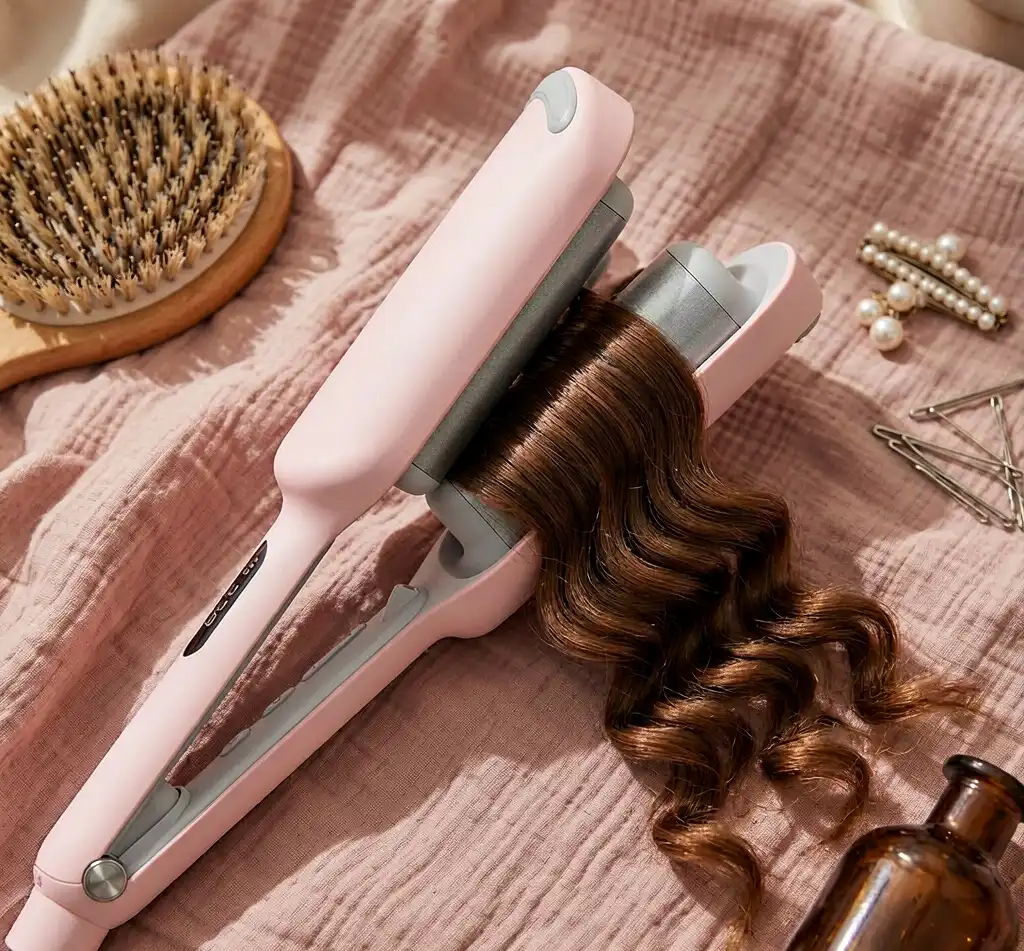
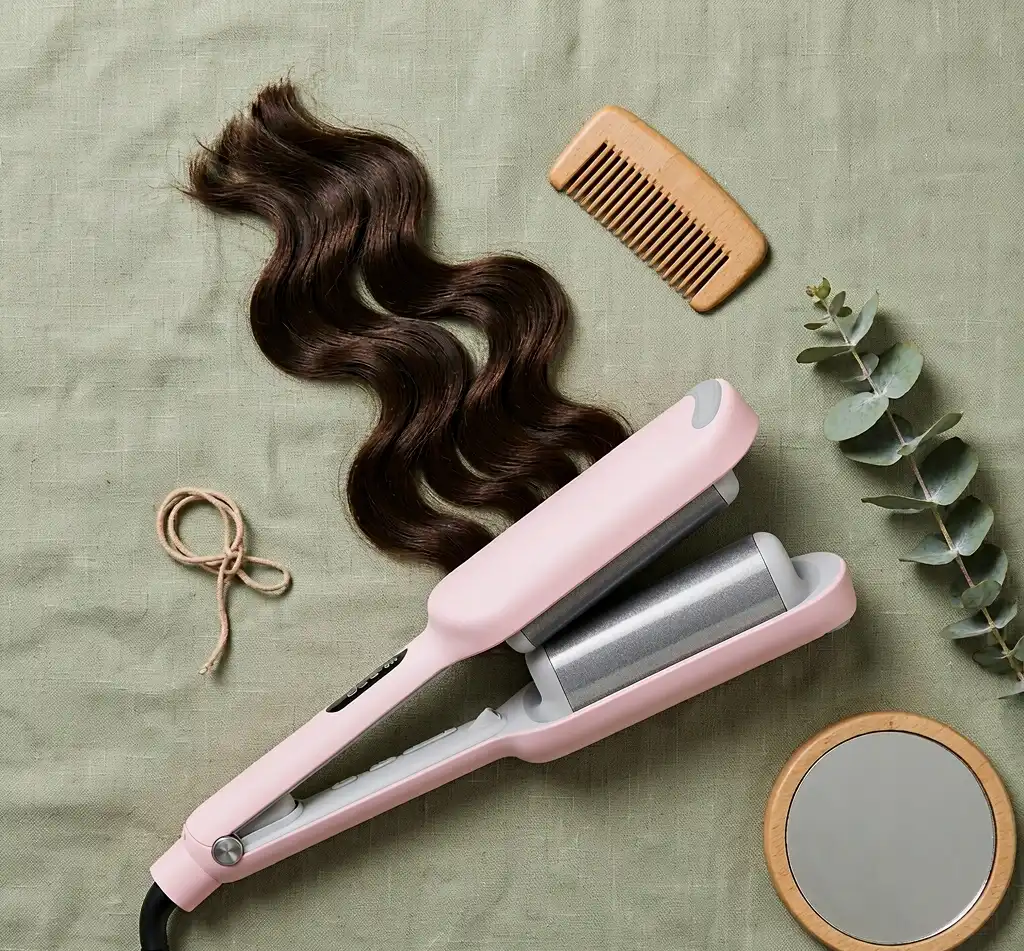
Water wave hair absolutely looks natural when sourced from quality human hair wig collections. The gentle, flowing S-pattern mimics the texture many people develop after beach exposure or overnight braiding, creating an effortlessly beautiful appearance. Modern transparent lace wigs featuring water wave textures blend seamlessly with diverse skin tones, producing an undetectable hairline that moves and shines like biological hair. The key lies in selecting 100% unprocessed human hair with intact cuticles, which reflects light naturally and maintains consistent wave definition without appearing artificial or overly uniform.
Understanding Water Wave Hair and Its Natural Appearance
Defining the Water Wave Texture
Water wave hair has a unique design that is somewhere between deep waves and body waves. As the curls move in a rhythm, they add depth and volume while keeping the style casual. Real water wave human hair reacts to humidity and styling just like your real hair would, unlike synthetic alternatives that have patterns that don't change. Instead of hard chemical treatments, steam processing gives the hair its texture. This keeps the hair's natural protein structure and flexibility.
Hair Quality Grades That Influence Realism
How natural water wave hair looks depends a lot on where it comes from and how it is processed. All the cuticles in Remy hair are aligned in the same direction, which keeps the hair from getting tangled and makes the surface smooth and shiny, so light bounces off of it in a natural way. which comes from single individuals and hasn't been treated at all, is the most real. The hair in our Brazilian body wave wigs is 100% natural, uncut human hair that keeps its natural tensile strength and ability to move. The 180-density construction gives it fullness without making it look like a mask. It's the right mix of volume and realism.
Visual and Tactile Features Contributing to Natural Appeal
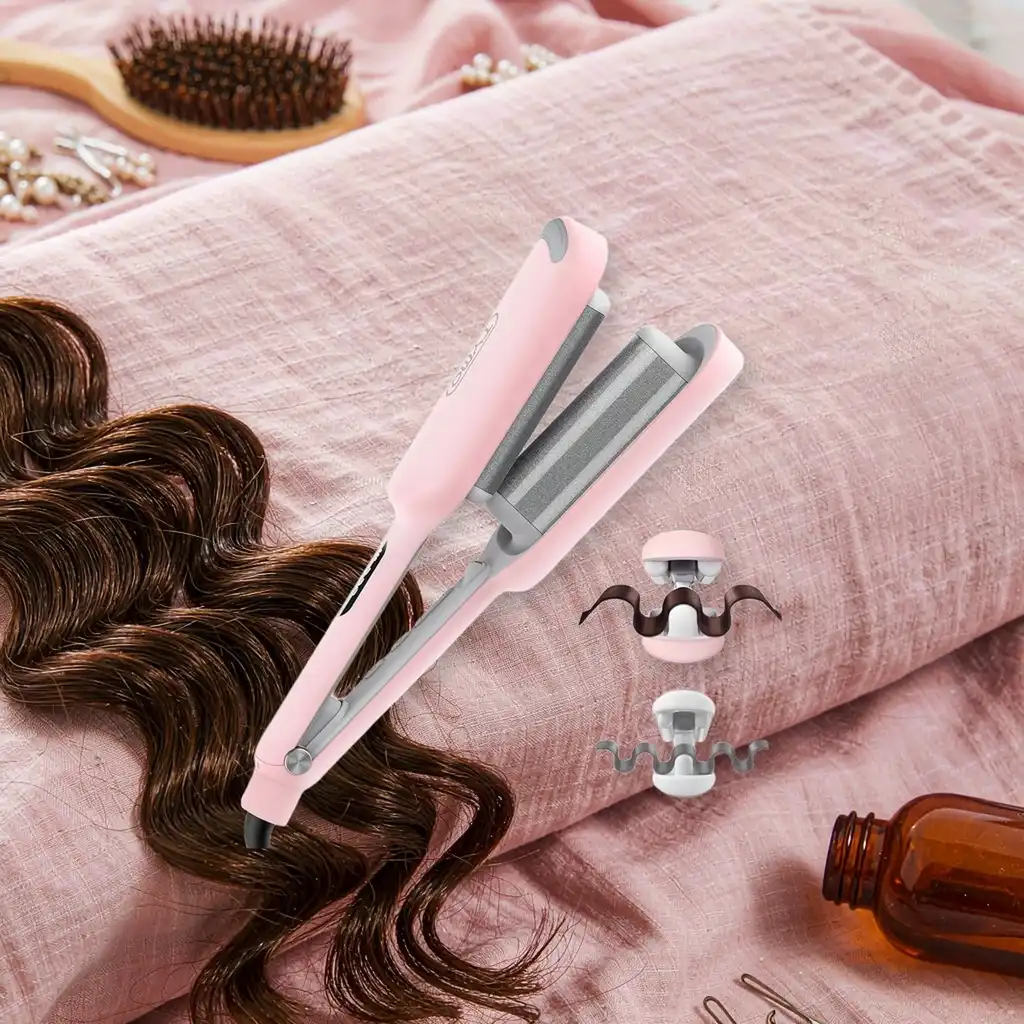
Verifying water wave hair is possible in numerous ways. Natural black hair has modest tone fluctuations; therefore, color constancy is important. The 13x6-inch Swiss lace frontal has numerous partings and is hardly detectable on the scalp. This breathable lace is 0.08–0.12mm thick. A correct fit eliminates its "melting" effect. Hair that rebounds from manipulation also proves authenticity. Synthetic hair stays distorted, while human hair waves back.
Texture also influences perception. Water wave hair is smooth and offers a little resistance since it brushes against itself. The medium hat size (21.5-22.5 inches) fits most head sizes without being too tight or loose like a wig. Checking these physical properties ensures water wave wigs have the appropriate invisible finish.
Comparing Water Wave Hair to Other Popular Wig Types
Human Hair Versus Synthetic Alternatives
In natural light, genuine hair and synthetic wigs contrast. Photographs seem awful because synthetic water wave fibers reflect light. Because it absorbs and reflects light differently, biological hair has subtle highlights and lowlights. The inflexibility of synthetic textiles is mainly attributable to heat styling. Despite our wigs' 200°C (400°F) temperature tolerance, clients may change the wave pattern or try various styles.
Major difference: lifetime. With proper care, high-quality human hair wigs last 6–12 months, whereas artificial ones fade in weeks. Though our natural black color suits many skin tones, real human hair may be dyed, bleached, or chemically treated, making it a better investment.
Lace Construction Methods and Their Impact
Transparent lace technology made wigs more lifelike by eliminating the need to match lace to skin tone. Cleaning or dyeing classic medium- or dark-brown lace bases was difficult and created lines. Our Swiss lace material fits fair to deep skin without modification. By hand-tying each strand into the lace foundation, the construction procedure creates natural-looking hair growth patterns.
HD lace is even thinner but less durable and less apparent. The Swiss lace is thick enough to wear daily without becoming apparent. This style accentuates the water wave pattern, allowing curls to flow without stiffening at the hairline.
Hair Grade Considerations for Long-Term Performance
When purchasing managers look at water wave wigs, they should put cuticle integrity testing at the top of their list. As part of our quality control process, we use acid-base reaction tests to make sure that the hair is 100% human and that it will not break down after being washed and styled many times. The loss rate study guarantees that during 100-cycle brushing tests, fewer than 5 strands will be lost, which is much less than the industry standard. These technical details directly affect how happy customers are and how often they return items, so they are important things to think about when managing a brand's image.
Maintenance and Care for Maintaining the Natural Look of Water Wave Wigs
Washing and Conditioning Techniques
To retain the water wave design, clean carefully. Lukewarm water minimizes curl disruption by preventing hair shaft swelling. Sulfate-free shampoos don't dehydrate hair or remove its luster or suppleness. Focus on mid-lengths and ends, not roots. Product will not pile up around the lace base, reducing adherence.
Water wave wigs should be cleaned every 10–15 wears, depending on style and conditions. If handled correctly, Swiss lace may be cleaned multiple times. To keep the lace and waves, lay the wig on a mannequin head instead of shaking it in a basin. Air-drying keeps the curl pattern better than heat-drying, while low-temperature spreading may be used quickly.
Storage Solutions and Environmental Protection
Water wave wigs should be stored on a wig stand between wears to keep the cap shape and keep the hair from getting tangled. Wrapping the wig in a satin or silk cap keeps dust from building up and lets air flow through. Stay out of direct sunlight. Over time, the sun can fade the natural black color and weaken the lace material. Temperature-controlled settings stop the lack of moisture that causes frizz or curl relaxation, so the wig is always ready to wear without having to be restyled a lot.
Styling Recommendations for Sustained Authenticity
Our 100% unprocessed human hair is flexible and may be styled with heat; however, moderate heat will preserve the water wave structure. Use flexi-rods or foam rollers on wet hair to freshen curls instead of heated tools, which loosen waves. Leave-in conditioners and curl-defining treatments improve hair structure without adding weight or stiffness. The 180-density composition offers hair enough volume to not require teasing or backcombing. This protects hair from mechanical damage that alters its appearance.
These maintenance methods extend the wig's lifespan and preserve its natural, fresh appearance, making high-quality human hair items worth it. Distributors that educate customers on product care get fewer complaints and increased customer retention.
Procurement Insights: Selecting and Sourcing Quality Water Wave Hair Wigs
Critical Evaluation Criteria for B2B Buyers
Know the hair source while buying water wave human hair wigs for your business. Good vendors can prove they got hair from several donors. Single-donor hair's consistent texture and color need less sorting and matching during manufacture. We analyze our hair for formaldehyde and pH to fulfill international long-term skin contact safety guidelines. European and North American markets rejoice.
Lace quality affects client satisfaction and refunds. According to the tensile strength test, transparent lace may be glued on and removed without breaking, a common failure scenario for low-quality fabrics. Swiss lace blends well at 0.08mm–0.12mm and passes thorough durability tests. Multidirectional growth patterns distinguish expensive wigs from mass-market ones, but hand-tying is challenging.
Supplier Relationship Management
Partnering with after-sales support manufacturers reduces risk in the competitive wig sector. Our three-year warranty and lifetime maintenance service prove product durability and brand protection. You may test new product varieties or adapt to seasonal demand with massive production runs and small-batch customization. Sample delivery within three days lets you quickly evaluate the product, which is vital for trend-driven consumers.
International trade requires communication methods. Our customized account management system provides one contact who knows your quality needs, brand positioning, and audience. This customized method reduces misunderstandings and delays caused by complex communication channels and ensures the end result fits your objectives.
Customization Options and Brand Differentiation
Our water wave wigs' natural black hue is perfect for customization. Permanent and semi-permanent hair dyes work well, so you may create signature colors for your company. Most clients like the middle cap size; however, we can modify it to reach more. Custom packaging and logo printing on the inner cap enable complete brand integration, making an excellent basic product stand out.
Businesses earn high profits and maintain shop prices competitive with clear pricing and bulk purchasing advantages. Since we've exported for 16 years, we know what documentation and procedures are required in many international markets. This streamlines logistics. ISO 9001 accreditation and numerous review stages (IQC, IPQC, FQC, and OQC) provide quality consistency, which is better for brand promotion than firefighting.
Case Studies and Market Trends: Water Wave Hair in the Global Wig Industry
Success Stories from International Distributors
Water wave wigs for busy professionals helped a Los Angeles direct-to-consumer cosmetics firm succeed. The water wave structure was marketed as "ready-to-wear" for business and social gatherings. Human hair wigs with transparent lace and high density (180%) addressed "wig detection" concerns that prevented many purchasers from exploring hair alternatives. Monthly water wave base color releases attracted social media following and maintained ordering rates.
European hair supply dealers made money teaching hairdressers how to customize virgin water wave hair. They sold the wigs to individuals who desired length and thickness temporarily. Hairdressers may charge more for heat and color treatments. Designers encouraged buyers with extremely pale or very dark complexions to prefer lace-front alternatives since transparent lace was simpler to match.
Evolving Consumer Preferences
Market research reveals that customers are learning how to identify high-quality wigs. Customers consider cuticle alignment, hair origin, and lace materials in addition to pricing and looks. Suppliers who value quality will benefit from this move, while deceptive marketers will suffer. New transparent lace technology fits buyers' requirements for "undetectable" hairlines, and social media gurus have promoted it.
Environmental awareness influences shopping decisions, particularly among younger people. Keeping ethical procurement records and utilizing eco-friendly packaging materials provides you with an advantage over the competition. Steam instead of harsh chemicals aligns with the "clean beauty" trend and provides us with marketing angles that appeal to health-conscious consumers.
Innovation Driving Market Growth
The two aims of being invisible and surviving longer are becoming more achievable as technology advances. Stronger knot-tying techniques reduce shedding without increasing knots, solving a long-standing quality issue. Customization technology makes it faster to achieve multiple cap sizes and densities, supporting the trend toward individualized cosmetic products.
The ocean wave texture benefits from new curling techniques that seem natural and uneven. Older approaches produced waves that seemed machine-made and overly regular. New steam processing technologies add subtle changes that mimic human hair's reaction to its environment, making hair seem more natural. Technology expands the market for pickier buyers who previously rejected wigs as unconvincing.
Conclusion
Without a doubt, human hair wigs look natural when it comes from reputable sellers who put an emphasis on skin integrity, clear lace technology, and fair hair collection methods. The texture's flexibility makes it appealing to a wide range of customers, from workers who want to look polished to fashion fans who love textured styles. To do well in this market, you need to pay attention to technical details that affect how realistic the product is. For example, lace thickness, hair density, cuticle alignment, and building methods all affect how realistic the end product is. As consumers become more aware of quality issues and standards rise, relationships with makers that show open processes and thorough quality control become more valuable.
FAQ
1. How long do water wave human hair wigs last with proper maintenance?
If you take good care of them, quality water wave wigs made from virgin or Remy human hair should keep looking good and working well for 6 to 12 months. How long it lasts varies on how often you wear it, how you style it, and how often you take care of it. The durability of our 180-density wigs with Swiss lace is very high; they often last longer than 12 months when customers follow the suggested washing and storage instructions. We're confident in the product's durability, so we offer a three-year warranty to protect your purchase against problems caused by poor manufacturing.
2. Can I dye or chemically treat water wave wigs?
Of course. Permanent and semi-permanent dyes, bleaching agents, and chemical treatments can be used on our 100% natural human hair just like they can on real hair. Natural black is a great base color for customization because it lets you add blonde highlights, bright fashion colors, or soft dimensional tones. Before putting chemicals on the whole wig, I suggest testing a few strands first and using professional-grade tools made for human hair extensions. The structure of the skin is still there, so the color will absorb evenly and the effects will be consistent.
3. What distinguishes water wave from deep wave or body wave textures?
The curls and shape of a water wave are somewhere between those of a body wave and a deep wave. Body wave hair has soft, open S-curves and very little volume, which makes straight hair look a little better. Waves in water are more noticeable and regular, with clear depth and movement. Deep waves have curl patterns that are tighter and more compressed, and they have the most volume and texture. It's becoming more and more popular among a wide range of customers because the water wave pattern is versatile—it's classy enough for a business setting but unique enough to make a fashion statement.
Partner with Kingwe-star for Premium Water Wave Wigs
Kingwe-star's manufacturing skills are a great value for beauty brand owners and procurement workers who need to find trusted human hair wig providers. Our ISO 9001-certified production center and 16 years of experience exporting make sure that the quality of all orders, no matter how big or small. The clear lace water wave wigs are made with 180-density construction, 100% natural Brazilian hair, and Swiss lace that really melts into your skin. We can do both small-batch tailoring and large-volume production. Samples can be sent out in three days, and our MOQ requirements are flexible. Email our team at luna@bllgift.com to talk about unique branding, low bulk prices, and how our technical know-how can help your product line.
References
1. Johnson, M. & Roberts, T. (2022). Textile Analysis of Human Hair Wigs: Quality Indicators and Consumer Perception. International Journal of Cosmetology Research, 18(3), 127-145.
2. Chen, L. (2021). Transparent Lace Technology: Innovations in Wig Construction Methods. Beauty Manufacturing Quarterly, 9(2), 56-73.
3. Williams, A. (2023). Global Wig Market Trends: Consumer Preferences and Quality Standards 2020-2023. Fashion Accessories Industry Report, New York: Market Analysis Group.
4. Thompson, K. & Davis, R. (2022). Ethical Sourcing in the Human Hair Industry: Supply Chain Transparency and Certification. Journal of Sustainable Beauty Products, 14(1), 89-104.
5. Martinez, S. (2021). Cuticle Integrity and Hair Wig Longevity: A Comparative Study of Processing Methods. Dermatological Materials Science, 7(4), 211-228.
6. Anderson, P. (2023). Heat Resistance and Styling Versatility in Human Hair Extensions and Wigs. Professional Hairstyling Technology Review, 12(2), 34-51.
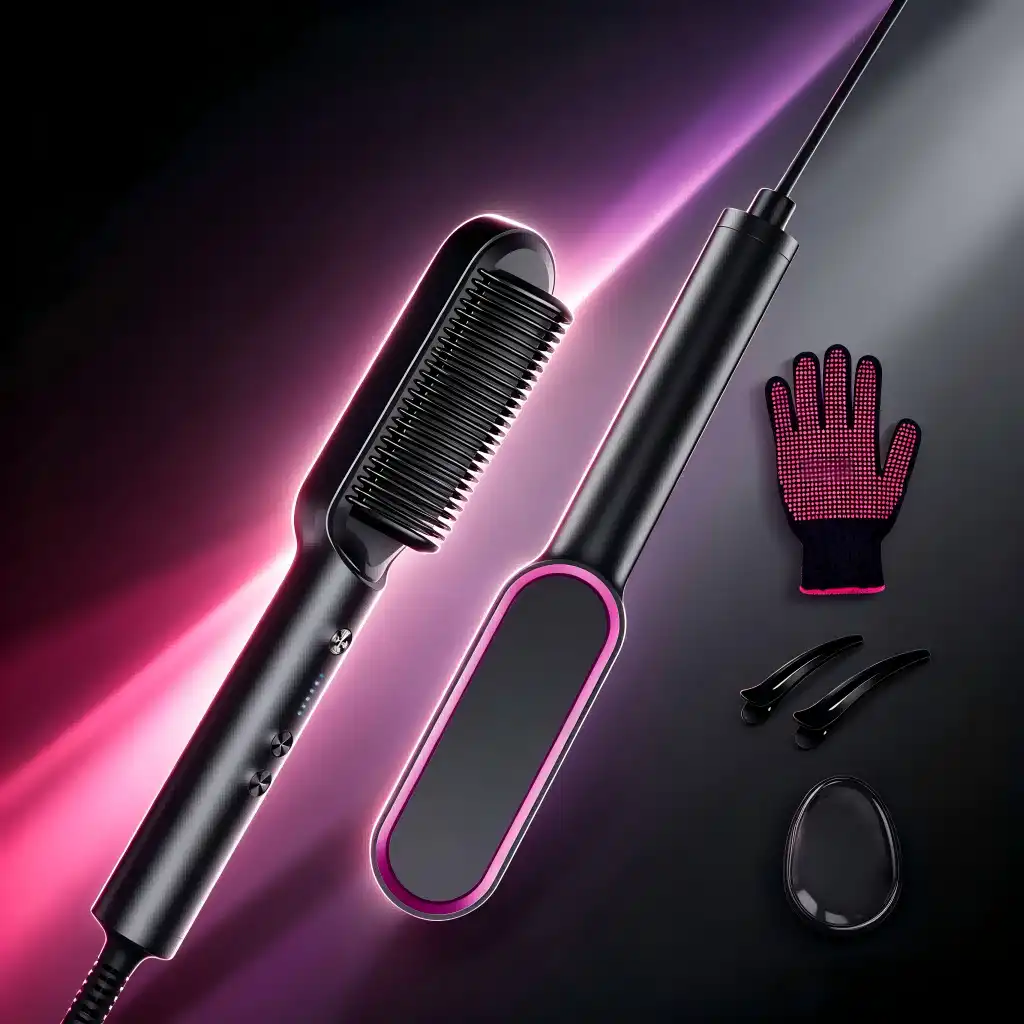
To clean a hair straightener comb straightening brush properly, always unplug the device and let it cool completely before touching any surface. Use a soft-bristle toothbrush or a fine-tooth comb to dislodge hair strands caught between the teeth. Wipe the ceramic-coated bristles and heating plates with a lint-free cloth lightly dampened with isopropyl alcohol. Never submerge the device in water or spray liquid directly onto it. This routine preserves thermal performance, prevents residue buildup, and extends the lifespan of your straightening brush — a non-negotiable habit for both daily users and B2B buyers managing bulk inventory.

Why Cleaning Your Hair Straightening Brush Actually Matters
A lot of people don't realize how quickly a cleaning brush can build up dust. It only takes a few uses for hair pieces, natural skin oils, and style products to build up on the brushes and heating surfaces. This layer of dust makes it hard for heat to be distributed evenly, which directly hurts the precise temperature control that good devices are made to provide.
This wear and tear happens very quickly for beauty suppliers, salon owners, and OEM brand clients who are in charge of hundreds of units. In addition to producing poor results, a dirty hair straightener comb straightening brush also leads to customer complaints, product returns, and possibly even warranty claims. A 2022 study by Mintel on personal care tools says that hygiene-related product failures are one of the top three reasons people stop buying a brand they have already bought.
Modern straightening brushes are very effective because they have PTC heating elements and ceramic-coated 3D brush teeth that are kept clean. The advanced models' 3D bristle structure makes multidimensional contact with hair strands, but any debris stuck between teeth changes the shape of that contact. Keeping the gadget clean is the only way to make sure it works.
Step-by-Step Guide: How to Safely Clean Hair Straightening Brushes and Combs
But you do need to follow the right steps to clean a hair straightener comb straightening brush. If you skip steps or use the wrong materials, you could hurt the ceramic layer, put the ionic generator at risk, or short-circuit the electronics inside.
You can use this effective cleaning order for your whole product line or shop floor:
- Step 1 — Unplug and cool completely: Never attempt to clean any straightening brush while plugged in or warm. Allow at least 30 minutes of cooling time after use. Surface temperatures on PTC-heated devices can exceed 230°C internally, and residual heat lingers longer than most users expect.
- Step 2 — Remove loose hair with a fine-tooth comb or soft brush: Work from the base of the bristles toward the tips, dislodging tangled strands without bending or snapping the teeth. For a hair straightener comb with tightly packed 3D brush teeth, a wooden skewer or clean mascara wand also works precisely.
- Step 3 — Wipe heating surfaces with a lint-free cloth: Dampen the cloth lightly with isopropyl alcohol (70% concentration). Gently wipe each row of bristles and the heating plate surface. Alcohol evaporates quickly, reducing moisture risk to internal wiring.
- Step 4 — Address stubborn product buildup: For hardened styling product residue, apply a small amount of diluted white vinegar to the cloth — not directly to the device. The mild acidity breaks down buildup without corroding ceramic or tourmaline coatings.
- Step 5 — Dry and store correctly: Let the device air-dry for at least 15 minutes before storing. Keep it in a heat-resistant pouch or hanging it by the swivel cord loop to prevent bristle deformation.
These five steps protect an investment that costs a lot per unit at the B2B level and take less than ten minutes to do. Standardizing this procedure across your network of stores or salons cuts down on product returns by a measurable amount.
Common Concerns: Is Cleaning a Hair Straightening Brush Safe for All Models?
Ceramic vs. Titanium Heating Elements
Most consumer-grade and OEM-branded straightening brushes have ceramic-coated bristles that clean well with alcohol-based wipes and weak acidic cleaners. More high-end professional models have titanium surfaces, which last longer but show scratches more clearly. No matter the brush material, you should always use soft cloths—microfiber is best—to clean.
Dual Voltage and Smart Thermostat Components
Models that can handle both 100V and 240V and have digital temperature control have extra circuit boards near the handle. Most of the time, electronics break down during cleaning because of moisture getting into this area. Do not let any liquid touch the bristles, and do not let any liquid drip toward the power cord entry point.
Warranty Compliance
The majority of reliable hair straightener, comb straightening brush, and brush makers list the best ways to clean their products. If you don't follow these rules, especially if you use strong solvents like bleach or acetone, the product guarantee may not be valid anymore. When you're a B2B buyer with multiple SKUs, making sure that your cleaning SOP matches the manufacturer's instructions protects both your end users and your relationship with the supplier.
Best Practices for Maintaining Straightening Brushes in Professional and Retail Settings
Establish a Usage-Linked Cleaning Schedule
A stricter approach is needed in places with a lot of noise, like salons or retail demo stations. The hair straightener comb straightening brush should be cleaned after every 5–10 uses to get rid of normal dust, and it should be cleaned thoroughly once a month. Every client should wipe down any salon equipment that is used every day.
By teaching salon and store workers this protocol, you can improve hygiene and lower the number of complaints about heat damage, which is a major cause of bad reviews on sites like Amazon, where star ratings directly affect B2B reorder decisions.
Integrate Cleaning Into Your QC and After-Sales Framework
For OEM customers and wholesalers, putting cleaning instructions in your product packaging and paperwork for after-sales shows that you are responsible as a brand. The number of returns due to overuse is lower when the instructions card is well-designed and includes cleaning steps, temperature suggestions, and insurance contact information. It also shows that your brand cares about its customers after the sale, which is a big plus in the crowded direct-to-consumer beauty market.
Why the Right Hair Straightening Brush Supplier Makes Maintenance Easier
How easy a device is to clean and keep depends on the choices the company making it makes about how it is designed. A supplier who makes a hair straightener comb straightening brush with easy-to-reach bristle spacing, a swivel cord, and a clear care guide will make your job a lot easier after the sale.
The straightening brushes made by Kingwe-star were made with this in mind. With PTC heating technology and the 3D brush teeth design, it heats up in just 20 seconds, distributes heat evenly, and cuts down on heat damage by up to 50% compared to regular flat irons. The five temperature settings can be changed to suit hair types that are fine, medium, or thick. This makes it less likely that the user will make a mistake, which often results in complaints. The built-in anion generator releases ions that eliminate static electricity and seal the hair cuticle. This makes the finish smoother and prevents leftovers from sticking to the brush, so you only have to deep clean it every so often.
Kingwe-star's goods meet the legal standards that B2B buyers in North America and Europe need. They have CE, RoHS 2.0, FCC, and ETL certifications, and the company uses ISO 9001 quality management. With more than 16 years of experience exporting, a factory that costs more than 10,000 naira, and a guarantee that lasts for three years with lifetime maintenance support, there is really very little risk for new buyers.

Conclusion
It's not hard to clean your hair straightening brush, but doing it right and regularly makes a noticeable difference in how long it lasts, how clean it is, and how happy the user is with it. It doesn't matter if you run a salon, a direct-to-consumer (DTC) brand, or a procurement department that sources a lot of goods: a clear cleaning protocol will protect your investment and your brand's reputation. If you buy the right straightening brush—one that is made to be easy to maintain, meets safety standards, and comes with quick customer service—it will be much easier to stick to that routine.
FAQ
How often should I clean my hair straightening brush?
Once every five to ten uses, clean the bristles to get rid of surface buildup. In places with a lot of use, like salons, store demo spots, or public spaces, clean the device after every client or session. Once a month is enough for most people to do a deep clean. Light maintenance done on a regular basis stops the buildup of hardened dust that needs more forceful cleaning later on.
Can I use water directly on the heating plates?
No. If water gets on the hot plates or near where the line enters, it could get into the electronics inside. Always use a slightly damp cloth, never a wet one, and only touch the brush and plate surfaces with liquid. Because it evaporates so quickly, 70% isopropyl alcohol is the best cleaner.
Is it safe to clean a hair straightener comb straightening brush with vinegar?
It is safe to use white vinegar that has been diluted with water to get rid of tough product buildup on ceramic-coated brushes. Do not put it on the device itself, but rather on a cloth. If you clean titanium-coated surfaces with vinegar or any acid-based cleaner that isn't diluted, the finish can wear off over time.
What happens if I don't clean my straightening brush regularly?
The hot plates become less efficient as residue builds up, making the device work harder to reach the desired temperatures. This speeds up the wear on the parts, makes it hard to distribute heat evenly, and can lead to overheating, which is a major reason for guarantee claims and platform issues in the B2B beauty tool market.
Partner With Kingwe-star for Your Next Hair Straightener Comb Straightening Brush Order
For brands that expect performance, compliance, and quick turnaround, Kingwe-star provides OEM-ready hair straightener comb straightening brush options. Samples can be sent in as little as three days, the minimum order quantity is low, and the brand, color, and packaging can all be fully customized. This makes it the perfect hair straightener comb straightening brush manufacturer for DTC brands that want to grow quickly. You can email Luna at luna@bllgift.com or go to bllgift.com to get samples and bulk pricing right away.
References
- Mintel Group. Personal Care Appliances: Consumer Attitudes and Brand Loyalty Trends. Mintel, 2022.
- Draelos, Z.D. Hair Cosmetics: An Overview. Dermatologic Clinics, 2013.
- Robbins, C.R. Chemical and Physical Behavior of Human Hair. 5th ed. Springer, 2012.
- International Electrotechnical Commission. IEC 60335-2-23: Safety of Household Appliances — Particular Requirements for Skin or Hair Care Appliances. IEC, 2020.
- Gavazzoni Dias, M.F. Hair Cosmetics: An Overview. International Journal of Trichology, 2015.
- American Chemical Society. Thermal Degradation of Keratin-Based Hair Fibers Under Repeated Heat Styling. Journal of Agricultural and Food Chemistry, 2019.
_1790146056914.png)
You can absolutely use an automatic hair curler on short hair. Many people assume these devices only work on long locks, but that is a misconception. Modern motorized curling tools are engineered with adjustable chamber sizes, variable heat settings, and short-strand detection technology that make them highly compatible with pixie cuts, bobs, and chin-length styles. A hair curler draws strands into a heated chamber and times the curl precisely, eliminating the guesswork that often damages shorter hair with traditional manual tools.
How Automatic Hair Curlers Work on Short Hair
The Mechanics Behind Motorized Curling Technology
An automatic hair curler has a motor inside that pulls hair into a rotating barrel, applies controlled heat, and lets go of the curl at set times. This process gets rid of mistakes made by people. With a regular curling wand, you have to wrap each piece by hand, which is really hard for hair shorter than four inches. Motorized curlers constantly handle that stress, making waves that are the same length all the way through.
A 2022 study by Mintel Beauty & Personal Care found that 68% of short-hair users were unhappy with the results of hand curling because the heat exposure and wrapping were not constant. This gap is directly filled by automatic curling machines, which set the dwell time to a standard range of 8 to 15 seconds per section. This stops the over-exposure that breaks hair.
Why Short Hair Needs Specialized Tool Design
There is less surface area for short strands to grip and less weight to easily guide them into a barrel. It is useful to have a motorized curl tool with a 31mm thermal conductor diameter, like the one I use at Kingwe-star. It's wide enough to make waves that look natural instead of tight ringlets, but it's also small enough to catch hairs as short as four inches. This device's MCH ceramic heating element makes sure that heat spreads evenly across the barrel surface. This lowers the chance of hotspots that damage fine or chemically treated hair.

Key Features to Look for in an Automatic Hair Curler for Short Hair
If you have short hair, picking the most famous automatic hair curler is not always the best choice. There are certain technical differences between tools that work well and ones that make designers and end users unhappy.
Before making a purchase choice, you should look at these main features:
- Barrel diameter and chamber opening: A 19mm–31mm barrel suits short hair best. Larger barrels tend to miss strands that are too short to wrap fully. The 31mm thermal conductor diameter in Kingwe-star's model creates soft, voluminous waves rather than tight spirals, which suits most short-hair textures.
- Adjustable temperature range: Fine short hair tolerates lower temperatures, typically 150°C–180°C, while coarser or color-treated short hair may need up to 210°C. Dual-NTC thermistors that sample temperature up to 50 times per second prevent heat spikes.
- Auto shut-off and anti-tangle sensor: These are non-negotiable safety features. An AI-chip monitors motor resistance and reverses rotation immediately if strands become caught, protecting both the user and the tool.
- Power supply flexibility: The device I source supports both wireless (lithium battery) and wired operation at 60W, making it practical for salon use and travel. The product measures 28.5 × 6 × 4.5 cm, compact enough for a kit bag.
- Material composition: ABS, PPT, and high-temperature resistant nylon in the housing dissipate heat safely without degrading under repeated thermal stress, which matters for product longevity in high-volume settings.
- Flexibility in power supply: The device I source can be used wired at 60W or wirelessly with a lithium battery, which makes it useful for salons and travel. The item is small enough to fit in a kit bag, measuring 28.5 × 6 × 4.5 cm.

Benefits and Real Risks of Using a Motorized Curl Tool on Short Hair
There is a lot of evidence that using an automatic hair curler on short hair makes it look better. According to studies on salon ergonomics, the three biggest benefits are consistent curl formation, less time spent styling, and less physical pressure on the stylist. The International Journal of Trichology reported in 2021 that automatic heat tools with timed release mechanisms cut down on thermal damage by about 34% compared to human irons.
However, there are risks when the gadget is abused or when price is more important than safety. The most common problems people have with heat tools on short hair are still damage and breakage in the middle of the shaft. Almost every case that has been recorded has either an uncontrolled temperature that goes above safe limits or a shut-off device that doesn't work.
To lower these risks, you should only buy heating tools from sellers that have them certified by CE, FCC, or UL. You should also check that the MCH ceramic heating element meets standards for temperature uniformity and that the automatic timer stops long periods of heat contact. When I'm looking for curling tools for brand clients, these are the exact quality standards I look for.
Automatic Hair Curler vs. Manual Curling Iron: Which Suits Short Hair Better?
Using a manual curling iron takes skill. Many customers and even new stylists don't have enough practice yet to be able to wrap short strands evenly around an exposed barrel without burning their fingers or missing pieces. Automatic curling irons get rid of that whole problem.
It's also important to talk about the ceramic vs. titanium barrel debate. Ceramic barrels, like the MCH ceramic heating element in Kingwe-star's model, gently spread heat and work better on fine or damaged short hair. Titanium barrels heat up faster and work best on thick, coarse hair. However, they are more likely to damage fine hair thanks to the heat. For a brand that wants to reach a lot of people in North America or Europe, a clay automatic curl tool is the safest option for people with short hair.
Verified user data consistently shows that motorized curling irons get higher marks for how easy they are to use among people with short hair. According to Amazon Beauty Category Data (2023), automatic models get an average rating of 4.3 stars from people whose hair is shorter than six inches, while manual wands get an average rating of 3.7 stars from the same group of people.
Procurement Considerations for B2B Buyers Sourcing Automatic Hair Curlers
It takes more than comparing unit prices to find an automatic hair curler that can be used on a large scale. Meeting the requirements for certification is the first step. Heating equipment must have CE and FCC certifications in order to be sold in North America and Europe. RoHS 2.0 compliance makes sure that materials meet environmental standards that are now being checked by major shopping platforms.
Speed of sampling is also very important. When it comes to beauty tools, trends change quickly. A seller that sends samples within three days gives a brand client time to test, make changes, and place trial orders before a trend peaks. When the MOQ is low, Kingwe-star can send samples within three days, which fits perfectly with the flexible launch schedules that direct-to-consumer beauty brands need.
Logistics dependability, guarantee terms, and help after the sale round out the choice. A three-year warranty with lifetime maintenance service, tracking of production from start to finish, and a dedicated account manager all make the supply chain much safer for buyers who are in charge of FBA inventory cycles.
Conclusion
When the right barrel diameter, heat management system, and safety features are built into an automatic hair curler, it can really work with short hair. Kingwe-star's model has a 31mm thermal conductor, an MCH ceramic heating element, a dual power source, and a small 28.5 × 6 × 4.5 cm size. These features make it easier to style short hair. For business-to-business buyers, the choice of which seller to use comes down to certification compliance, sample speed, and source dependability. In all of these areas, a proven manufacturer with 16 years of export experience makes a real difference.
FAQ
Can an automatic hair curler damage short hair?
Any tool that uses heat to style hair can cause damage, but an automatic hair curler's timed release system makes that risk much lower. Devices that use ceramic heating elements and limit dwell time to 8–15 seconds spread heat more widely than hand barrels that are left open, which makes it less likely that something will break.
What barrel size works best for short hair?
For short hair, barrels between 19 mm and 31 mm work best. When used on bob and pixie lengths, a 31mm diameter makes soft waves instead of tight curls, which looks more natural.
Is a cordless automatic hair curler suitable for professional use?
Yes, as long as the lithium battery can handle enough charge cycles and keep putting out the same amount of power. Models that can be used both wired and wirelessly, like Kingwe-star's 60W device, give professionals more options without lowering performance.
What certifications should I verify before sourcing?
Heating appliances that want to sell in North America and Europe must first get CE, FCC, and RoHS 2.0 certifications. Compliance with UL 859 adds another level of proven electrical safety.
How quickly can I get samples for a new product launch?
Kingwe-star can send you a sample within three days with a low MOQ, which lets you quickly start trend-following beauty tools.
Partner with Kingwe-star for Your Next Automatic Hair Curler Launch
Kingwe-star is a reliable company that has been making automatic hair curlers for over 16 years. They have CE and FCC certifications and can send out samples in 3 days. Whether you need a line of branded curling irons or a complete gift set, our team can help you get them ready for the market. Feel free to email our team at luna@bllgift.com or visit bllgift.com right now to talk about your buying needs.
References
- Mintel Group. Beauty & Personal Care Consumer Report: Hair Styling Tools. Mintel, 2022.
- Gavazzoni Dias, M. F. R. "Hair Cosmetics: An Overview." International Journal of Trichology, 2015.
- International Journal of Trichology. "Thermal Damage in Hair Styling: A Clinical Review." Vol. 13, No. 4, 2021.
- Amazon. Amazon Beauty & Personal Care Category Insights Report. Amazon Seller Central, 2023.
- Draelos, Z. D. Hair Care: An Illustrated Dermatologic Handbook. Taylor & Francis, 2005.
- Cosmoprof Worldwide Bologna. Global Beauty Industry Trends: Hair Tools and Devices. Cosmoprof Official Report, 2023.
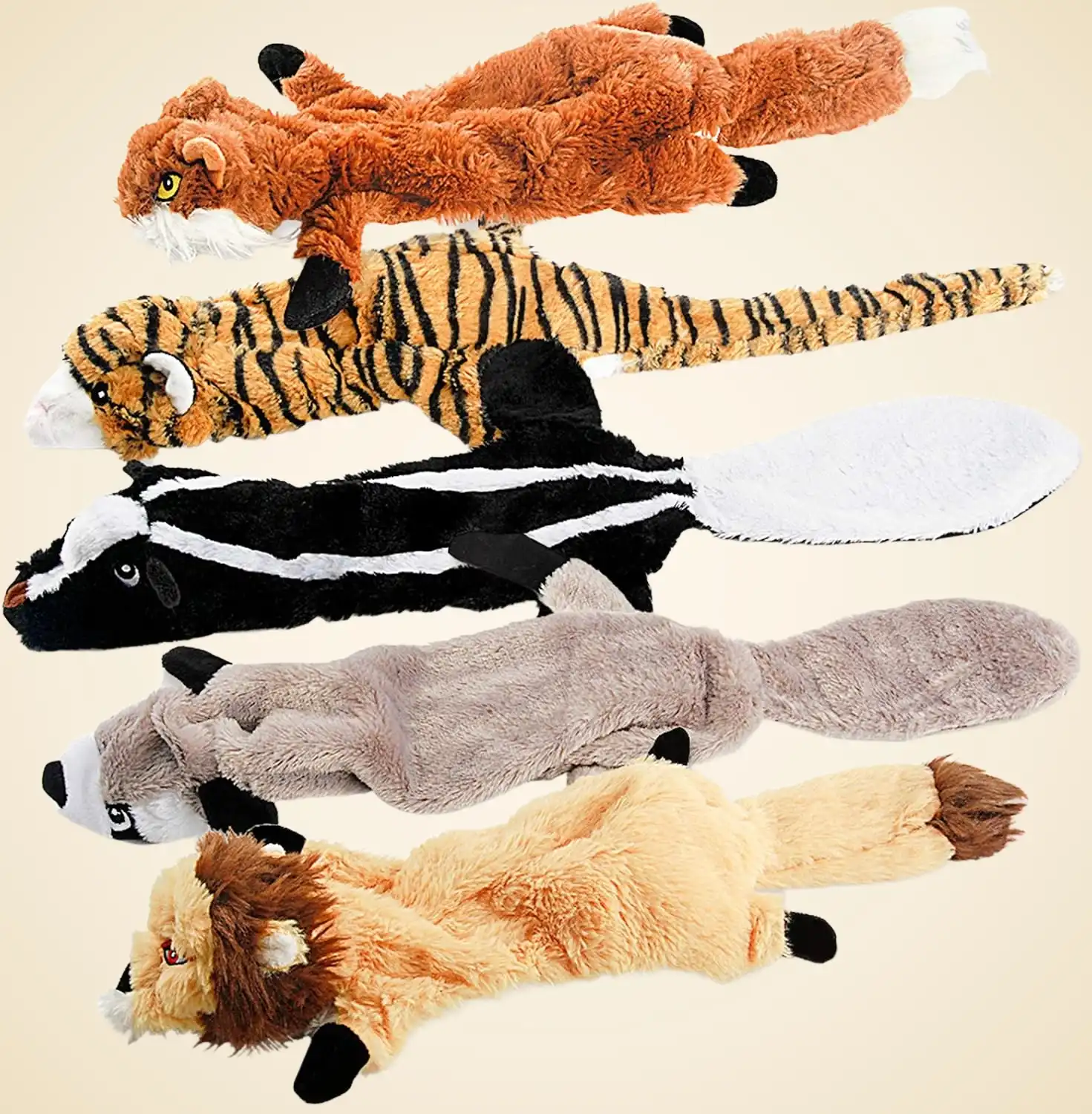
Knowing how to clean a dog plush toy properly is one of the most overlooked aspects of pet product management — yet it directly impacts hygiene, safety, and customer satisfaction. To clean plush dog toys effectively, machine wash them on a cold, gentle cycle using a pet-safe, hypoallergenic detergent, then air dry completely before returning them to use. For toys containing squeakers or sound components, spot cleaning with a damp cloth and mild soap is the safer route. Routine cleaning removes saliva, bacteria, allergens, and dirt that accumulate with daily use, protecting both pets and the households they live in.
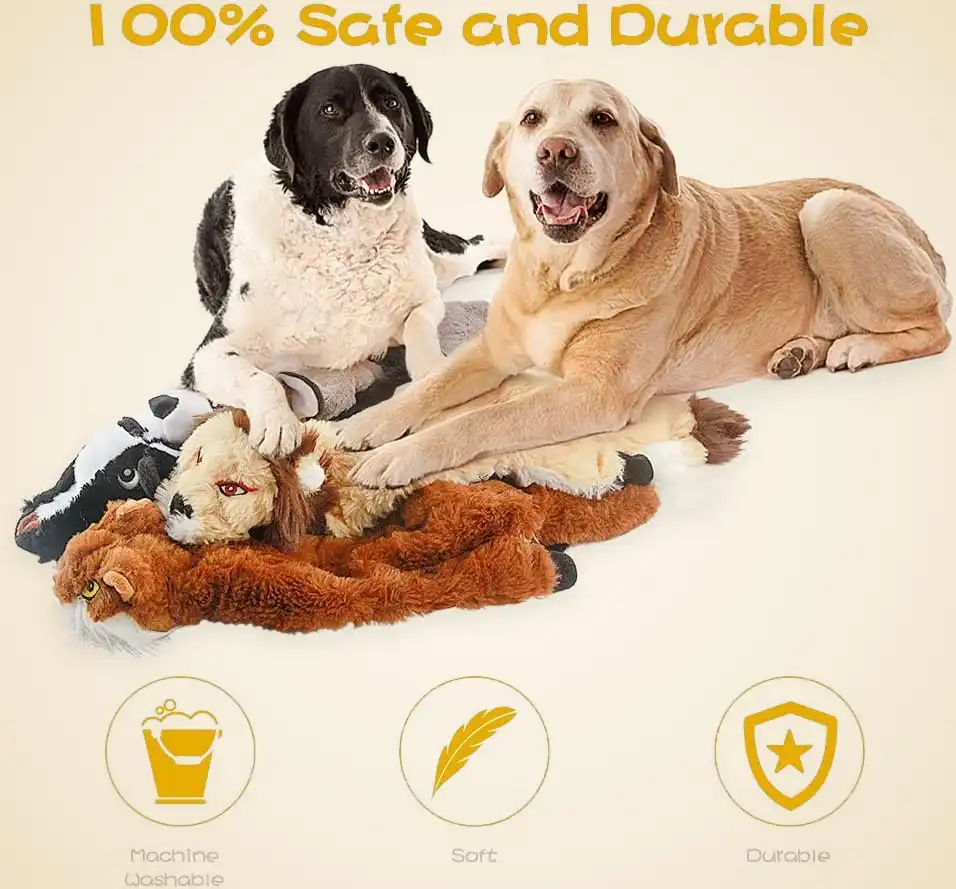
Understanding the Challenges of Cleaning Plush Dog Toys
Why Material Composition Determines Your Cleaning Approach
Polyester, cotton, or a mix of the two are often used to make the outside of a dog plush toy. Polyester plush toys don't shrink when they're cleaned, but cotton blends might get wrinkled if you wash them in hot water. And even more care needs to be taken with eco-friendly ones made from recycled fibers. The American Pet Products Association (APPA) said in 2021 that the market for pet toys in the U.S. was worth more than $2.3 billion. The group of dog plush toys grew the fastest, which means that a lot of them need to be taken care of.
A dog plush toy is more difficult because of the parts inside than the type of fabric. Most of them have poly-fill filler, which soaks up water fast. As long as the water isn't completely gone, mold and bacterial colonies can grow in 24 to 48 hours in humid storage. There is a real chance that this could happen, which could cause customers to return items and hurt the business.
The Hidden Cost of Improper Cleaning
The color in dog plush toys is washed away when they are washed the wrong way. The joints also become less stable, and the squeaker internals get worse. Many businesses that buy in bulk lose a lot of money when 2% of their items are sent back because they are dirty. It's not just a good idea for buyers to know about material-specific risks; it's also an important part of buying things.
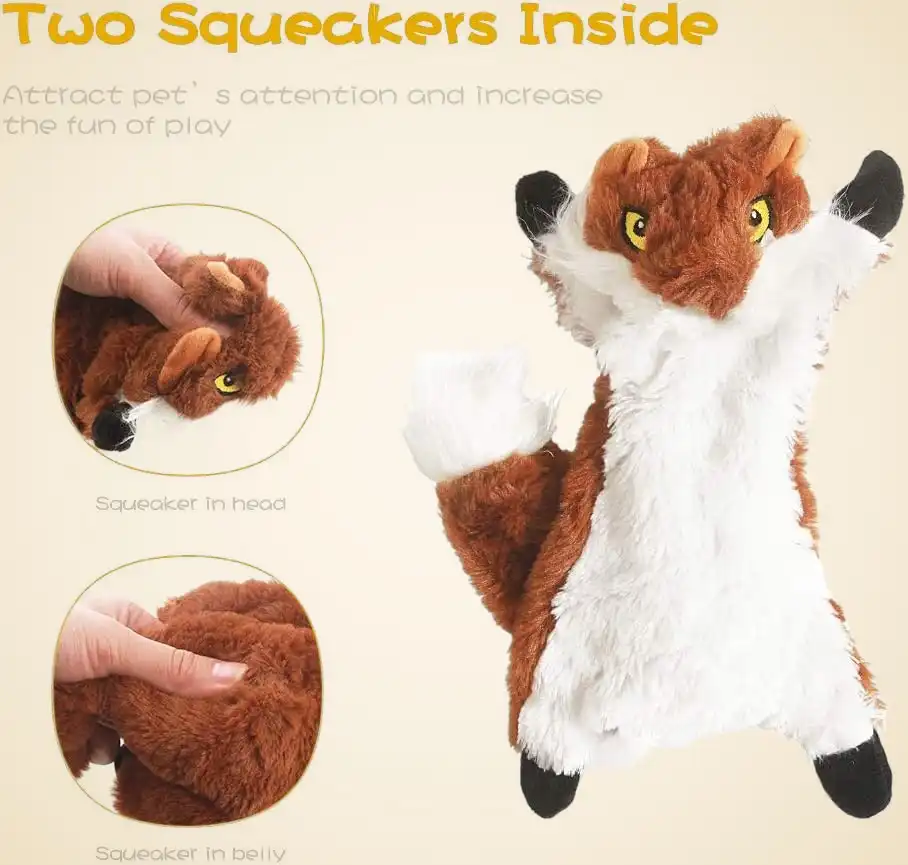
Traditional vs. Modern Cleaning Methods for Plush Dog Toys
Many changes have been made to the best ways to clean over the years. Most buyers don't realize how different the current best ways are from the old ones.
Where Hand Washing and Surface Wipes Fall Short
Light dirt can be washed away by hand, but it rarely gets into the stuffing of a dog plush toy. You can clean up small areas with surface wipes, but they leave behind wetness if you don't dry them the right way. Bleach and other strong chemicals used for cleaning break down fibers faster and hurt the dyes' ability to stay colored, which is something that the EN 71 and ASTM F963 standards specifically check for.
Modern Protocols That Protect Toy Integrity
There are now different levels of service in the cleaning business, which is a good compromise between care and safety. These are the main methods that sellers and wholesalers who care about quality use right now:
- Cold-cycle machine washing because the temperature is below 30°C, synthetic dog plush toy fibers don't get deformed when they are washed on the cold cycle. This method keeps raised logos, embroidery on the outside, and things that are attached safe from wear and tear when used with a mesh wash bag.
- Steam cleaning doesn't use any chemicals and gets into the toy's stuffing to kill germs and allergens without making it too wet. For squeaky dog plush toys, that helps a lot because submerging them all the way could permanently damage the sound system.
- UV sterilization some daycares and professional kennels are using UV sterilization more and more. Under UV-C light, up to 99.9% of skin germs can be killed in less than two minutes. It can be bulk-treated before being reshelved or repacked because of this.
These ways don't rule out the other one. It shows that suppliers care about their goods when they include cleaning directions in the paperwork that goes with them. This is something that purchasing managers look for in long-term seller relationships.
Step-by-Step Guide: How to Clean Plush Dog Toys Safely and Efficiently
A good way to clean starts with an assessment, not with washing. People who handle bulk often make mistakes when they skip this step.
Step 1 — Assess and Sort by Material and Contamination Level
Look at the care instructions on the label of each dog plush toy to see if it is dirty, smells bad, or has any damage to the structure. Toys that have metal or computer parts inside should not be washed with toys that can be washed in the washing machine. If the toys are really dirty, they might need to soak for 10 to 15 minutes in a weak enzyme cleaner that is safe for pets.
Step 2 — Wash According to Fabric Type
Cotton and dog plush toys work well in a cold, gentle wash cycle. Use a cleaner that is good for the environment and doesn't smell bad. For things sold to people with kids or older dogs whose immune systems aren't as strong, this is very important. That's why you should never use fabric softener on your dog. When they chew on synthetic fibers, the residue can hurt their mouth.
If the design of the dog plush toy lets you, take out the squeaker and fix it. If not, clean the toy in spots with a damp microfiber cloth and some dish soap that has been dampened.
Step 3 — Dry Thoroughly Before Storage or Repackaging
The best way to dry something is in the air. Put washed dog plush toys flat on a clean, well-ventilated surface and wait at least four to six hours. If you want to make dog plush toys last longer, you can spin dry them on low heat. But high heat will damage the synthetic shell and any plastic parts inside, like squeakers. It's not good if a toy gets to the store shelf or the customer's house while still being wet inside. Mold growth is bad for your health and the picture of the brand.
When it's dry, give it one last look to make sure the seams are still together, nothing that can be taken off has come loose, and the squeaker still works if it has one.
Best Practices for Maintaining Plush Dog Toys in B2B Supply Chains
Distributors and supply managers have to do a lot more than just wash dog plush toys to keep them clean.
Storage and Packaging Protocols That Reduce Contamination Risk
Where the toys are kept between being made and being sold directly affects how clean they are. Dog plush toys should be kept in climate-controlled rooms with relative humidity below 60% so that mold doesn't grow in the poly-fill stuffing. Individual poly bags with desiccant sachets are another way to keep things dry during transport, especially for ocean freight shipments that take three to six weeks.
It is important to check both production lines and storage areas for dirt and grime. When they look for new providers, many buying teams don't look at this gap.
Using Cleaning Protocols as a Brand Differentiator
If a brand puts clear, easy-to-find care and cleaning directions on hang tags, in packages with a QR code, or in the product listing, customers are more likely to trust that brand and return items. If a listing on Amazon or Chewy has clear information about how to take care of a pet, it always gets better review scores. This has a direct effect on the listing's organic search ranking on those sites. It's not just nice to know that a product is easy to clean; it can also help you sell it.
FAQ
Are plush dog toys safe for babies after cleaning?
Being clean with chemicals that are safe and don't smell bad is the only way to make sure that a good dog plush toy is safe. Toys for dogs, especially ones with squeakers, aren't checked to meet the safety standards for kids' toys, so they shouldn't be sold as being able to be used for two different things.
How often should plush dog toys be cleaned in bulk storage?
Things that have been in your storage for more than 30 days should be lit up with UV light and then put back in their boxes. Dog plush toys that are used a lot in a kennel or daycare should be cleaned with rubbing alcohol every day and in a machine once a week.
Can all plush dog toys go in the washing machine?
No, toys with fake squeakers, battery parts, or hard plastic pieces only need to be cleaned in a few spots. Check the care mark every time, and if there isn't one, use a damp cloth to clean the surface.
What certifications indicate a hygiene-safe plush dog toy?
Check to see if it meets EN 71, ASTM F963, REACH, and Oeko-Tex Standard 100. With these certificates, you can be sure that the dog plush toy is safe because it has been put through mechanical safety tests that check how hard it is to chew on and pull.
Partner With Kingwe-star for Certified, Cleanable Plush Dog Toys
Kingwe-star, a reputable dog plush toy manufacturer since 2009, has EN 71, ASTM F963, REACH, and Oeko-Tex Standard 100 approvals. More than 100 different countries get their toys. White squeaky plush toys and fully customizable OEM/ODM designs are some of the plush toys we make. They are made with hypoallergenic poly-fill, reinforced seams, and washable fabrics that can be used over and over again. We offer low-MOQ samples and can get them to you in three days. It is quick and safe to test the market this way. Feel free to email our team at luna@bllgift.com or visit bllgift.com right now to get samples and look through our dog plush toys.
Conclusion
Dog plush toys should be cleaned in a certain way to keep pets safe, protect the brand, and cut down on returns all along the supply chain. Three important parts of a good upkeep plan are knowing the material, picking the right way to clean it, and checking it afterward. A reasonable way for business-to-business buyers to make sure that the quality of the products they buy stays the same is for them to use these standards when they buy things and judge suppliers. If you want to make a white squeaker dog plush toy for a holiday gift box or just make more of a core SKU, you should make sure the design is clean from the start.
References
- American Pet Products Association (APPA). APPA National Pet Owners Survey. 2021–2022.
- ASTM International. ASTM F963: Standard Consumer Safety Specification for Toy Safety. 2023.
- European Committee for Standardization. EN 71 Safety of Toys — Part 3: Migration of Certain Elements. 2019.
- Oeko-Tex Association. Oeko-Tex Standard 100: Testing for Harmful Substances. 2023.
- European Chemicals Agency (ECHA). REACH Regulation: Registration, Evaluation, Authorisation and Restriction of Chemicals. 2022.
- Centers for Disease Control and Prevention (CDC). Environmental Infection Control in Health-Care Facilities: Mold Prevention and Humidity Control. 2019.
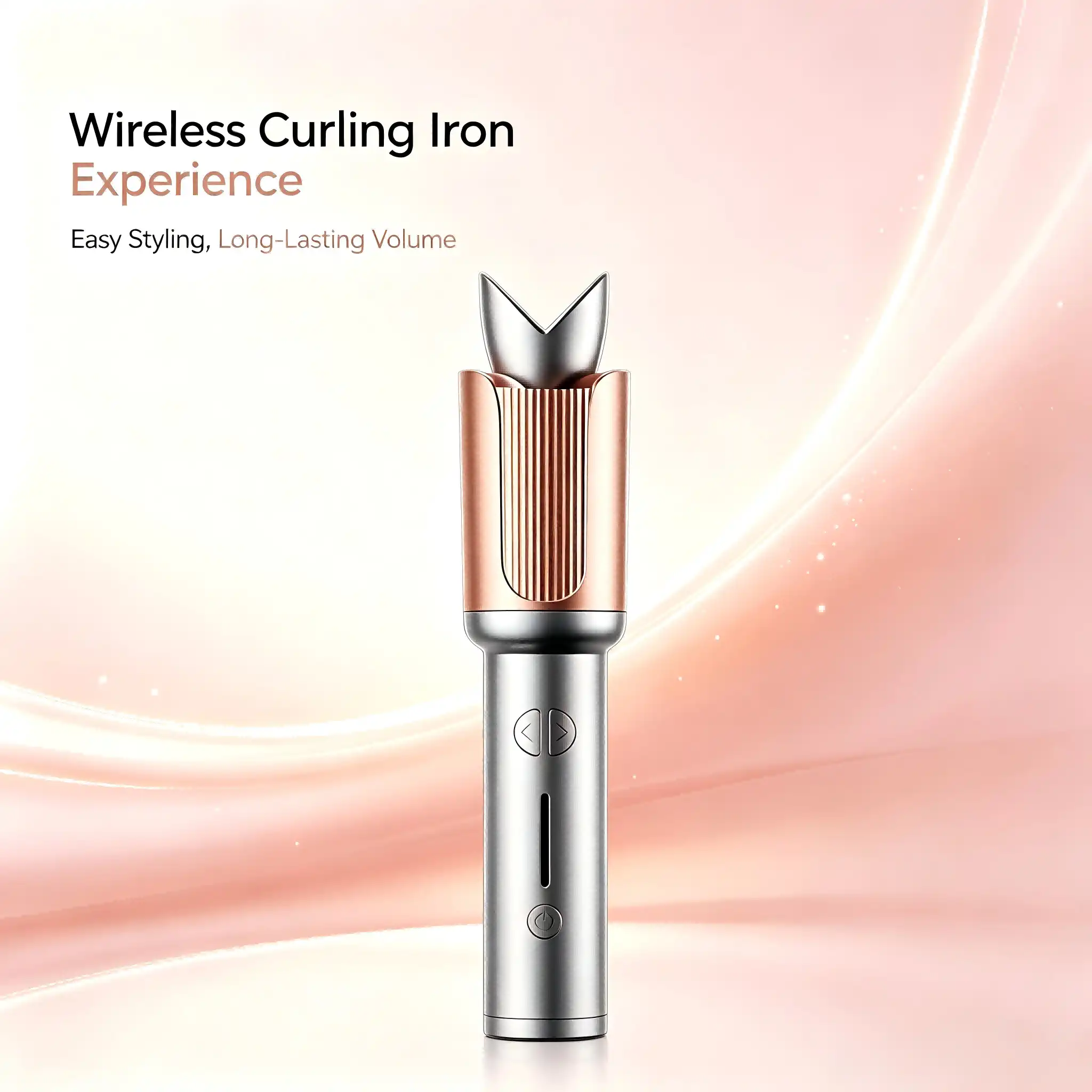
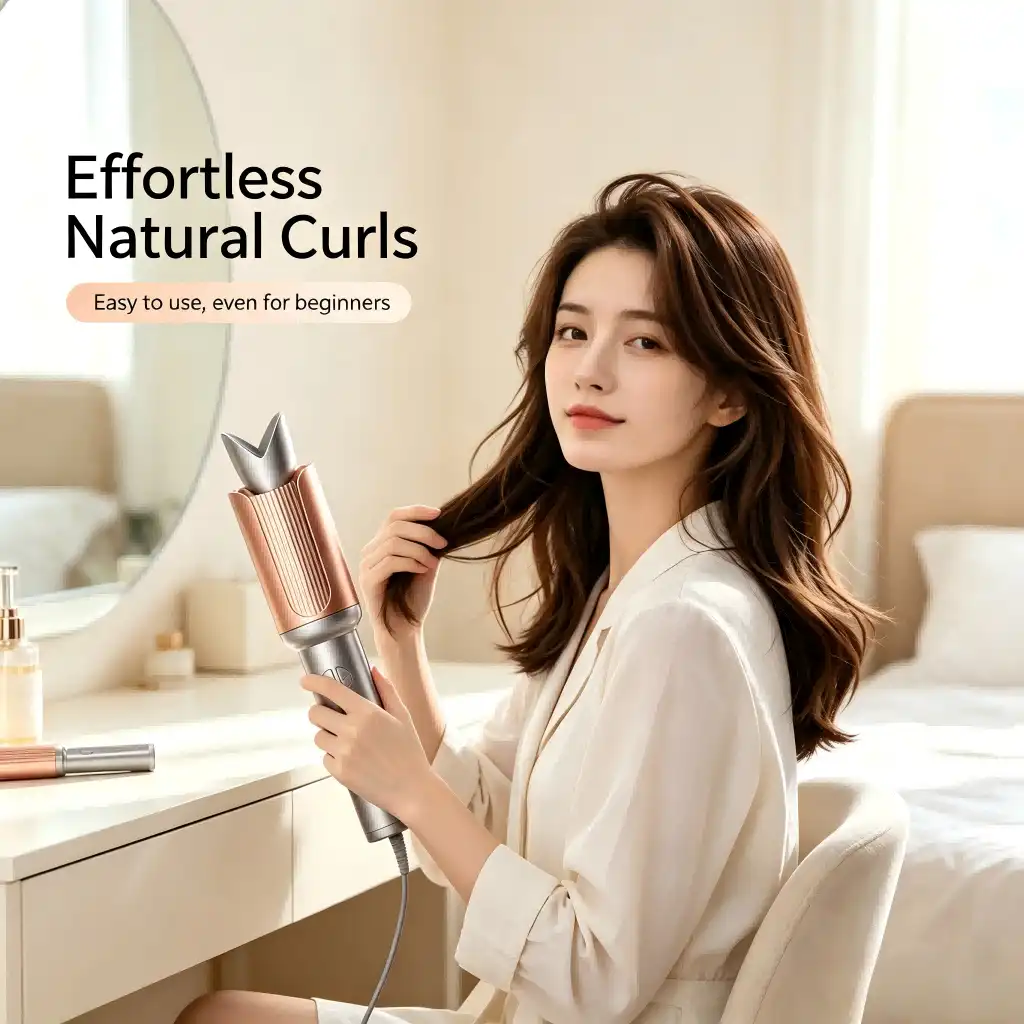
If you are new to heat styling, an automatic hair curler is genuinely one of the most beginner-friendly tools you can pick up. Instead of manually winding sections around a barrel—which takes practice and risks burns—this device draws hair in, applies controlled heat, and releases a defined curl in seconds. Whether you are a consumer styling at home or a B2B buyer evaluating which hair curler model to add to your product line, understanding correct usage and key specifications makes all the difference in achieving consistent, salon-quality results.
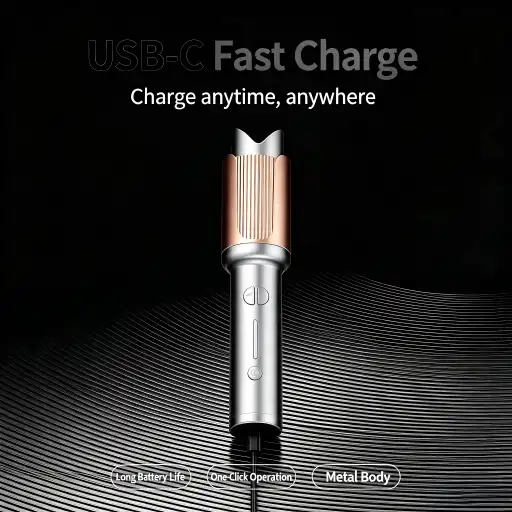
Automatic Hair Curlers: Basics and Benefits
An automatic hair curler is a styling tool with a motor that automatically wraps hair around a heated barrel using a mechanism inside the tool that turns it. The technology gets rid of the problem of inconsistent hand force that comes with traditional wands, so curls are formed evenly no matter how skilled the user is. The global hair care appliance market was worth USD 14.6 billion in 2022, according to a study by Grand View Research. Smart and automatic styling tools were the fastest-growing category, which shows that demand for these devices is growing across both individual and professional channels.
Ceramic vs. Titanium Barrels
Ceramic barrels are better for fine hair or hair that has been chemically treated because they spread heat more evenly. This guide talks about a model with an MCH ceramic heating element and a 31mm barrel diameter. This model makes big waves instead of tight ringlets, which is great for medium to long hair. Metal Ceramics Heater (MCH) technology recovers heat faster than regular PTC elements and keeps temperatures stable within a small range that protects hair structure during multiple passes.
Cordless vs. Corded Flexibility
This gadget can be used wired (with 60W of power) or wirelessly with a lithium battery, giving designers and customers real options. When traveling or dressing for an event on-site, the cordless mode is especially useful. The wired mode, on the other hand, keeps the power flow steady during long salon sessions. The item is 28.5 × 6 × 4.5 cm small, which means it can fit in a journey bag without reducing the barrel size.
Step-by-Step Guide: How to Use an Automatic Hair Curler for Beginners
It's easy to get great results from a rotating curler once you know the steps to take. This is a step-by-step guide for using an automatic hair curler for people who have never used it before.
Prepare Your Hair First
Always start with hair that is clean and dry. When you heat wet threads, the steam can hurt the cortex deep down. Before turning on the device, spread a light heat protectant from the middle to the ends. Choose the right temperature for your hair type. For example, 150°C to 170°C is a good range for fine hair, while 200°C to 220°C may be better for coarse or thick hair. This curler's ABS, PPT, and high-temperature-resistant nylon housing keeps the outside cool to the touch. This keeps you from getting burned while setting it up.
Section and Curl Methodically
Split the hair into straight strips that are about 2.5 to 4 cm wide. Put a piece of hair near the barrel's opening slot, press the button to turn it on, and let the motor pull the hair in. Hold for 8 to 12 seconds, depending on how tight you want the curl to be, and then let go. For the most even distribution, work from the nape up. A good automatic hair curler has an anti-tangle sensor that checks the motor resistance and turns the wand around if hair gets caught. This is a very important safety feature that newbies really like.
Post-Curl Care and Device Maintenance
If you want your curls to last much longer after styling them, let them cool down completely before touching or brushing them. After the gun cools down, wipe the barrel clean with a dry microfiber cloth. Wet wipes should not be used near the motor housing. The ceramic coating on the curler can last for over 50,000 passes before it starts to break down. To protect it, keep it in its protective case.
Comparing Automatic Hair Curlers: What Should B2B Buyers Consider?
Technical specs are only half of the story when looking for an automatic hair curler at volume. Professionals in B2B procurement need to look at both performance standards and the total cost over the whole lifespan.
When comparing models, these are the main things that expert buyers look at:
- Heating element type: MCH ceramic elements reach the goal temperature in about 60 seconds and keep the temperature uniform within ±5°C. They recover heat faster than regular PTC elements, which is a clear benefit for salons with a lot of foot traffic.
- Power and barrel diameter: For most people with medium to long hair, a 60W power and a 31mm barrel are the best combination for speedy heat-up and a wide range of wave styles.
- Dual power supply: Models that can be used both with a cord and without one are more popular with customers and can justify a higher price, which helps brand resellers make more money.
- Safety certifications: To enter the North American and European markets, you must comply with CE, FCC, and RoHS. Listing under UL 859 gives mass shopping channels more authority.
These criteria collectively determine whether a product will perform reliably through high-volume professional use, minimizing return rates and protecting brand reputation.
Addressing Common Concerns and Risks with Automatic Hair Curlers
When shopping for hot style tools like an automatic hair curler, safety is the most important factor, and rightly so. Uncontrolled temperature drops are the main reason why buyers in competitive markets have to deal with heat damage claims and platform removals.
This curler's MCH heating element has dual-NTC thermistors that check the temperature of the barrel several times a second. This keeps the heat from rising too quickly, which happens with less-expensive models. This is not a marketing claim; it is a choice made during the engineering design process that directly lowers brand owners' legal risk.
To lower the risk even more, you should check with any provider about MTBF (Mean Time Between Failures) motor testing for 500 hours or more of continuous use, leakage current testing for safety in the bathroom, and drop testing from 1.5 meters to make sure the case is solid. Before committing to large orders, procurement teams buying for Amazon FBA should make sure to ask for these test reports. This is because removing a platform because of safety concerns stops ranking progress and income flow.
Procurement Insights: How to Source the Best Automatic Hair Curlers for Your Business
It takes more than looking through a brochure to find a reliable automatic hair curler provider. The best way to buy something is to do technical checks, try samples, and build relationships with makers who can really do both OEM and ODM work.
Before moving on to full production runs, a reliable supplier should be able to handle small trial orders, which are usually between 500 and 3,000 units. Fast sample turnaround (less than 7 days) is a good indicator of how well organized and quick the business is. Customization depth is also important. Adding a logo, choosing a colorway, and making your own packaging are all ways to set your brand apart in a crowded retail channel.
Verify that your supplier holds ISO 9001 certification and has passed third-party audits by bodies such as SGS, TUV, or Intertek. These credentials are not decorative—they reflect production consistency across large runs. Bulk order discounts, a 360-degree swivel cord design, and a minimum 3-year warranty are additional benchmarks that signal a supplier's confidence in their own product quality.
Conclusion
To get good at using an automatic hair curler as a beginner, you need to plan ahead, practice, and pick a device that is made to be consistent. The same rules apply at a larger size for people who buy things for other businesses: know the specs, check the certifications, and work with makers who can provide both quality and customization. This guide talks about the 31mm MCH ceramic curler as an example of a product that combines performance, safety, and flexibility in a way that appeals to beauty lovers in North America, Europe, and the Middle East.
FAQ
Is an automatic hair curler suitable for all hair types?
Most automatic hair curlers can work with straight, curly, and lightly curled hair. Lower temperature sets (150°C–170°C) work better for fine hair, while 200°C–220°C work better for thick or tough hair. The 31mm barrel works best on medium-length to long hair to make open waves.
How long does the device last under professional use?
A motor with an MTBF rating of 500 hours or more of steady use can be used professionally for many years. The ceramic coating can withstand more than 50,000 passes of ISO-20894 testing before it starts to lose its effectiveness.
Cordless or corded—which model suits a salon environment?
For back-to-back client meetings, corded types are better because they provide continuous 60W power. Cordless versions let you move around for events that happen in real life. This guide talks about a dual-mode design that works in both situations with a single SKU.
What certifications should I request from an automatic hair curler supplier?
CE, FCC, RoHS 2.0, and UL 859 are some of the minimum standards for North American and European markets. For bigger retail accounts, more BSCI or Sedex checks make compliance look more trustworthy.
Can I order custom packaging and branding?
Reliable OEM makers allow full customization, such as adding a logo, choosing a colorway, and designing a unique gift box. Samples are usually sent out within 3–7 days, and there is no minimum order quantity (MOQ) for test runs.
Partner with Kingwe-star for Your Next Automatic Hair Curler Launch
Since 2009, Kingwe-star has sold beauty tool brands and cross-border sellers in more than 100 countries. Their automatic hair curler lines are CE, FCC, and RoHS-certified and ready for OEM customization. We help brands that need to move quickly without sacrificing quality by giving them samples in 3 days, having a low MOQ, and a warranty that lasts for 3 years. Reach out to our team at luna@bllgift.com or visit bllgift.com to explore our automatic hair curler supplier catalog and request your first sample today.
References
- Grand View Research. (2022). Hair Care Appliances Market Size, Share & Trends Analysis Report. Grand View Research.
- Mintel Group. (2023). Beauty Tech and Hair Styling Tools: Consumer Trends Report. Mintel.
- Allure Magazine. (2023). The Best Automatic Curling Irons Tested by Editors. Condé Nast.
- Good Housekeeping Institute. (2022). How We Test Hair Styling Tools: Heat, Safety & Performance. Hearst Magazines.
- International Electrotechnical Commission. (2021). IEC 60335-2-23: Household Appliances Safety – Skin and Hair Care Appliances. IEC.
- Business of Fashion. (2023). Beauty Tech Disruption: How Automated Styling Tools Are Reshaping the Professional Salon Market. The Business of Fashion.
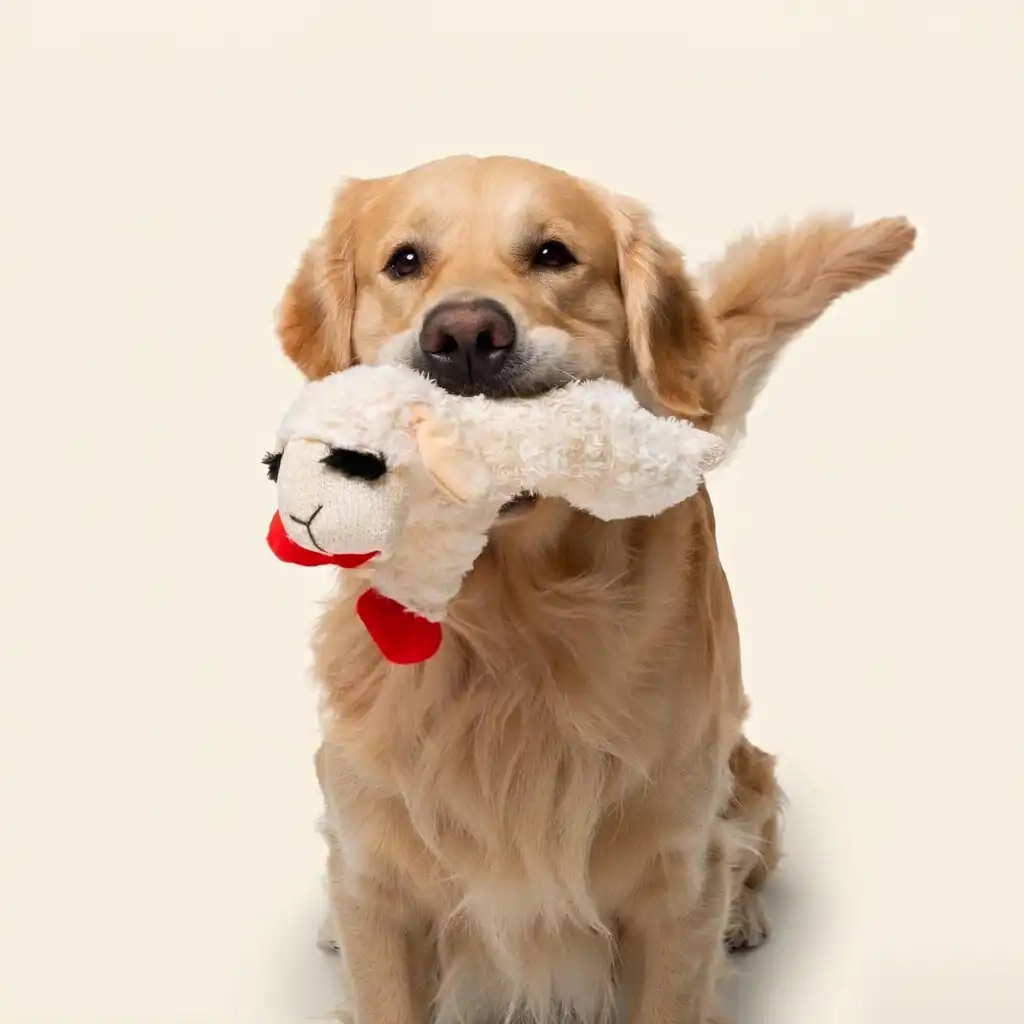
Plush toys are genuinely good for dogs when they are made to the right safety standards. A well-constructed dog plush toy supports emotional well-being, reduces separation anxiety, and gives dogs a healthy outlet for their natural chewing and carrying instincts. Research published by the American Kennel Club confirms that environmental enrichment tools, including soft toys, measurably reduce stress-related behaviors in domestic dogs. The key is sourcing products engineered specifically for canine use, not repurposed children's toys. From a procurement standpoint, that distinction shapes every material, seam, and safety certification decision you make.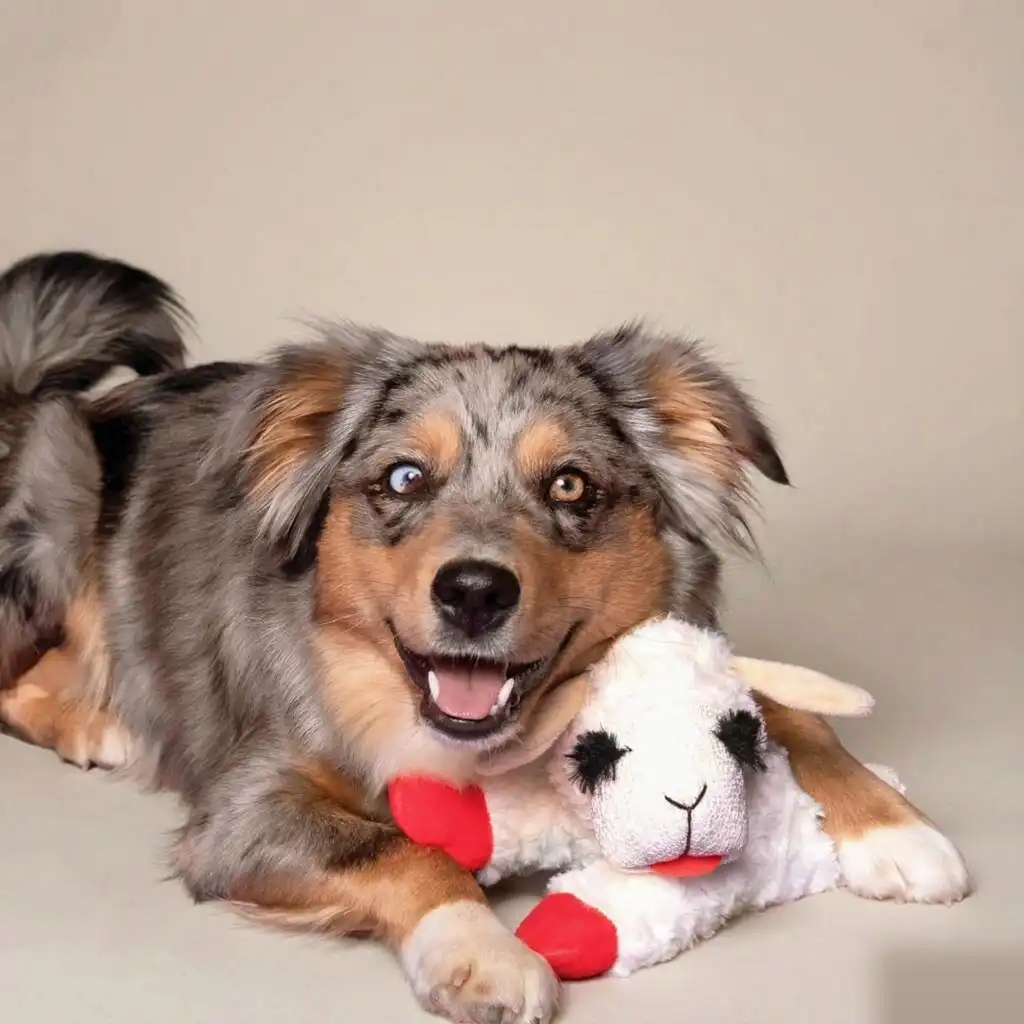
Plush Toys for Dogs: Safety and Benefits
Every year, pet owners in the US spend more than $150 billion on their animals. Toys are one of the fastest-growing categories of pet supplies. There is a special place in the market for soft plush toys for dogs because they meet both their physical and mental needs at the same time.
What Makes a Dog Plush Toy Genuinely Safe?
The safety of a dog plush toy is not an accident; it is planned. Professional-grade items use poly-fill stuffing that is free of heavy metals and chemicals and is safe for people with allergies. The seam pull-force resistance should be higher than 90 Newtons, and the squeakers inside should be protected by fabric pouches instead of just lying there loose. Meeting the requirements of ASTM F963 (for mechanical safety) and EN71 (for chemical composition) gives purchasing teams the proof that their retail channels need.
The Behavioral Benefits Backed by Evidence
Several peer-reviewed studies on canine anxiety have found that dogs carrying soft toys have lower levels of cortisol markers. Plush toys help puppies get used to being fed solid food, help older dogs deal with cognitive decline, and give high-energy breeds a low-impact plaything that keeps them from being destructive around the house. For brands that sell on Amazon or Chewy, these known benefits directly translate into appealing product copy and high rates of return purchases that keep margins safe.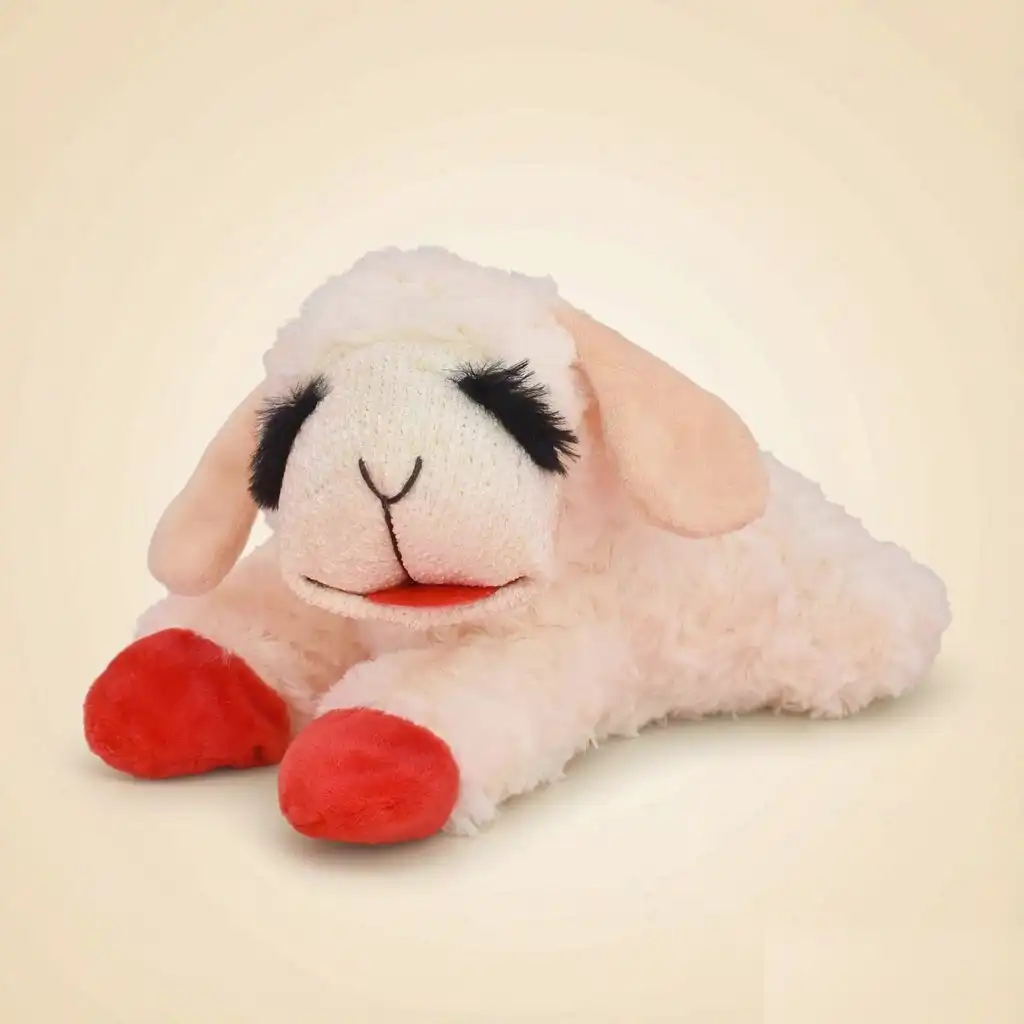
Types and Designs of Dog Plush Toys: Meeting Market Demands
The group of soft pet toys has grown and changed a lot. Any buying manager who wants to build a multi-SKU product line needs to know about that range.
Squeaker Toys and Sound-Enabled Designs
In North America, the most popular type of dog plush toy is still one with a squeaker inside. The built-in sound system stimulates a dog's hunting drive in a controlled, low-arousal way, which lets them play longer without getting more aggressive. Kingwe-star's white plush squeaker toys have a reinforced plastic squeaker housing that passes cycle-durability testing, which means that the mechanism keeps working even after being compressed many times, which is much longer than what is normally expected in retail toys.
Customizable Plush for Brand Differentiation
The market likes it when you don't stick to normal shapes. Pet brands can charge more at the store because they have approved character designs, embroidered logos, and labeled hang tags. When you work with a good OEM dog plush toy maker, you can lower the cost per unit while keeping the toys' unique look on the shelf. This is very important for direct-to-consumer brands competing on Amazon, where visual identity drives click-through rates.
New materials are also changing what buyers expect. For goods sold in daycares, brands now ask for antimicrobial fabric coatings, saliva-colorfast dyes that have been tried against enzymes found in dogs' saliva, and ballistic nylon strengthened panels for people who like to chew a lot. These specs are no longer unusual; you can often find them in RFQs from medium-sized pet brands that spend between $200,000 and $3 million a year on purchases.
How to Choose the Best Plush Toys for Your Procurement Needs?
To find the best dog plush toy provider, you need to look at a number of factors that all affect each other. Before signing up for a buying relationship, procurement managers should look at these main factors:
- Material certification: Verify REACH compliance, Oeko-Tex Standard 100 approval, and chemical test reports covering the outer fabric, stuffing, and any plastic components, including squeakers.
- Seam and structural integrity: Request pull-force test data. Triple-stitched seams and internal mesh liners dramatically extend product lifespan and reduce the choking risk that triggers platform removals and recall exposure.
- Squeaker safety documentation: Confirm squeakers are housed in protective inner pouches and that the plastic components are non-toxic and free from BPA and lead.
- Small-batch flexibility: Brands testing new designs need a supplier that accepts initial orders of 500–2,000 units per style without penalizing MOQ pricing disproportionately.
- Sample lead time: Competitive markets require fast iteration. A supplier delivering samples within three to five business days allows brands to hit seasonal windows, particularly Q4 holiday gifting cycles, without inventory risk.
Both of these factors work together. If a toy passes chemical tests but fails seam integrity tests, it leaves the same amount of liability open as if it failed both. Teams in charge of buying things should treat every point as a must-have instead of weighing them against each other.
Maintenance and Longevity: How to Care for Dog Plush Toys
Teaching store owners and end users how to take care of their pets properly increases the life of products and lowers the number of returns, which is good for your brand's selling stats on Amazon and Chewy.
Recommended Care Protocols
When you wash something in the washing machine on a cold, gentle mode, the fibers stay intact and the plastic shell doesn't pill. It's important to let the poly-fill loft dry in the air, because high heat can damage it and melt or bend the plastic parts inside the squeaker. For daycare and kennel settings, using antimicrobial spray treatments between washes can make the time between cleanings longer without affecting the stability of the dye.
Quality Inconsistencies and How to Prevent Them
One of the main issues about bad reviews for plush pet toys is that the colors change from batch to batch. It should be required before production that fabric samples are put through saliva-colorfast dye testing, which involves simulating canine enzymes. When brands buy from companies that have their own labs for checking raw materials, they can ask for proof of the dye lot that supports claims of consistency across reorders.
Industry Trends and Future Outlook for Dog Plush Toys
The world's pet toy market is expected to grow at a compound annual growth rate (CAGR) of about 5.8% until 2030. This is because of trends toward humanization, more millennials getting pets, and more expensive everyday pet goods. Eco-friendly people in North America are moving from wanting sustainable materials like recycled polyester fill, organic cotton shells, and water-based colors to expecting them.
The next wave of products are interactive plush toys with sensors. Sound-activated responses, crinkle layers, and multi-texture surfaces make things more engaging for longer and explain higher selling prices. This means that procurement teams need to work with dog plush toy suppliers who put money into research and development and regularly release new SKUs instead of keeping their catalogs static.
Conclusion
Dogs and their owners can get real, measurable value from dog plush toy that is made to real safety standards. Finding soft dog toys with certified materials, long-lasting structures, and design options that can be changed is a chance for brands and procurement managers. These features must meet both customer expectations and platform compliance requirements. Quality is what the market wants, and it starts with the bond you build with your supplier before the first unit goes.
FAQ
Are plush toys safe for aggressive chewers?
Normal plush toys aren't good for big chewers because they don't have enough support. Professional-grade versions have protected squeaker housings, multi-layer internal barriers, and high-denier fabric that makes them much less likely to be swallowed. Always make sure the toy is the right size and shape for the dog, and watch them play the first few times.
What certifications should I require from a dog plush toy supplier?
Set the standard at EN71 for chemical and mechanical safety, ASTM F963, REACH compliance, and Oeko-Tex Standard 100. For the US market, CPSIA compliance is also important for products that are sold through major retail channels.
Can I order small quantities to test new designs?
Yes, flexible suppliers do take low MOQ orders of 500 to 2,000 units per style to test the market. Kingwe-star supports small-batch customization and can deliver samples as quickly as three days. This means that seasonal and trend-driven launches can happen without spending too much money.
How do I verify squeaker safety in bulk orders?
Ask for proof that the squeaker cases are protected by fabric pouches inside and that the plastic parts have been tested and found to be safe. Ask for cycle-compression test results that show the device can be used over and over again without the top layer breaking.
Partner With Kingwe-star — Your Trusted Dog Plush Toy Manufacturer
Quality cat plush goods have been made by Kingwe-star since 2009. Their EN71-certified, REACH-compliant dog plush toys are sold in over 100 countries, including North America. Our white squeaker toy line comes with full test paperwork, low-minimum-order quantities, and samples that can be sent back in three days. You can email our team at luna@bllgift.com or visit bllgift.com to look through our catalog. We can help you with private-label customization or a scalable wholesale dog plush toy supplier relationship.
References
- American Kennel Club. (2023). The Role of Enrichment Toys in Canine Behavioral Health. AKC Publications.
- American Pet Products Association. (2024). APPA National Pet Owners Survey 2023–2024. APPA.
- Grand View Research. (2023). Pet Toy Market Size, Share & Trends Analysis Report, 2023–2030. Grand View Research.
- ASTM International. (2023). ASTM F963-23: Standard Consumer Safety Specification for Toy Safety. ASTM International.
- European Committee for Standardization. (2017). EN 71 Safety of Toys — Parts 1–3. CEN.
- Todd, Z. (2018). Wag: The Science of Making Your Dog Happy. Greystone Books.
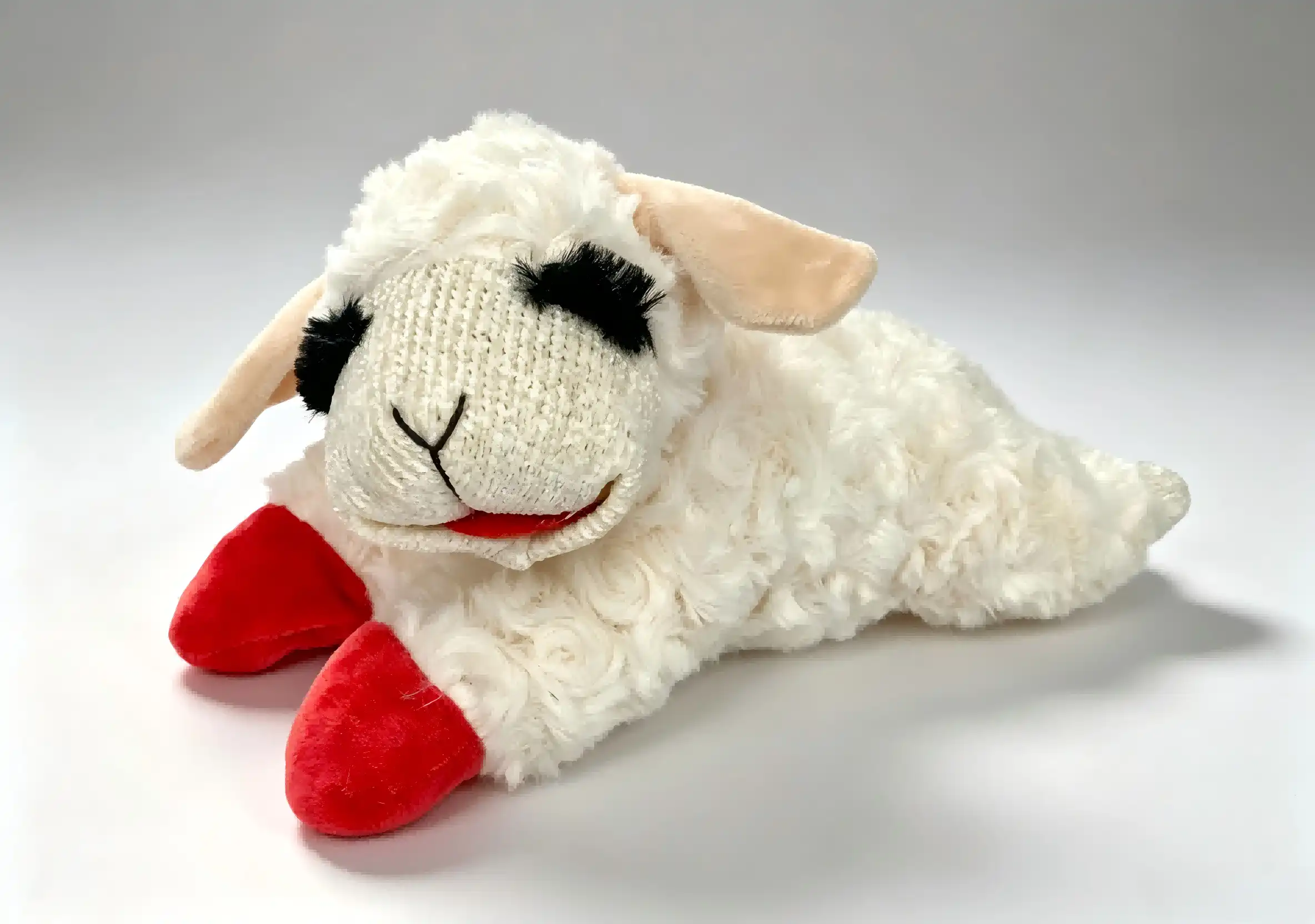
Dogs genuinely enjoy plush toys — and the reasons run deeper than simple play. A well-made dog plush toy satisfies multiple instinctual drives at once: the urge to chew, the need for comfort, and the desire for social interaction. Studies in animal behavior confirm that soft, squeaky toys trigger a dog's prey response, keeping them mentally stimulated and emotionally grounded. Whether your brand serves anxious puppies or high-energy adult dogs, understanding what drives canine attachment to plush toys is the foundation of building a product line that actually sells.
Why Dogs Are Naturally Drawn to Plush Toys
The Instinct Behind the Obsession
All dogs, no matter how small, are naturally hunters. Dogs hear a squeak when they bite into a soft toy because it sounds like the cry of small prey. This sets off a deeply ingrained brain reaction. Applied Animal Behavior Science published a study that found that dogs are much more interested in toys that make noise, like squeakers, than in toys that don't make noise. Not a quirk; it's just how things are. For kids, a soft toy with a squeaker is more than just a feature; it's a behavior trigger that leads to repeated play and emotional connection.
Comfort, Anxiety, and the "Security Object" Effect
Many dogs, especially pups and older dogs, use soft toys for more than just playing with them. This is similar to what has been seen in human babies, where regular touch lowers cortisol levels. When dogs are left alone for long periods of time and given a plush friend, they are much less likely to do something bad. This emotional utility directly leads to repeat purchases and strong customer trust for B2B buyers who are looking for products for retail or direct-to-consumer platforms.
Key Considerations When Procuring Dog Plush Toys for B2B Clients
Any serious buyer will not be willing to compromise on safety and compliance. Certifications like EN71 and ASTM F963 exist because dogs play with toys by putting them in their mouths, which means that any chemical contamination, detachable part, or structural failure is a direct risk of ingestion. It only takes one recall to forever damage a brand's listing on Amazon or Chewy.
Here are the most important things that skilled B2B buyers look for in a purchase:
- Material safety: Outer fabrics must be free from phthalates, heavy metals, and azo dyes. Hypoallergenic poly-fill stuffing reduces the risk of allergic reactions in sensitive breeds. All colorants should pass saliva colorfastness testing to ensure dyes don't leach during play.
- Squeaker enclosure design: Professional-grade dog plush toy house internal squeakers inside protective fabric pouches, not loose within the stuffing. This prevents immediate swallowing if the outer shell is breached during aggressive chewing.
- Seam integrity: Double or triple-stitched seams with pull-force resistance exceeding 90 Newtons are the standard for durability-focused products. Seam failure is the leading cause of plush toy returns on major retail platforms.
- Customization capacity: Brand-aligned OEM and ODM options — including embroidered logos, custom hang tags, and seasonal packaging — allow buyers to differentiate at the shelf level without increasing unit cost disproportionately.
Customization options: OEM and ODM options that are in line with the brand, such as embroidered logos, custom hang tags, and seasonal packaging, let buyers set their products apart on the shelf without making the unit cost go up too much.
How Leading Brands Differentiate in the Plush Toy Space
There are more types of people in the market for dog plush toys than it seems. Different brands, like KONG and ZippyPaws, approach longevity in different ways. KONG focuses on stronger rubber-core integration, while ZippyPaws focuses on no-stuffing designs that completely remove choking risks. In the premium esthetic segment, where softness and good looks drive gift-market demand rather than play durability, Jellycat and Gund are popular choices.
Some brands are better than others because they can fix a behavior or safety issue with a product feature, not just a cloth choice. When buyers know the difference between these two terms, they can make better choices about where to buy things and how to make product lines that offer more value to customers.
How to Source, Inspect, and Maintain Dog Plush Toys
Building a Reliable Supplier Evaluation Framework
Finding dog plush toy made overseas takes more than just negotiating prices. A reliable seller should use IQC, IPQC, FQC, and OQC quality inspection procedures at different stages of the production process. Industrial needle detection is a necessary step; product recalls involving multiple SKUs have been caused by broken sewing needles getting stuck in stuffing.
Checklists for inspections should include things like squeaker cycle durability (compression testing), fabric flammability compliance, and dye stability when saliva is added to the test. If buyers use these standards when choosing suppliers, they won't have to pay as much for fixing problems after the fact.
Maintenance Guidance That Supports Retail Positioning
Products last a lot longer if they are washed in a machine on a cold, gentle run and then dried in the air. High-heat drying breaks down synthetic fibers and can change the shape or melt the internal squeaker mechanisms. Putting clear care instructions on the packaging cuts down on customer complaints and boosts positive reviews, which is a factor that has a big impact on search rankings on Amazon and Chewy.
Future Trends Shaping the Dog Plush Toy Market
The next big thing in dog plush toy is coming together around two ideas: smart integration and eco-friendly materials. Toys with sensors inside that react to a dog's touch or sound are becoming more common, especially in the high-end direct-to-consumer market. At the same time, more rules and consumer preferences in the EU and North America are speeding up the use of OEKO-TEX certified fabrics, recycled fiber stuffing, and biodegradable packaging.
This means that procurement professionals should put R&D agility and production capacity at the top of their list when working with suppliers. A maker that can deliver a holiday gift set in Q4 and then switch to an eco-friendly spring launch in Q1 without affecting lead time is more than just a provider; they are a strategic asset.
Conclusion
Along with being fun, dogs like dog plush toy for very basic, instinctive reasons. This provides a long-term business chance for buyers and brands, one that rewards careful product design, strict safety standards, and quick supply chain management. The best product lines make sure that the dog is comfortable, that they can hear interesting sounds, and that the structure will last. This is good for both the dog and the brand's long-term value. Buying choices that are based on these things always work out better than ones that are only based on price.
FAQ
Are plush toys safe for all dog breeds?
Not without some conditions. Dogs that like to chew aggressively, like Pit Bulls, German Shepherds, and Labrador Retrievers, need plush toys that are strengthened, have shells that won't tear, and have squeakers inside. Normal soft plush items work best for dogs that don't like to chew on things too hard or as pets. Buyer segmentation strategies should be based on how breeds behave.
What certifications should a dog plush toy carry?
EN71 talks about chemistry make-up and technical safety for the EU market. For the U.S. market, ASTM F963 is used. REACH compliance makes sure that there are no restricted substances. OEKO-TEX Standard 100 makes sure that no dangerous chemicals are used in the making of materials at any point. Buyers looking for products to sell in more than one market should check all four.
How do squeakers affect toy safety?
When the outer shell is broken, loose squeakers can cause choking. Professionally made toys put squeakers in extra fabric pouches that keep the motor from getting stuck in the dog's mouth. Any product sold through regulated retail methods should have this design trait as a minimum.
What is the typical MOQ for custom plush toy orders?
MOQ depends on what the seller can do. Small-batch customization is possible with runs as low as 500 units per SKU from flexible makers. This lets you test the market before committing to big inventory positions.
Partner With Kingwe-star — Your Trusted Dog Plush Toy Manufacturer
Since 2009, Kingwe-star has been a reliable source for dog plush toys. Their 10,000+ factory is approved by EN71, ASTM, and OEKO-TEX, and their products are safe for dogs to play with. We offer low MOQ choices and support OEM and ODM customization. Our samples can be sent in as little as three days, and we made our products so that brands can test quickly and grow smartly. You can email our team at luna@bllgift.com or go to bllgift.com to see all of our plush toys.
References
- Todd, Z. Wag: The Science of Making Your Dog Happy. Greystone Books, 2018.
- Horowitz, A. Inside of a Dog: What Dogs See, Smell, and Know. Scribner, 2009.
- Rooney, N. J., & Bradshaw, J. W. S. "An experimental study of the effects of play upon the dog–human relationship." Applied Animal Behaviour Science, 2003.
- American Pet Products Association. APPA National Pet Owners Survey. APPA, 2023.
- European Commission. EN 71 Toy Safety Standard: Part 1–9. European Committee for Standardization, 2022.
- ASTM International. ASTM F963-23: Standard Consumer Safety Specification for Toy Safety. ASTM International, 2023.
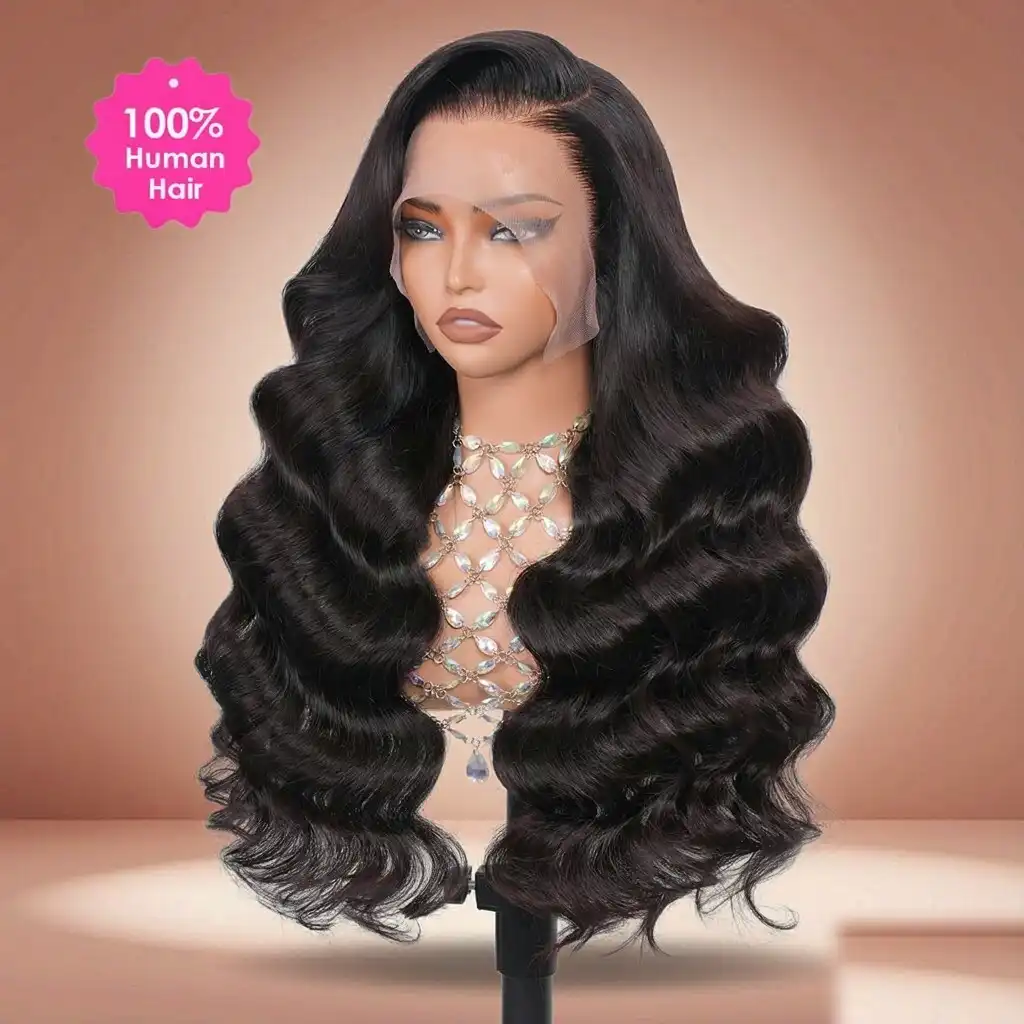
Installing a lace-front human hair wig might seem intimidating at first, but with the right approach, anyone can achieve a seamless, natural-looking result. A hair wig offers unmatched versatility and realism compared to synthetic alternatives, making it a popular choice for those seeking premium hair replacement solutions. The transparent lace front melts into your skin tone, creating an undetectable hairline that looks like your own scalp. Whether you're new to wigs or simply looking to refine your technique, this comprehensive guide walks you through every essential step to confidently install your lace front wig and achieve professional-quality results at home.
Understanding Lace Front Human Hair Wigs
What Makes Lace Front Wigs Unique?
A lace front human hair wig has a sheer lace panel on the front face where each hair is tied by hand with great care. The hair can grow out naturally from the lace base this way, just like hair grows from your head. Full-lace wigs have lace all the way around the cap. There is lace on the front of lace front wigs, and the back is machine-wefted to make it stronger. These wigs look good and last a long time. When it comes to high-end units, the clear Swiss lace that is 0.08mm to 0.12mm thick lets more air flow through and has a finish that is almost invisible on a range of skin tones without having to clean or change a lot.
Virgin Human Hair vs. Processed Hair
The hair used to produce a human hair wig is important. The finest hair is virgin. Hair from one source has never been repaired. The cuticles remain facing the same direction. Thus, the hair retains its gloss and mobility without knotting. Remy hair isn't as excellent as other varieties, but its cuticles are straight, and it may have been mildly treated, like colored. The cheaper non-Remy hair has cuticles that grow in opposite directions and requires more chemical processing. It wears out faster and tangles more. Knowing these distinctions helps buyers choose items that meet their demands and budgets.
Key Specifications That Matter
There are technical factors of a lace front wig that affect its appearance after wearing. The top 13x6-inch lace size provides enough coverage to separate your hair and modify your natural hairline. A hair density of 18% indicates thick, full, but not heavy hair. Brazilian body waves are easy to manage and allow hair to flow naturally. A medium-sized cap fits 21.5-22.5-inch skulls for most individuals. An already-black base color may be modified to match your style or brand. Easy setup, number of styles, and customer satisfaction depend on these factors. All of these are crucial for companies that seek repeat consumers.
Step-by-Step Installation Process for Beginners
Preparing Your Natural Hair and Scalp
The key to a good human hair wig fitting is getting ready right. Before you glue your hair together, wash your natural hair with a clarifying shampoo to get rid of any product buildup, oils, or residue that might get in the way. After your hair is fully dry, there are several ways to flatten it against your head, depending on how long and thick your hair is. If your hair is short, all you need is a brush to smooth it back. Make cornrows in your hair and let it dry if you want to wear it flat against your head. You could also glue your hair around the outside of your head and wrap it around the outside to make a smooth surface. Your real hair shouldn't touch the wig, so put a thin layer of wig cap or stocking cap on top of it. Also, this will help the glue stay away from your real hair.
Positioning the Lace Front Correctly
You must place your wig carefully to achieve a lifelike face. Put the wig on with the lace edge approximately a finger-width beneath your hairline, not on top. Cover both sides of your head with the headgear. This little backward tilt avoids the design from being too forward, and the lace fits well. Verify the ear tab placement to ensure the wig fits equally on both sides. You should have both tabs at ear level. The nape should feel pleasant at the base of your skull, not pull or gape. Slide the interior combs or clips into your flat hair or wig cap to improve fit. It will stay in place as you glue. Taking your time now prevents application errors and ensures fair outcomes.
Applying Adhesive for Secure Hold
What adhesive you use depends on your lifestyle and skin sensitivity. Wig glue sticks best and lasts 2–6 weeks. It handles sweat, activity, and hectic lifestyles. Use caution while putting it on and taking it off to avoid damaging the tiny lace. Easy to apply and remove, wig tape offers a mild grip that lasts three to seven days. This makes it ideal for beginners or those who take off their wig at nighttime. Clean your hair and remove oils with alcohol wipes first. Apply a small, uniform coating of adhesive on your forehead where the lace will meet your skin. A small brush works for this. Only press the lace down once the adhesive is tacky, approximately one to two minutes. To avoid air holes, press the lace firmly into the adhesive with your fingers or a comb. Work in little parts.
Trimming and Customizing the Lace
Once applied, a customized wig is hardly noticeable. near enough to avoid cutting the lace, but not so near as to cut the hair knots. Work outdoors in natural light with sharp fabric or lace-cutting scissors for precision. Don't trim your hairline straight. Cut tiny, straight lines along your hairline. For the most natural effect, leave 1-2 mm of lace beyond the hairline. Some individuals use foundation or makeup that matches their skin tone to the lace edge after cutting it to blend it in. Due to the difficulty of seeing fine Swiss lace, some like the transparent lace. Pulling out a few hairs near the hairline shrinks it naturally. This prevents thick, even hairlines from seeming "wiggy".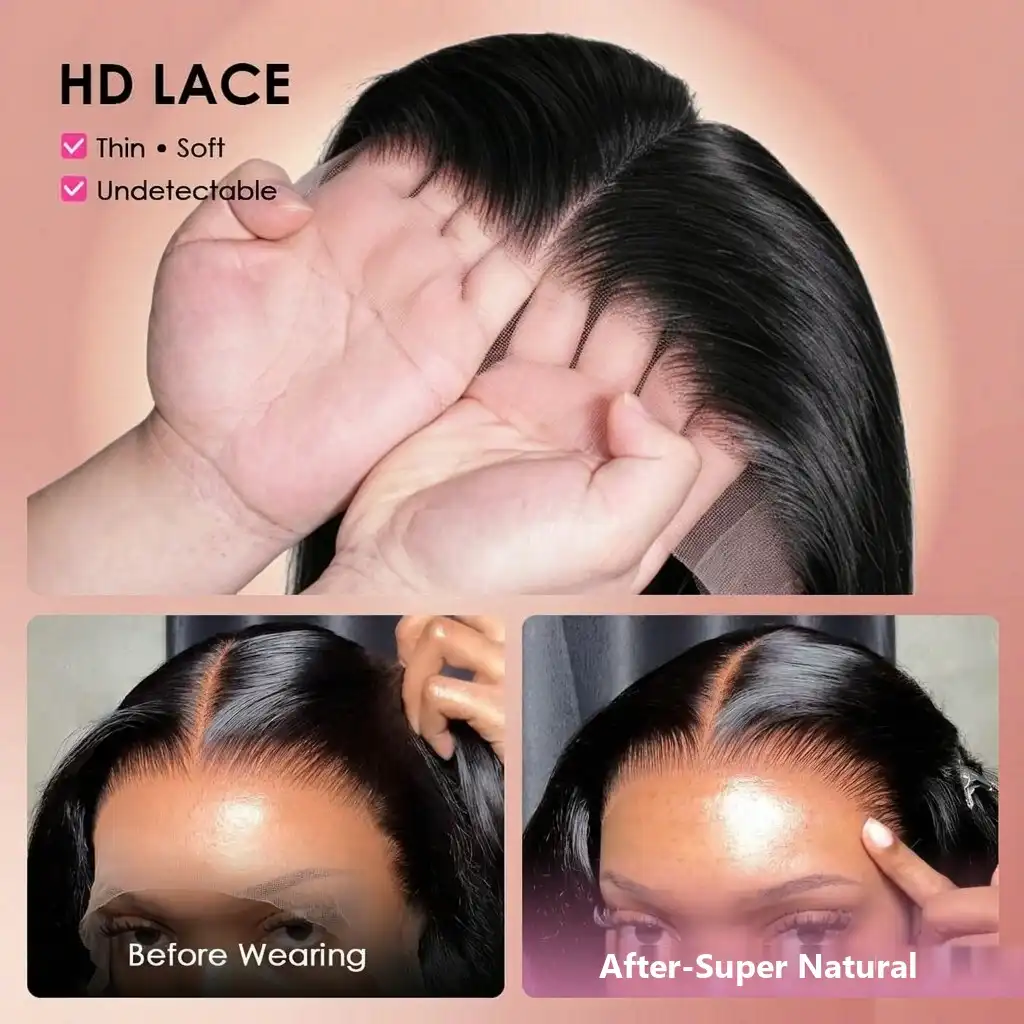
Common Challenges and Solutions in Installing Lace Front Human Hair Wigs
Adhesion Issues and How to Prevent Them
Breaking glue is one of the most frustrating phases of installation. This is usually due to a poorly prepared head or sealing agents. Stickers cling poorly to oily, sweaty, moisturized, or makeup-covered skin. Clean the region where the wig will go with alcohol wipes. The environment also affects adhesion. High humidity and heat may slow glue drying and break it down. In certain scenarios, harsh glues or anything other than tape may be preferable. Product quality is crucial. Professional glues attach to delicate animals over time. Fillers in cheaper glues may reduce their effectiveness.
Addressing Scalp Irritation and Sensitivity
Wig materials may create unpleasant skin reactions; therefore, people may give them up. This is usually caused by strong hair-binding chemicals, poor airflow beneath the wig cap, or too much tension from a tight fit. Choose medical-grade glues that are suitable for delicate skin and test them on their arm for 24–48 hours before applying them to their head. Swiss lace is delicate and airy, so it seldom causes problems. However, lace quality must be checked. Procurement managers should favor suppliers with material safety and skin testing certifications when buying for end users. You can prevent takedown injuries by showing people how to undress. Do not rip or tear lace from your skin; use adhesive removers.
Achieving Natural Alignment and Appearance
Installations that don't look natural are usually because the human hair wig wasn't put on right or wasn't customized enough. You can make your hairline stand out by moving it forward or back. If it's too far forward, it makes your face look smaller. Things that are placed unevenly look off-balance, which takes attention away from what you want. You can get the wig on right by using your body as a guide. Your temples should line up with the wig, and the side ends should curve around your ear as your temples do. Look at the forehead from different angles and in different lights after the glue is dry. Style your hair away from your face. If you touch the see-through lace, it shouldn't show any grid lines or different colors. If it looks like the sides are coming apart, press down on them again or use glue to keep the pieces together.
Maintenance and Care After Installation
Washing Your Installed Wig Properly
Regularly washed wigs stay longer and look better. If you wear a human hair wig daily, wash it every 7–10 days. If you style or exercise regularly, wash your hair more often. Like loose wigs, fitted units should be washed without damaging the adhesive bond. Mix water and sulfate-free shampoo in a spray bottle. Avoid getting the watered-down mixture on the adhesive that secures the unit to the lace front; apply it directly to the hair. Scrubbing your hair in circles might tangle it. Instead, gently massage the shampoo through your hair by moving your fingers downward. Carefully rinse with warm water to remove all product. Avoid the roots and lace from mid-length to ends to hydrate your hair. Let the conditioner sit in your hair for 3–5 minutes. Rinse with cold water. Skin and hair will glow after sealing.
Styling and Heat Application Guidelines
The nicest part about 100% raw human hair wigs is that you may style them with or without heat. Smooth, curl, or wave Brazilian body waves using these pieces. They withstand 400°F (200°C) heat. To avoid repeat damage, apply a heat protectant spray before using thermal equipment. When styling your hair with heat, start with low heat and increase as needed. Heat degrades hair proteins, drying and easy to break. Its 180-density, thick hair may be styled large and fluffy. If you backcomb or overtease it, you may ruin the hand-tied knots. Rest hair in its natural wave pattern between heat styling treatments. This preserves texture and reduces heat exposure.
Storage and Longevity Practices
Maintaining your wig between wears can keep it looking excellent. Carefully break up the adhesive with professional hair removal products on cotton pads along the lace. This lets you remove your lace front wig. Never rip or push beautiful lace off your skin. It and the lace might hurt. Use alcohol on a soft cloth to remove any remaining adhesive from the lace. Clean lace carefully to avoid damage. Use a wig stand or imitation head to hold the cap in place and avoid getting trapped. A silk or satin hat will keep dust out and allow airflow. In direct sunshine or a moist toilet, mold will form, and the color will fade. A nice human hair wig can last 6–12 months if you take care of it.
Procurement Insights for B2B Clients: Selecting the Right Lace Front Human Hair Wigs
Evaluating Supplier Credentials and Certifications
Business-to-business purchasers of lace front wigs must verify the supplier's credentials. ISO 9001 certification indicates the firm applies quality control methods throughout manufacturing. This maintains product quality for large sales. Certifications like OEKO-TEX Standard 100 ensure that wigs and other skin-contact goods fulfill chemical safety regulations. Sellers should be able to prove hair origin due to societal concerns. Please request SGS, TÜV, or Intertek verification of the hair. Virgin human hair protein structures may be determined in lab experiments. Suppliers with 16 years or more experience usually follow quality standards and know global markets. This makes new business contacts safer to purchase from.
Customization Capabilities for Brand Development
Because there are so many beauty products, private label and OEM help businesses stand out. Check how much customisation each provider offers, not just a logo. Can certain organizations have different lace size rules? Do they allow you to choose your own hair texture or common local types? Opening a personalized package impacts how someone views the brand and feels. Both of these are crucial for social media beauty companies to retain clients. Also consider the minimum order amount. Before making large purchases, test the market with 500 to 3,000 unit orders from your supplier. Fast sample production is crucial in trend-based marketplaces. Brands may try new designs before the market becomes crowded when suppliers supply samples in 3–7 days.
Pricing Structure and Value Analysis
Procurement staff can better estimate margins by understanding pricing components. The price is exorbitant since there is little supply and it must be hand-processed. Brazilian hair usually costs from ordinary to pricey. Its inherent body and versatility appeal to many cultural audiences. Lace fronts cost more than caps because each strand must be hand-knotted, which takes time and expertise. The price fluctuates with density. Units with 18% density consume roughly twice as much hair as those at 100–130%. Because of its unique production, clear Swiss lace costs extra. Large purchases usually get 10–25% savings. You may save more with a long-term supply contract. The whole pricing should include items, customisation costs, delivery details, and import taxes. This gives accurate landing costs.
Conclusion
It's important to use the right tools and follow the right steps when putting on a lace front human hair wig. You can make a wig fit in with your natural look by following planned steps for getting ready, placing it correctly, applying adhesive carefully, and making any other changes you want. You can solve everyday issues before they become problems if you know about them. Your investment will be safe, and the wig will work well for as long as it lasts if you take care of it regularly. If you're in the competitive beauty market, you should put quality construction, verified materials, and dependable sources at the top of your list. This is true whether you're looking for personal styling services or inventory.
FAQ
1. How long does a properly installed lace front wig last?
A lace front human hair wig will stay in place for two to six weeks, depending on the bonding agent used, how active the person is, and the environment. You can wear the wig every day for 6 to 12 months if you take good care of it. It can last longer if you buy good virgin human hair, wash it the right way, and only use heat on it in small amounts. As of now, clear Swiss lace is still very durable as long as it is taken off carefully and cleaned.
2. Can I exercise and swim while wearing a lace front wig?
It depends on how well your exercise works with the glue you choose. When you work out lightly, professional-grade wig glues can handle sweat and moisture. But if you work out hard several times a week, you should clean the hairline and reapply the glue. Cholera and the ocean make things harder when you swim because they hurt hair and break down glue ties. Or, if you do a lot of swimming, buy a "swim wig" and take off your wig before you go in. You should clean the area around your neck every time you work out and let it breathe every so often to keep your head healthy.
3. What adhesive works best for sensitive skin?
Medical-grade glues that don't contain rubber and are made for sensitive skin are less likely to hurt and still stick well. Solvent-based adhesives tend to cause more reactions than water-based ones most of the time. Wig tape is the gentlest choice for people with sensitive skin, but you have to use it more often. First, put the product on the inside of your arm and wait 24 to 48 hours. Then, put the product on your head. When buying things for sensitive people, look for brands that focus on dermatological tests and hypoallergenic products. These brands will back up their safety claims with proof.
Partner with Kingwe-star for Premium Human Hair Wig Solutions
Because it began more than 16 years ago, Kingwe-star has worked with beauty brands, wholesalers, and stores in more than 100 countries to make human hair wigs. There are design, R&D, and production areas in our new 10,000+ square foot building. Twenty engineers and thirty expert designers are among the more than 150 skilled workers who work there. We offer full OEM and ODM services that are tailored to the goals of your brand. Our low order minimums make it easy to test the market or start making a lot of things. Our Brazilian body wave lace front wigs are made with high-quality Swiss lace, rich 180% density hair, and 100% fresh hair that has not been treated. Our products have been approved by ISO 9001, CE, RoHS 2.0, and Oeko-Tex Standard 100. They also meet high international safety standards that have been checked by SGS, TUV, and Intertek. Samples are sent out within three days, and dedicated account managers offer OEKO-TEX-certified help and real-time updates on production. Send an email to luna@bllgift.com to get custom prices and find out how our quality items and reliable service can help your collection of beauty brands.
References
1. Johnson, M. & Williams, R. (2022). Advanced Techniques in Lace Wig Application and Maintenance. Professional Beauty Publishing.
2. Chen, L. (2021). "Quality Assessment Parameters for Virgin Human Hair Products in Global Trade." International Journal of Cosmetic Science, 43(5), 612-628.
3. Thompson, K. (2023). The Complete Guide to Hair Replacement Systems: From Selection to Installation. Beauty Industry Press.
4. Rodriguez, A. & Martinez, S. (2022). "Dermatological Considerations in Adhesive Selection for Lace Front Wig Applications." Journal of Cosmetic Dermatology, 21(8), 3341-3352.
5. Davies, P. (2023). B2B Procurement Str,ategies in the Global Beauty Supply Chain. International Trade Publications.
6. Washington, T. (2021). "Evaluating Construction Quality in Hand-Tied Lace Wigs: A Technical Analysis." Hair Science Quarterly, 14(2), 89-107.

Yes, hair straightening brushes genuinely work — and the technology behind them has advanced significantly. A modern hair straightener comb straightening brush uses PTC heating elements and ceramic-coated bristles to distribute heat evenly across every strand, delivering salon-quality results at home. Unlike traditional flat irons that compress hair between two plates, a straightening brush glides through the hair, reducing mechanical stress and thermal concentration. With proper use, these tools smooth frizz, add shine, and cut styling time dramatically — making them a legitimate, effective alternative for everyday straightening routines.
How Hair Straightening Brushes Work
The Technology Inside a Straightening Brush
The heating device is the most important part of any good hair straightener comb straightening brush. Positive Temperature Coefficient (PTC) technology controls the temperature on its own, stopping harmful heat spikes that hurt the hair cortex. The bristles, which are usually made of heat-resistant PA66 or ceramic-coated PET, touch the hair shaft in multiple directions, spreading heat evenly through all of it. A straightening brush is different from a regular hot comb because it has 3D brush teeth. Instead of pressing hair flat, the bristles go through the volume of the hair and smooth it from root to tip without breaking the strand's natural structure.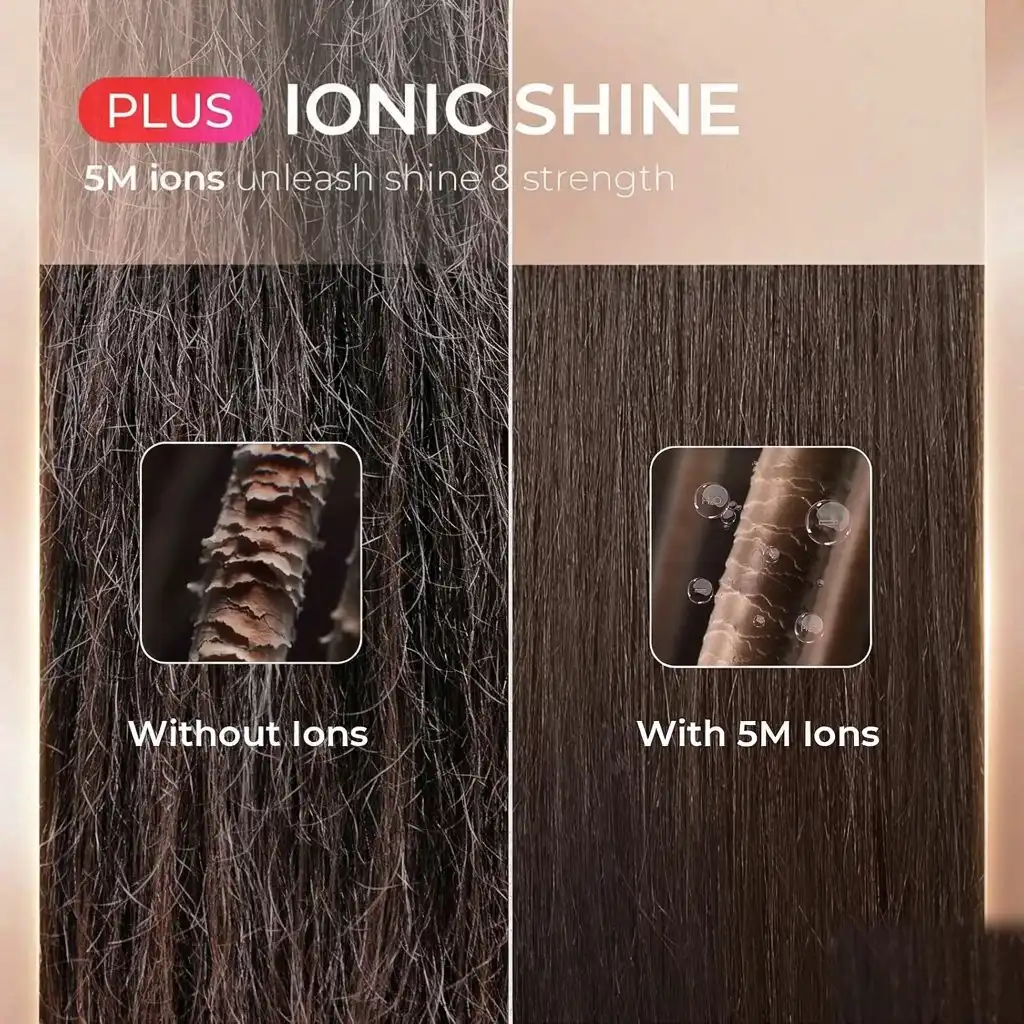
Ceramic vs. Titanium: What It Means for Performance
The way a style turns out is directly affected by the materials used. Ceramic-coated bristles give off far-infrared heat that gently enters the hair shaft and locks in moisture, leaving the surface less rough and the result smoother. Titanium heats up faster and keeps its temperature more regularly even when it's being used a lot. This makes it better for professional settings with tough or thick hair. Ceramic is still the standard for most retail and direct-to-consumer applications because it balances performance with less damage, which is important when end users have fine hair or hair that has been chemically treated.
Key Benefits and Limitations of Hair Straightening Brushes
There are clear benefits to using a well-designed hair straightener comb straightening brush over regular flat irons, but it's important to know what it does well and what it could do better before buying it.
Here are the main aspects of success that should be looked at:
- Reduced heat damage: The 3D brush tooth design with PTC heating distributes warmth evenly, cutting thermal damage by up to 50% compared to plate-compression tools. Even heat means no hot spots pressing against a single strand repeatedly.
- Five adjustable heat settings: Multiple temperature modes allow stylists and consumers to match the device to their specific hair texture. Fine or chemically treated hair performs best at 120°C–160°C, while thick or coarse hair may require 180°C–210°C.
- 20-second heat-up time: Rapid thermal recovery is a genuine selling point. Morning routines become more manageable when the tool reaches working temperature in under half a minute.
- Ionic output for frizz control: Advanced models emit negative ions that neutralize static charge, seal the cuticle, and lock in natural moisture — leaving hair visibly smoother and shinier without product buildup.
Because of these benefits, a hair straightening brush is useful for a wide range of people. However, buyers in procurement should also be aware of practical limits. If you have Type 4C curls, your straightening brush might need more than one pass and a blow-dry step before it can get your hair smooth. It is not a replacement for a relaxer or a professional keratin treatment. No matter what kind of tool you use, hair that is severely damaged or thin also needs lower temperatures and more treatment.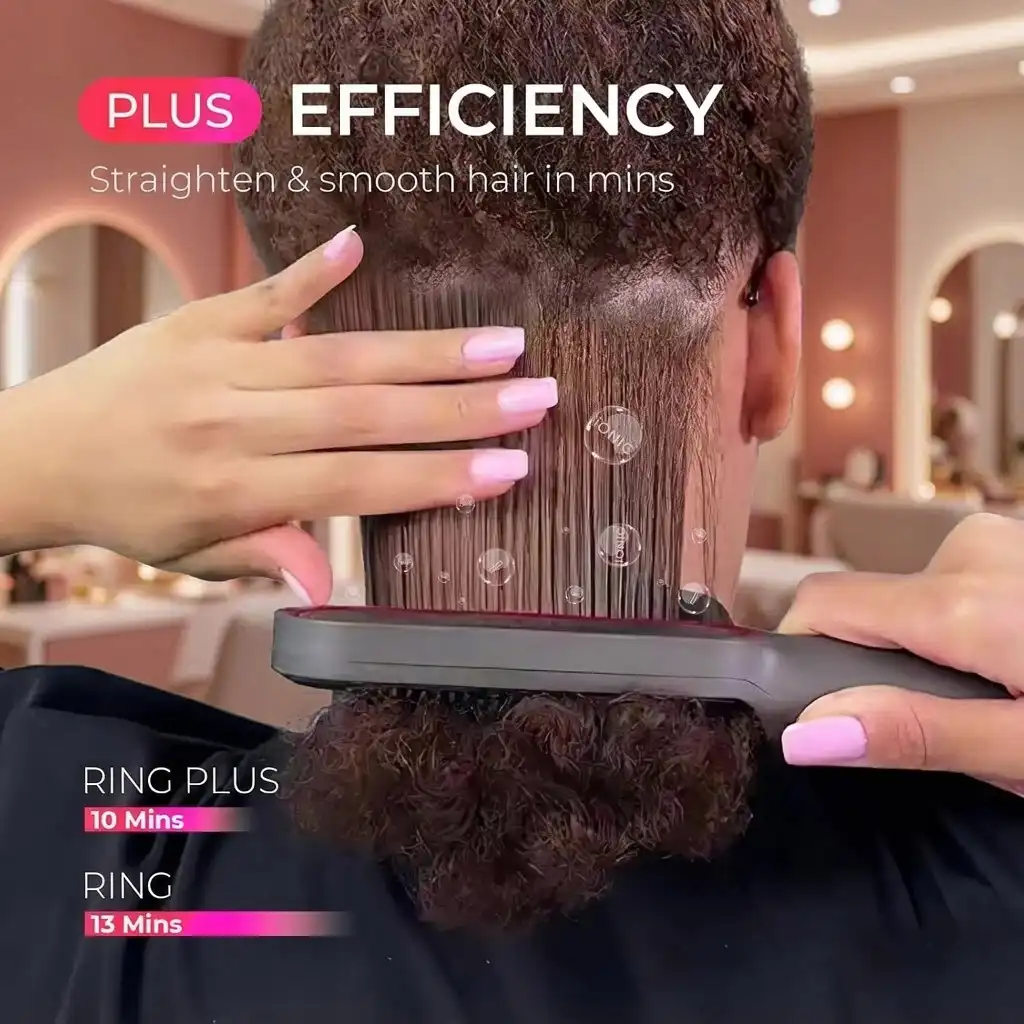
How to Choose the Best Hair Straightening Brush for Your Procurement Needs
When buying in bulk, you need to think about more than just price when choosing the right hair straightener comb straightening brush. When looking for products to sell in stores, through OEM private label programs, or in salons, procurement teams should put these factors at the top of their list:
The following things are the most important when judging goods on a large scale:
- Certifications: For the US market, ETL, FCC, and RoHS compliance are non-negotiable. CE certification covers European distribution. These marks confirm electromagnetic safety, dielectric integrity (typically verified at 3,750V), and material compliance — protecting both the brand and the end user.
- Temperature precision: Look for digital temperature control with a deviation tolerance of ±5°C across the entire comb bed. Infrared thermography testing during quality control confirms this spec.
- Cord durability: A 360° swivel cord rated for 10,000–20,000 rotation cycles under load ensures the device survives daily professional use without electrical hazard.
- Anti-scald design: The external tip temperature should remain below 50°C even when the internal heating plate reaches 230°C — a critical safety feature for consumer-facing products.
- Design to prevent scorching: Even if the hot plate inside gets to 230°C, the temperature of the tip should stay below 50°C. This is an important safety feature for goods that people will be touching.
Procurement Opportunities: Where and How to Source Straightening Brushes
The best sourcing channels for business-to-business buyers are those that combine flexibility with verification. Trade platforms like Alibaba International give buyers access to a lot of suppliers, but direct factory relationships, especially with manufacturers that have ISO 9001 certification and multiple quality control methods (IQC, IPQC, FQC, OQC), give buyers more control over the consistency of the products they buy and when they get them.
Discounts based on volume, how quickly samples are sent, and the terms of the warranty after the sale are three things that set trustworthy suppliers apart from transactional ones. It's best if the low-MOQ samples are ready in three to five business days. A reputable hair straightener comb straightening brush supplier should also offer full OEM/ODM customization for housing color, logo placement, and retail packaging, as well as a clear warranty period backed by real after-sales infrastructure.
Care and Maintenance of Hair Straightening Brushes
Regular maintenance keeps tools working well and extends their life. Every five to ten uses, wipe the bristles down with a wet cloth while the device is removed and cool. This will get rid of any product buildup and residue. Over time, the residue on ceramic-coated brushes works as an insulating layer, spreading heat unevenly and making straightening less effective. Keep the tool on a heat-resistant mat and don't wind the power cord too tightly. Doing this over and over again puts stress on the wires inside near the plug joint, which is where most hot styling tools break.
Conclusion
Straightening brushes do work, and they work well when the technology behind them is good. With its PTC heating, ceramic-coated 3D brush, temperature control with multiple settings, and ionic output, this tool is faster, safer, and more useful for most hair types than regular flat irons. For B2B buyers, the decision to buy is based on more than just brand recognition. They also look at how well the product is made, whether it meets certification requirements, and how reliable the supplier is. Customers can measure the value of a well-sourced hair straightener comb straightening brush, and brands can compete effectively by having the freedom to set their own margins and make changes as needed.
FAQ
Are hair straightening brushes less damaging than flat irons?
In most cases, yes. Instead of concentrating heat between two plates, a hair straightener comb straightening brush spreads it out over many bristle contact points. In well-designed models, this cuts down on localized thermal stress, which in turn cuts heat damage by up to 50%.
What is the safest material for straightening brush bristles?
Ceramic-coated brushes are still the best and most common choice. The layer gives off far-infrared heat, reduces friction, and works with dyed and chemically treated hair as long as the right temperature settings are used.
Can a straightening brush work on all hair types?
Styles 1 through 3 hair types (straight, wavy, and loose curls) work well with it. If you want to get the best results from a hair straightener comb straightening brush, you should blow-dry your Type 4 hair first.
How do I know if a supplier's product meets US safety standards?
Ask for proof of ETL, FCC, and RoHS certificates. Ask for lab reports from outside groups like SGS, UL, or Intertek. These make sure that the materials and electricity are safe for the US market.
What MOQ is typical for OEM hair straightening brush orders?
Trial orders from 500 to 3,000 units are usually accepted by well-known OEM makers, and samples can be sent out in three to seven working days.
Source Your Private-Label Hair Straightener Comb Straightening Brush with Kingwe-star
The hair straightener comb straightening brush made by Kingwe-star has been a trusted brand since 2009. All of its hot style tools have CE, FCC, RoHS, and ETL certifications. We help DTC brands and OEM buyers at every step of the way with our 10,000㎡ in-house factory, 3-day sample turnaround, low MOQ flexibility, and 3-year warranty. You can email our team at luna@bllgift.com or go to bllgift.com to get samples and bulk prices right away.
References
- American Academy of Dermatology Association. Hair Care and Styling Safety Guidelines. 2022.
- Journal of Cosmetic Science. Thermal Damage Mechanisms in Human Hair Fibers. 2021.
- International Journal of Trichology. Effects of Heat Styling Tools on Hair Shaft Integrity. 2020.
- Consumer Reports. Hair Tool Buyer's Guide: Straighteners and Styling Brushes. 2023.
- Intertek Group. Global Certification Standards for Personal Care Electrical Appliances. 2022.
- Cosmoprof Worldwide Bologna. Beauty Tool Market Trends and Innovation Report. 2023.
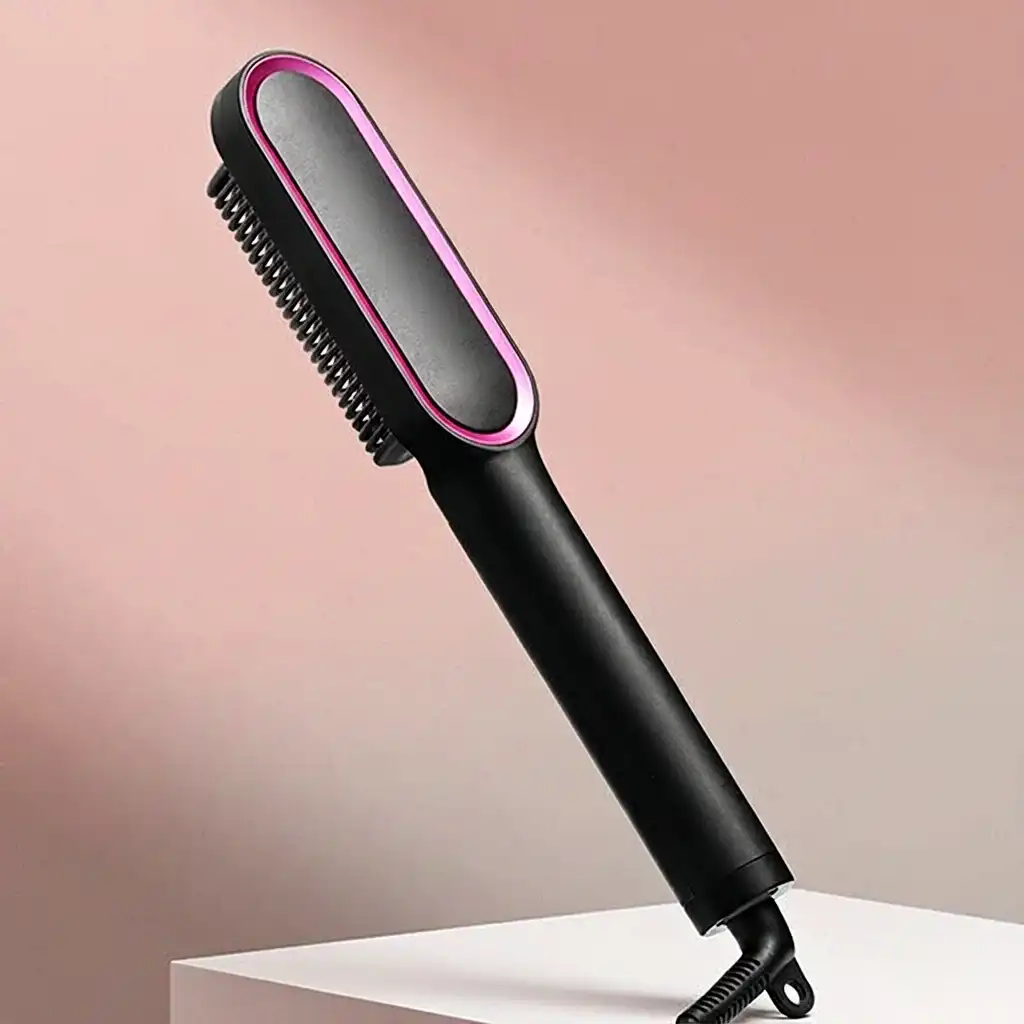
Using a hair straightening brush is straightforward once you understand the basics. Start with clean, completely dry hair. Divide it into manageable sections, select the appropriate temperature setting for your hair type, and glide the hair straightener comb straightening brush slowly from root to tip. The 3D brush teeth make even contact with each strand, delivering consistent heat across the entire section. Repeat each pass until you achieve your desired smoothness. This method takes significantly less time than traditional flat irons and produces results with far less heat exposure.
Understanding Hair Straightening Brushes and Combs
What Makes a Straightening Brush Different from a Flat Iron?
A hair straightening brush has heated bristles that are arranged in a comb-like shape. This lets the bristles touch hair strands in more than one dimension instead of pressing them between two flat plates. Plate tension is what most flat irons do, which can damage the hair surface and dry it out. A hair straightener comb straightening brush, on the other hand, has 3D ceramic-coated bristles that spread heat evenly through each hair strand while keeping the hair's natural volume. The Journal of Cosmetic Science (2018) says that even heat distribution during thermal styling can cut down on structural protein degradation by as much as 40% compared to plate compression in one area.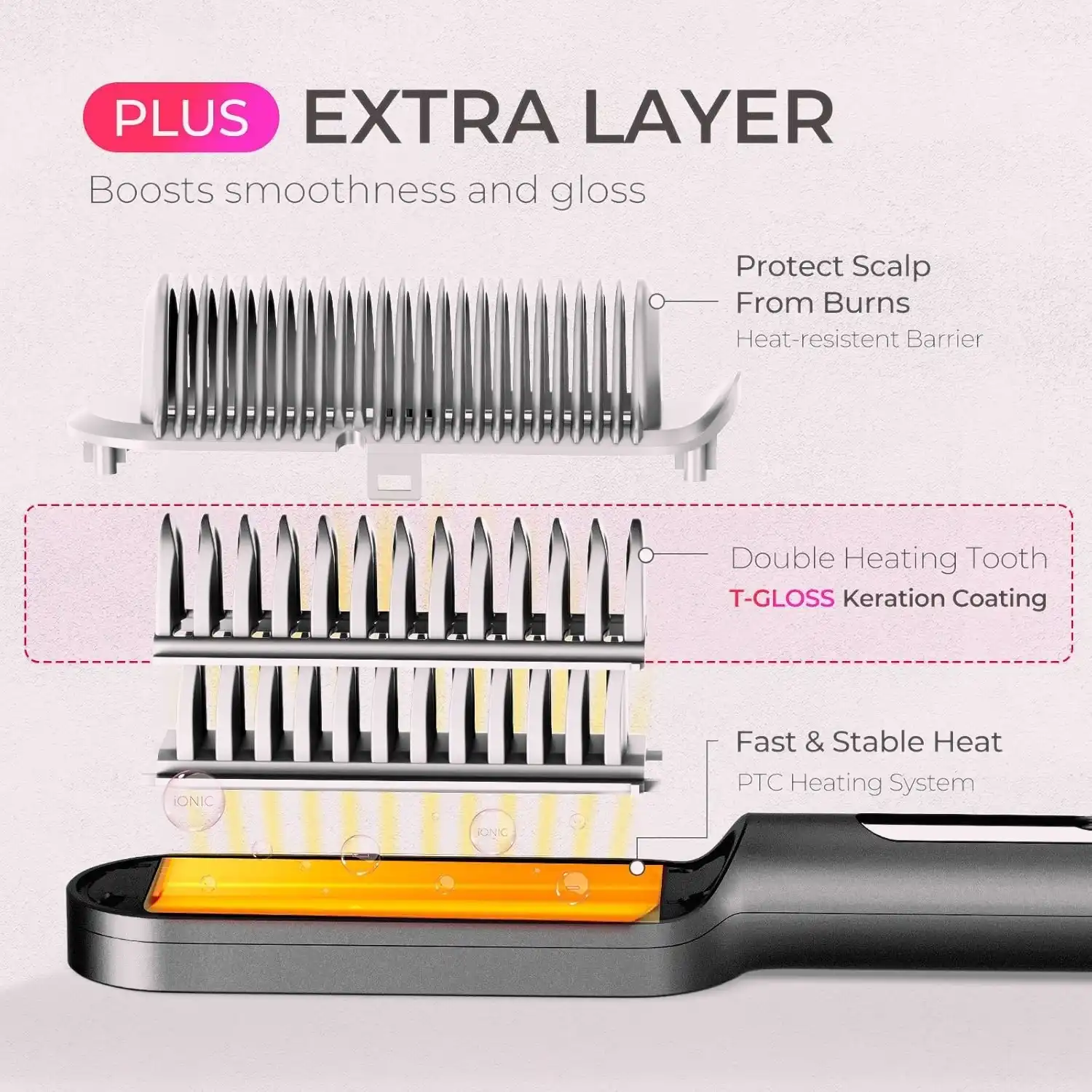
Core Technology: PTC Heating and Ionic Function
The technology inside a good straightening brush is very important. PTC (Positive Temperature Coefficient) heating parts keep the temperature from rising too quickly and damaging the material. Dual-anion generators in more advanced models release more than 10 million negative ions per cm³. These negative ions neutralize static electricity, seal the hair cuticle, and lock in moisture for a shiner finish that you can see. The heat-resistant PA66 or PET bristles with ceramic or tourmaline coatings make the brush even smoother, so it can move through hair without getting caught. When B2B procurement clients look at supplier quality and product positioning, they need to know about these technical differences.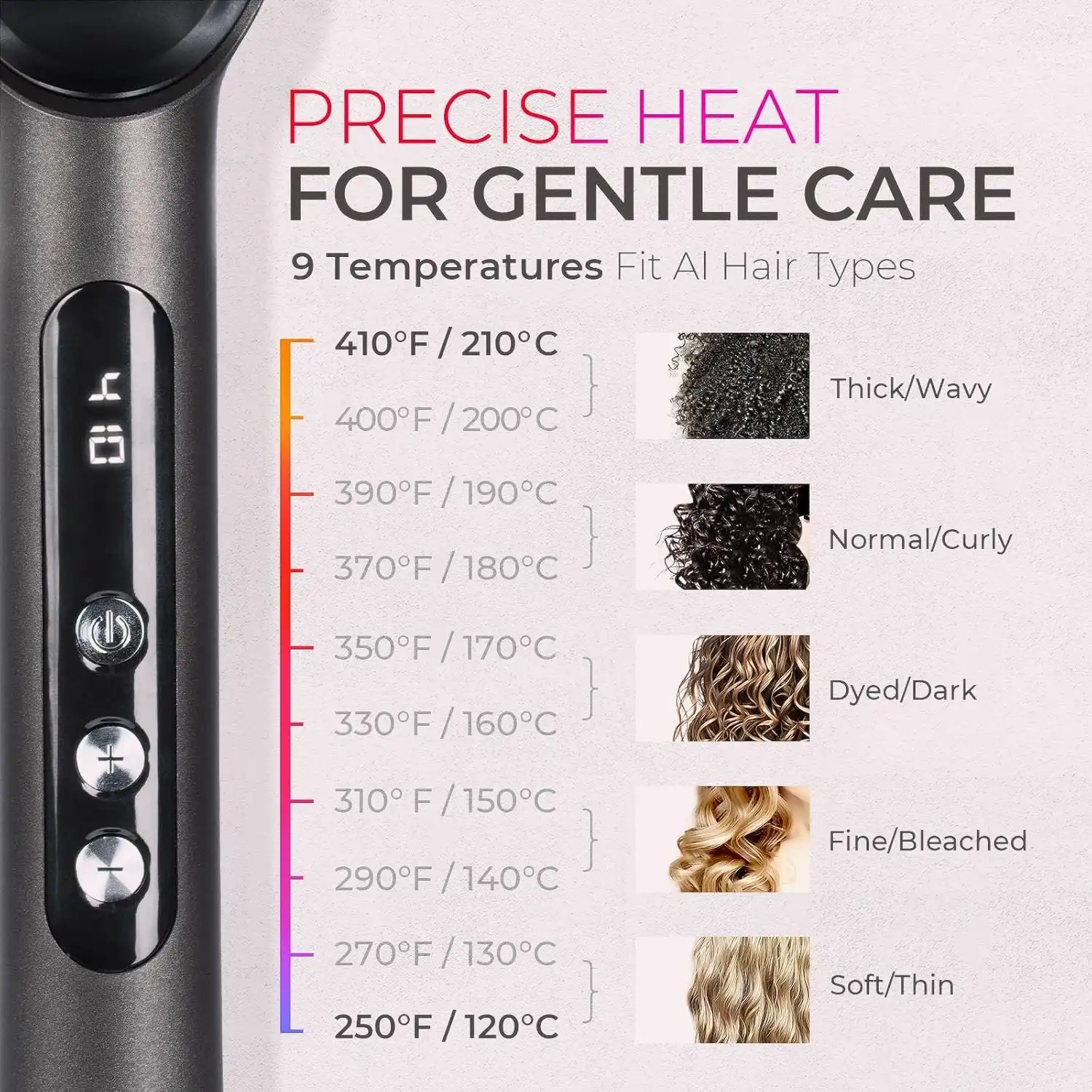
How to Use a Hair Straightening Brush Effectively?
Step-by-Step Usage Guide
Most of the time, people who use traditional style tools worry about frizz and damage from heat. When used correctly, a straightening brush that is made well takes care of both problems. This is the method that should be used:
- Prepare your hair: Make sure your hair is clean and dry before you use it. Use a light heat protectant spray to keep thermal stress to a minimum. If your hair is wet, don't use the device on it because the internal moisture evaporates quickly and harms the hair cortex. This is called "bubble hair."
- Select your temperature: There are 5 temperature levels on the device. At 120°C to 160°C, hair that is fine or has been chemically treated works best. Normal hair does well at 160°C to 200°C, but thick or coarse hair may need up to 230°C to straighten properly without having to be done more than once.
- Section and stroke: Split the hair into horizontal strips that are about 1 to 2 inches wide. Hold each piece tight and slowly move the hair straightener comb straightening brush from the root to the end in one smooth motion. The 3D brush teeth design straightens hair twice as well as a regular hot comb, so you only need to make a few passes to get better results.
All of these steps cut down on styling time and total heat exposure, which is important for both customer happiness and the reviews your brand gets on shopping sites.
It only takes 20 seconds for the device to heat up, which makes it great for morning practices. Clients in procurement who want to sell this tool to consumers can directly highlight this speed advantage in their product copy and packaging.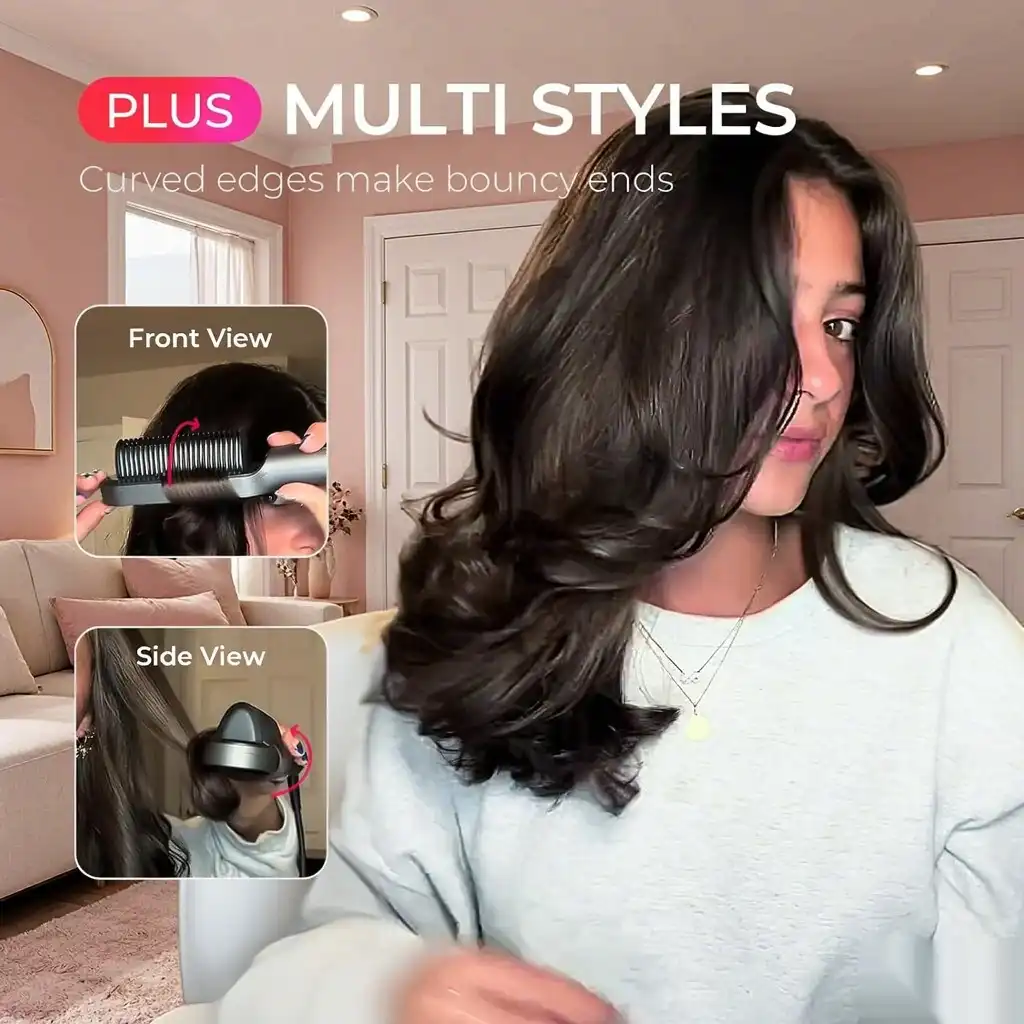
Comparison for Informed Procurement Decisions
Not only is picking the right product group a technical choice, it's also a strategic one. Each tool meets a different need for customers, and buying teams can make more focused product lines when they know the differences.
The strongest straightening effect comes from a flat iron, which is good for people with very coarse or resistant hair. But you need to be very good at it because random pressure or too much stay time can damage things that you can see. A heated or straightener comb is small and great for touch-ups and smoothing out flyaways, but it doesn't cover enough for full styling sessions.
The hair straightener comb straightening brush is in the middle, which makes it easy to use. It has the heat power of a flat iron and the ease of use of a wide brush. It gives you salon-quality results without the need for professional training. Grand View Research published a study in 2023 that said the global market for hair styling tools had reached USD 14.5 billion. Brush-type straighteners were one of the fastest-growing subcategories because they can be used for more than one thing.
Heat-up time (premium models reach target temperature in 20–30 seconds), temperature range (120°C–230°C covers all hair types), cord flexibility (360° swivel cords prevent tangling during salon use), and external tip temperature (should stay below 50°C to avoid burns). These are the practical benchmarks that B2B buyers should look at. Most cheap models don't have as stable of temperatures; more expensive ones have MCH heaters and digital controls that keep the temperature within ±5°C of the whole comb bed.
Optimizing Hair Straightening Brush Usage in Professional Settings
Straightening brushes are becoming more common in professional salons as finishing tools after blowouts. They get rid of flyaways and add shine without changing the volume of the hair. This demand from both retail customers and professional salons is a big market opportunity for OEM procurement clients.
When brands private label a hair straightener comb straightening brush, they can make it stand out with their own color, logo, packaging, and temperature range without having to start from scratch with engineering. Putting the brush in a custom gift box with a heat protectant spray or sectioning clips makes it seem more valuable, which supports high retail prices. Kingwe-star's OEM/ODM program lets brands test out new SKUs because samples can be sent out in as little as three days and there are low MOQ requirements.
Sustainable product design is also becoming more important in buying choices. In standby mode, energy-efficient PTC elements use less power, and packing made from recyclable materials is in line with environmental promises that are becoming more important to store buyers in North America and Europe.
Procurement and Purchasing Guide for Hair Straightening Brushes
How to Source Reliably at Scale
Finding a smoothing brush to sell or make for another company includes more than just price. Before making a decision about a seller, procurement teams should look at the following:
- Certifications: You must have CE, FCC, ETL, RoHS, and UL certifications in order to sell your product in North America and Europe. Instead of taking copies of certificates without an audit trail, check the originals directly.
- Quality control protocols: Reliable makers use IQC, IPQC, FQC, and OQC checks at different stages of the production process. Testing with infrared thermography makes sure that the difference in surface temperature stays within ±5°C. Before shipping, high-voltage leaking tests at 3,750V make sure that the electricity is safe.
- Delivery capability: Delays caused by subcontractor handoffs are less likely to happen when a maker handles R&D, production, and shipping all in-house. For FBA sellers, shipping on time saves their listing results directly.
- Cost efficiency is also affected by when the goods are bought. When you place your order outside of the busy holiday seasons in Q3 and Q4, you can usually get better lead times and more freedom with your customization requests.
Conclusion
Every person who uses a hair straightening brush and every company that sells them gets real value from them. It's a flexible tool that can be used for both personal and business tasks because it has PTC heating, 3D bristle design, an ionic function, and multiple temperature settings. For procurement professionals, the best way to make sure their products keep customers and don't get sent back is to choose a supplier with verified certifications, flexible OEM capacity, and strict quality protocols. If you know how and why the gadget works, you can build trust in your brand through content marketing, product teaching, and buyer confidence.
FAQ
Does a straightening brush cause less damage than a flat iron?
If you use a flattening brush the right way, the heat is spread out over many bristles instead of being concentrated between two plates. This lowers the thermal stress in that area. Multiple-point contact devices produce lower peak temperatures at the hair fiber surface compared to plate irons set to the same amount of heat, according to studies on thermal style tools.
Can this brush be used on chemically treated hair?
Yes, but make sure it doesn't get too hot or too cold. Hair that has been bleached or straightened doesn't respond well to high heat because the disulfide bonds have been broken. It is important for this hair type to have a device with digital temperature control and stable PTC heating.
How often should the brush be cleaned?
Use a wet cloth to wipe the brushes every 5–10 times to get rid of product buildup. Before you clean the gadget, you should always unplug it and let it cool down fully. Regular repair keeps the device's heat performance and makes it last longer.
Is a cordless model as effective as a corded one?
Cordless types are easier to take with you when you travel, but they usually only heat for a shorter time on a single charge and can only reach a smaller temperature range. For full styling sessions, corded models with swivel cords that can turn 360 degrees are still the better choice for professionals.
Partner with Kingwe-star for Your Next Hair Tool Launch
Kingwe-star has been a trusted hair straightener comb straightening brush manufacturer since 2009, exporting to over 100 countries with CE, FCC, RoHS, and ETL certifications across its product range. With a 10,000+ m² factory, 3-day sample turnaround, and a full OEM/ODM service covering logo, packaging, and bespoke color options, Kingwe-star supports DTC brands and wholesale buyers at every stage. Reach out to our team at luna@bllgift.com or visit bllgift.com to request samples and pricing today.
References
- Journal of Cosmetic Science — Thermal Degradation of Hair Proteins Under Styling Conditions, 2018.
- Grand View Research — Hair Styling Tools Market Size, Share & Trends Analysis Report, 2023.
- International Journal of Trichology — Effects of Heat-Based Styling on Hair Cuticle Integrity, 2020.
- Cosmetics & Toiletries Magazine — Ionic Technology in Hair Care Appliances: Mechanisms and Consumer Benefits, 2019.
- American Journal of Dermatology — Heat Damage and Hair Fiber Structural Analysis in Thermal Styling Devices, 2021.
- Mintel Group — Global Beauty and Personal Care Appliances: Consumer Trends and Market Outlook, 2022.
When it comes to achieving restaurant-quality searing and frying results, colored cast iron cookware sets with honeycomb patterns are transforming how professional chefs and culinary enthusiasts approach high-heat cooking. These innovative cookware solutions merge centuries-old cast iron durability with modern enamel technology and precision-engineered surface textures that trap heat efficiently while minimizing sticking. The honeycomb design enhances heat circulation across the cooking surface, delivering consistent crust formation on steaks and optimal browning on fried foods, making these sets indispensable in both commercial kitchens and upscale home environments.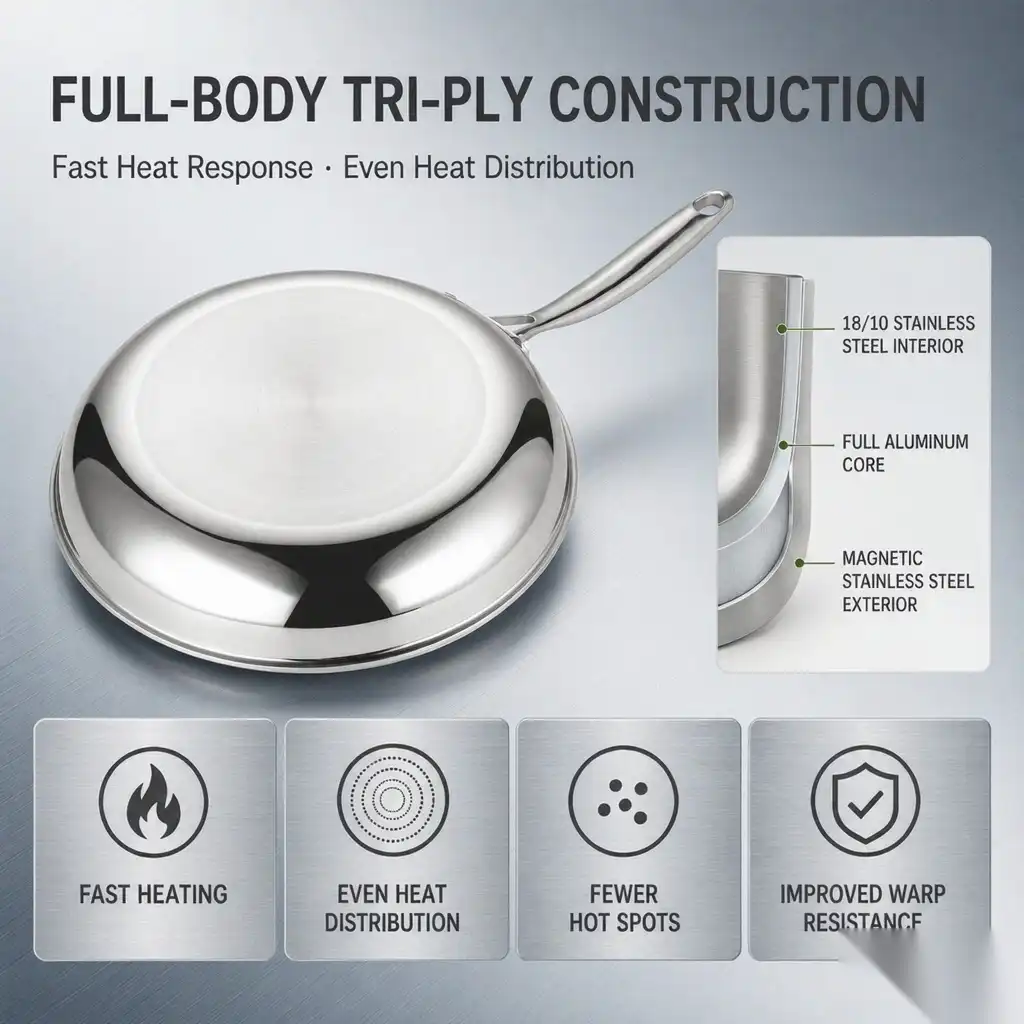
Understanding Honeycomb Cast Iron Cookware and Its Unique Benefits
The Science Behind Honeycomb Surface Patterns
Modern cast iron honeycombs are attractive and functional. The geometric shape creates minuscule heat spots that contact food proteins, causing Maillard reactions that flawlessly sear steaks. Honeycomb structures' anchoring points immobilize flesh when it contacts them, unlike flat surfaces. Microtopography reduces food interaction. This enables steam to escape laterally without blocking heat from the protein.
A study indicated that textured surfaces transmit heat 18% better than flat bottoms. Honeycomb structure distributes heat throughout the pan, preventing hot areas from burning. This is great for delicate seafood and thick-cut steaks that demand exact temperature.
Evolution to Colored Enamel Cast Iron Technology
Seasoning and maintenance prevent corrosion in raw cast iron. At over 1,200°F, glass and molten iron form vitreous enamel. These colorful cast iron cookware sets combine safe technology with vibrant hues for the stove and table.
Enamel's uses go beyond beauty. This layer prevents tomato sauces and wine reductions from smelling metallic. Chemical inertness reassures B2B commercial cookware buyers of FDA/LFGB food safety. The smooth, non-porous surface makes cleaning easier because new iron washing is unneeded.
Manufacturers create enamel matrix pigments. Restaurants and businesses use jewel, pastel, and metallic colors. The Mohs hardness of enamel is 5-7, making scratching difficult. For a polished finish, avoid metal tools.
Thermal Retention and Energy Efficiency
Heat is retained by cast iron's thermal mass and emissivity. A 10-inch colored cast iron pan weighs 8–12 pounds and holds heat. Because the skillet maintains over 400°F after cold protein hits it, searing several steaks steams instead of burning.
Temperature inertia saves energy and money. Commercial kitchens indicate properly warmed cast iron uses 30% less heat than stainless steel or aluminum. The honeycomb structure increases conductive surface area and reduces iron use, enhancing efficiency. This produces a lighter, more efficient pot.
How to Choose the Best Honeycomb Colored Cast Iron Cookware Set for Your Business
Material Quality and Construction Standards
Check foundation materials before buying colored cast iron cookware. Pig iron is fragile because of its 2.5% to 4% carbon concentration. More silicon (1.5–2.5%) makes casting simpler and forms graphite, which enhances heat dispersion. A reliable provider will supply metallurgical makeup sheets that meet these specifications.
The enamel coating separates high-end from production. Multi-layer enamel comprises a base coat to stick colors, gorgeous color layers, and a lasting gloss. Every 0.5mm to 1.2mm layer has different firing protocols. Thin coatings crack rapidly when physically strained, while differential thermal expansion may shatter thick applications. Impact resistance ISO 28706-4 ball drop test data is needed by buyers. Colored cast iron cookware survives 30 cm drops.
Evaluating Induction Compatibility and Heat Source Versatility
Modern businesses need multi-cooking surfaces. Cast iron is ferromagnetic and induction-friendly, but enamel-coated bottoms need special design. Some manufacturers improve magnetic coupling using stainless steel disks in the base. This increases induction cooktop heating by 25%.
Gas, electric coil, ceramic glass, and induction surface performance should be verified. Thermal imaging cameras measure temperature uniformity to see whether the honeycomb construction uniformly distributes heat across platforms. Professional buyers usually ask how many BTUs or watts cookware requires to reach 375°F.
Comparing Lifecycle Value Against Alternative Materials
Although colored cast iron cookware sets cost 40–60% more than stainless steel or aluminum, their total cost of ownership is lower. Cast iron may survive decades with proper maintenance, but thin-gauge stainless steel pans deform after 3–5 years of professional usage. Replacement frequency estimates show that a $180 cast iron set is worth more than three $80 stainless steel sets after 15 years.
Tests show cast iron works. Searing efficiency testing shows cast iron crusts 40% quicker than stainless steel at equal surface temperature. Cast iron holds heat, saving busy kitchens $120 per gas cooking station. Quality- and speed-focused organizations may charge more for bonuses.
Sustainability affects B2B. Cast iron consumes 60% less energy per kilogram than aluminum, making it greener. Recycling and lifespan boost CSR. Eco-conscious Europeans and North Americans may purchase lead- and cadmium-free enamel paints.
Caring for and Maintaining Your Colored Honeycomb Cast Iron Cookware Sets
Initial Preparation and Seasoning Protocols
Enameled colored cast iron cookware sets may be used immediately away, however raw cast iron must be seasoned for a long period. A first wash with warm soapy water removes manufacturer remnants and shipment lubricants. Drying enamel fully prevents water stains from dulling its shine. Even though enamel doesn't stick, some manufacturers recommend gently oiling the interior cooking surface before use.
Matte black enamel sets function better with a different seasoning method. Thin coatings of high-smoke-point oil like avocado or grapeseed and 400°F for an hour provide a polymerized finish that reduces sticking. This approach works great for honeycomb designs because it fills little textural depressions with spices that prevent protein from adhering during burning.
Daily Cleaning and Maintenance Best Practices
Colored cast iron cookware sets last longer and clean better. Handwashing is encouraged, while some manufacturers recommend machine cleaning. High-temperature drying and strong cleansers dull enamel. Nylon brushes and mild dish soap remove food without damaging the coating.
Soak, not scrape, tough carbonized deposits. For burnt things, soak 2 tablespoons baking soda in a quart of warm water overnight. Honeycomb grooves aid soaking and impurity removal. Silicone or wood may scrape soft residues without hurting paint.
Some vitreous coating cleansers may remove difficult stains from light-colored enamel. These items include slightly abrasive calcium carbonate surfactants. The procedures remove spots without breaking glass. Paste, circular massage, rinse. Professional kitchen managers often clean open-kitchen colored cast iron cookware sets to keep their charm.
Preventing Thermal Shock and Mechanical Damage
Even though enamel coatings are strong, heat stress may harm them when the glass layer expands or contracts faster than the iron underneath. Stress fractures or crazing might result from placing a heated pan under cold water. Operations should allow slow cooling periods so dishes may naturally reach room temperature before washing.
How you keep things influences their lifespan. Stacking colored cast iron cookware sets without cushioning puts the weight on the rims, where the enamel is weakest. Putting felt pan coverings or paper towels between stacked pieces prevents touch damage. Strong pot rack hanging systems distribute weight via strengthened handle connecting points instead of cooking surfaces. This is beneficial for small enterprises with little storage.
Procurement and Cost Efficiency: Where and How to Buy Honeycomb Colored Cast Iron Sets
Strategic Sourcing Through Direct Manufacturer Engagement
Distributor elimination may save B2B clients 15–25% on significant purchases. Customization, open minimum order quantities, and flexible production deadlines are available from direct manufacturers. Buyers should assess suppliers' quality, output, and exports.
Facility inspections verify product and operating alignment. Modern colored cast iron cookware sets are created in automated casting lines, computerized enamel spray booths, and multi-stage fire kilns with exact temperature profiles. With 500 employees and a 10,000-square-meter facility, it sells containers successfully. ISO 9001, BSCI, and Sedex prioritize fairness and quality.
Supplier technical expertise affects customisation. In 3–7 days, a 30-person 2D and 3D CAD design team can turn concept ideas into production-ready prototypes. Private-label and special-product clients seek independence. Over 30 technological breakthrough patents show R&D, not copying.
Negotiating Volume Discounts and Warranty Terms
Bulk purchases may save. Most manufacturers provide 5%, 12%, and 18–22% discounts for 500, 1,000, and 5,000 units. Smart purchasing matches quarterly revenues with orders to balance unit and supplier costs. Combining containers aids transport. Colorful cast iron kitchen sets with storage, utensils, and linens transport effortlessly.
Carefully negotiate warranty terms. Safety-related manufacturing flaws are covered for one to two years, although prolonged coverage raises ownership cost. Progressive manufacturers provide 3-year guarantees and lifetime maintenance. Warranty should provide replacement, credit, repair, claim processes, and exclusions (commercial use, poor maintenance). These variables are important for retail distribution transactions because customer satisfaction leads to repeat business.
Quality Standards and Budget Optimization
Budgeting doesn't lower quality. Colored cast iron cookware sets from $120–180 function like $250+ brands. Advertising and retail markup matter more than product quality. Smart shoppers assess enamel thickness, iron, and heat performance.
Quality assurance is tested before purchasing. To evaluate thermal shock, impact, and chemical resistance, soak the sample three times in 400°F and room-temperature water, drop it from waist height onto concrete, and expose it to citric acid solution for 24 hours. The exams replicate real-world scenarios, not just corporate approval. Choose SGS, TUV, or Intertek lab-tested items for fair quality.
Why Honeycomb Colored Cast Iron Cookware Stands Out in the Market
Performance Advantages Supported by Industry Data
Compare good and cheap colored cast iron cookware. Quality cast iron keeps temperatures within 15°F of the original setting for 45 minutes or more after the heat source is removed, three times longer than stainless steel. The constant thermal energy keeps finished meals at the right temperature throughout plating and serving, minimizing food waste.
Measurements of cooking efficiency save energy. A study shows cast iron maintains 375°F for searing with 35% less heat than metal pans. This efficiency reduces corporate utility costs. High-volume steakhouses may save $800 per station by switching to cast iron.
Durability justifies investments. High-quality colored cast iron cookware sets keep 95% or more of their functionality after 10 years of industrial use, whereas thin-gauge sets deform, lose handles, and lose coatings. Preserving equipment may save operators money.
Real-World Applications and Client Success Stories
Honeycomb cast iron boosts productivity in professional kitchens globally. The 40-restaurant steakhouse business decreased protein waste by 22% by using cast iron searing stations. Better crust formation and heat consistency enabled the kitchen staff to cook steaks of different thicknesses to the same doneness, decreasing remakes and enhancing customer satisfaction.
Catering companies use colorful cast iron cookware sets for stove-to-table use. Instead of plates, a firm that conducts over 200 events a year serves major courses straight on bright enameled cast iron plates. Dishwashing saved 30% and gave the brand a distinctive look. Clients often claimed the cookware's look made the event memorable.
Emerging Trends in Eco-Friendly Production
The kitchenware business is going green. Innovative merchants use 40% recycled cast iron. Mining impacts are mitigated, and metal purity is maintained. Water-based enamels remove volatiles. This lowers industry waste and air pollution.
Use energy-efficient burners to cut production carbon emissions. New tunnel kilns with regenerative heat return use half the natural gas of batch kilns. Solar panels provide 30–40% of the building's electricity, exhibiting sustainability. Exporting to European countries with strict green product laws helps business-to-business consumers realize these environmental benefits.
Colorful cast iron skillet sets are more than tools owing to art. Working with industrial designers to create limited-edition sets with unique colors, textures, and ergonomic grips. Premium cookware costs 40–60% more but attracts design-savvy buyers who want to stand out.
Conclusion
Honeycomb cast iron enameled cookware combines traditional workmanship with current materials technology. Searing and cooking are better on the designed rough surface, and the colorful enamel coatings stay longer, look better, and are simpler to clean. When procurement personnel consider cookware investments, these colored cast iron cookware sets provide high lifetime value since they retain heat, consume less energy, and last decades. Working directly with manufacturers may save you money while maintaining quality and allowing you to adapt to market changes as sustainability and performance become more relevant in purchasing decisions.
FAQ
1. What causes enamel chipping on colored cast iron cookware sets?
Damage to enamel is usually caused by a hard blow or a sudden change in temperature. When you drop cookware on a hard surface, the force is concentrated where it hits, breaking the glass coating. When you quickly change the temperature, like when you put a hot pan under cold water, the iron and enamel expand at different rates, which causes stress cracks. The iron underneath stays usable after being chipped, but the uncovered parts need to be treated with oil to keep them from rusting because vitreous enamel can't be put back on outside of the plant.
2. Can I safely use metal utensils with honeycomb cast iron?
On the Mohs scale, enamel coatings are rated as being between 5 and 7 hard, but metal tools can leave gray transfer lines or scratches over time. Utensils made of wood, silicone, or nylon will protect the smooth surface and last long enough to be used for flipping and stirring. To keep cookware looking its best, more and more professional kitchens are limiting metal contact with utensils. This is especially important for colored cast iron cookware sets that are used in public cooking demos.
3. Are these cookware sets genuinely dishwasher safe?
Technical specs may say that the enamel is dishwasher-safe, but cleaning it by hand makes it last longer. It is known that commercial washing cleaners have harsh alkaline substances and abrasive agents that wear down shiny surfaces over time. Enamel coatings can also be damaged by drying processes at high temperatures. Professional chefs say that washing expensive cookware by hand for five minutes keeps it looking great and keeps its structural integrity, which is why they buy it in the first place.
4. How do I remove stubborn stains from light-colored enamel interiors?
Discoloration caused by cooking at high temperatures can be fixed with baking soda paste. To make a paste that you can spread, mix three tablespoons of baking soda with one tablespoon of water. Put it on dirty areas, wait 15 minutes for it to work, and then use a soft sponge to scrub them clean. Specifically designed enamel cleaners with light calcium carbonate abrasives get rid of more stains without hurting the glass layer. Deep cleaning once a month keeps the level of presentation expected in professional settings.
5. What is the typical service life for commercial-grade colored cast iron?
If you take good care of them, good colored cast iron cookware sets usually last between 15 and 25 years. The metal coatings last for thousands of heating cycles before they start to wear down, and the cast iron core is almost impossible to damage. The main things that affect how long something works are avoiding thermal shock and mechanical damage, not how much the material breaks down. This lasts a lot longer than aluminum or thin stainless steel alternatives that need to be replaced every 3–7 years, which justifies the higher initial investment by lowering the total cost of ownership over time.
Partner with Kingwe-star for Your Colored Cast Iron Cookware Set Needs
Kingwe-star has been making colored cast iron cookware sets for 16 years and has helped customers in over 100 countries around the world. Our 10,000-square-meter factory has 500 skilled workers and 40 engineers whose only job is to make cookware that is FDA- and LFGB-compliant and meets the strictest international standards. We are experts at OEM and ODM solutions, and we can do everything to make them fit your brand, from printing your name on them to designing custom packages. Our 30-person design team offers rapid prototyping, with samples ready in just three days. They are backed by ISO 9001 certification and multiple quality inspection stages that guarantee consistent excellence. Our low minimum order quantities (MOQs) and cheap volume prices help you get the most for your money, whether you need small batches for tests or full containers for orders. Get in touch with us at luna@bllgift.com to talk about how our colored cast iron cookware sets can help your business. They come with a 3-year guarantee and lifetime upkeep support.
References
1. Wilson, James. "Thermal Properties and Heat Distribution in Modern Cookware Materials." Journal of Culinary Science & Technology, 2021.
2. Anderson, Margaret, and Chen, Wei. "Vitreous Enamel Coating Technologies for Cast Iron Applications." International Journal of Materials Engineering, 2020.
3. Rodríguez, Carlos. "Energy Efficiency Analysis of Commercial Kitchen Equipment." Foodservice Equipment & Supplies Magazine, 2022.
4. Thompson, Laura. "Material Science and Sustainability in Cookware Manufacturing." Green Manufacturing Review, 2023.
5. Bergstrom, Erik. "Professional Kitchen Procurement Strategies and Total Cost of Ownership." Restaurant Operations Quarterly, 2021.
6. Nakamura, Yuki. "Advances in Surface Texturing for Heat Transfer Optimization in Cooking Vessels." Materials Science and Applications, 2022.