- English
- French
- German
- Portuguese
- Spanish
- Russian
- Japanese
- Korean
- Arabic
- Greek
- German
- Turkish
- Italian
- Danish
- Romanian
- Indonesian
- Czech
- Afrikaans
- Swedish
- Polish
- Basque
- Catalan
- Esperanto
- Hindi
- Lao
- Albanian
- Amharic
- Armenian
- Azerbaijani
- Belarusian
- Bengali
- Bosnian
- Bulgarian
- Cebuano
- Chichewa
- Corsican
- Croatian
- Dutch
- Estonian
- Filipino
- Finnish
- Frisian
- Galician
- Georgian
- Gujarati
- Haitian
- Hausa
- Hawaiian
- Hebrew
- Hmong
- Hungarian
- Icelandic
- Igbo
- Javanese
- Kannada
- Kazakh
- Khmer
- Kurdish
- Kyrgyz
- Latin
- Latvian
- Lithuanian
- Luxembou..
- Macedonian
- Malagasy
- Malay
- Malayalam
- Maltese
- Maori
- Marathi
- Mongolian
- Burmese
- Nepali
- Norwegian
- Pashto
- Persian
- Punjabi
- Serbian
- Sesotho
- Sinhala
- Slovak
- Slovenian
- Somali
- Samoan
- Scots Gaelic
- Shona
- Sindhi
- Sundanese
- Swahili
- Tajik
- Tamil
- Telugu
- Thai
- Ukrainian
- Urdu
- Uzbek
- Vietnamese
- Welsh
- Xhosa
- Yiddish
- Yoruba
- Zulu

If you work in the pet grooming industry or manage a pet product brand, this question comes up constantly. The short answer: the best dog grooming shedding tools depend on coat type, breed, and grooming frequency. A stainless steel deshedding brush works well for double-coated breeds like German Shepherds, while a fine-tooth comb suits short-haired dogs. For B2B buyers, choosing the right category of shedding tool also affects customer retention, return rates, and brand reputation. This guide helps you make that call with confidence.
Understanding Dog Shedding and Grooming Needs
Before you pick a tool to help you clean your dog, you should know why they shed.
The Biology Behind Shedding
Dogs shed more when the light changes than when it's cold. Four-legged dogs with two coats have two big "coat blowout" times a year: spring and fall. Loose layer hairs fall off the face a lot faster than normal at these times. If you don't use the right deshedding rake or undercoat brush, this loose hair will bunch up into mats that stop air from getting to the skin.
Breed-Specific Shedding Patterns
Dogs don't all shed in the same way. Some dog breeds, like Golden Retrievers, Huskies, and Corgis, need to have a special tool used once a week to shed their thick undercoats. Short-haired dogs like Beagles shed less often but all the time, so a rubber or bristle brush is better for daily use. When buying teams stock tools by breed group, it keeps customers from getting lost and cuts down on returns.
Why Professional-Grade Tools Matter
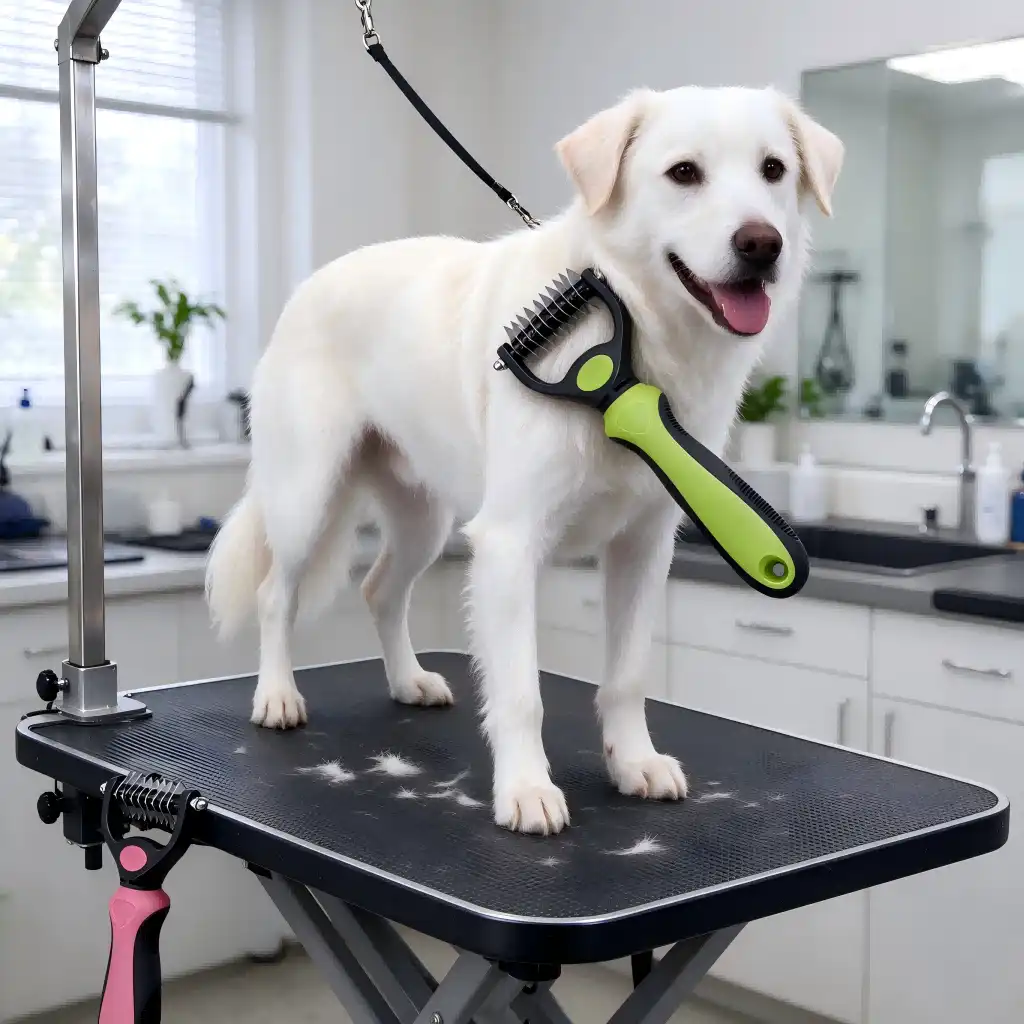
A study published in the Journal of Veterinary Dermatology in 2021 showed that regularly removing dead hair physically lowers the amount of dander in the air. Dander is one of the main reasons why people are allergic to pets. If you take care of your coat with professional-grade dog grooming shedding tools, you can avoid skin problems caused by moisture getting stuck under matted fur. Grooming shops that work with dozens of dogs every day need to be able to get a lot of work done and build trust with their clients.
Types of Dog Shedding Tools Explained
The market is split into several groups, and each group is best for a certain type of clothing or care situation.
Manual Deshedding Brushes and Rakes
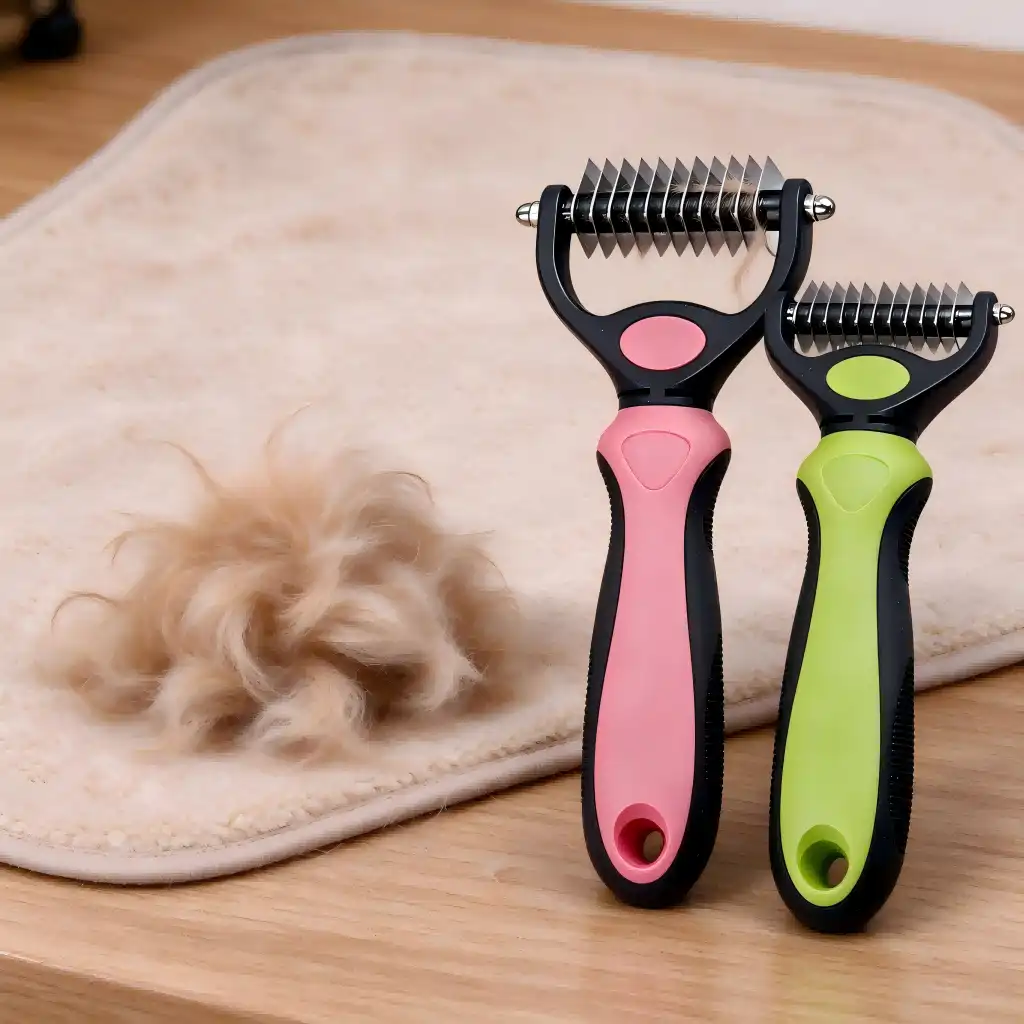
Hand tools are still the most common way to clean, both at home and in the workplace. This is great for dogs with thick double coats because it gets deep into the undercoat without cutting the guard hairs. A slicker brush can get rid of top knots in coats that are about shoulder-length. The best hand-held power tools have teeth made of finely ground stainless steel that are designed to cut through the finish and catch the thinner primer.
Fine-Tooth Combs and Grooming Blades
To finish off, a fine-tooth metal comb is great for getting rid of the last bits of loose hair after detangling it. If you need to get things done quickly in a salon with a lot of customers, grooming blades work better. These tools work best on clean clothes that don't have a lot of mats. Hairdressers might want both kinds of tools as a set, which could help sellers make more money on each sale.
Specialized Tools for Heavy Shedders
For breeds that shed a lot at certain times of the year, you need dog grooming shedding tools with more teeth per inch (TPI) and stronger seams between the blade and the handle. To get through thick, tight hair, these special deshedding tools are made to handle the pulling force. When used in a salon, the blades do get worn down. There are tests that make sure tools can hold their shape so that the head doesn't come off when they're under a lot of stress.
How to Choose the Best Shedding Tool for Your Dog or Clients?
It's not enough to just read about a product to pick the right tool. This is what really matters at the buying level.
Match Tool to Coat Type
People often err by getting one type of tool for all coats. If a rubber mitt works well on a Labrador's short coat, it won't do much for a Samoyed's thick undercoat. Make a list of your customers by breed and coat length before you place large orders. Then, pick the right tools for each one. The number of returns can change a lot just by doing this step.
Prioritize Material Safety and Certifications
Brands that sell on Amazon or Chewy have to make sure their products are safe. For tools, look for blades made of 304- or 420-grade stainless steel and plastics that are safe for food or REACH. These things don't rust, are safe according to international standards, and won't break when they're cleaned over and over again. It is more secure to buy from companies that have been approved by ISO 9001 and have audit proof from companies like SGS or Intertek.
Consider Ergonomics and Eco-Friendly Manufacturing
It's easier for the groomer to work for long periods of time with tools that have handles made of Thermoplastic Rubber (TPR). Tool stories that are made from salvaged or sustainably sourced plastics are much better if abrand wants to attract eco-friendly customers. No longer just marketing, this is becoming more and more of a thing that stores and customers use to choose what to buy.
Comparison of Popular Dog Shedding Tools on the Market in 2026
People who buy tools can better plan how to spend their money if they know where different types of tools work best.
Manual vs. Electric: What the Data Shows
Electric dog grooming shedding tools work faster in hairdressers with a lot of customers, but they cost more and need more maintenance. But stainless steel brushes that you clean by hand don't have any moving parts that could break. They usually cost less and are easier to clean, which is why they are the best choice for both store-bought and home-use lines.
Budget vs. Premium: Where the Difference Shows
A lot of cheap tools are made with steel that isn't very good and breaks down after six to eight weeks of daily use in a shop. Once every 12 to 18 months, if you clean and oil good high-carbon stainless steel tools, the edge will stay sharp. When purchasing managers add up the year-round costs of both options, the more expensive one usually wins out.
Compatibility Across Dog Sizes and Coat Conditions
Not taking size differences into account is a common mistake people make when they shop. A tool made for a 70-pound Husky will be too big for a 12-pound Shih Tzu to use to remove shed fur. Responsible sellers split their lines of goods into three sizes: small, medium, and large. The space between each size's teeth is set up to work with a certain range of weights. It's very important for stores that sell more than one brand to have all of the sizes on hand.
How to Use and Maintain Dog Shedding Tools Effectively?
Even the best tools don't work as well if they are kept or used in the wrong way.
Proper Technique and Usage Frequency
Groom a coat that is dry at all times. If the hair is wet, it is more likely to stretch and break. This makes grooming less effective and leaves the coat open to damage. Short, firm strokes that go in the direction of hair growth should be used section by section. Sessions once a week during blowout times are normal for dogs with two coats. Just once a month during slow times is fine. It's best to use a smaller tool to groom short-haired dogs every two weeks.
Cleaning and Sterilization Protocols
You can use your hands or a cleaning pick to get rid of any hair that gets stuck between sessions. After that, clean the blade by running warm water over it. Next, clean spas with a spray that is safe for pets. You should let tools dry all the way before putting them away so they don't rust, even if they are made of stainless steel, which doesn't rust. Every two weeks, grease the blade to keep the teeth moving smoothly and to make the tool last longer.
Inspection and Replacement Schedules
Your dog's teeth should not be hurt, so check them often for signs of wear or damage. Deshedding doesn't work as well when you have bad teeth. Every 30 days, you should check the blades if they are being used for work. A lot of good stainless steel blades last between 12 and 18 months before they need to be changed. By sticking to a replacement schedule, you can keep service going and keep the results of grooming the same.
FAQ
How often should I use a deshedding tool on my dog?
For double-coated breeds like Huskies or Golden Retrievers, weekly use during shedding seasons is appropriate. During low-shedding months, bi-weekly sessions are sufficient. Short-haired breeds require less frequent grooming—every two to three weeks typically keeps loose hair under control without irritating the skin.
Are these tools safe for dogs with sensitive skin?
Yes, provided the tool features rounded-edge tooth geometry that prevents direct harsh contact with the skin. Avoid tools with visible burrs or irregular tooth spacing. For dogs with known skin conditions, consult a veterinarian before starting a new grooming routine.
Can a deshedding brush help with pet allergies?
Research supports this. Regular removal of dead undercoat reduces airborne dander, which is the primary allergen carrier in pet hair. Consistent grooming with the right tool measurably lowers allergen load in the home environment.
How do I know when blades need replacing?
If teeth feel rough during use or the tool begins pulling rather than gliding, the blade has dulled. Visible bending of individual teeth is another clear indicator. High-carbon stainless steel tools typically last 12 to 18 months under regular professional use.
Source Your Next Dog Grooming Shedding Tools Supplier at Kingwe-star
Kingwe-star has been sending cat care tools to more than 100 countries since 2009, when they were first made. Our dog grooming shedding tools are made from stainless steel and plastics that are good for the environment. They are also approved by ISO 9001, REACH, and BSCI. We have low minimum order numbers (MOQs), can customize for OEM/ODM, and restock quickly. This makes us great for brands that want to grow on Chewy or Amazon. Email our team at luna@bllgift.com or visit bllgift.com to get rates and samples.
Conclusion
Make sure the dog grooming shedding tools you choose are safe for your dog's coat type, the area where you'll be grooming it, and the brand. For most tasks, manual stainless steel brushes are the best choice because they offer the best mix of performance, durability, and value for money. Giving priority to certified suppliers with tried-and-true quality control methods and flexible order structures is a good way for procurement teams to protect both the product's image and customer happiness. Buying now is the right thing to do because it will save you money in the long run and make you more loyal to the brand.
References
- Journal of Veterinary Dermatology – "Mechanical removal of undercoat and its effect on airborne dander levels," 2021.
- American Pet Products Association (APPA) National Pet Owners Survey – Pet Grooming Market Data, 2023–2024.
- Veterinary Practice News – "Best Practices in Professional Canine Coat Maintenance," 2022.
- Consumer Reports – "Pet Grooming Tools Tested: Safety and Durability Ratings," 2023.
- Grooming Business Magazine – "Tool Selection Guide for High-Volume Grooming Salons," 2022.
- International Journal of Applied Animal Sciences – "Seasonal shedding cycles in domestic dogs and implications for grooming protocols," 2020.


_1779179067083.png)
_1779947741675.jpg)
_1779181551319.png)
_1779947411407.jpg)
_1779179662775.png)