- English
- French
- German
- Portuguese
- Spanish
- Russian
- Japanese
- Korean
- Arabic
- Greek
- German
- Turkish
- Italian
- Danish
- Romanian
- Indonesian
- Czech
- Afrikaans
- Swedish
- Polish
- Basque
- Catalan
- Esperanto
- Hindi
- Lao
- Albanian
- Amharic
- Armenian
- Azerbaijani
- Belarusian
- Bengali
- Bosnian
- Bulgarian
- Cebuano
- Chichewa
- Corsican
- Croatian
- Dutch
- Estonian
- Filipino
- Finnish
- Frisian
- Galician
- Georgian
- Gujarati
- Haitian
- Hausa
- Hawaiian
- Hebrew
- Hmong
- Hungarian
- Icelandic
- Igbo
- Javanese
- Kannada
- Kazakh
- Khmer
- Kurdish
- Kyrgyz
- Latin
- Latvian
- Lithuanian
- Luxembou..
- Macedonian
- Malagasy
- Malay
- Malayalam
- Maltese
- Maori
- Marathi
- Mongolian
- Burmese
- Nepali
- Norwegian
- Pashto
- Persian
- Punjabi
- Serbian
- Sesotho
- Sinhala
- Slovak
- Slovenian
- Somali
- Samoan
- Scots Gaelic
- Shona
- Sindhi
- Sundanese
- Swahili
- Tajik
- Tamil
- Telugu
- Thai
- Ukrainian
- Urdu
- Uzbek
- Vietnamese
- Welsh
- Xhosa
- Yiddish
- Yoruba
- Zulu

If you own or sell products for Huskies, you already know the fur struggle is real. The best shedding tool for a Husky is a stainless steel deshedding brush designed specifically for double-coated breeds — one that reaches the dense undercoat without scratching skin. Based on my experience researching dog grooming shedding tools for B2B procurement, the ideal tool combines precision-ground teeth, an ergonomic handle, and eco-friendly materials. According to the American Pet Products Association, U.S. pet industry spending exceeded $147 billion in 2023, making grooming tools one of the fastest-growing subcategories.Husky Shedding and Grooming Needs
Huskies have two coats: an undercoat that is soft and warm, and a covering made of guard hairs that is rougher. Twice a year, during "blowout" seasons, they lose a huge amount of hair in just a few weeks. When it's not blowout season, mild shedding happens all year long.
The Biology Behind the Blowout
What's under a Husky's fur can keep heat, wetness, and dead hair in. Without regular cleaning, impaction can cause skin diseases and make it hard to keep your body temperature stable. Using the right tools to remove fur is good for your skin's health, not just for keeping things clean.
Why This Matters for B2B Buyers
Professional grooming salons, animal shelters, and stores that sell pet supplies all have the same problem: they need tools that work the same way after hundreds of grooming sessions. Durability and comfortable design directly cut down on tool repair costs and staff tiredness.
Operational Efficiency in Commercial Settings
When there is a lot of work to be done, like in grooming salons for Alaskan Malamutes, German Shepherds, and Huskies, downtime because of dull blades or broken handles costs money. It is important to choose certified, professional-grade deshedding brushes when you are buying things, not just because you can.
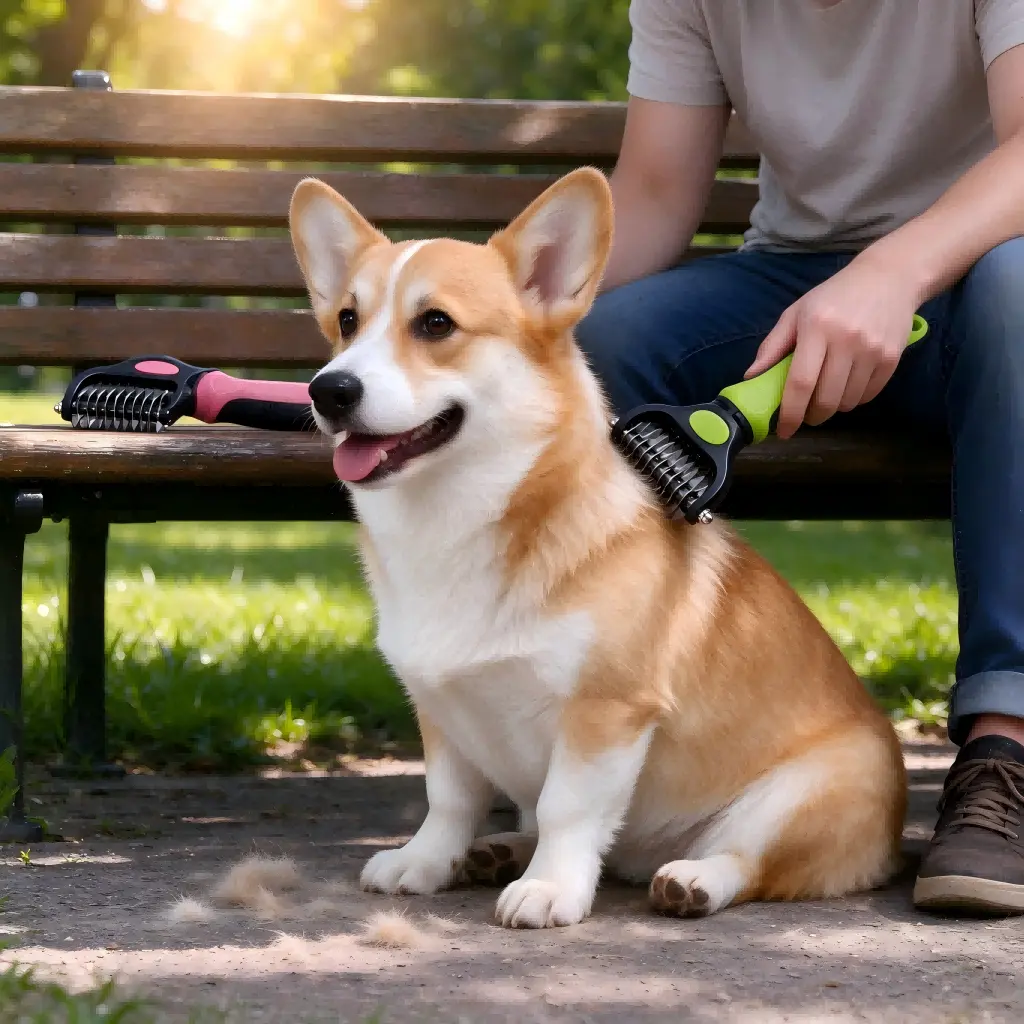
Top Types of Dog Grooming Shedding Tools Suitable for Huskies
The thick double coat of a Husky doesn't like all brushes. When you're buying in bulk, it's very important to use the right type of tool.
Deshedding Tools
Tough, precisely ground stainless steel teeth in these dog grooming shedding tools make it possible to pull loose undercoat through the topcoat without cutting guard hairs. Veterinary care studies show that regular use can cut hair loss by up to 90%. When professionals talk about double-coated breeds, they are the most common choice they suggest.
Undercoat Rake Combs
Rake combs have tines that can rotate or stay in place and are spaced out to get deep into the undercoat. They work well during peak blowout season, when there is a lot of extra fur. Many rakes now have Thermoplastic Rubber (TPR) handles that make them easier to hold and keep from slipping. This keeps your hands from getting tired after long grooming sessions.
Shedding Blades and Slicker Brushes
Shedding blades quickly get rid of loose fur on the surface and are good for regular care in between deep brushing sessions. Even though slicker brushes are popular for finishing, they don't get to the undercoat very well. Slicker brushes are best used as a follow-up tool after deshedding for Huskies, not as the main way to manage their coat.
How to Choose the Best Shedding Tool for Husky Procurement?
A structured evaluation process is needed to find the right dog grooming shedding tools for large-scale use. When I'm looking at B2B procurement options, these are the main things I look at:
- Material quality: High-grade 304 or 420 stainless steel blades resist corrosion in humid salon environments and maintain edge retention through repeated salt spray testing (typically 48–72 hours minimum for professional-grade products).
- Tooth geometry (TPI): Teeth Per Inch spacing must be calibrated to bypass thick guard hairs while capturing finer undercoat fibers — this is non-negotiable for Husky-specific tools.
- Handle ergonomics: TPR or medical-grade silicone grips reduce vibration transfer and prevent repetitive strain injuries in high-use professional environments.
- Eco-friendly materials: Plastic components sourced from recycled or REACH-compliant materials align with growing retailer sustainability requirements in North American and European markets.
- Certifications: ISO 9001 manufacturing consistency and REACH compliance are minimum standards for reputable dog grooming shedding tool suppliers.
These factors are the same whether you are looking at new OEM suppliers or well-known names. A tool that does well in all five areas is worth a lot more in the long run than what it costs.
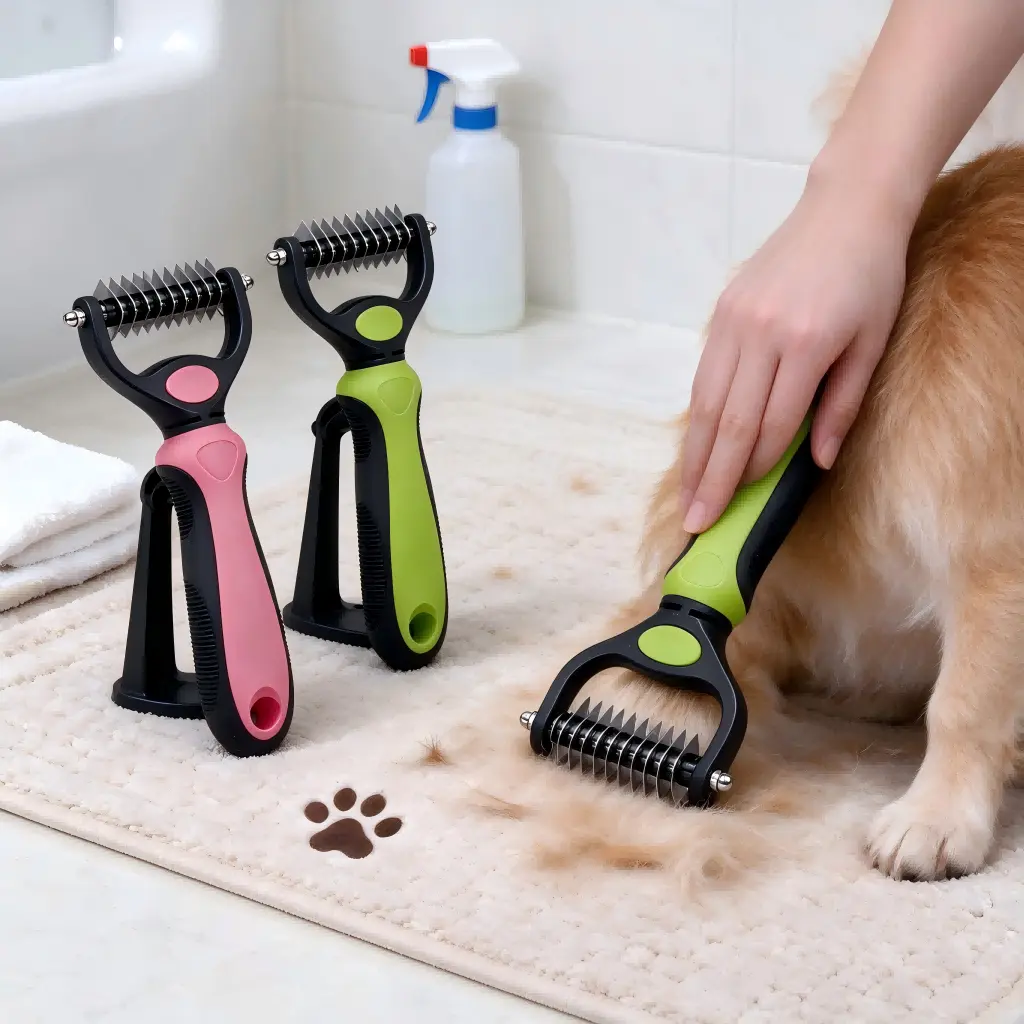
Best Practices for Using and Maintaining Husky Shedding Tools
Without the right method and care, even the best tool won't work as well as it should.
Grooming Frequency Guidelines
It is normal for Huskies to be groomed two or three times a week during blowout season. For year-round care, you should brush your teeth thoroughly at least once a week. Professional groomers always say that regular sessions keep the hair from getting tangled and cut down on the time needed for each session by a large amount.
Blade Care and Cleaning Protocols
Use the tool's release button or a stiff cleaning brush to get rid of any fur that got stuck after each session. To stop micro-corrosion, put a thin layer of blade lubricant on the teeth made of stainless steel. In salons, high-carbon stainless steel blades usually keep working at their best for 12 to 18 months before they need to be replaced, as long as the cleaning instructions are always followed.
Safety Guidelines for Sensitive Skin
Groom your dog when it's dry. Hair that is wet is physically weaker and more likely to break and snag. If you know that a dog's skin is sensitive, use tools with rounded edges. Instead of pressing the blade directly against the epidermis, use light, even pressure. This will keep the skin from getting brush burn, which happens a lot when staff aren't properly trained on how to use tools.
Procurement and Supply Chain Insights for Dog Grooming Shedding Tools
There's more to finding professional Husky cleaning tools on a large scale than just comparing prices per unit. Every choice you make today about your supply chain will have an effect on the quality of your products, your profit margin, and how quickly you reorder in the next 12 to 24 months.
Sourcing Channels and Supplier Evaluation
Alibaba International, Global Pet Expo (Orlando), and Interzoo (Nuremberg) are still the best places for B2B buyers to find new products. Ask the company that makes dog grooming shedding tools for salt spray test reports, Rockwell Hardness (HRC) test records for steel parts, and tensile strength test results to make sure the blade-to-handle bond can withstand high-torque pulling on matted fur.
MOQ Flexibility and Fast-Response Production
Suppliers that can handle small orders (500 to 2,000 units per SKU) and quick reorders (four to six weeks) are becoming more important to more pet product names, especially direct-to-consumer (DTC) buyers on Amazon and Chewy. This method lets you test the market with multiple SKUs before committing to full production runs. This greatly lowers the risk of running out of inventory.
Sustainability and Certification Trends
Retailers in North America and Europe are requiring more and more REACH compliance for all plastic parts and claims that packaging is eco-friendly. When suppliers offer these credentials openly, sellers don't have to do as much work to make sure they're compliant, and retailers can get started faster.
FAQs
How often should I groom a Husky with a deshedding tool?
During blowout seasons (spring and fall), groom two to three times per week. Year-round, once per week is sufficient to prevent undercoat impaction and maintain coat health.
What is the difference between a slicker brush and a deshedding tool?
A slicker brush addresses surface-level loose fur and finishing. A deshedding tool penetrates the topcoat to extract dead undercoat hair — the primary source of shedding in double-coated breeds like Huskies.
Are stainless steel deshedding tools safe for sensitive skin?
Yes, provided the tool features rounded-edge teeth geometry. Models with skin-guard technology prevent direct metal contact with the epidermis during grooming.
Can these tools be used on wet fur?
Grooming on dry fur is strongly recommended. Wet hair is weakest structurally, and dry grooming removes dander and undercoat more efficiently without snagging.
How long do professional-grade blades last?
With proper cleaning and lubrication after each session, high-carbon stainless steel blades in salon environments typically perform well for 12 to 18 months before replacement.
Conclusion
The best dog grooming shedding tools for a Husky depend on the quality of the material, the shape of the teeth, how well it fits the dog's body, and how reliable the supplier is. For business-to-business buyers, these choices have big effects: a good dog grooming shedding tool that works the same way over thousands of sessions saves your brand's image and your profits. Choose certified suppliers first, ask for proof of tests, and begin with small orders to check quality before going big. People who do their research before buying a grooming tool will be rewarded.
Source Your Next Dog Grooming Shedding Tools with Kingwe-star
Since 2009, Kingwe-star has been making high-quality pet grooming products that are sent to more than 100 countries. Our eco-friendly dog deshedding brushes are made with 304-grade stainless steel teeth, ergonomic plastic handles, and REACH-compliant materials. They are designed to work well in professional settings and come in packaging that is ready to sell. As a reliable provider of dog grooming shedding tools, we offer OEM/ODM customization, low MOQ trial orders, and reorder response times of four to six weeks. You can email our team at luna@bllgift.com or go to bllgift.com to get samples, certificates, and a personalized price.
References
- American Pet Products Association (APPA). APPA National Pet Owners Survey. 2023.
- Fogle, Bruce. The Encyclopedia of the Dog. Dorling Kindersley, 2000.
- Coren, Stanley. The Intelligence of Dogs. Free Press, 2006.
- Gorrel, Cecilia. Veterinary Dentistry for the General Practitioner. Saunders Elsevier, 2013.
- Harvey, Richard G., and Patrick J. McKeever. A Colour Handbook of Skin Diseases of the Dog and Cat. Manson Publishing, 2009.
- White, Stephen D. "Canine Coat and Skin Disorders: Diagnosis and Management." Veterinary Clinics of North America: Small Animal Practice, 2012.

_1779179901227.png)
_1778230477696.png)