- English
- French
- German
- Portuguese
- Spanish
- Russian
- Japanese
- Korean
- Arabic
- Greek
- German
- Turkish
- Italian
- Danish
- Romanian
- Indonesian
- Czech
- Afrikaans
- Swedish
- Polish
- Basque
- Catalan
- Esperanto
- Hindi
- Lao
- Albanian
- Amharic
- Armenian
- Azerbaijani
- Belarusian
- Bengali
- Bosnian
- Bulgarian
- Cebuano
- Chichewa
- Corsican
- Croatian
- Dutch
- Estonian
- Filipino
- Finnish
- Frisian
- Galician
- Georgian
- Gujarati
- Haitian
- Hausa
- Hawaiian
- Hebrew
- Hmong
- Hungarian
- Icelandic
- Igbo
- Javanese
- Kannada
- Kazakh
- Khmer
- Kurdish
- Kyrgyz
- Latin
- Latvian
- Lithuanian
- Luxembou..
- Macedonian
- Malagasy
- Malay
- Malayalam
- Maltese
- Maori
- Marathi
- Mongolian
- Burmese
- Nepali
- Norwegian
- Pashto
- Persian
- Punjabi
- Serbian
- Sesotho
- Sinhala
- Slovak
- Slovenian
- Somali
- Samoan
- Scots Gaelic
- Shona
- Sindhi
- Sundanese
- Swahili
- Tajik
- Tamil
- Telugu
- Thai
- Ukrainian
- Urdu
- Uzbek
- Vietnamese
- Welsh
- Xhosa
- Yiddish
- Yoruba
- Zulu

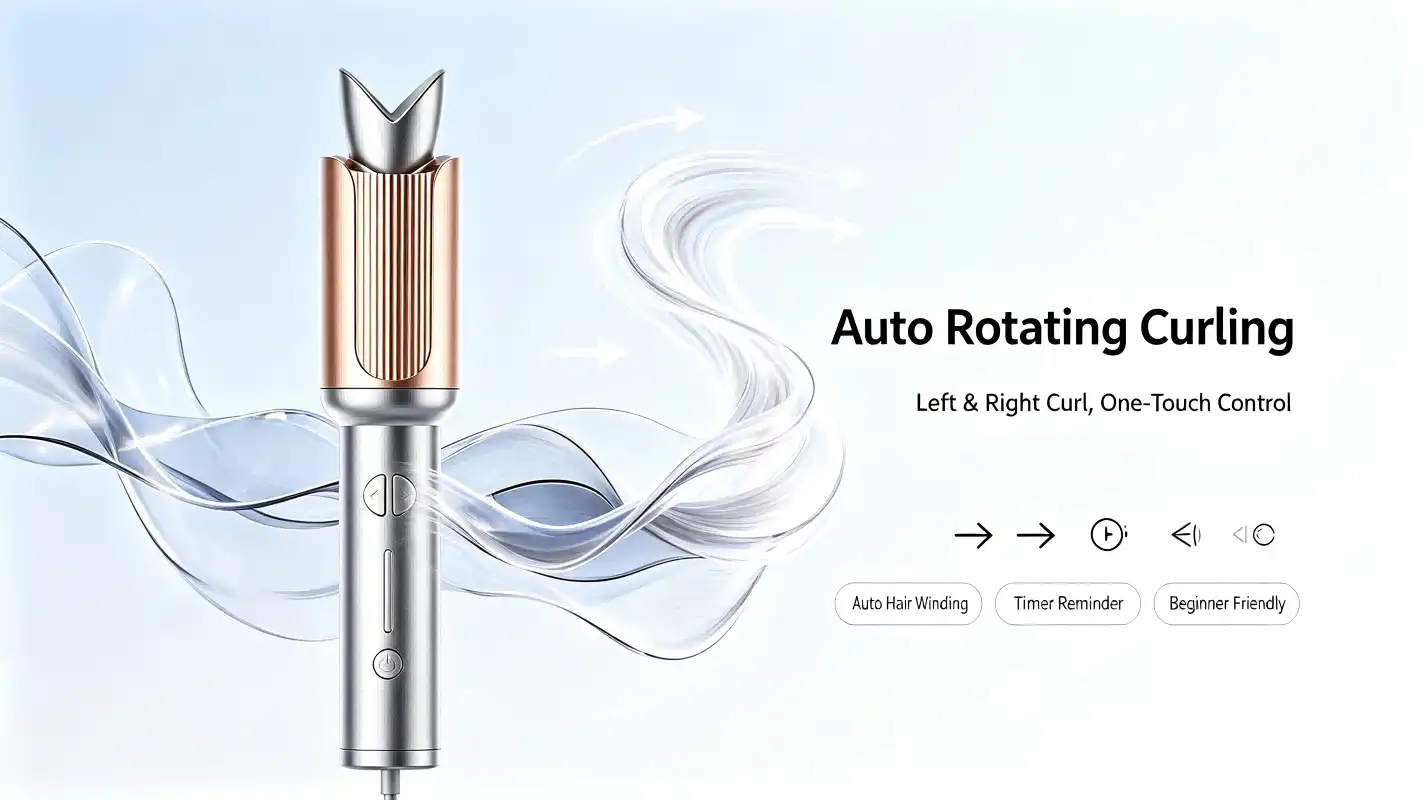
Using an automatic hair curler is straightforward once you understand its core mechanism. This motorized styling tool captures a hair section into its heated chamber, wraps it automatically around the barrel, holds it for a preset dwell time, then releases a finished curl — all without manual winding. The device featured here runs at 60W with MCH ceramic heating, a 31mm thermal conductor diameter, and supports both wired and wireless (lithium battery) operation. Whether you style at home or source for retail, mastering this tool unlocks consistent, salon-quality results every time.
Automatic Hair Curlers Advantages
The market for hair style tools has changed a lot. Curling wands that you use by hand require skill and care, and the results aren't always uniform. An automatic hair curler fixes these issues at the hardware level; the rotating mechanism inside the iron evenly distributes tension, and the heated barrel heats the hair evenly.
What Makes the MCH Ceramic Element Different?
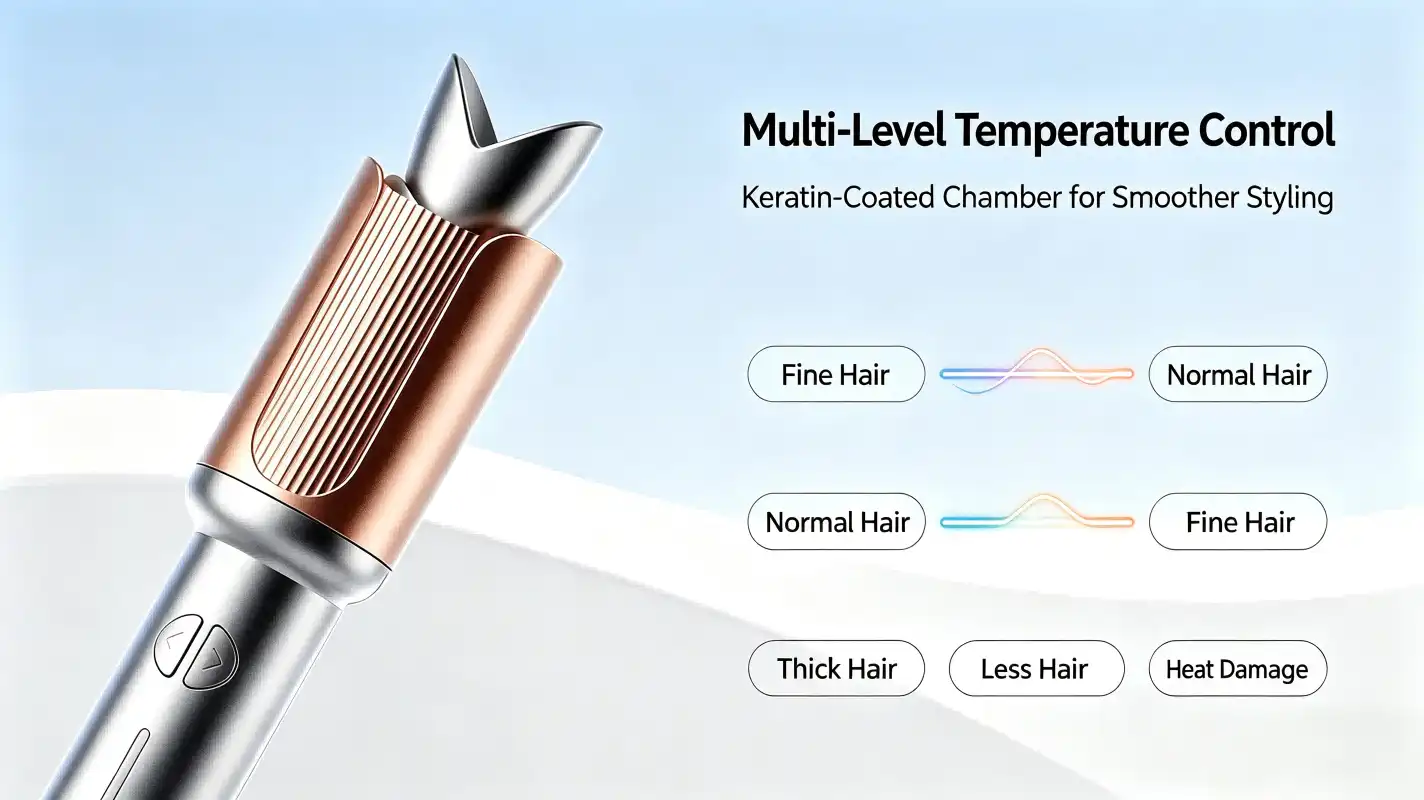
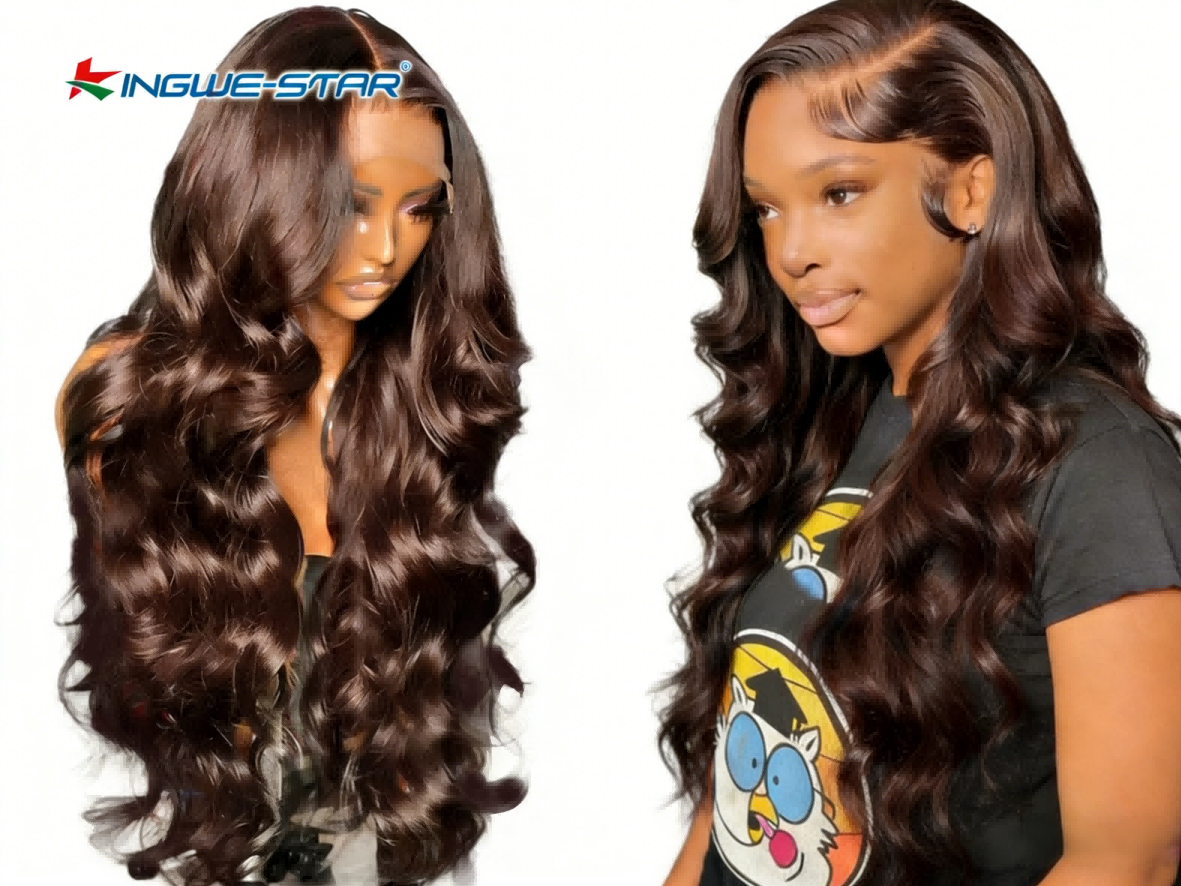
An MCH (Metal Ceramics Heater) element is used in this electric curl wand instead of a normal PTC coil. Studies on ceramic heating elements show that MCH heating returns temperature 30–40% faster than standard resistance coils after each curl cycle. As a result, every strand gets the same amount of heat, which lowers the risk of overexposure that breaks fibers. With a 31mm barrel diameter, it creates loose, fluffy waves that are some of the most-searched-for hairstyles on Instagram and TikTok right now.
Dual Power Supply for Maximum Flexibility
There aren't many portable styling tools with a 60W power that can be used with both a lithium cell and a cord. For retail positioning, this hybrid power architecture is very important. It speaks directly to the travel and portability segment while still delivering full-power performance when plugged in. This dual-mode feature lets B2B procurement workers build a product line that can reach more customers without having to create a different SKU.
Here are the core technical specifications that distinguish this model:
- Barrel diameter: 31 mm thermal conductor, best for wave patterns that are medium to loose
- Power output: 60W of power through an MCH ceramic heating element for fast, stable heat return
- Power supply: Wireless lithium battery mode and wired mode — two options in one unit
- Product dimensions: 28.5 x 6 x 4.5 cm, which is small enough to be packaged in store gift boxes.
- Material composition: ABS, PPT, and high-temperature-resistant nylon housing
These standards directly lead to trust among retailers. When it comes to conversion measures, a device that checks both the speed and portability boxes regularly does better than single-mode competitors.
Step-by-Step Guide on How to Use an Automatic Hair Curler
Knowing the right way to use a device protects both the user and the device. If you follow the steps below, the curls will form perfectly and the product will last longer.
Preparing Hair Before Styling
Always start with clean, dry hair. When residual moisture builds up near a hot barrel, it raises the steam pressure and hurts the brain. Use a heat protectant spray that can handle temperatures up to 230°C. If your hair is fine or has been chemically treated, you must do this step. Cut your hair into pieces that are no more than an inch wide. Narrower pieces go into the rotation chamber more smoothly and curl up tighter and for longer.
Operating the Device Correctly
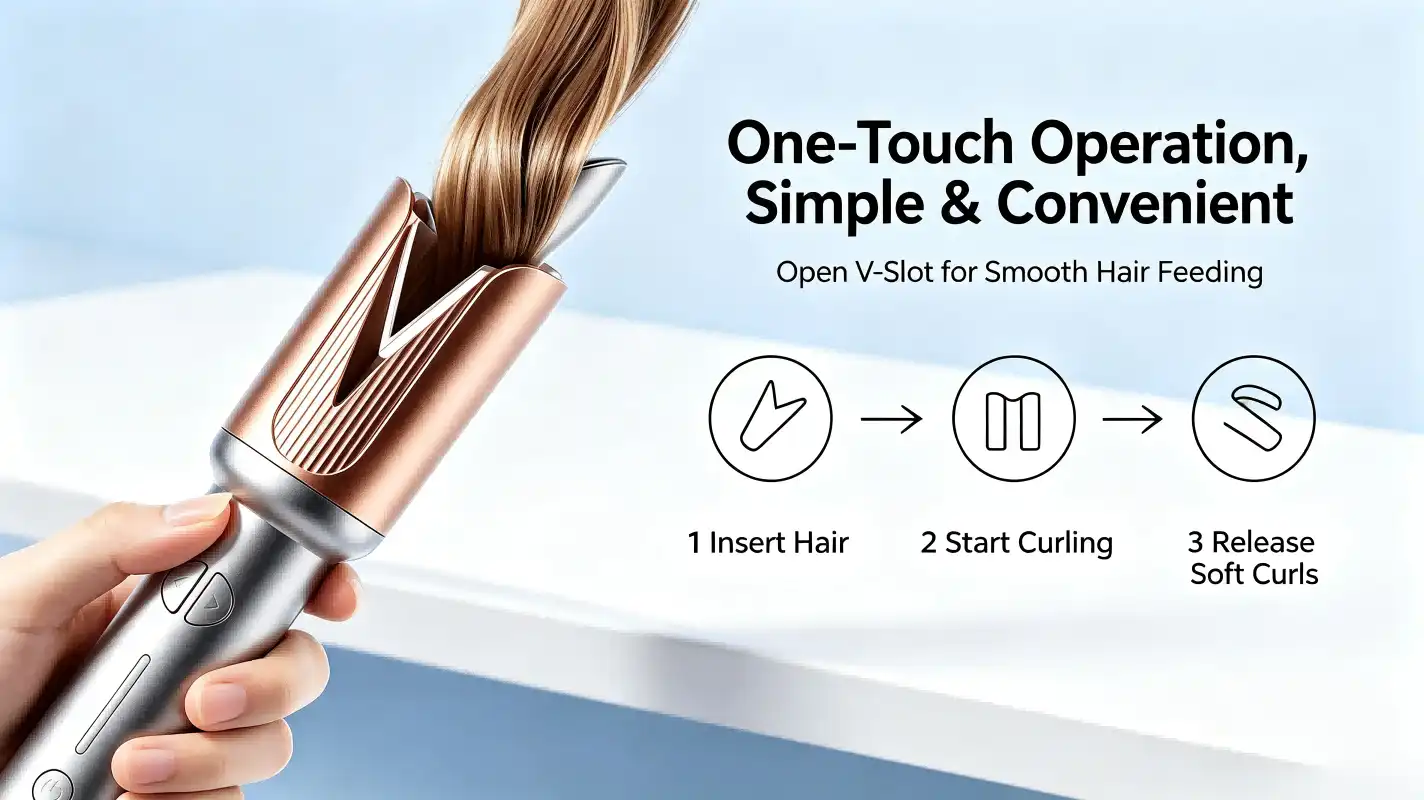
Turn the unit on and pick the right temperature setting. As a general rule, 150–170°C is best for fine hair, 170–200°C is best for normal hair, and 200–220°C is best for thick or heavy hair. Put the curl wand on its side and feed a section of hair into the open slot at the barrel's opening. Then press the curl button. The built-in motor pulls the strand in and wraps it around the 31mm barrel. The built-in timer then holds the curl for the set dwell period, which is usually 8–12 seconds. The chamber opens and the curl falls when the alarm goes off. For a more natural, lived-in wave pattern, switch the curl ways on areas next to each other.
Troubleshooting Common Issues
The anti-tangle sensor has found resistance, so the automatic hair curler will beep and turn around in the middle of its cycle. This is a safety feature, not a problem. Carefully pull out the hair and feed a thinner section again. For wireless use, keep an eye on the battery charge signs. A dead cell lowers the voltage, which makes the heater less stable. After each use, wipe the barrel down with a dry microfiber cloth to keep product buildup from happening, which over time hurts the ability to conduct heat.
Comparing Automatic Hair Curlers with Traditional Curling Tools
When people decide to buy automatic or manual curling tools, they usually look at three things: how well they do their job, how safe they are, and how the end user feels about them.
When a stylist uses a manual curling wand, the hot barrel is in close touch with their hand during every wrap cycle. When a lot of people work in a spa, like when people are getting ready for a wedding party or fashion week, they are more likely to get a repetitive strain injury. An automatic hair curler gets rid of the need to wind the hair, which makes it easier on the operator's body.
In terms of material science, ceramic barrels spread heat across the surface of the barrel more evenly than titanium barrels do. Titanium heats up faster and works best on rugged, thick hair, but its higher peak temperature makes it more likely that heat damage will happen if the rest time is wrong. The MCH ceramic element in this unit blends the quick-recovery benefit of advanced heating with the softer thermal profile of ceramic. This is a good balance for a product that will appeal to a wide range of people.
As a result, there are fewer returns and higher levels of customer service for buying workers when they use a tool that has good safety ratings and works with a wide range of hair types.
Procurement Considerations for B2B Buyers
When looking for a rotating curl styling tool to sell in stores or under your own brand, you need to look at more than just the spec sheet.
The most important part of the decision matrix is the safety certification. For heating appliances coming into the US market, UL 859 certification, FCC compliance, and RoHS 2.0 compliance are musts, not extras that can be added. When buyers don't check the certification, their brand is open to platform takedowns and liability claims that are worth a lot more than any savings on unit cost.
When setting prices for devices with MCH, the extra cost of the heating element must be taken into account. It costs more to make MCH parts than PTC ones, but the performance difference—faster recovery and tighter temperature tolerance—justifies the extra cost on mid- to high-end market levels. A performance story that can be shown works better than a cheap product pitch for direct-to-consumer brands building on TikTok or Amazon.
Supplier evaluations should put a lot of weight on how quickly prototypes can be made. It can only last for six to eight weeks before a style goes out of style. A plant that can send working samples within three days and handle small trial orders of 500 to 3,000 units lets brands see how the market reacts to their products before committing to full production.
Safety and Maintenance Best Practices
Automatic hair curler that uses 60W produces a steady amount of heat that needs to be respected. Don't leave the device on by itself when it's on. It's best to leave the unit on its heat-resistant stand for five to eight minutes after use so that the barrel can fully cool down. The internal parts are protected by the high-temperature-resistant nylon case, but surface touch with flammable materials during cool-down is still a risk that needs to be managed.
For upkeep, clean the barrel once a week when it is normally used. Do not use rough cloths on the ceramic coating because they will scratch it. A coating surface that is damaged will make the temperature less even and wear faster. Every three months, check the swivel line for kinks or insulation wear. This is where most wired styling tools break, but it can be easily avoided.
FAQ
Does the automatic curl device damage hair more than a manual wand?
No, the built-in pause timer stops the over-exposure that happens when you use a hand tool and does most of the damage from heat. The automatic cycle holds each curl for exactly 8–12 seconds and then lets go. This takes away the guessing that can cause the hair to get too hot when wrapping by hand.
What heat setting works best for fine hair?
150–170°C is best for fine hair or hair that has been dyed. This unit's MCH ceramic element keeps the temperature within a narrow range, which lowers the risk of heat spikes that regular coil heaters can't stop.
How long does the lithium battery last per charge?
The battery's runtime depends on how often it is used and what temperature it is set to. Most lithium-powered style tools in the 60W class can be used continuously for 30 to 45 minutes at modest settings, which is long enough for a full styling session.
Is this device suitable for short hair?
The 31mm barrel width works best for hair that is longer than five inches. When you want to curl hair that is shorter, a smaller barrel (19–25 mm) works best.
What certifications should buyers verify before importing?
At the very least, check for CE, FCC, UL 859, and RoHS 2.0 before entering the US and EU markets. Ask to see the original test reports from reputable companies like SGS, TUV, or Intertek.
Partner with Kingwe-star — Your Trusted Automatic Hair Curler Manufacturer
Since 2009, Kingwe-star has sent approved, ready-to-sell beauty tools to more than 100 countries. Our line of automatic hair curlers comes with a 3-year guarantee, low-minimum order quantities (MOQs), and an OEM/ODM personalization service. If you're ready to start or grow a private-label styling tool line, email our team at luna@bllgift.com or go to bllgift.com to get a catalog and a custom price right away.
Conclusion
An automatic hair curler is clearly better than a traditional one in terms of uniformity of performance, user safety, and store appeal. The 60W MCH ceramic type described here meets the main needs of both end users and B2B buying teams thanks to its 31mm barrel, dual power modes, and small size. The technology is proven, and the supply chain path is clear for brand owners looking for hair tools that are flexible, certified, and in style. The most important thing to do when buying something is to choose a seller with verified certifications, fast prototyping, and real after-sales help.
References
- Journal of Cosmetic Science — 2021
- International Journal of Trichology — 2020
- Cosmoprof North America Official Show Report — 2023
- UL Standards & Engagement: UL 859 Household Electric Personal Grooming Appliances — 2022
- Amazon Beauty & Personal Care Category Trend Report — 2023
- TikTok For Business: Beauty Industry Insights Report — 2023
_1779179067083.png)
_1779183928592.png)
_1779947099676.jpg)