- English
- French
- German
- Portuguese
- Spanish
- Russian
- Japanese
- Korean
- Arabic
- Greek
- German
- Turkish
- Italian
- Danish
- Romanian
- Indonesian
- Czech
- Afrikaans
- Swedish
- Polish
- Basque
- Catalan
- Esperanto
- Hindi
- Lao
- Albanian
- Amharic
- Armenian
- Azerbaijani
- Belarusian
- Bengali
- Bosnian
- Bulgarian
- Cebuano
- Chichewa
- Corsican
- Croatian
- Dutch
- Estonian
- Filipino
- Finnish
- Frisian
- Galician
- Georgian
- Gujarati
- Haitian
- Hausa
- Hawaiian
- Hebrew
- Hmong
- Hungarian
- Icelandic
- Igbo
- Javanese
- Kannada
- Kazakh
- Khmer
- Kurdish
- Kyrgyz
- Latin
- Latvian
- Lithuanian
- Luxembou..
- Macedonian
- Malagasy
- Malay
- Malayalam
- Maltese
- Maori
- Marathi
- Mongolian
- Burmese
- Nepali
- Norwegian
- Pashto
- Persian
- Punjabi
- Serbian
- Sesotho
- Sinhala
- Slovak
- Slovenian
- Somali
- Samoan
- Scots Gaelic
- Shona
- Sindhi
- Sundanese
- Swahili
- Tajik
- Tamil
- Telugu
- Thai
- Ukrainian
- Urdu
- Uzbek
- Vietnamese
- Welsh
- Xhosa
- Yiddish
- Yoruba
- Zulu

A typical fun sprinkler for kids uses between 2 and 5 gallons per minute (GPM), depending on water pressure and design. At an average residential pressure of 40–60 PSI, most backyard sprinkler toys run through roughly 120 to 300 gallons per hour of continuous play. Lightweight models weighing around 544 grams, designed for babies and toddlers, tend to use closer to 2–3 GPM due to their smaller nozzle arrays. Knowing this figure helps wholesalers and gift buyers position water-efficient sprinkler toys as both family-friendly and eco-responsible products.
Understanding Water Usage in Kids Sprinklers
The people in charge of buying water toys need to know how much water these toys use so they can keep buying them. It is important to think about flow rate when putting a product on the market, especially in places where saving water is becoming the law.
Key Factors That Affect Water Consumption
The water in fun sprinkler for kids depends on three things: the pressure at the top, the number of nozzles, and the shape of the spray. A spinning type with one vent and 40 PSI will use a lot less than a splash pad with many arms and 60 PSI. Nozzles that are pressure-balanced tend to keep flow rates between 2 and 3 GPM even if the conditions at the inlet change. This means that producers can trust them to help retail users understand their water bills.
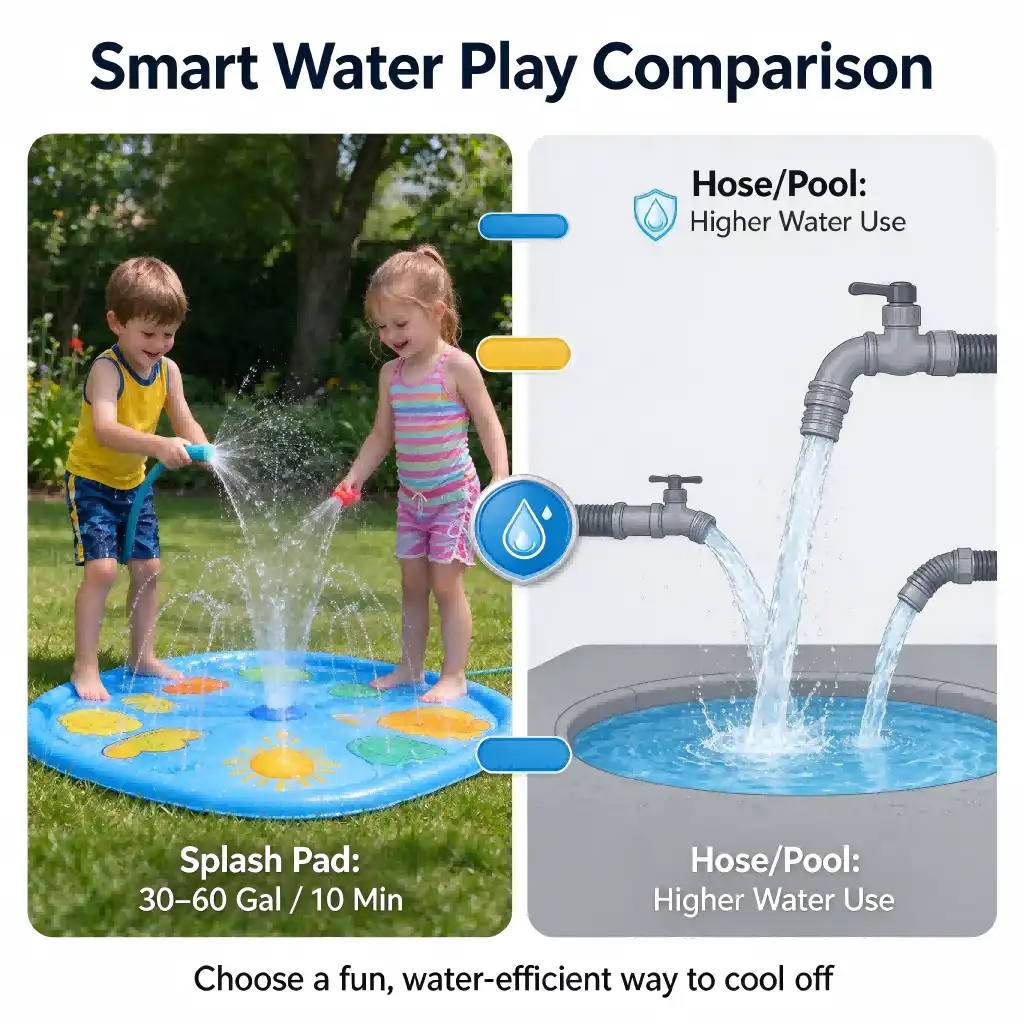
Average Flow Rates by Product Type
Because they spray over a large area with little force, most inflatable sprinkler mats run at 2 to 3 GPM. The normal flow rate for rigid plastic sprinkler toys with arms that move is 3 to 5 GPM. Toys with one tip that you have to move by hand are near the bottom, at about 1.5 to 2 GPM. Most baby and toddler toys that weigh less than 544 grams fall in the 2–2.5 GPM range, which is a good, affordable range. This is good for people who are buying birthday gift sets or summer play bundles.
Why Flow Rate Matters to B2B Buyers
They are being asked to give more details about how much water they use if they sell to California, Australia, or the EU. If a store has certified flow-restriction technology on hand, they are less likely to be sued. Toys with sprinklers that use 2 GPM instead of 5 GPM use about 180 gallons less water in an hour of play. You can use this number to market eco-labels and write store packaging copy.
Safety and Health Benefits Associated with Kids Sprinklers
Safety compliance is a must for people who want to buy things for babies and toddlers—every SKU has to pass it before it can be priced.
Age-Appropriate Water Pressure and Design
Fun sprinkler for kids should be safe to use when the pressure is less than 50 PSI. The soft-touch, impact-resistant polymer material keeps you from hurting yourself if you touch it by mistake. As long as a product is accepted by ASTM F963 and EN71, it meets certain requirements for needle holes, seam tensile strength, and the safety of the material. Most of the time, reliable manufacturers use BPA-free ABS or strengthened PVC as their main material.
Developmental and Physical Health Benefits
Kids between the ages of 6 months and 3 years can play in the water outside and improve their big motor skills while staying cool and making friends. What the American Academy of Pediatrics says is that young children who can play outside for free, including those who can play in water, are healthier overall. To keep toddlers safe while they play, a gentle-spray sprinkler toy should only be used on a flat, non-slip surface with an adult nearby.
Compliance Certifications That Reduce Recall Risk
People who work in purchasing for Amazon, Walmart, or European retail chains should check that the fun sprinkler for kids they want have paperwork that shows they meet CE, UKCA, and CPSIA standards. In order to be safe for kids under 12, CPSIA says that products must have labels that say they are free of phthalates and lead. Get full test reports from a third-party lab like SGS, Intertek, or Bureau Veritas before you place a large order. You will be able to avoid costly recalls this way.
Comparison of Popular Kids Sprinkler Models: Water Use and Features
When sellers know the differences between items in the same group, they can spread out their stock and not put too much into things that don't sell quickly. You can buy a lot of different kinds of water toys, so this list will help you decide which ones to buy.
Inflatable vs. Rigid Plastic Sprinkler Toys
Even though they only have a 2–3 GPM flow rate, inflated splash mats cover a big area with water, often 60 inches or more. This helps them use less water. If you don't add anything to make them more stable, they are more likely to get holes and break down in UV light. Rubber rotary sprinklers, like the 544-gram toddler-sized ones that come in many birthday gift sets, last longer, stay colored better in direct sunlight, and are easier to ship flat.
Electric vs. Manual Flow Control
A study from the WaterSense program in 2022 says that electric timer-connected fun sprinkler for kids can save up to 40% of water compared to manual faucet-on/faucet-off operation. This is because guardians can set the run time ahead of time. Manual models are less expensive and don't have to follow any safety rules for electricity. This helps wholesalers find SKUs that can be brought to market quickly and don't cost a lot to certify.
Budget Options Under $50: What Buyers Should Evaluate
If a business spends between $10,000 and $200,000 a year, most of them look for single gift prices beneath $30 to $50. The main differences between them are the number of nozzles, the spray height (3–15 feet), the style of the package, and the fact that the hose connectors can be used with any type of hose. When you put something in a bright, bilingual box with clear age and safety signs, you might sell more on Amazon and in gift shops.
Procurement Insights: Sourcing Water-Efficient Kids Sprinklers
Sourcing the right sprinkler toy supplier involves more than comparing unit prices. Water-flow specs, certification breadth, and OEM flexibility all feed into long-term margin and compliance health.
What to Look for in a Supplier's Technical Spec Sheet
Ask suppliers to provide the rated flow rate at both 40 PSI and 60 PSI. Request hydrostatic pressure test results confirming the unit withstands up to 100 PSI without seam failure. Confirm that rotational components are rated for 10,000+ operational cycles. These figures give buyers a direct basis for comparison and signal which factories apply engineering discipline to their production lines.
OEM and Private Label Considerations
For gift-channel buyers who need branded packaging, fun sprinkler for kids suppliers with in-house design teams can turn around 2D/3D sample concepts in as few as three days. Low MOQ trial runs—accepting orders as small as a few hundred units—reduce inventory risk when testing a new sprinkler toy SKU ahead of a summer season or holiday gift catalog. Full-range customization covering logo imprinting, box design, and multilingual warning labels is standard among experienced OEM manufacturers.
Balancing Price, Lead Time, and Certification
Holiday-season buyers face hard shipping deadlines. Working with a factory that integrates R&D, production, quality control, and logistics under one roof typically cuts lead time by one to two weeks compared to trading-company sourcing. Confirm that the supplier operates under ISO 9001 and runs multi-stage inspection (IQC, IPQC, FQC, OQC) before committing to a seasonal order.
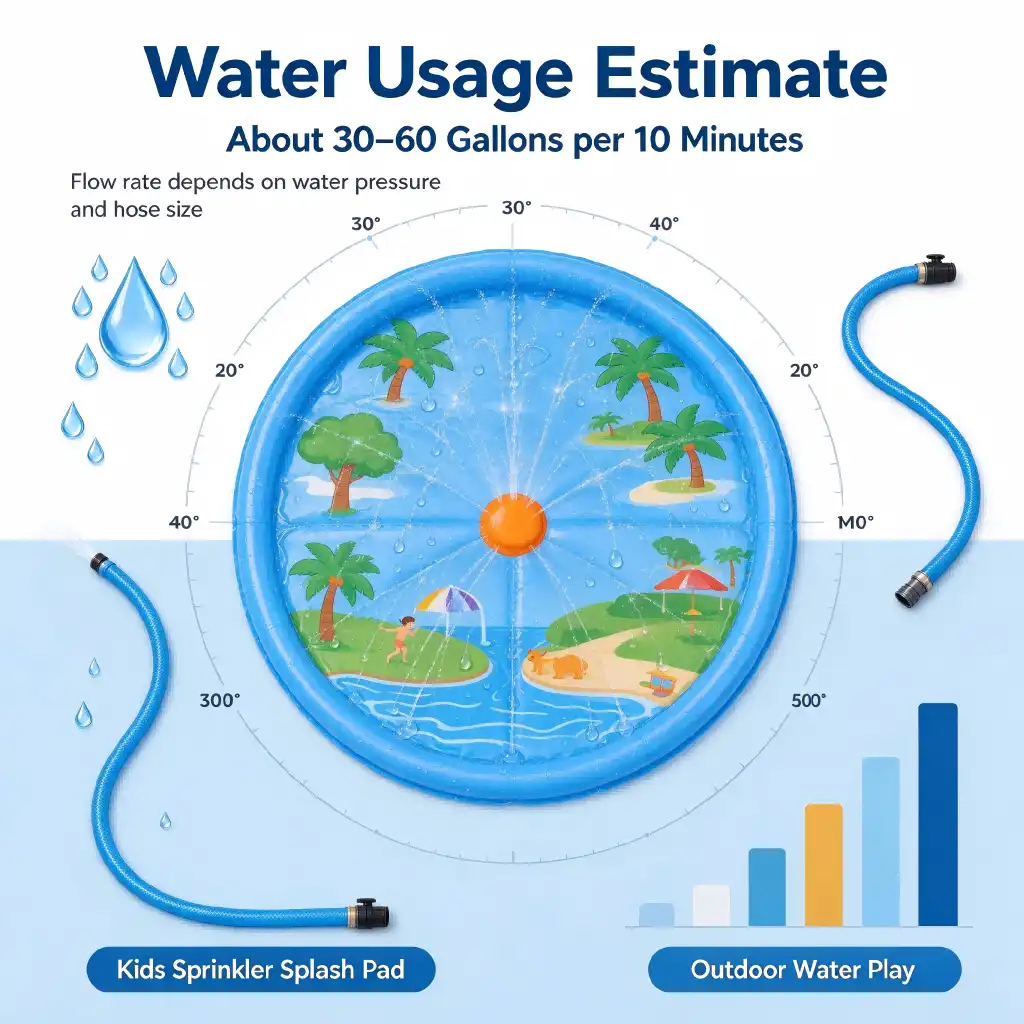
Practical Tips for Maintaining and Optimizing Kids Sprinkler Water Use
Helping retail customers get the most from their sprinkler toys reduces returns, builds brand loyalty, and supports repeat wholesale orders.
Preventing Clogs and Nozzle Wear
Hard water deposits are the most common cause of reduced flow and uneven spray patterns. Flexible silicone nozzles allow caregivers to rub away calcium and lime buildup without tools. Advise distributors to include simple cleaning instructions in their retail packaging—a one-page insert reduces customer service inquiries and return rates.
Post-Use Storage to Extend Product Life
Drain the toy completely after each use and store it away from direct sunlight. UV exposure without stabilizing polymer additives will cause color fade and surface cracking within one to two seasons. Products that meet ISO 4892 UV weathering standards retain structural integrity and color vibrancy for 500+ hours of sunlight exposure—a verifiable claim that supports premium retail pricing.
Monitoring Water Use for Responsible Play
A simple hose-end timer costs under $15 and can cut session water use by 30–40% by automating shutoff. Including a timing recommendation on product packaging—such as "15-minute play sessions for toddlers"—positions the brand as safety-conscious and environmentally aware, two attributes that resonate strongly with today's North American and European parent consumers.
Conclusion
Most fun sprinkler for kids use between 2 and 5 GPM of water. It's easy for toys for toddlers that weigh 544 grams to handle 2 to 2.5 GPM of normal home pressure. This piece of information is useful for people who buy in bulk and people who sell gifts because it helps them place their products, write copy for stores, and talk about compliance. Kids can safely use products that are certified by ASTM F963 and EN71, made of long-lasting BPA-free materials, and come in flexible OEM packaging. These products also make money on the shelf and are good for the environment.
FAQ
How many gallons per hour does a typical kids sprinkler toy use?
Most garden fountain toys for kids run at 2 to 5 GPM, which is 120 to 300 gallons per hour. This range is mostly made up of lower-end child models with smaller vent groups.
Are there water-efficient sprinkler toys that meet eco-label requirements?
Yes. Eco-friendly products can be sold in some markets in North America and Europe as long as they have nozzles that limit pressure and flow rates of 2.5 GPM or less. It is best to find suppliers whose products meet performance standards that work with WaterSense.
What safety certifications should I require before placing a wholesale order?
For the USA, you should need ASTM F963 proof that the product is phthalate-free. For the EU and UK, you should need EN71 proof. All stores in the UK will need to have UKCA after Brexit. A third party lab test record from SGS, Intertek, or Bureau Veritas will help you be sure.
What is the recommended minimum water pressure for a kids sprinkler toy to work properly?
Most of them need at least 20 to 30 PSI to work. Most of the time, the 360-degree spin and full spray height work best at 50 to 60 PSI.
Can I order kids sprinkler toys with custom branding and low MOQ?
Yes, OEM manufacturers with a lot of experience will take on small test orders. They can also add your name and make custom packages. Test runs can be done in as little as three days if you work with the right factory.
Source Your Kids Sprinkler Toys with Kingwe-star
Kingswe-star has sold water toys to gift shops and dealers in more than 100 countries since 2009. Our fun sprinkler for kids line is built to ASTM F963, EN71, CE, and CPSIA standards, with approved test results from SGS and Intertek available upon request. Our factory is worth at least 10,000 naira, we have 40 engineers working for us, and we offer different MOQ levels, so we can handle both seasonal big sales and small-batch trials. Please email us at luna@bllgift.com if you would like a list of our products, information on how to buy in bulk, or a unique sample. You can also look through our current fun sprinkler for kids seller list at bllgift.com.
References
- American Academy of Pediatrics. The Importance of Play in Promoting Healthy Child Development and Maintaining Strong Parent-Child Bonds. Pediatrics, 2007.
- U.S. Environmental Protection Agency WaterSense Program. Water-Efficient Products and Practices. EPA, 2022.
- ASTM International. ASTM F963-23: Standard Consumer Safety Specification for Toy Safety. ASTM, 2023.
- European Committee for Standardization. EN 71 Safety of Toys — Part 1: Mechanical and Physical Properties. CEN, 2014 (revised 2023).
- U.S. Consumer Product Safety Commission. CPSIA: Consumer Product Safety Improvement Act — Guide to Children's Product Safety. CPSC, 2021.
- International Organization for Standardization. ISO 4892-2: Plastics — Methods of Exposure to Laboratory Light Sources — Part 2: Xenon-Arc Lamps. ISO, 2013.
_1779703014142.png)
_1779179901227.png)
_1778230657754.png)
_1779947370800.jpg)
_1779179662775.png)
_1779183278356.png)
_1779180807109.png)