- English
- French
- German
- Portuguese
- Spanish
- Russian
- Japanese
- Korean
- Arabic
- Greek
- German
- Turkish
- Italian
- Danish
- Romanian
- Indonesian
- Czech
- Afrikaans
- Swedish
- Polish
- Basque
- Catalan
- Esperanto
- Hindi
- Lao
- Albanian
- Amharic
- Armenian
- Azerbaijani
- Belarusian
- Bengali
- Bosnian
- Bulgarian
- Cebuano
- Chichewa
- Corsican
- Croatian
- Dutch
- Estonian
- Filipino
- Finnish
- Frisian
- Galician
- Georgian
- Gujarati
- Haitian
- Hausa
- Hawaiian
- Hebrew
- Hmong
- Hungarian
- Icelandic
- Igbo
- Javanese
- Kannada
- Kazakh
- Khmer
- Kurdish
- Kyrgyz
- Latin
- Latvian
- Lithuanian
- Luxembou..
- Macedonian
- Malagasy
- Malay
- Malayalam
- Maltese
- Maori
- Marathi
- Mongolian
- Burmese
- Nepali
- Norwegian
- Pashto
- Persian
- Punjabi
- Serbian
- Sesotho
- Sinhala
- Slovak
- Slovenian
- Somali
- Samoan
- Scots Gaelic
- Shona
- Sindhi
- Sundanese
- Swahili
- Tajik
- Tamil
- Telugu
- Thai
- Ukrainian
- Urdu
- Uzbek
- Vietnamese
- Welsh
- Xhosa
- Yiddish
- Yoruba
- Zulu

If you've ever tried to play music at a backyard party or a rooftop event and ended up with tinny, wind-swallowed sound, you already know why outdoor sound system bluetooth speakers exist. These devices are purpose-built to push audio into open air — no walls, no room resonance, no echo chambers to help. The real question is: how well do they actually perform? Based on hands-on sourcing experience and technical benchmarking data, modern outdoor sound system bluetooth speakers deliver surprisingly strong results — especially when you choose units built to IP67 or higher standards with DSP-tuned "Outdoor EQ" profiles and Bluetooth 5.0+ connectivity.
Understanding Outdoor Sound System Bluetooth Speakers
What Makes Them Different From Indoor Speakers
Normal speakers inside use the room's echoes to make music fill the space. That's not possible with Bluetooth speakers that are used outside. Engineers use passive radiators for bass extension, high-excursion drivers, and Digital Signal Processing (DSP) algorithms to boost low-mid frequencies. Low-mid frequencies lose the most energy in open spaces, so these are the frequencies that engineers use to make up for it.
Physical Design and Durability Standards
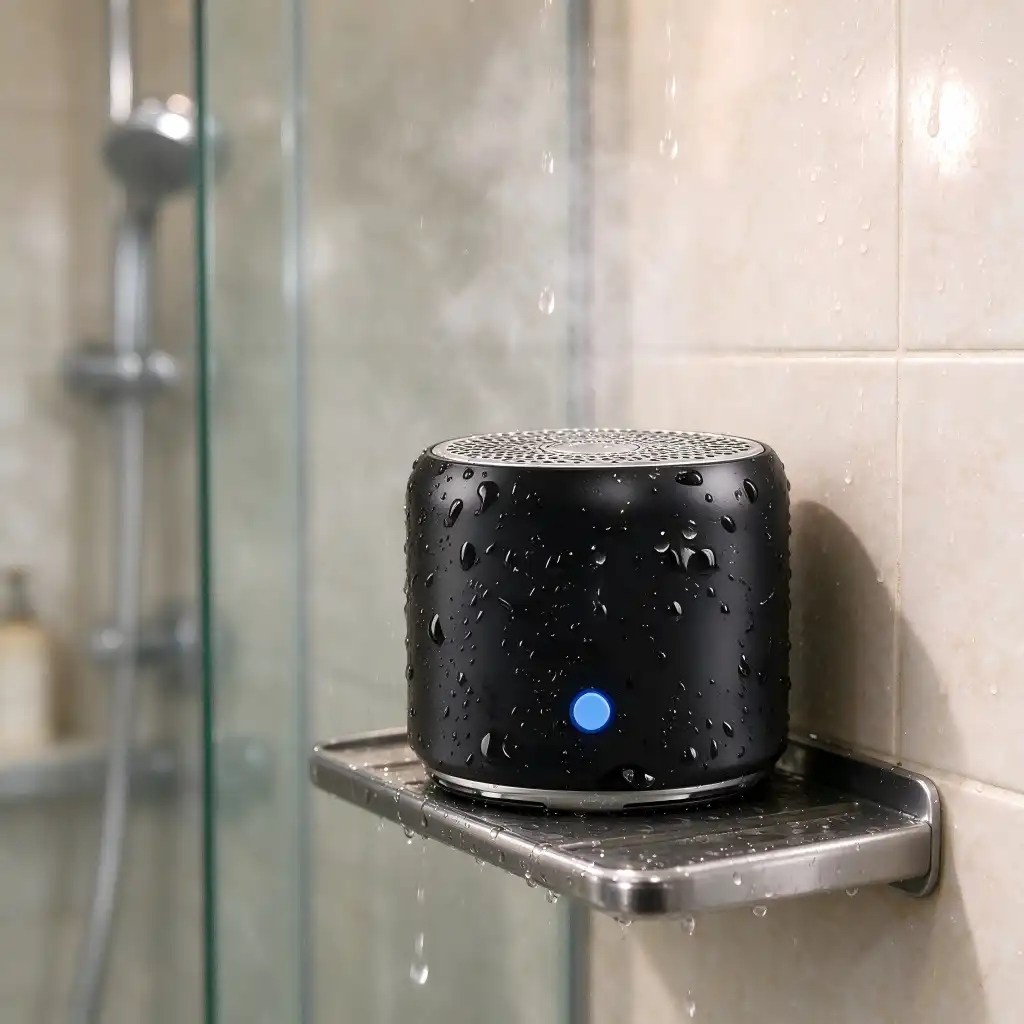
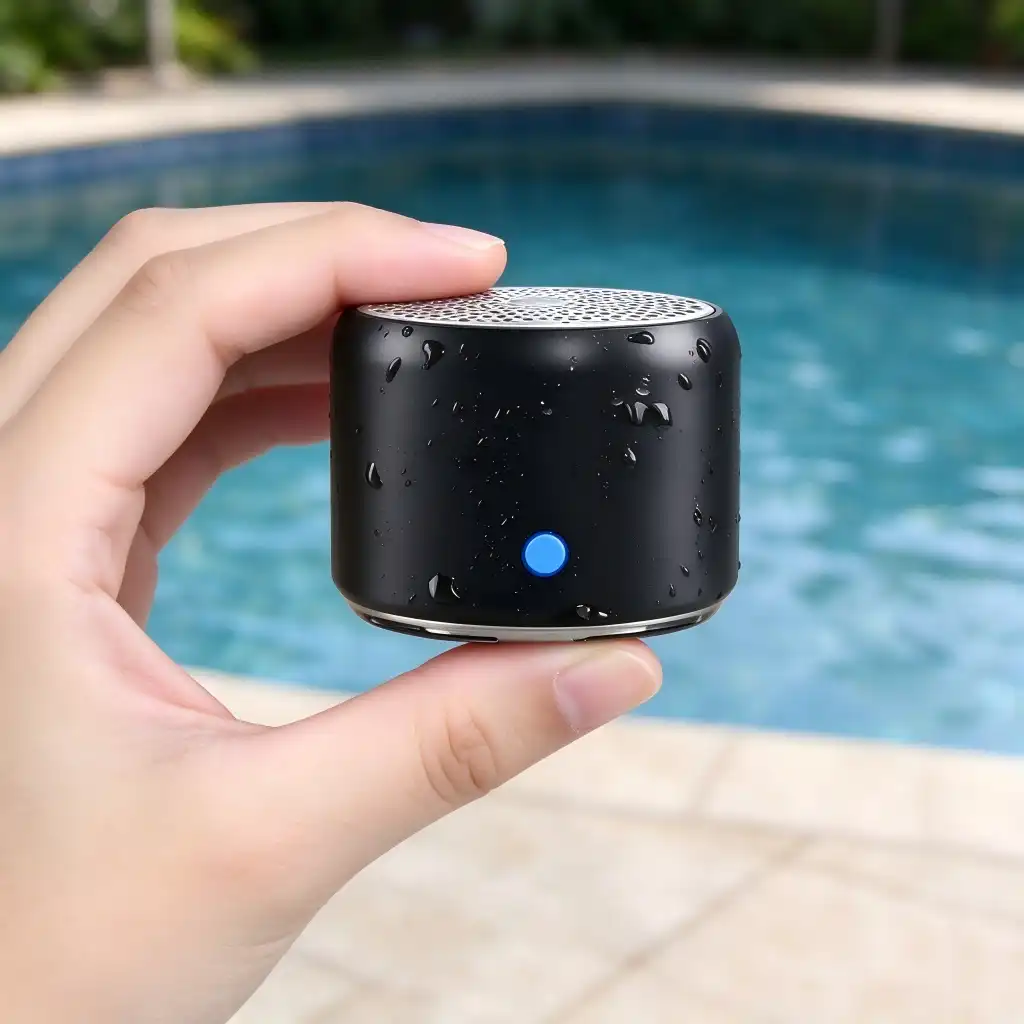
When you take a small outdoor sound system bluetooth speakers outside, make sure it has an IP67 grade. This means that it can handle being submerged in dust and water for 30 minutes at a depth of 1 meter. The devices don't break after being in the sun for a long time because their IK08+ impact strength and UV-stabilized ABS or silicone housings keep them that way. There is proof for these claims in the form of ASTM G154 UV aging tests and ASTM B117 salt spray tests.
Wireless Connectivity and Multi-Device Pairing
With Bluetooth 5.3, there is less delay, better power economy, and more stable signals around things like crowds and trees. Most outdoor Bluetooth speakers made for professionals can connect to TWS (True Wireless Stereo) receivers and play music in stereo with both units. In a master-slave configuration, the "Party" or "Broadcast" modes can sync more than 100 units, which is great for business-to-business events.
Key Benefits and Advantages for B2B Clients
Buyers care most about three things when they buy outdoor sound system bluetooth speakers for business use: how reliable they are, how easy they are to expand, and how much it costs to set everything up. Installing wired outdoor audio systems can easily cost several thousand dollars per zone because they need to be set up over a long period of time and trenches need to be dug. You don't have to worry about any of that stuff if you have a wireless outdoor music system.
The most important things in business-to-business (B2B) settings are these:
- Wireless deployment speed: No cable runs, no conduit permits. A team can set up a multi-point audio zone in under 30 minutes, which directly reduces labor costs for event rental businesses and corporate A/V teams.
- Weather-rated construction: IP67-certified portable outdoor speakers operate reliably across rain, humidity, and dust-heavy environments — covering resorts, construction sites, and open-air markets without the maintenance overhead of sealed wired enclosures.
- Scalability through broadcast modes: Party-mode connectivity lets operators start with two units and grow to dozens without hardware changes, protecting the original investment as business needs expand.
The total cost of ownership for wireless outdoor music systems is cheaper than for wired systems because of these advantages. Because of this, it's easy for buying teams that plan regular events or set up long-term business systems to make the business case for them.
Procurement Considerations for B2B Buyers
Matching Specs to Use Case
One lithium-ion battery powers the 6"D x 9"W x 9"H outdoor sound system bluetooth speakers that is being reviewed. It is small and movable, so it's easy to connect via Bluetooth to a phone or computer. The two specs that directly affect how happy a customer is with an event hire or retail purchase are the battery life (in Watt-hours, not just mAh) and the Bluetooth range at a certain SPL.
Certifications and Compliance Documentation
You need to be FCC certified to sell in the U.S. Products must have the CE mark and meet RoHS 2.0 requirements in order to be sold in Europe. Sellers in the EU also want REACH paperwork. Buy outdoor Bluetooth speaker systems through OEM channels. Ask for full, traceable certification files instead of written highlights. Check these files in the certifying body's public database.
Supplier Assessment and MOQ Flexibility
It can be hard for people who are sourcing for the first time as an OEM to meet the minimum order quantity. Many people who want to buy mid-size brands need between 500 and 2,000 units to try the market out. Supply chains that you can trust have clear rules about trial orders, set sample lead times (ideally less than 7 days), and non-disclosure agreements (NDAs) that keep industrial designs and custom molds from being sold to competing brands.
Future Trends in Outdoor Bluetooth Sound Systems
Bluetooth Protocol Advancement
Auracast broadcast audio will be added to Bluetooth LE Audio when it is standardized in 2023. This is a protocol that lets a single Bluetooth speaker for an outdoor sound system send sound to an infinite number of users at the same time, without any pairing delay. Right now, this means that old broadcast modes can no longer really be used in large venues.
Battery and Charging Technology
Because LiFePO4 is more stable at high temperatures, it is being used in portable speakers. People have said that lithium-ion batteries break down when they get too hot (above 40°C). Business users who need to get back to work quickly between events must now have fast charge with USB-C Power Delivery (PD).
Smart Integration and IoT Connectivity
Commercial outdoor sound systems are connecting to venue management platforms more and more through Wi-Fi or their own mesh protocols, on top of Bluetooth. If a hotel or resort is looking for outdoor Bluetooth speaker systems, they should make sure that the units have firmware update channels and app-based zone control. These features make it so that technicians don't have to be there as often over the life of the product.
Conclusion
Outdoor sound system bluetooth speakers have grown up and become a reliable product category. These days' units are smart enough to do real business tasks, like building resort pool decks and branded shopping programs. It's made to meet FCC and CE standards, and it's waterproof up to IP67. They also have DSP-tuned sound and a Bluetooth 5.x link. Different types of units are certified in different ways, and their batteries and drivers work in different ways. When you buy something based on proven specs instead of marketing talk, you always get more for your money. The basics stay the same for brand makers that enter this market through OEM channels: approved, well-documented, sound-tuned, and simple to provide.
FAQ
How long does the battery last on a typical outdoor Bluetooth speaker?
The SPL changes how long the battery lasts. About 15 to 24 hours for business units that are only flowing 50% of the time. Don't just look at mAh; always look at Watt-hours (Wh). If the Wh number is bigger, it shows how long the battery will really last, especially when it's hot outside and the battery doesn't work as well.
What does IP67 actually mean for an outdoor speaker?
You can put the unit up to one meter deep in water and it will still work for 30 minutes. It's known as IP67. Even in rain, splashing water, and high humidity, IP67 is more than enough for most business use outside. When you add IP68, it makes it more waterproof, which is important for uses near pools or in the water.
Can outdoor Bluetooth speakers support large-scale event coverage?
Pro units with Party or Broadcast mode can sync up many speakers that are spread out over a large area. So much better, speakers that work with Auracast (Bluetooth LE Audio) can connect to an endless number of listeners at the same time. These rules are good for use at events and shows.
Does outdoor use affect Bluetooth signal reliability?
When you compare open spaces outside to buildings full of Wi-Fi routers and steel, the interference is less. With Bluetooth 5.3 Class 1 modules, links can stay stable up to 100 meters away in open space. Signal loss isn't a big deal as long as the hardware is set up right.
What certifications should I require when sourcing OEM outdoor speakers for the U.S. market?
FCC (for radio frequency compliance in the U.S.), CE (if selling in the EU), RoHS 2.0 (to limit dangerous substances), and ISO 9001 (for quality management) are the very least that must be met. Consumers often need proof that a business follows social rules, and BSCI or Sedex checks can help them do that.
Partner With Kingwe-star for Your Next Outdoor Audio Program
Customers in North America, Europe, and the Middle East have been able to buy approved outdoor sound system bluetooth speakers from Kingwe-star since 2009. The company has paperwork for FCC, CE, RoHS 2.0, and ISO 9001 on file. They also offer three-day sample turnaround, low MOQ trial orders, and a guarantee that lasts three years with lifetime support. This gets rid of the normal risk that comes with OEM audio apps when it comes to sourcing. Send an email to luna@bllgift.com or go to bllgift.com to start your product brief with our outdoor sound system bluetooth speakers maker team.
References
- Consumer Electronics Association. CES Industry Data Report: Portable Audio Category Growth and Bluetooth Adoption Trends. 2024.
- Bluetooth Special Interest Group. Bluetooth Technology Overview: Core Specification 5.3 and LE Audio. 2023.
- ASTM International. Standard Practice for Operating Fluorescent Ultraviolet (UV) Lamp Apparatus for Exposure of Nonmetallic Materials (ASTM G154). 2023.
- IEC (International Electrotechnical Commission). IEC 60529: Degrees of Protection Provided by Enclosures (IP Code). 2022.
- Parks Associates. Smart Home & Portable Audio: Connected Device Market Outlook. 2024.
- Grand View Research. Outdoor Speakers Market Size, Share & Trends Analysis Report. 2023.
_1779947124928.jpg)
_1779702410222.png)
_1779702889291.png)
_1779947741675.jpg)
_1779947477692.jpg)
_1779947706970.jpg)
_1780040306557.png)