- English
- French
- German
- Portuguese
- Spanish
- Russian
- Japanese
- Korean
- Arabic
- Greek
- German
- Turkish
- Italian
- Danish
- Romanian
- Indonesian
- Czech
- Afrikaans
- Swedish
- Polish
- Basque
- Catalan
- Esperanto
- Hindi
- Lao
- Albanian
- Amharic
- Armenian
- Azerbaijani
- Belarusian
- Bengali
- Bosnian
- Bulgarian
- Cebuano
- Chichewa
- Corsican
- Croatian
- Dutch
- Estonian
- Filipino
- Finnish
- Frisian
- Galician
- Georgian
- Gujarati
- Haitian
- Hausa
- Hawaiian
- Hebrew
- Hmong
- Hungarian
- Icelandic
- Igbo
- Javanese
- Kannada
- Kazakh
- Khmer
- Kurdish
- Kyrgyz
- Latin
- Latvian
- Lithuanian
- Luxembou..
- Macedonian
- Malagasy
- Malay
- Malayalam
- Maltese
- Maori
- Marathi
- Mongolian
- Burmese
- Nepali
- Norwegian
- Pashto
- Persian
- Punjabi
- Serbian
- Sesotho
- Sinhala
- Slovak
- Slovenian
- Somali
- Samoan
- Scots Gaelic
- Shona
- Sindhi
- Sundanese
- Swahili
- Tajik
- Tamil
- Telugu
- Thai
- Ukrainian
- Urdu
- Uzbek
- Vietnamese
- Welsh
- Xhosa
- Yiddish
- Yoruba
- Zulu

A toddler kids golf set is safe for young children when it is designed and manufactured to recognized safety standards. Products built from BPA-free plastic, with rounded edges, lightweight clubs, and no small detachable parts, present minimal risk to children aged 18 months and up. The key is verifying that the set carries third-party certifications such as ASTM F963 or EN71 before purchase. As a B2B buyer, sourcing a toddler kids golf set from a certified supplier dramatically lowers product liability exposure and builds confidence with your retail customers.
Understanding Toddler Kids Golf Set Safety Concerns
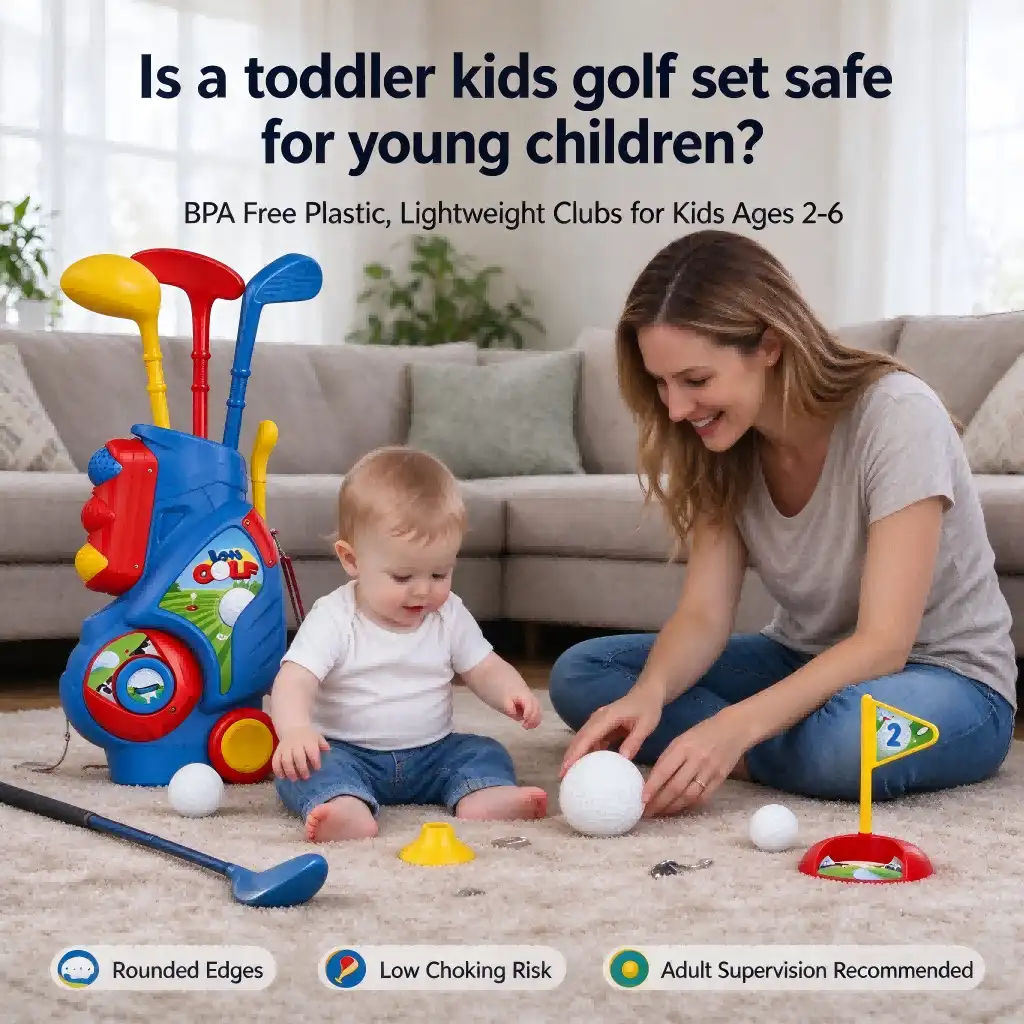
Anyone who is smart will check to see if a sports toy for a child is safe before taking it home. Before you choose where to source, you should know where the real risks are.
Choking Hazards and Small Parts
There is a test called the "small parts cylinder test" that all toys for kids under three years old must pass. A golf set for kids 18 months and up can't have tees, ball marks, or club heads that fit inside the cylinder. Sets that are well-made and use golf balls that are too big and clubs with fixed heads completely get rid of this risk.
Material Safety and Chemical Compliance
It's a big problem that some plastic toys are made of toxic materials. Toddler golf sets that are good are made from ABS or HDPE plastic that doesn't have BPA in it. Also, phthalates, lead, and other illegal substances are checked for in these plastics. At the batch level, XRF (X-ray fluorescence) research shows that there is no chemical movement. Producers must follow strict chemical limits set by the CPSIA in the US and EN71 Part 3 in Europe. These limits are checked by approved labs.
Age Recommendations and Design Differences
Not all kids' golf sets are the same. A toddler kids golf set is different. These are for toddlers. They have shorter shafts (18 to 24 inches), smaller club weights (150 to 300g), and EVA foam balls that are softer. Kids at least 18 months old should wear them. Because these sizes are right for a toddler's height and muscle growth, they won't hurt their back or make them trip and fall. Always make sure that the age label on the package fits how the item looks.
Key Factors to Consider When Choosing a Safe Toddler Golf Set
Once you know what the risks are, you can use a clear plan to decide what goods to buy. Toy golf sets for kids are really safe if they are well-built, made of good materials, and well-designed.
Club Weight, Length, and Grip Design
The club should be between 150g and 300g in weight so that little kids can swing without getting tired. As you measure the shaft, you need to think about how tall the child is. It should go from the waist to the belly button if possible. Thermoplastic Rubber (TPR) grips that don't slip keep kids' clubs from flying off their hands as they swing. It's even less likely that someone will get hurt by accident if the club heads are round and don't have any sharp edges.
Non-Toxic, BPA-Free Materials
As a toddler kids golf set gets safer, the materials that are used to make it become more important. ABS plastic that doesn't have BPA in it is very strong and doesn't break easily. It's also not too heavy for little kids to use. UV stability stops the colors from fading and the surface from getting worn down when you play outside. HDPE doesn't break down in water, which is good for sets that are used in grass or backyards.
Structural Integrity and Assembly
Each joint, like the one between the club head and the shaft or the one between the ball and the base, needs to be able to handle turning stress without breaking. Torque tests show that you can't take off grips by hand. When you drop something from 1.5 meters onto concrete, you can see that it doesn't break into sharp pieces. The ASTM F963-17 and EN71 Part 1 standards say that all goods that meet their needs must go through these tests.
Comparison of Toddler Golf Sets: Safety and Quality Insights
There are different kinds of great golf toys out there. When procurement teams know how things are different, they can make better decisions about what to buy.
Toddler Sets vs. Standard Kids Golf Sets
Kids as young as 18 months can play golf with a toddler set. It is made of heavier-gauge plastic that is softer and doesn't have any sharp edges. Most standard kids' golf sets are made for kids 3 years and up. The metal parts on the shafts and the balls may be too hard for babies to handle. When buyers are looking for items for stores with a mix of age groups, they should treat these as separate SKUs that need different compliance paperwork.
Brand Quality Benchmarks
Well-known brands of kids' sports toys pay a third party to test their products and keep written quality management systems. Companies that are ISO 9001 certified check their work at different stages (IQC, IPQC, FQC, and OQC) all the way through the production process. You need to ask for the Children's Product Certificate (CPC) if you want to buy a lot of baby golf sets. Tests done by a third-party lab show that this document shows the set meets ASTM F963 standards.
Manual Play Sets vs. Feature-Added Sets
It's easiest to follow and costs the least to buy a basic manual child golf set that comes with clubs, balls, tees, holes, and flags. More electrical safety tests need to be done on sets that have extra computer parts, like sound or light parts. As a gift, hand sets help you keep more of the profit when there are a lot of sales. They are faster to clear for compliance.
Safe Usage and Teaching Tips for Toddlers Using Golf Sets
Even the safest products need to be used and watched over in the right way. Giving good advice to people who buy from your store makes the things you sell much more valuable.
Supervision and Basic Safety Rules
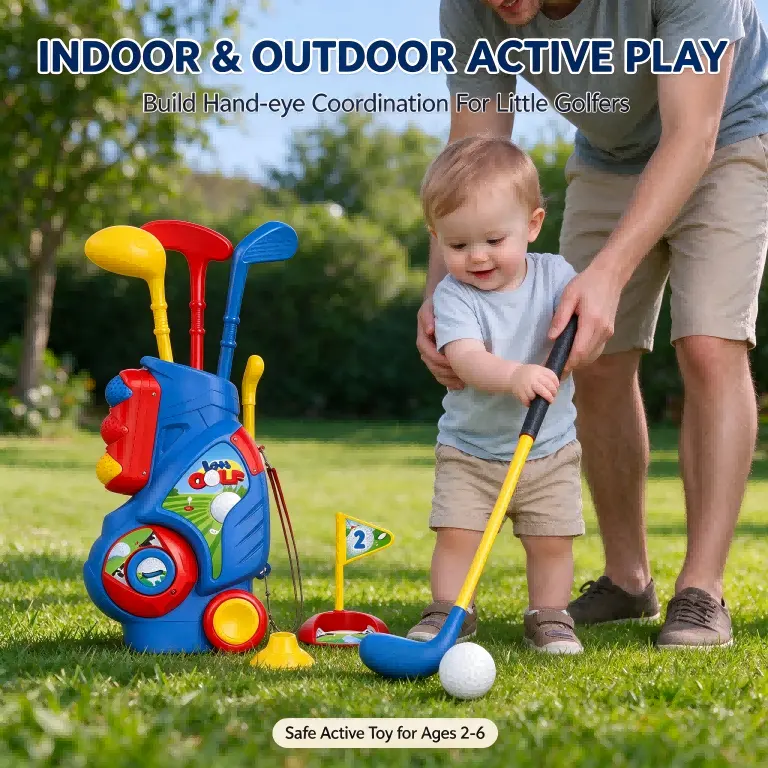
Kids younger than 18 months should always be watched when they play with a golf set. One simple rule is that you can't swing if there is another child or adult nearby. An accident is less likely to happen if the play area is clear, whether it's on a soft mat inside or grass outside. Beginning with clear rules makes the game safer and more fun in the long run.
Introducing Golf Skills at the Right Pace
Things work best when done in steps. At first, let the kid hold the club and just tap the ball toward a hole. Slowly teach them how to aim and count strokes as their motor skills get better. Games that are right for their age, like matching flags to balls of the same color, keep them busy without being too hard. Little kids can connect with an activity better when they use training tools like low-height tee places.
Maintenance and Inspection Routines
Things stay safe and last longer when they are inspected regularly. Check the club heads every time you use them to see if they are broken or coming off the shaft. To clean plastic items, only use mild soap and water. Do not use harsh chemicals that could damage the surface. As long as possible, keep the set out of direct sunlight to keep it in good shape. These simple steps make the product last longer and keep the safety plan that was put there at the start.
Procurement and Transaction Guide for Safe Toddler Kids Golf Sets
People who buy from businesses need to do study before they buy. This is what separates a profitable product from a costly return.
Verifying Safety Certifications Before Ordering
Get the Children's Product Certificate (CPC), the EN71 test record, and the CPSIA compliance paperwork before you place a large order. Check to see if the tests were done by a lab that is not affiliated with the company and has been approved by a well-known group. A lot of people know the names SGS, Intertek, Bureau Veritas, and TUV in this area. You should use batch-level certificates instead of a master certificate that is used for many production runs because it is safer. Also, you need to get UKCA marking if you want to sell to stores in Europe. For the UK market, you already need CE marking.
Balancing Price with Compliance Costs
When you buy from someone who isn't certified and they offer a lower unit price, you end up with many more problems than you saved in the beginning. A properly certified toddler kids golf set costs money for things like testing in a lab, getting certified, and packaging the set in the right way. People who buy things ahead of time don't have to pay extra to be surprised during customs or store compliance checks. Talking about MOQ freedom is another good idea. Trial sales of new SKUs in smaller amounts lower the risk of running out of stock before making a full seasonal commitment.
Reliable Sourcing Channels and Logistics
When you work directly with a maker, you have the most control over paperwork, wait times, and unique packaging. First, you can check out sellers on sites like Alibaba. But going to trade shows like Canton Fair and Hong Kong Toys & Games Fair to see them in person adds another level of trust. To sell your goods in the US, make sure that your seller can give you the right HTS codes and that the boxes have the necessary English warning signs. Holiday supply should be based on what's in stock now and when it can be shipped, which should be within two to four weeks.
Conclusion
Young children can play with a toddler kids golf set as long as it is safe and comes from a reputable company. This item is safe for kids 18 months and up because it is made of BPA-free plastic, the right weight, and has been approved by a third party. Also, stores can feel good about selling it. For business-to-business buyers, how they get the product is just as important as the product itself. Always look at the certificates and ask for examples. Also, only do business with companies that have clear quality processes in place.
FAQ
What materials are safest for a toddler golf set?
Clubs are made of ABS plastic that doesn't have BPA in it, and balls are made of EVA foam. Chemical safety standards set by ASTM F963 and EN71 are met by both materials, and they can take a hit without breaking into sharp pieces.
What certifications should a toddler golf set carry for US sale?
The item must have a Children's Product Certificate (CPC) from a third-party lab that has been approved and states that it meets ASTM F963-17 needs. US stores also need CPSIA compliance paperwork that has a list of the lead and phthalate limits.
How do I know if the club length is right for my toddler?
The club should be about 8 inches long, which is the same as the child's waist. The child can swing naturally in this range, without having to bend or stretch too far.
Can a toddler golf set be used indoors?
Yes. Inside, you can use sets with soft foam balls that are made of BPA-free plastic. Hard floors stay safe because of a soft mat under the hole targets. Kids won't be able to run all over them.
What is included in a standard toddler golf set?
Four golf balls, two flags, two holes, a golf cart, and three golf clubs make up a full set. This is everything a toddler needs to play right away; they don't need to buy anything else.
Get Your Certified Toddler Kids Golf Set from Kingwe-star
Kingwe-star began selling safe toys and gifts for kids to people in more than 100 countries in 2009. Our golf set for babies is made of BPA-free plastic and is best for kids over 18 months old. It has two holes, two flags, two tees, three clubs, and six balls. Just let us know if you need all the ASTM F963 and EN71 paperwork. To help you get your orders out quickly during the holiday season, we can help you make baby and kids' golf sets directly. We have a low MOQ and a lot of stock. Email our team at luna@bllgift.com or visit bllgift.com right away to get a sample or bulk price.
References
- American Society for Testing and Materials (ASTM). ASTM F963-17: Standard Consumer Safety Specification for Toy Safety. ASTM International, 2017.
- U.S. Consumer Product Safety Commission (CPSC). Children's Product Certificate (CPC) Requirements Under CPSIA. CPSC, 2021.
- European Committee for Standardization. EN 71 Safety of Toys — Parts 1, 2, and 3. CEN, 2020.
- American Academy of Pediatrics (AAP). Choosing Safe Toys for Infants and Toddlers. Pediatrics, 2022.
- U.S. Consumer Product Safety Commission (CPSC). Small Parts Regulations for Children's Toys (16 CFR Part 1501). CPSC, 2019.
- International Play Equipment Manufacturers Association (IPEMA). Safety Standards and Guidelines for Children's Outdoor Play Products. IPEMA, 2023.
_1779702935119.png)
_1779180699244.png)
_1778230477696.png)
_1779183491779.png)
_1779947208267.jpg)