- English
- French
- German
- Portuguese
- Spanish
- Russian
- Japanese
- Korean
- Arabic
- Greek
- German
- Turkish
- Italian
- Danish
- Romanian
- Indonesian
- Czech
- Afrikaans
- Swedish
- Polish
- Basque
- Catalan
- Esperanto
- Hindi
- Lao
- Albanian
- Amharic
- Armenian
- Azerbaijani
- Belarusian
- Bengali
- Bosnian
- Bulgarian
- Cebuano
- Chichewa
- Corsican
- Croatian
- Dutch
- Estonian
- Filipino
- Finnish
- Frisian
- Galician
- Georgian
- Gujarati
- Haitian
- Hausa
- Hawaiian
- Hebrew
- Hmong
- Hungarian
- Icelandic
- Igbo
- Javanese
- Kannada
- Kazakh
- Khmer
- Kurdish
- Kyrgyz
- Latin
- Latvian
- Lithuanian
- Luxembou..
- Macedonian
- Malagasy
- Malay
- Malayalam
- Maltese
- Maori
- Marathi
- Mongolian
- Burmese
- Nepali
- Norwegian
- Pashto
- Persian
- Punjabi
- Serbian
- Sesotho
- Sinhala
- Slovak
- Slovenian
- Somali
- Samoan
- Scots Gaelic
- Shona
- Sindhi
- Sundanese
- Swahili
- Tajik
- Tamil
- Telugu
- Thai
- Ukrainian
- Urdu
- Uzbek
- Vietnamese
- Welsh
- Xhosa
- Yiddish
- Yoruba
- Zulu

Proper care and maintenance is very essential to safeguard the performance, appearance and service life of nylon dog collars. Nylon collars may be cleaned using standard, pet-safe cleaning procedures, and they work well. Remove your dog’s collar and wash it by hand with warm water and a pet-safe mild detergent. Use a soft-bristled brush to gently clean the webbing to remove debris, body oils and leftover odors that may be buried in the strands. Rinse well to get rid of any soap residue and let the collar air dry completely before putting it back on your pet. Do not keep collars with metal hardware soaking in water for lengthy periods as this may lead to corrosion and hardware failure. Nylon dog collars may be washed often and properly to keep them looking fresh and to prevent bacteria from building up on the fibers. This is an effective way of reducing dog skin irritation and dermatitis issues.
Understanding Nylon Dog Collars and Core Cleaning Challenges
Why Nylon Dominates the Dog Collar Market
High tenacity polyamide nylon webbing is unrivaled among dog collar materials in strength to weight ratio over other materials such as classic leather or cotton. Premium nylon dog collars are resistant to decay, mold and mildew even with regular exposure to water, suitable for active outdoor dogs, working breeds and everyday long-term usage.
According to the American Pet Products Association (APPA) 2023 industry report, U.S. pet industry spending has surged beyond $147 billion. Dog collars and other pet accessories are becoming a high-growth segmented market. Nylon dog collars are the best overall value for B2B procurement teams and brand operators alike: amazing durability, cheap unit cost, extensive color possibilities (red, blue, orange, black, pink and more), and convenient snap closures that meet universal everyday style situations.
Key Cleaning Pain Points for Nylon Dog Collars
Despite its robust physical properties, nylon webbing easily traps pet grease, mud, salt stains, and organic residues, accumulating dirt and odor far faster than most pet owners expect. Notably, black nylon: the wrong cleaning or drying method may easily cause collars to have an unpleasant chalky surface layer, which will affect the visual texture of the product.
Incorrect cleaning procedures might cause permanent harm to the product. Harsh bleaches, boiling high temperature water, and abrasive cleaning pads may decrease the tensile strength of the nylon fibers and cause dye leakage, which will discolor the dogs hair. For bulk sellers and pet product companies, client returns due to color fading, fiber deformation, and structural damage directly raise operating expenses and harm brand image. The basis of product quality and the stabilization of consumer happiness are scientific cleaning principles.
The Value of Standardized Cleaning: Pet Safety, Product Durability & Brand Equity
The dirty nylon collar fibers trap in a moist, airtight environment that enables big bacteria to grow and may be a concealed threat to a dog’s skin health. A 2021 research published in Veterinary Dermatology found that uncleaned dog collar webbing was associated with recurrent canine dermatitis, emphasizing the significance of collar cleanliness to pet health.
Negative reviews of collar odor, mildew and skin irritation on Amazon, Chewy and other e-commerce shops will lower the single ASIN ratings and product line conversion rates, resulting in long-term brand traffic and word-of-mouth losses to DTC firms.
The collar life duration of nylon is tied to its color fastness after normal wash. The light color fastness is graded 1-8 based on international ISO 105-B02 standard . If you are purchasing nylon dog collars retail, be sure they are Grade 4 or above, otherwise they may fade and discolor from UV exposure and regular washing.
The cleaners are phosphate free, biodegradable and environmentally friendly for removing filth and odor without harming nylon fibers. This green maintenance plan not only maintains the functionality of the product but also fulfills the sustainable consumption needs of the current pet owners. Procurement managers should choose for easy-to-clean nylon collars to reduce after-sales return rates and enhance supplier evaluation ratings.
Step-by-Step Guide: Effective Nylon Dog Collar Cleaning Method
Preparation & Pre-Cleaning Inspection
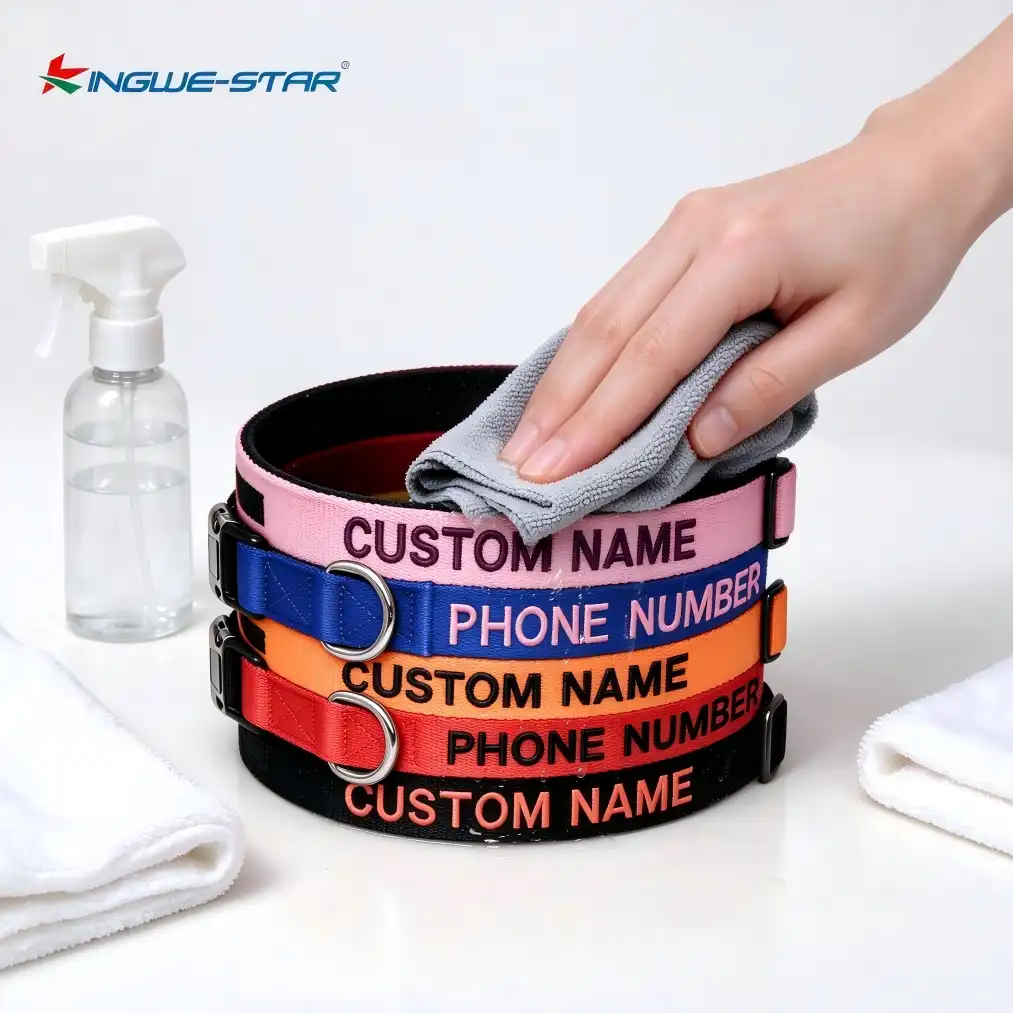
Prepare certain cleaning materials in advance: a soft-bristled brush, a moderate pet-safe liquid detergent, warm water, and clean, dry towels. Remove any ID tags, ornamental embellishments and removable sections of the collar. Pay attention to the snap buckle openings for embedded grit and debris, as the long-term residual dirt will weaken the buckle structure and impact the locking stability.
Hand Washing vs. Machine Washing: Scenario-Based Selection
Both techniques can clean nylon dog collars with advantages for various applications:
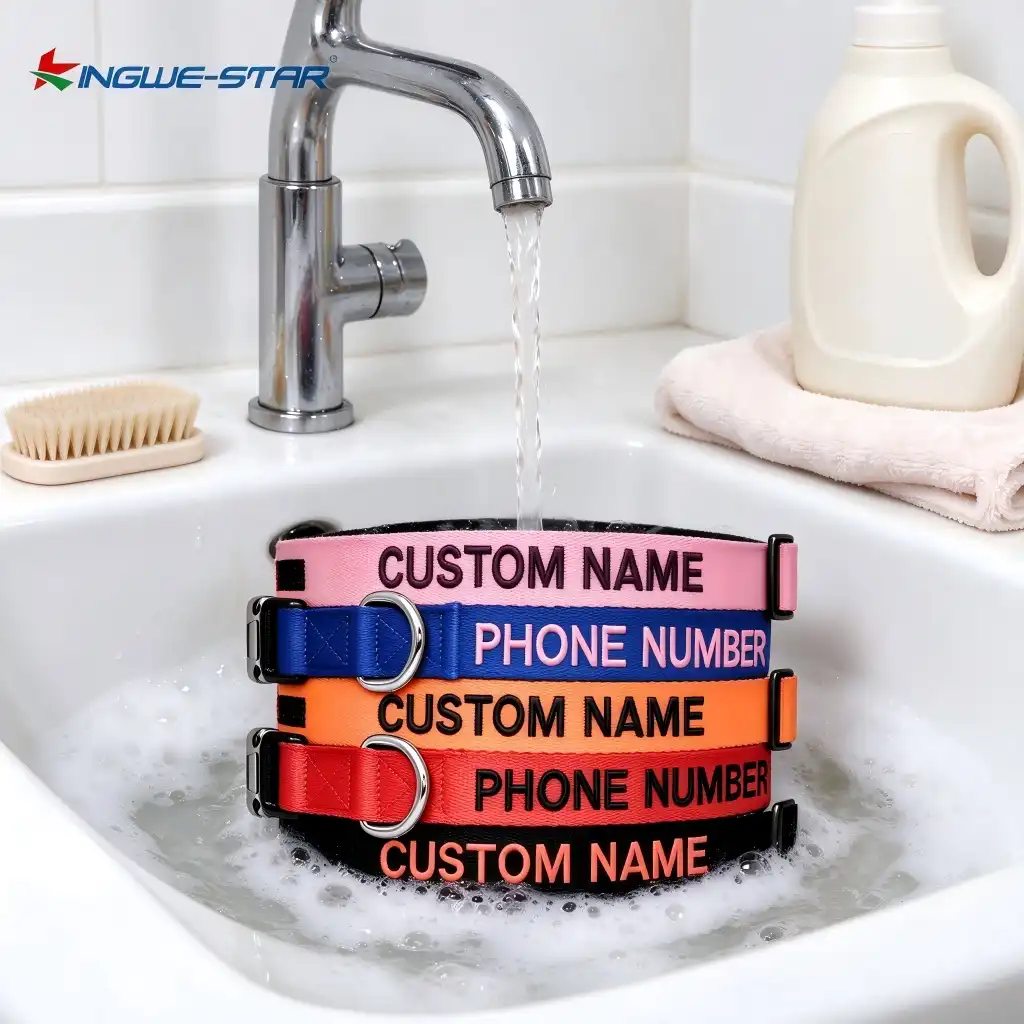
- Hand wash high value & custom collars: This technique allows you to control the scrubbing pressure which is great for collars with embroidered logos, reflective stripes and delicate stitching. Fill the collar with warm soapy water and gently clean the webbing in a circular motion. Rinse until the rinse water is clear and free from foam. Good for samples inspection, display items and bespoke high-end collars with tight need of appearance.
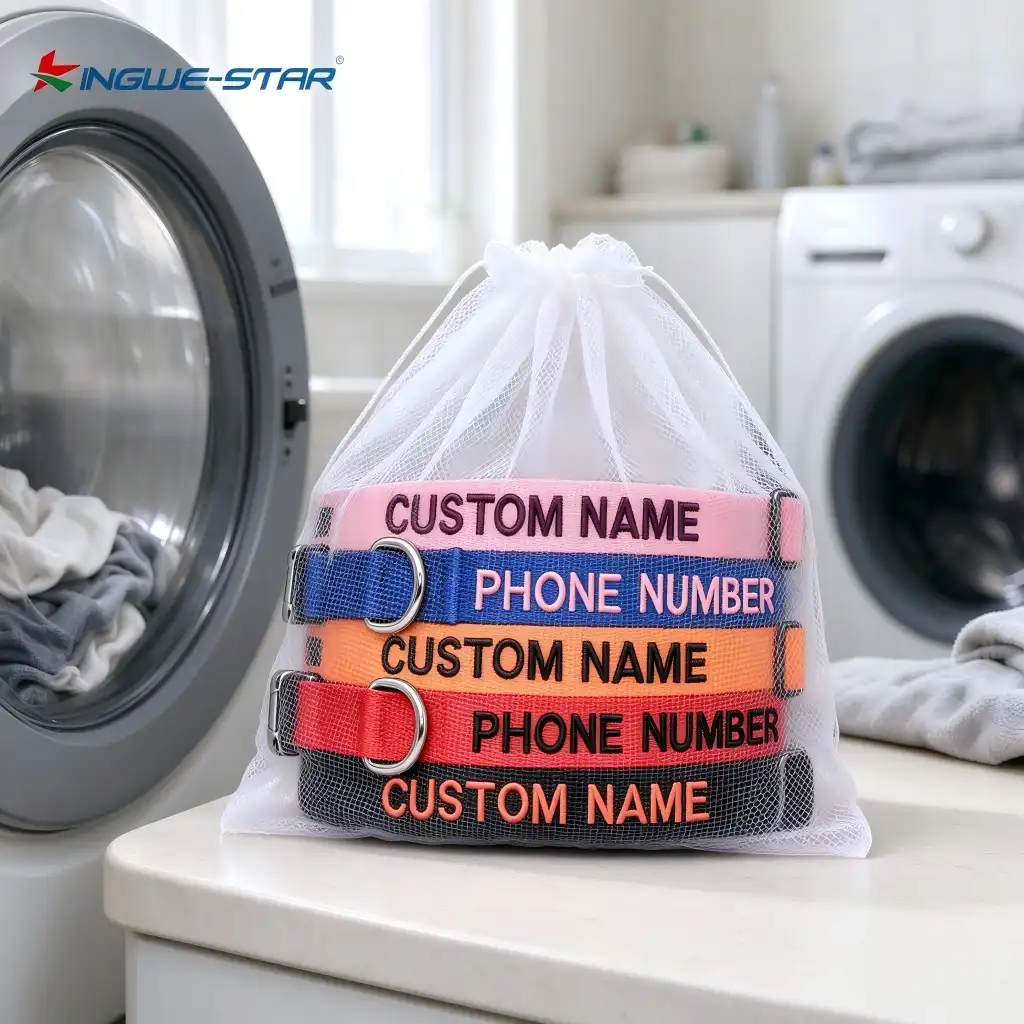
- Best for mass maintenance: Machine Wash For daily inventory usage and for batch cleaning of mass-used collars. All collars should be placed in a mesh laundry bag, since snap buckles and metal might damage the washing machine drum. Use a moderate, fragrance-free, pet-safe detergent. Use the gentle cycle and wash at around 30°C (86°F). Avoid fabric softeners since they coat the nylon strands and cut down on surface friction with a change in the collar texture and match.
- Universal drying rules: After washing, lay the collar flat or hang in a ventilated spot to air dry, avoiding direct sunlight and dryer high-temperature heating. Excessive heat may warp plastic snap buckles, shrink nylon webbing and throw off size calibration.
Special Maintenance for Different Nylon Collar Variants
Reflective Nylon Dog Collars: Require gentle cleaning. Never scrub the reflective tape vigorously, as the micro-glass bead coating on the surface is easily damaged by friction, leading to permanent loss of reflective function.
Collars with Metal Hardware: After cleaning, wipe D-rings and metal accessories with a dry cloth in time to remove water stains. This operation complies with the ASTM B117 industrial corrosion resistance standard, effectively preventing surface oxidation and rust and extending hardware service life.
Cleaning Solution Comparison: Traditional Harsh Cleaning vs. Modern Eco-Friendly Cleaning
Aggressive alkaline degreasers and chlorine bleach used in standard cleaning processes degrade nylon collars. These potent compounds hydrolyze polyamide molecular bonds, therefore reducing the tensile strength of nylon webbing. The load-bearing capacity of 1,200–4,500 lbs will be reduced, which increases the danger of hardware damage and collar failure during pet activity.
Modern degradable detergents based on enzymes are both safe and efficient. They break out pet oil, protein residue and stains right at the source without hurting the nylon. More formal firms specify pH-neutral, REACH-compliant non-toxic cleaning solutions in pet product care instructions. This standard maintenance strategy assists in preserving product performance and attracts eco-conscious consumers.
Non-toxic standards for cleaning might reduce brand operational liability in EU, California and other highly regulated markets. Full lifetime cost accounting for procurement demonstrates that the little cost premium of eco-friendly cleansers is significantly lower than batch returns due to fiber degradation and quality concerns, resulting in more consistent long-term economic gains.
Maintenance Cycle & Bulk Procurement Core Standards
Scientific Cleaning Frequency Guide
A weekly rinse is all it takes to keep outside active dog collars clean, with a full clean needed every 2–4 weeks to get rid of built-up dirt and odor. Deep cleaning cycles for indoor dogs in dry environment are enough once a month. Long-term standardized maintenance may effectively prolong the service life of nylon collars and preserve the long-term color brightness. It is a crucial element influencing customer ratings and repurchase rates.
Key Sourcing Criteria for Bulk Nylon Dog Collars
Specialists occupied with customization and bulk purchase of nylon dog collars must underline the following essential features, which define washability, durability and satisfaction of the end-user:
- Webbing Density & Weave Specification: Multi-ply military-spec high-density webbing with exceptional resistance to snagging, friction and distortion, retaining stable structural performance after numerous washing, significantly superior to typical ribbon-grade webbing.
- Hardware Corrosion Resistance Certification: D-rings and snap buckles that pass the 48-96 hours ASTM B117 salt spray test have solid anti-corrosion performance and can adapt to long-term repetitive cleaning and complicated outdoor usage situations.
- Color Fastness Test Report: Before placing bulk orders, ask suppliers to supply ISO 105-B02 official test results to ensure that key color SKUs such as black and red can pass Grade 4-5 color fastness to minimize large-area fading after washing.
- Chemical Safety Compliance: REACH and Oeko-Tex Standard 100 certifications prove that collar dyes and finishing chemicals are free of dangerous ingredients, safe for long-term contact with pet skin, and satisfy regulations for access to the worldwide retail market.
These standardized indicators determine the stable performance of products after repeated cleaning and use, and are the core guarantee for pet product brands to maintain long-term competitiveness on e-commerce and offline retail channels.
Conclusion
The scientific cleaning and maintenance of nylon dog collars may effectively safeguard the pet skin health, preserve the product structural integrity and color appearance, and prolong the product service life. The basic maintenance criteria apply to domestic pet usage and commercial bulk sales: use mild non-toxic cleaning products, clean at moderate water temperature, prevent high-temperature drying, and routinely check the hardware and webbing state.
B2B procurement practitioners and pet brand owners should pair established product maintenance methods with high-quality suppliers that include washability, color fastness and corrosion resistance into product design. This may effectively lower the after-sales return rate, increase the end-user happiness and develop long-term stable brand competitiveness in the competitive pet accessories industry.
FAQ
1. Can nylon dog collars be machine washed?
Yes. Place the collar in a mesh laundry bag, run a gentle cycle with water temperature controlled below 30°C, and use fragrance-free pet-safe detergent. Avoid fabric softeners and high-temperature dryer drying; natural air drying is mandatory after washing to prevent hardware deformation and webbing shrinkage.
2. What cleaning agents are safe for nylon collars?
Mild pet-safe dish soap, castile soap and biodegradable enzyme-based pet cleaners are all ideal choices. Never use bleach, strong alkaline degreasers and cleaners containing optical brighteners, which will destroy nylon fiber structure and cause dye migration to stain pet fur.
3. How to remove stubborn odors from nylon dog collars?
Prepare a mixed solution of warm water and white vinegar at a 1:4 ratio, soak the collar for 15 minutes to decompose odor-causing bacteria and organic residues, then scrub gently and rinse thoroughly. This method removes odors from the source without damaging nylon webbing and hardware.
4. Will repeated washing cause collar fading?
High-quality nylon collars that meet ISO 105-B02 Grade 4–5 color fastness standards can maintain stable color after dozens of washes. Early and obvious fading is usually caused by unqualified dyes and inferior production processes, which is a key quality problem that needs to be verified with suppliers before bulk procurement.
5. How to judge whether a washed collar is still safe to use?
Inspect the webbing surface for fraying and delamination, check the firmness of stitching, and test whether the snap buckle locks smoothly. Qualified high-quality nylon collars can maintain stable tensile resistance and structural integrity even after multiple cleaning cycles.
Custom Nylon Dog Collar Bulk Sourcing | Kingwe-star
Founded in 2009, Kingwe-star is a professional OEM/ODM manufacturer focusing on custom pet accessories, with products exported to more than 100 countries and regions worldwide. We provide customized nylon dog collars in multiple classic colors including red, blue, orange, black and pink, supporting personalized embroidery logos, exclusive packaging design and custom snap closure structures.
We support low-MOQ trial orders with a fast 3-day sample delivery cycle. All our nylon dog collars comply with REACH, Oeko-Tex Standard 100 and BSCI international certification standards, with complete quality test documents, fully meeting the access requirements of mainstream global retail channels. Whether you are a new brand testing the market or a mature brand expanding product lines, we can provide one-stop customized production solutions. Contact our team via email: luna@bllgift.com to obtain product samples and bulk quotation details.
References
1. American Pet Products Association (APPA). APPA National Pet Owners Survey. 2023.
2. Ihrke, P.J., & Gross, T.L. Veterinary Dermatology: Skin Diseases of the Dog and Cat. Wiley-Blackwell, 2021.
3. International Organization for Standardization. ISO 105-B02: Textiles — Tests for Colour Fastness to Artificial Light. ISO, 2014.
4. ASTM International. ASTM B117: Standard Practice for Operating Salt Spray (Fog) Apparatus. ASTM, 2019.
5. European Chemicals Agency (ECHA). REACH Regulation: Understanding the Basics. ECHA Publications, 2022.
6. Oeko-Tex Association. Oeko-Tex Standard 100: Testing for Harmful Substances. Oeko-Tex, 2023.
_1779947786252.jpg)
_1779702410222.png)
_1779183928592.png)
_1779703075683.png)