- English
- French
- German
- Portuguese
- Spanish
- Russian
- Japanese
- Korean
- Arabic
- Greek
- German
- Turkish
- Italian
- Danish
- Romanian
- Indonesian
- Czech
- Afrikaans
- Swedish
- Polish
- Basque
- Catalan
- Esperanto
- Hindi
- Lao
- Albanian
- Amharic
- Armenian
- Azerbaijani
- Belarusian
- Bengali
- Bosnian
- Bulgarian
- Cebuano
- Chichewa
- Corsican
- Croatian
- Dutch
- Estonian
- Filipino
- Finnish
- Frisian
- Galician
- Georgian
- Gujarati
- Haitian
- Hausa
- Hawaiian
- Hebrew
- Hmong
- Hungarian
- Icelandic
- Igbo
- Javanese
- Kannada
- Kazakh
- Khmer
- Kurdish
- Kyrgyz
- Latin
- Latvian
- Lithuanian
- Luxembou..
- Macedonian
- Malagasy
- Malay
- Malayalam
- Maltese
- Maori
- Marathi
- Mongolian
- Burmese
- Nepali
- Norwegian
- Pashto
- Persian
- Punjabi
- Serbian
- Sesotho
- Sinhala
- Slovak
- Slovenian
- Somali
- Samoan
- Scots Gaelic
- Shona
- Sindhi
- Sundanese
- Swahili
- Tajik
- Tamil
- Telugu
- Thai
- Ukrainian
- Urdu
- Uzbek
- Vietnamese
- Welsh
- Xhosa
- Yiddish
- Yoruba
- Zulu

To adjust a nylon dog collar, locate the metal or plastic slider on the webbing and slide it to loosen or tighten the strap around your dog's neck. The universal safety benchmark is the two-finger rule — you should comfortably fit two fingers between the collar and your dog's skin. A properly fitted dog collar sits snugly without constricting breathing or slipping over the head. Always recheck the fit after the first few wears, as high-quality nylon webbing may settle slightly with use. For snap-closure styles, confirm the buckle clicks firmly before each outing.
Nylon Dog Collars Adjustment Essentials
When I look for pet supplies for names that sell on Amazon or Chewy, collars are always the first thing that come up, and for good reason. The most important thing for daily dog safety is a collar that fits properly.
Nylon dog collars are made from polyamide manmade fibers, which have a high tensile strength-to-weight ratio that most natural materials can't match. Industry standards for testing materials say that high-denier nylon rope can hold tensile loads of 1,200 to 4,500 pounds, based on the weave density. The non-porous fiber structure doesn't let bacteria keep smells and breaks down when it gets wet, which is known to be a problem with leather alternatives in damp places.
Collar Types That Matter for B2B Procurement
The market has three main types of collars, and each one has its own way of adjusting:
- Adjustable sliding collars have a tri-glide metal or nylon slider that lets you change the size of the strap all the time. They offer the best fit for dog breeds from XS to XL, which is helpful for stores that sell a lot of different breeds.
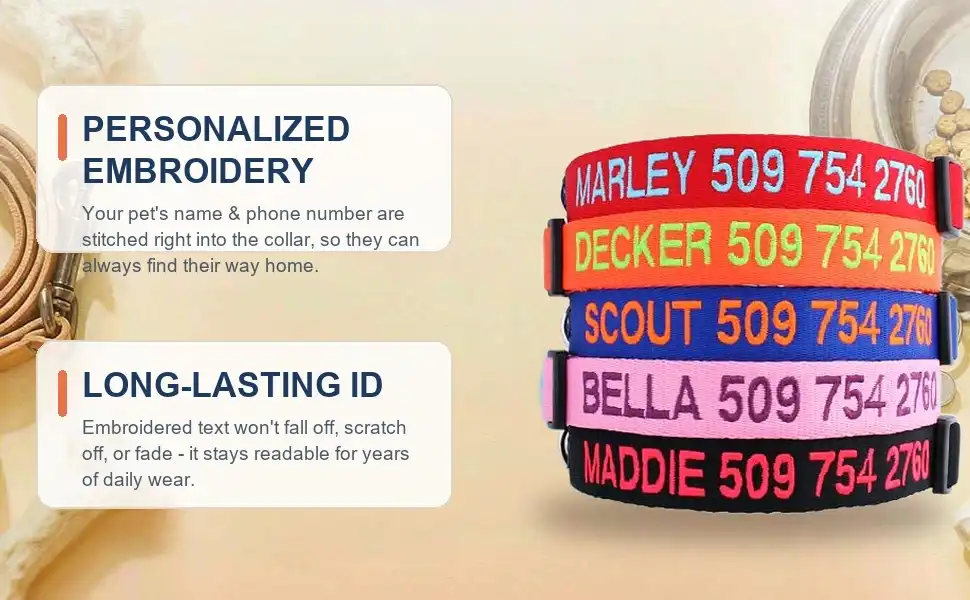
- Snap-closure collars feature quick-release buckles that make it easy to put on and take off quickly. Our line of products includes snap-closure collars in red, blue, orange, black, and pink. These collars are all made from durable nylon webbing and come in a full range of colors to help buyers tell retail SKUs apart.
- Specialized collars, such as ones that are reflective, padded, or waterproof, are sold to performance-oriented customers and cost more.
Procurement professionals can avoid sourcing mistakes that lead to high return rates by understanding these differences.
Step-by-Step Guide: How to Measure and Adjust a Nylon Dog Collar
It's not a guess what size to use. Getting this process right cuts down on customer complaints and returned packages by a huge amount. These are two problems that every brand owner wants to avoid.
Measuring Your Dog's Neck Correctly
As the nylon dog collar sits at the base of your dog's neck, wrap a soft fabric tape measure around it. You need to add 2 inches to that number to get the right collar size. The gap is tighter for small breeds and a little wider for big working breeds to make them more comfortable. Before confirming bulk orders, compare these measurements to your supplier's size chart. Size table inconsistency between batches is a known issue in this category.
The Adjustment Process
Lay the collar flat and find the device for adjusting it. It could be a slider, a tri-glide, or a side-release snap buckle. Thread or slide the webbing through the hardware until the collar's width fits the neck size you already know, plus two fingers' worth of space. Attach the snap closing and make sure you can hear it click into place. Place two fingers under the collar band. If they can go through with only a little resistance, the fit is right. If you feel a pinch or too much slack, make small adjustments every half-inch.
The layered design adds a small amount of thickness to reflective or padded collars, which makes the adjustment range a little smaller. When giving end sellers advice on size charts for unique SKUs, keep this in mind.
Common Challenges and Solutions When Adjusting Nylon Dog Collars
When there is no size advice, even good items cause friction. I've seen brands lose repeat customers because of problems that could have been avoided with better supplier support.
The most common fitting issues I see and how to fix them in real life are:
- Collar slippage on narrow-necked breeds: Sighthounds, like greyhounds, have necks that are bigger than their heads, which makes regular collars fall off. To avoid this, choose a martingale-style variant or put breed-specific size notes on the sale package.
- Buckle fatigue under repeated stress: After 6–8 months of daily use, low-grade plastic snap clips can break. The product will last longer if you buy collars with buckles made of strengthened nylon or glass-filled polymer that have been tested to meet ASTM standards.
- Webbing stretch after prolonged moisture exposure: The stretch coefficient of high-quality nylon is only about 2–5%, but low-quality webbing may get longer after being wet several times. Before you place a large order, make sure you get ISO 105-B02 color fastness and dimensional stability wash-cycle results from your provider.
These problems can be fixed when the products are being sourced, not when they are sold. When buyers add these steps to their buying process, they consistently see fewer returns and better reviews of the products they buy.
Nylon Dog Collar vs. Leather Dog Collar: Adjustment and Performance Insights for Procurement
When people who run brands ask me to compare materials, I tell them that the answer depends on how the materials will be used in the end.
When it comes to flexibility, nylon dog collar is clearly better. Because the webbing can be adjusted to fit a wider range of sizes without affecting the structure, they can be used for a wider range of breeds in retail programs. They can also be washed in a machine, won't get damaged by salt water, and can have both printed and stitched logos added to them, which is a big plus for OEMs. According to ASTM B117 standards, a salt spray test shows that good metal hardware on nylon collars can withstand 48 to 96 hours of fast corrosion without breaking.
People who live a high-class lifestyle like leather collars. But leather gets stiff in cold weather and stretches in strange ways when it gets wet. It also needs to be conditioned every so often to keep its shape. When purchasing teams are in charge of big SKU catalogs or outdoor-focused product lines, these upkeep factors mean that products will need to be replaced more often and may not be covered by warranties.
Nylon collars have a more stable total cost of ownership and appeal to a wider range of people for brands that sell on Amazon, Chewy, or in local pet stores.
How to Choose the Right Nylon Dog Collar for Your Business Needs?
It's not enough to just compare prices when choosing a nylon dog collar supplier. When buying something for a business, the most important factors are the certification of the material, the level of customization, and the dependability of the lead time.
Here are the main things I tell people who are buying brands to look at:
- Material compliance: Make sure that the webbing and tools are safe for chemicals according to REACH standards and that the end product is safe for skin contact according to Oeko-Tex Standard 100.
- Color and size range: A collar line that can make money should have sizes XS to XL and at least four or five colorways. The article talks about nylon collars with a snap closure that come in red, blue, orange, black, and pink. TikTok and Instagram pet influencer trend data show that these colors are popular in the US market.
- Customization capability: Embroidered logos, custom hang tags, and branded packages turn a common item into a unique one. Suppliers with their own design teams can speed up this process a lot.
- Testing documentation: Before accepting samples, ask for tensile strength test records, color fastness results, and buckle stress test data.
When you follow these rules consistently, you can protect your margins, cut down on returns, and build a line of products that your customers trust.
FAQ
Are nylon dog collars safe for all breeds?
Yes. All dog types can use high-quality nylon webbing because it is safe and has been pH-tested for long-term skin contact. The snap-closure design makes it easy to take off quickly in an emergency, which is especially helpful for dogs with a lot of energy.
How often should a collar be adjusted or replaced?
Whenever your dog's weight changes by more than 5%, you should make a new adjustment. If your dog is busy outside, check the collar once a month for worn-out wire or buckles. As a general rule, plan to replace it every 12 to 18 months if it is used normally.
Can nylon dog collars be customized for private labels?
Of course. Customization options for OEM and ODM products usually include woven labels, embroidered brand logos, custom colorways, and custom retail packaging. Brands can try different SKUs before ramping up production because the minimum order quantity is low.
Does black nylon fade faster than other colors?
No, black nylon dog collar webbing has carbon-black pigment in it, which naturally blocks UV light. According to ISO 105-B02 color fastness tests, good black nylon keeps its color even after being exposed to UV light for a long time, better than lighter colors in this case.
What closure type is most durable?
In stress tests, snap-closure buckles made of glass-filled nylon or reinforced polymer do better than regular plastic. When it comes to heavy-duty uses, metal side-release buckles last the longest.
Partner with Kingwe-star for Custom Nylon Dog Collar Solutions
Since 2009, Kingwe-star has sold high-end pet items to brands around the world. We are a reliable company that makes nylon dog collars. We offer OEM and ODM programs with low minimum order quantities, sample response times of 3 days, full certification paperwork including REACH and Oeko-Tex, and dedicated account management. Our nylon collars with snap closure come in five colors and can be fully customized to fit your brand. You can email our team at luna@bllgift.com or go to bllgift.com to get samples and start planning the launch of your next product.
Conclusion
Changing the collar is a small technical task that has big business effects. A collar that fits right keeps dogs safe, cuts down on returns, and boosts a brand's image. Procurement teams can confidently source goods when they know how nylon webbing, snap closures, and size calibration work. If you choose a supplier that offers certified materials, easy customization, and clear testing documentation, you can turn a purchase of a commodity into a long-lasting business asset. If you buy the right nylon dog collar from the right place, you'll earn customer trust that grows with each order.
References
- American Kennel Club. Dog Collar Fit and Safety Guidelines. 2023.
- ASTM International. Standard Practice for Operating Salt Spray (Fog) Apparatus (ASTM B117). 2019.
- ISO. Textiles — Tests for Colour Fastness — Part B02: Colour Fastness to Artificial Light (ISO 105-B02). 2014.
- Oeko-Tex Association. Oeko-Tex Standard 100: Testing for Harmful Substances. 2023.
- American Pet Products Association (APPA). APPA National Pet Owners Survey. 2023–2024.
- ASTM International. Standard Test Method for Abrasion Resistance of Textile Webbing (ASTM D6770). 2016.
_1779703014142.png)
_1779702985102.png)
_1779947448733.jpg)
_1779947572966.jpg)
_1779184142744.png)